

 Preview
 Send
Send Share
Share
 Details

 Download
 Similars
 X-Ray
X-Ray Diaporama
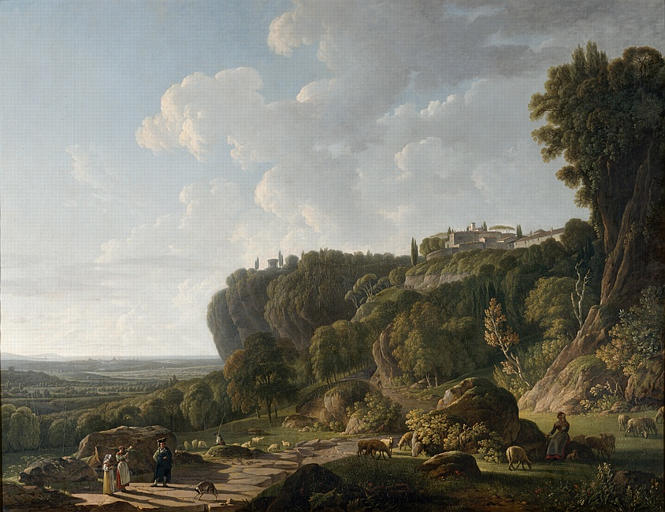
Vue de Tivoli
 Read More
Purchase a high-resolution, enhanced digital image, far superior to the online preview.
Each file is meticulously prepared by our in-house specialists using advanced tools and expert manual retouching. We ensure every image has exceptional clarity, precise color accuracy, and fine detail.
The final file is delivered via email within 72 hours, optimized for immediate use in professional, editorial, and print environments. This is the same quality trusted by top-tier design studios, publishers, and galleries.
Digital Image
Download a high-resolution file for personal display, printing, and creative projects. ( Buy Print Buy Hand Made Painting)
Included in Every Digital Image Order
Expert Digital Delivery, Guaranteed
When you choose ArtsDot.com, you're not just getting an image - you're receiving a professionally enhanced digital artwork, crafted with precision and backed by a satisfaction guarantee. Here's everything that comes with your order, automatically:

Fast Email Delivery
Your high-resolution digital image file will be emailed to you within 72 hours of ordering - ready for immediate use.

AI-Enhanced Digital File
Your artwork is professionally optimized using advanced AI tools and manual editing, ensuring maximum detail, clarity, and color accuracy.

Free Lifetime Re-Delivery
Accidentally deleted or lost your file? No worries - we'll resend it to you anytime, free of charge.

No Import Fees - Ever
Enjoy your artwork instantly with zero customs, duties, or delivery fees - digital downloads are always tax-free.

Color Accuracy Guarantee
We ensure your digital image reflects the original colors as closely as possible using professional tools and color management.

60-Day Satisfaction Guarantee
If you're not satisfied with your digital image, we'll revise it or refund 100% within 60 days - no questions asked.

100% Money-Back Guarantee
Not satisfied? Get a full refund within 60 days of receiving your digital file - no questions asked.

Bulk Order Discounts
Buy 3 images, save 10% - Buy 5, save 15% - Buy 10+, save 20%. Great for creative projects, galleries, and agencies.
Related Artworks
Artist Biography
William Hogarth: A Revolutionary Observer of 18th Century England
William Hogarth, born in London on November 10, 1697, was a pivotal figure in the history of art – not merely an artist, but a satirist, engraver, and keen social commentator. His career spanned nearly six decades, during which he profoundly influenced both painting and printmaking, establishing a new visual language that combined meticulous detail with biting social critique. He remains one of the first truly English-born artists to achieve international recognition, largely due to his unflinching depictions of London life and its moral failings. His legacy extends beyond individual artworks; Hogarth’s systematic approach to narrative in print – what we now recognize as sequential art – laid the groundwork for future developments in illustration and caricature.Early Life and Artistic Training: A Foundation of Discontent
William Hogarth's childhood was marked by a certain lack of paternal affection, a detail he frequently revisited throughout his life and writings. The only son of Richard Hogarth, a minor classical scholar, William’s education was largely shaped by his father’s modest circumstances and subsequent disappointments within the printing world. This early experience fostered in him a deep-seated distrust of academic pursuits and a fierce independence of spirit. Rather than pursuing a formal scholarly path, he apprenticed himself to a silversmith at the age of fifteen, an occupation that provided practical skills but also instilled a sense of insecurity and frustration. Crucially, this apprenticeship exposed him to engraving – initially on heraldic designs – which proved to be his true calling. The rigid constraints of producing decorative motifs for wealthy patrons fueled his dissatisfaction and ultimately drove him towards a more expressive and critical artistic vision. His early years were characterized by a relentless pursuit of self-improvement, often circumventing established methods in favor of innovative techniques, a trait that would define much of his career.The Rise of the Engraver: Moral Progress and Social Commentary
Hogarth’s breakthrough came through his engravings, which quickly gained popularity for their startling realism and satirical wit. He began producing prints depicting scenes from everyday London life – taverns, brothels, gambling dens – but soon shifted his focus to moral tales, often portraying the consequences of vice and folly. His most famous series, *A Rake’s Progress* (1733-1735), a set of eight engravings chronicling the downfall of Tom Rakewell, is a prime example of this approach. Each plate meticulously documented the stages of his moral decay – from youthful extravagance to prostitution and ultimately death – offering a stark indictment of London society’s obsession with wealth and pleasure. Beyond *A Rake's Progress*, Hogarth produced numerous other series, including *The Busy Body*, *Marriage à la Mode*, and *Raising of Willie*, each exploring different facets of human behavior and social customs. His work was not simply observational; it was deliberately designed to provoke thought and inspire reform.Technique and Style: A Master of Detail and Composition
Hogarth’s artistic style is instantly recognizable for its meticulous detail, precise composition, and dramatic use of light and shadow. He employed a technique known as ‘optical art,’ meticulously rendering textures and surfaces to create an illusion of depth and realism. His engravings were produced using a complex system of stippling – creating images through the careful placement of tiny dots – which allowed him to achieve astonishing levels of detail. Furthermore, Hogarth was a pioneer in the use of perspective in printmaking, employing aerial perspective to suggest distance and create a sense of spatial recession. His paintings, though less numerous than his engravings, shared these characteristics—a sharp eye for observation combined with a masterful understanding of composition and tonal values. He frequently used theatrical lighting to draw attention to key figures and heighten the emotional impact of his scenes.Legacy and Influence: A Foundation for Modern Art
William Hogarth’s influence on subsequent generations of artists is undeniable. He established a new standard for realism in both painting and printmaking, demonstrating that art could be used to engage with social issues and critique societal norms. His systematic approach to narrative in print—the sequential telling of a story through multiple images—laid the groundwork for the development of comic strips, cartoons, and other forms of illustrated storytelling. His theories on aesthetics, outlined in *An Essay on the Theory of Painting* (1753), were highly influential among Romantic writers like William Blake and Samuel Taylor Coleridge, who admired his emphasis on imagination and emotional expression. While Hogarth’s own attempts to establish himself as a history painter proved commercially unsuccessful, his legacy as a pioneering artist and social commentator endures, solidifying his place as one of the most important figures in British art history. He died in London on October 26, 1764, leaving behind a body of work that continues to fascinate and provoke debate today.
jean françois sablet
1745 - 1819 , Switzerland
Quick Facts
- Artistic Movement Or Style: Moral & satirical engravings/paintings
- Artists Or Movements Influenced By This Artist: ['Romantic literature']
- Date Of Birth: November 10, 1697
- Date Of Death: October 26, 1764
- Full Name: William Hogarth
- Nationality: English
- Notable Artworks: ["A Rake's Progress"]
- Place Of Birth: London, England

