 Preview
 Send
Send Share
Share
 Details

 Download
 Similars
 X-Ray
X-Ray Diaporama
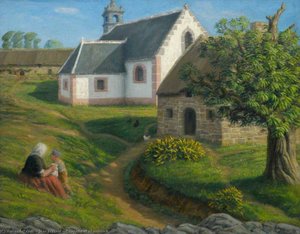
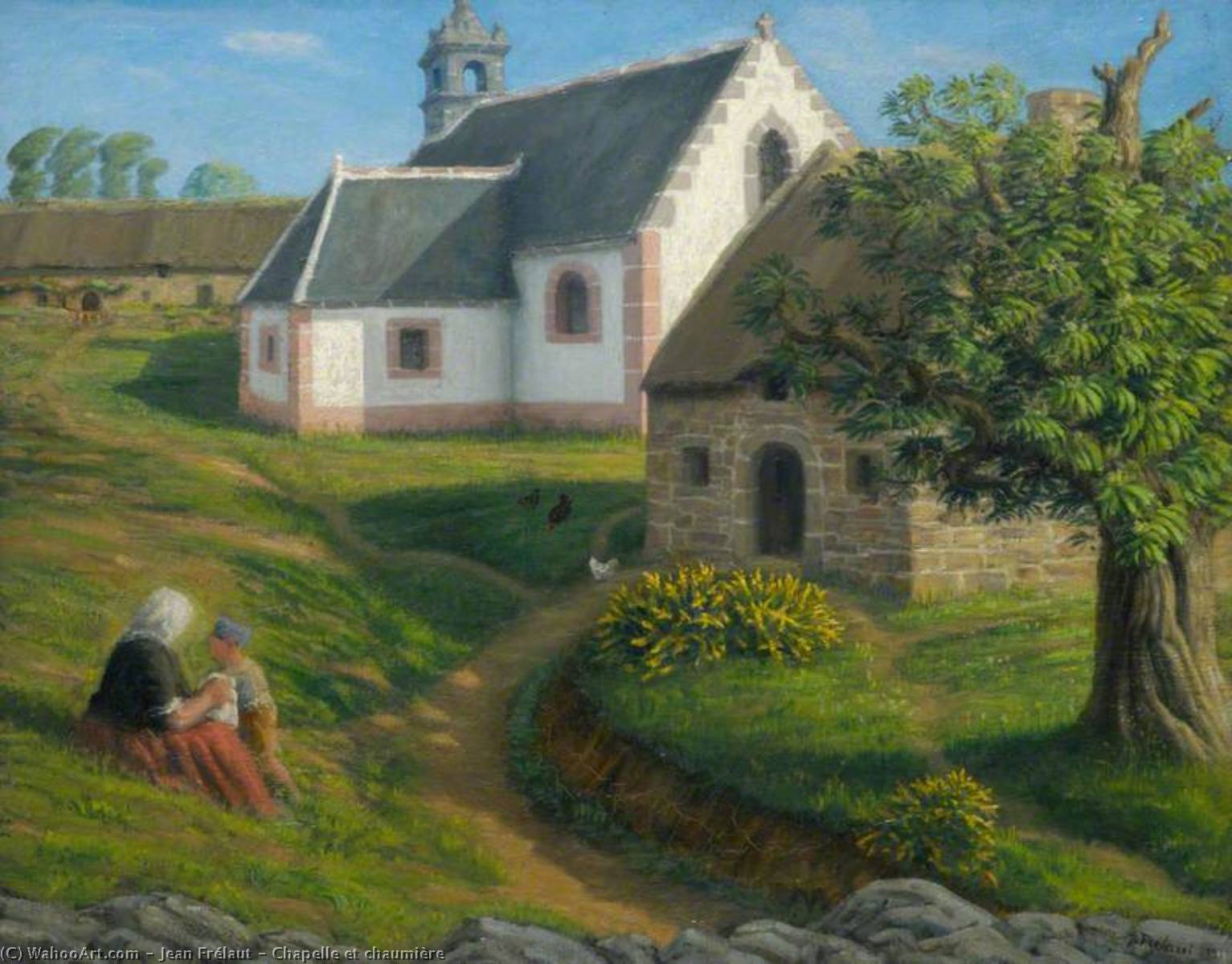
Chapelle et chaumière
 1931
1931 65.0 x 81.0 cm
 Read More
Hand Made Oil Reproduction
Hand-painted oil on canvas in your size and frame, made to order by our artists. ( Buy Print Buy Image)




































Pick from our preset sizes that match the artwork's original proportions.

You may enter your own dimensions to fit a specific frame or space. If your selected size does not match the original image's proportions, we will either crop the artwork or extend the painting with additional hand-painted elements. A digital mockup will be sent for your approval before production begins.
Please note that the on-screen preview does not reflect the actual cropping or extension. Only the mockup will accurately show the final composition.
While custom sizes are available, we recommend selecting a dimension from the predefined list to preserve the original proportions.
After order, ArtsDot.com team will email client for instructions and provide a mockup preview
Worldwide Delivery () in 3/4 weeks instead of standard 5 weeks. (28 August). No compromise on quality.

Free Worldwide Express Shipping

High-Quality Linen Canvas

Full Shipping Insurance

Customs Tax Refund Guarantee

True Color Matching Guarantee

60-Day Return Policy (Defects Only)

100% Money-Back Guarantee

Bulk Discount Offer
 Glass option is only available in size under 110 CM

Chapelle et chaumière
Reproduction Medium
Reproduction Size
-


Total Price
$ 263
Related Artworks







Artist Biography
Jean Frélaut: A Breton Vision of Rural Life
Born in Grenoble in 1879, Jean Frélaut’s artistic journey was inextricably linked to his homeland – the rugged and evocative landscapes of Brittany, France. He wasn't a product of Parisian art academies; instead, he cultivated his distinctive style through immersion in the traditions and rhythms of rural Breton life. This deep connection profoundly shaped his work, imbuing it with a palpable sense of place and an intimate understanding of the region’s people and customs.
Frélaut's early years were marked by a fascination with the natural world and a keen observation of everyday scenes. He initially trained as a painter in Paris, but found himself increasingly drawn back to Brittany, where he established his home and studio. Unlike many artists seeking grand historical or mythological subjects, Frélaut focused on capturing the quiet beauty of the countryside – the thatched roofs of villages nestled amongst rolling hills, the vibrant colors of flowering meadows, and the simple routines of farmers and fishermen. This deliberate choice aligned him with the Barbizon school of painters, known for their dedication to depicting nature as it was actually experienced, rather than idealized.
His artistic development can be traced through a progression from looser, more impressionistic brushstrokes in his early works to a greater degree of control and detail as he matured. However, even at his most technically proficient, Frélaut never sacrificed the emotional resonance that characterized his art. He employed a palette dominated by earthy tones – ochres, browns, greens, and blues – mirroring the colors of the Breton landscape. Light plays a crucial role in his paintings, often depicted as soft and diffused, lending an atmosphere of tranquility and nostalgia.
Key Works and Recurring Themes
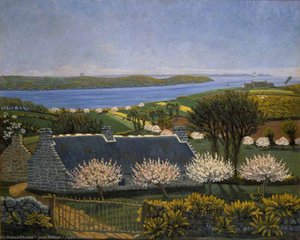
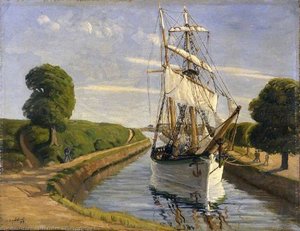
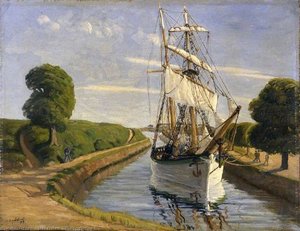
Frélaut’s oeuvre is characterized by a series of captivating scenes that offer glimpses into rural Breton life. “The Brigantine” (1923), perhaps his most famous work, exemplifies this focus. The painting depicts a small fishing boat bobbing on the choppy waters of the Atlantic coast, capturing both the beauty and the inherent challenges of maritime existence. Other notable works include “Apple Blossom,” which celebrates the bounty of the orchards during springtime, and “Avant l’orage” (Before the Storm), a dramatic depiction of a gathering storm over a Breton village – a testament to his ability to convey mood and atmosphere.
Recurring themes in Frélaut's paintings include the cyclical nature of agricultural life, the close-knit relationships within rural communities, and the enduring connection between people and the land. He frequently portrayed scenes of daily chores – harvesting crops, tending livestock, repairing fences – presenting a realistic yet warmly sympathetic view of peasant life. His work also subtly celebrates Breton folklore and traditions, hinting at the rich cultural heritage of the region.
Influences and Artistic Context
While Frélaut’s style is distinctly his own, he was undoubtedly influenced by several key artistic movements and figures. The Barbizon school, with its emphasis on plein air painting and a direct engagement with nature, provided a foundational influence. He also admired the works of Gustave Courbet, whose commitment to depicting ordinary subjects with honesty and realism served as an inspiration. Furthermore, Frélaut’s work aligns with the broader trend in late 19th-century French art towards a celebration of rural life and a rejection of academic conventions.
It's important to note that Frélaut operated within a specific historical context – the decline of traditional rural society in France during the Belle Époque. His paintings can be seen as a poignant reflection on this transition, capturing a fleeting moment in time before the countryside was irrevocably transformed by industrialization and modernization.
Legacy and Historical Significance
Jean Frélaut’s work holds significant historical importance as a key example of Breton art and a representative figure within the Barbizon school. His paintings offer valuable insights into the social, cultural, and economic realities of rural Brittany in the early 20th century. Despite not achieving widespread fame during his lifetime, Frélaut's legacy has been increasingly recognized in recent decades, with his works now exhibited in museums and private collections across France and beyond.
His ability to capture the essence of Breton life – its beauty, its hardships, and its enduring spirit – ensures that Jean Frélaut remains a vital voice in French art history. He stands as a testament to the power of observation, empathy, and a deep connection to one’s roots.
jean frélaut
1879 - 1954
Quick Facts
- Artistic Movement Or Style: Breton Art, Impressionism
- Artists Or Movements Influenced By This Artist: ['Impressionists']
- Artists Who Influenced This Artist: ['Breton painters']
- Date Of Birth: 1879
- Date Of Death: 1954
- Full Name: Jean Frélaut
- Nationality: French
- Notable Artworks:
- The Brigantine
- Apple Blossom
- Avant l'orage
- Place Of Birth: Grenoble, France