 Preview
 Send
Send Share
Share
 Details

 Download
 Similars
 X-Ray
X-Ray Diaporama
Nymphs (detail) (10)


 Read More
Hand Made Oil Reproduction
Hand-painted oil on canvas in your size and frame, made to order by our artists. ( Buy Print Buy Image)




P118B $10

P118H $10

P118W $10

P438Z $10

P508JH $12

P508YH $12

P805H $10

P805Z $10

P919BZ $10

P919G $10

P919XJ $10

P959ZH $10

P968JZ $12

W106C $8

W218G $10

W218JH $8

W218Y $10

W307PJ $10

W316G $10

W316PJ $8

W316Y $10

W398PJ $8

W4111J $10

W500HY $15

W500JH $15

W692G $12

W849H $8

W940BG $15

W953PJ $8




Pick from our preset sizes that match the artwork's original proportions.

You may enter your own dimensions to fit a specific frame or space. If your selected size does not match the original image's proportions, we will either crop the artwork or extend the painting with additional hand-painted elements. A digital mockup will be sent for your approval before production begins.
Please note that the on-screen preview does not reflect the actual cropping or extension. Only the mockup will accurately show the final composition.
While custom sizes are available, we recommend selecting a dimension from the predefined list to preserve the original proportions.
After order, ArtsDot.com team will email client for instructions and provide a mockup preview
Worldwide Delivery () in 3/4 weeks instead of standard 5 weeks. (17 August). No compromise on quality.

Free Worldwide Express Shipping

High-Quality Linen Canvas

Full Shipping Insurance

Customs Tax Refund Guarantee

True Color Matching Guarantee

60-Day Return Policy (Defects Only)

100% Money-Back Guarantee

Bulk Discount Offer
 Glass option is only available in size under 110 CM

Nymphs (detail) (10)
Reproduction Medium
Reproduction Size
-


Total Price
$ 263
Artwork Description
The Nymphs’ Embrace: Jean Goujon's Dance of Grace
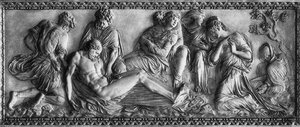
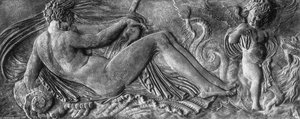
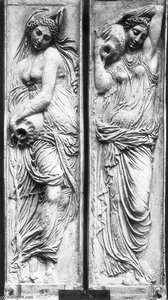
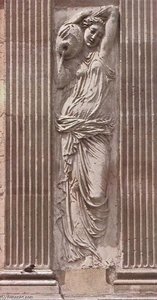
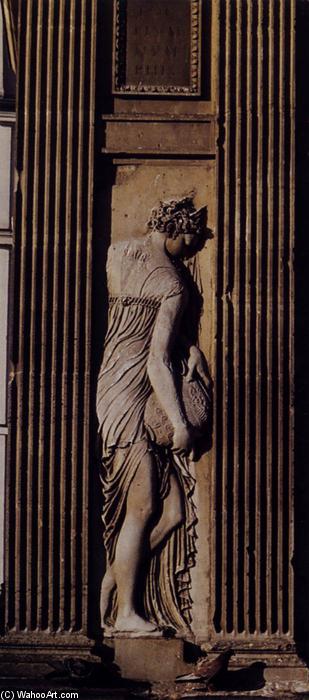
Jean Goujon’s “Nymphs (detail) (10)” is more than just a sculpted depiction; it’s an immersion into the heart of French Mannerism, a moment captured in marble that speaks volumes about Renaissance ideals and the pursuit of beauty. Created around 1547-49 during his tenure as sculptor to the King Henry II, this exquisite fragment—originally part of the grand Fontaine des Innocents fountain in Paris—offers a tantalizing glimpse into Goujon’s masterful command of form and his profound understanding of classical aesthetics. The piece isn't merely decorative; it embodies a sophisticated dialogue between ancient Greek sculpture and the burgeoning artistic sensibilities of 16th-century France.
Goujon, born in Normandy around 1510, was a pivotal figure in shaping Parisian art during this transformative period. Trained initially in Rouen Cathedral, he quickly gained renown for his ability to infuse classical principles with a distinctly personal and sensual style. His work reflects the influence of Italian Renaissance sculpture – particularly the idealized forms of Roman antiquity – but tempered by a heightened emotionalism and an emphasis on movement that characterizes Mannerism. This is immediately apparent in the dynamic poses of these nymphs, who seem poised mid-dance, their drapery swirling around them like liquid moonlight.
A Symphony of Form and Drapery
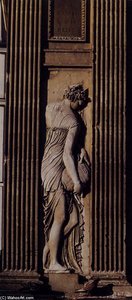
The technical brilliance of “Nymphs (detail) (10)” lies primarily in Goujon’s extraordinary skill with marble. The surface is remarkably smooth, achieved through a meticulous process of polishing and refining – a testament to the sculptor's dedication. Observe how the drapery cascades over the figures, not as static folds but as living fabric, responding to an unseen breeze. This isn’t simply representation; it’s an attempt to capture the *illusion* of movement, a key characteristic of Mannerist art. The elongated limbs, subtly curved torsos, and expressive faces contribute to this sense of dynamism, drawing the viewer into the scene.
The figures themselves are remarkably graceful, their bodies sculpted with a delicate balance between strength and fluidity. Goujon’s attention to anatomical detail is evident in the subtle musculature beneath the drapery, yet he never sacrifices elegance for realism. The positioning of the hands—one reaching out as if offering a gift, another gently touching a flower – suggests a narrative beyond mere visual beauty, hinting at themes of love, nature, and perhaps even mythology.
Symbolism and Context
The Fontaine des Innocents, where these nymphs once resided, was more than just a public fountain; it was a statement of civic pride and artistic ambition. Commissioned by the powerful Parisian merchant, Antoine le Blanc, it represented a significant investment in the city’s cultural landscape. Goujon's sculptures were intended to evoke classical ideals of beauty and harmony, reflecting the humanist values that were gaining prominence during the Renaissance. The nymphs themselves are often interpreted as allegorical figures representing fertility, grace, and the bounty of nature – potent symbols within a society deeply concerned with these themes.
Furthermore, the choice of marble itself held symbolic weight. Marble was associated with purity, immortality, and divine inspiration—qualities that aligned perfectly with the artistic aspirations of the era. The fact that this fragment is now housed in the Louvre Museum underscores its enduring significance as a masterpiece of French Renaissance sculpture.
Bringing the Nymphs to Life – A Reproduction
Reproductions of “Nymphs (detail) (10)” offer a remarkable opportunity to bring Goujon’s exquisite vision into your home or office. Each hand-painted reproduction meticulously captures the nuances of the original sculpture, from the subtle textures of the marble to the expressive gestures of the figures. The use of archival quality materials ensures that these reproductions will retain their beauty and detail for generations to come. Whether you are an art enthusiast, a collector, or simply seeking a touch of timeless elegance, this reproduction is a captivating addition to any space—a silent testament to the enduring power of artistic genius.
Related Artworks

Artist Biography
The Sculptor Who Shaped Parisian Elegance
Jean Goujon (c. 1510 – c. 1567) stands as a cornerstone of French Renaissance sculpture and architecture, embodying the stylistic fervor of Mannerism while simultaneously grounding itself in classical ideals. Born in Normandy, his early life remains shrouded in obscurity, yet his prolific output quickly established him as one of the era’s foremost artistic voices—a testament to his prodigious talent and unwavering dedication to craft. Goujon's journey began with formative experiences in Italy, where he absorbed the grandeur of Roman sculpture and integrated its principles into his own distinctive style. This influence is palpable throughout his oeuvre, particularly evident in his masterful handling of drapery and anatomical precision.
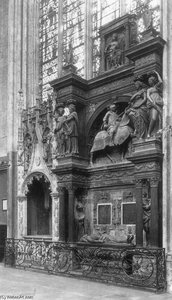
His artistic ascent commenced in Rouen Cathedral (1541-42), where he undertook the monumental task of sculpting the tomb monument to Louis de Brézé, seigneur d'Anet—a commission that showcased his burgeoning skill and ambition. This ambitious project cemented his reputation as a rising star within the French sculptural landscape. Simultaneously, he honed his architectural prowess at Saint-Maclou Church, demonstrating an innate ability to blend artistic vision with structural engineering. The resulting edifice stands as a magnificent example of Renaissance ecclesiastical architecture, reflecting Gouseb's commitment to both aesthetic beauty and functional integrity.
A Partnership of Visionary Grandeur
Moving to Paris in 1544, Goujon entered into a pivotal partnership with Pierre Lescot, the architect overseeing the ambitious reconstruction of Saint-Germain-l'Auxerrois cathedral. Together, they conceived and executed breathtaking sculptural decorations—most notably the pulpit—a masterpiece that exemplifies Lescot’s neoclassical sensibilities and Goujon’s masterful drapery technique. This era of collaboration defined the visual language of the French Renaissance, as Goujon began to infuse stone with a sense of fluid movement and ethereal grace.
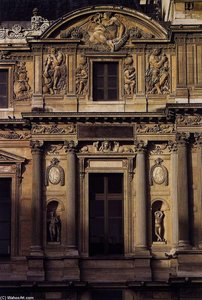
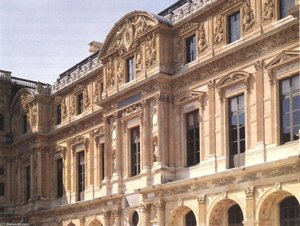
The height of his influence is perhaps most visible in his contributions to the Louvre. His work on the Façade of the Cour Carrée (wing Lescot) remains an iconic achievement, showcasing classical elegance through intricate carvings that reflect French artistic brilliance. In these works, one can observe the delicate interplay of light and shadow across sculpted figures, a hallmark of his ability to breathe life into cold marble. His mastery extended to the Façade of the Louvre (detail), where his exquisite attention to detail created a masterpiece of Mannerist style, blending classical elegance with intricate carvings that continue to captivate viewers centuries later.
Legacy of Grace and Classical Form
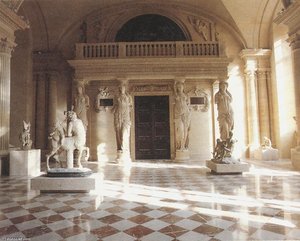
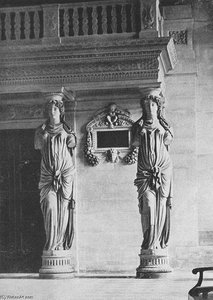
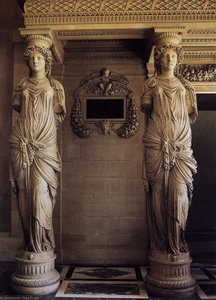
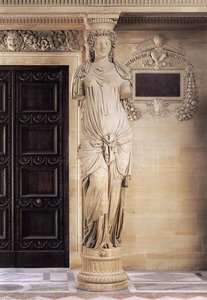
Goujon's legacy is defined by an unparalleled ability to harmonize the tension of Mannerism with the serenity of Classicism. His sculptures often feature nymphs and allegorical figures that seem to float within their architectural settings, a technique most famously realized in his Caryatides. These ten masterful figures represent the pinnacle of 16th-century French Renaissance sculpture, bringing a sense of classical grandeur and sophisticated elegance to the viewer. Through these works, Goujon did more than decorate buildings; he sculpted the very identity of French aesthetic refinement.
The historical significance of his work cannot be overstated, as his approach to anatomy and drapery influenced generations of European artists. His ability to transform heavy stone into flowing, rhythmic forms established a standard for French Classicism that would endure long after his death. Today, the remnants of his genius—from the intricate details of the Louvre's wings to his profound influence on architectural ornamentation—serve as a lasting testament to a man who truly shaped the elegance of Paris.
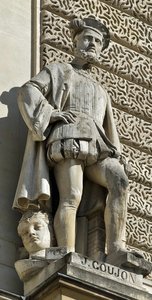
Jean Goujon
1510 - 1567 , France
Quick Facts
- Artistic Movement Or Style: Mannerism
- Artists Or Movements Influenced By This Artist: ['French Classicism']
- Artists Who Influenced This Artist: ['Michelangelo']
- Date Of Birth: c. 1510 Normandy France
- Date Of Death: c. 1567
- Full Name: Jean Goujon
- Nationality: French
- Notable Artworks:
- Nymphs (detail)
- Pietà
- War and Peace
- Fontaine des Innocents
- Louvre Sculptures
- Place Of Birth: Normandy France
Related Articles

Bronze Sculptures That Defined Art History | ArtsDot
Journey through art history with our Top 10 bronze sculptures! Explore masterpieces by Rodin, Michelangelo & more. Discover stories behind iconic statues and find museum-quality reproductions for your home decor at ArtsDot.com.

The Enduring Form: Exploring Themes & Techniques in Sculpture Across Historical Periods
Explore the rich history of sculpture from ancient masterpieces to contemporary innovations. Discover key techniques, influential artists & investment potential for discerning art collectors.

Bronze Age to Modern Masters: 10 Sculptures That Redefined Art | ArtsDot
Journey through art history with 10 legendary bronze sculptures – from Michelangelo's David to Rodin’s Thinker. Explore the stories, techniques & timeless beauty of these masterpieces. Find museum-quality reproductions & elevate your home decor on ArtsDot.com.
The Enduring Form: Sculpture Across History, Technique & Emotional Resonance
Explore the rich history of sculpture with ArtsDot. Discover key techniques, influential artists & investment potential for discerning collectors. Expert insights into valuing and collecting timeless masterpieces.

Louvre Masterpieces: Explore the Top 25 Artworks for Your Home | ArtsDot
Journey through the Louvre's 25 most iconic artworks! Explore masterpieces by Leonardo da Vinci, Michelangelo & Delacroix. Discover art history, techniques & find museum-quality reproductions for your home at ArtsDot.com.