

 Preview
 Send
Send Share
Share
 Details

 Download
 Similars
 X-Ray
X-Ray Diaporama
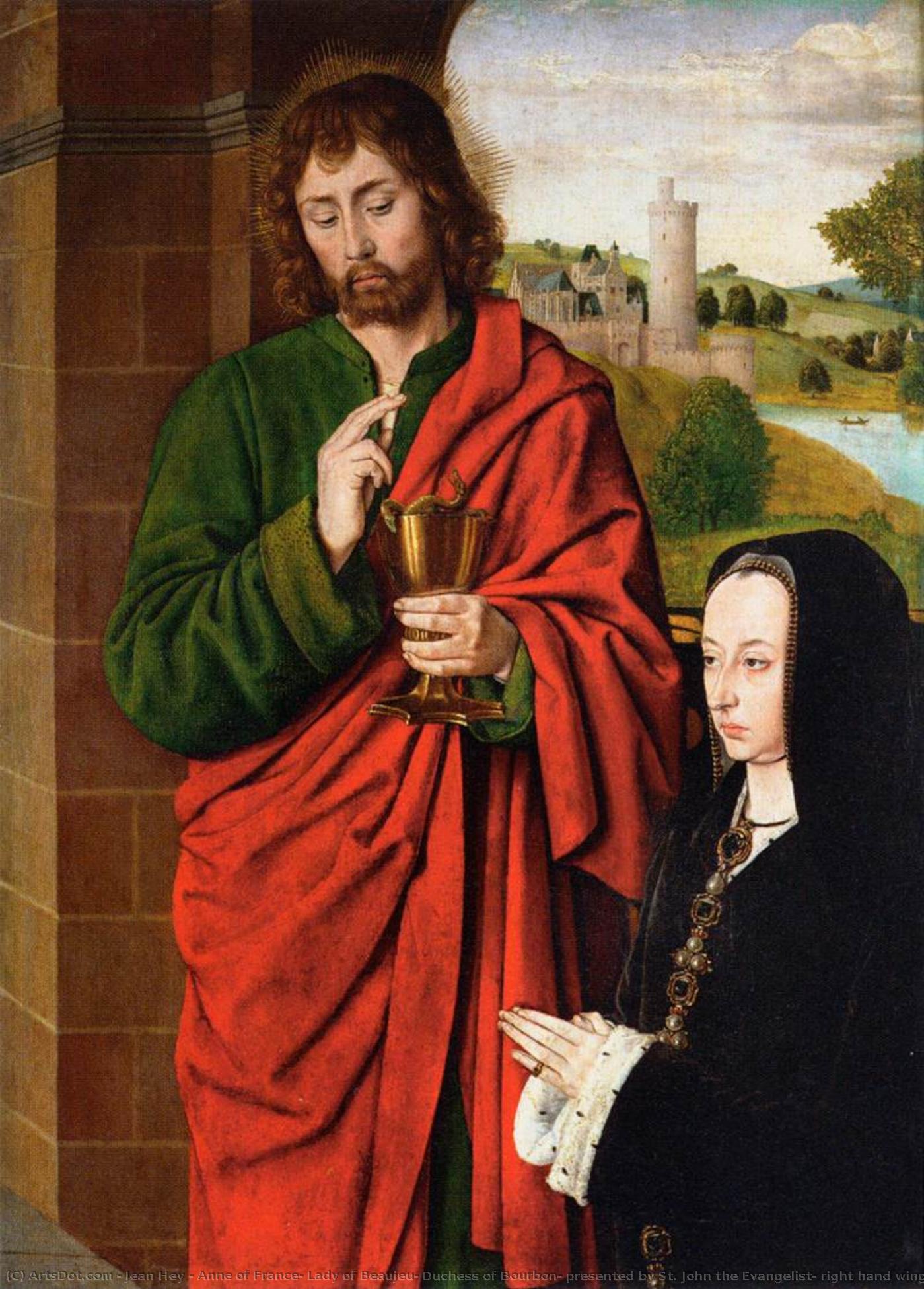
Anne of France, Lady of Beaujeu, Duchess of Bourbon, presented by St. John the Evangelist, right hand wing of a triptych
 Oil On Canvas
- WallArt
- Northern Renaissance
 1492
1492- Renaissance
 53.0 x 73.0 cm
 The Louvre
 Read More
Purchase a high-resolution, enhanced digital image, far superior to the online preview.
Each file is meticulously prepared by our in-house specialists using advanced tools and expert manual retouching. We ensure every image has exceptional clarity, precise color accuracy, and fine detail.
The final file is delivered via email within 72 hours, optimized for immediate use in professional, editorial, and print environments. This is the same quality trusted by top-tier design studios, publishers, and galleries.
Digital Image
Download a high-resolution file for personal display, printing, and creative projects. ( Buy Print Buy Hand Made Painting)
Included in Every Digital Image Order
Expert Digital Delivery, Guaranteed
When you choose ArtsDot.com, you're not just getting an image - you're receiving a professionally enhanced digital artwork, crafted with precision and backed by a satisfaction guarantee. Here's everything that comes with your order, automatically:

Fast Email Delivery
Your high-resolution digital image file will be emailed to you within 72 hours of ordering - ready for immediate use.

AI-Enhanced Digital File
Your artwork is professionally optimized using advanced AI tools and manual editing, ensuring maximum detail, clarity, and color accuracy.

Free Lifetime Re-Delivery
Accidentally deleted or lost your file? No worries - we'll resend it to you anytime, free of charge.

No Import Fees - Ever
Enjoy your artwork instantly with zero customs, duties, or delivery fees - digital downloads are always tax-free.

Color Accuracy Guarantee
We ensure your digital image reflects the original colors as closely as possible using professional tools and color management.

60-Day Satisfaction Guarantee
If you're not satisfied with your digital image, we'll revise it or refund 100% within 60 days - no questions asked.

100% Money-Back Guarantee
Not satisfied? Get a full refund within 60 days of receiving your digital file - no questions asked.

Bulk Order Discounts
Buy 3 images, save 10% - Buy 5, save 15% - Buy 10+, save 20%. Great for creative projects, galleries, and agencies.
Collectible Description
Jean Hey: The Master of Moulins and the Shadowy Figure of Early Renaissance France
Jean Hey (c. 1475 – c. 1505), a painter whose identity remained elusive for centuries, stands as one of the most intriguing enigmas of Early Netherlandish art. Primarily recognized through his monumental triptych housed in Moulins Cathedral—a masterpiece that continues to captivate scholars and viewers alike—Hey’s oeuvre comprises a handful of other paintings, predominantly portraits and devotional scenes, which offer glimpses into a prolific yet remarkably undocumented artistic career. Despite the considerable debate surrounding his authorship, Hey's distinctive style – characterized by subtle sfumato shading and meticulous attention to detail – firmly establishes him as a pivotal figure in shaping the visual landscape of Burgundy during the latter half of the fifteenth century. His work embodies the burgeoning humanist spirit of the time, reflecting an interest in naturalism alongside profound spiritual contemplation. Early Life and Artistic Training: The Puzzle Begins Information regarding Jean Hey’s birthdate and familial origins remains scarce, adding to the mystique surrounding his artistic development. While definitive biographical details are absent, speculation suggests he honed his skills under Hugo van der Goes, a towering figure of Early Netherlandish painting whose influence is palpable in Hey's stylistic choices—particularly the masterful use of atmospheric perspective and luminous color palettes. The precise circumstances of his formative years continue to fuel scholarly inquiry, highlighting the challenges inherent in reconstructing the lives of artists operating within complex social and intellectual contexts. The Moulins Triptych: A Beacon of Burgundian Artistry The centerpiece of Hey’s artistic legacy is undoubtedly the monumental triptych adorning Moulins Cathedral—a breathtaking achievement that exemplifies the zenith of Burgundian painting. Executed around 1492-93, this ambitious undertaking showcases Hey's unparalleled technical prowess and his profound understanding of visual storytelling. The central panel depicts Mary Magdalene kneeling before Christ’s tomb, bathed in ethereal light—a scene imbued with symbolic resonance reflecting themes of repentance, faith, and divine grace. Surrounding panels portray Saint John the Evangelist and Saint Peter, presenting a harmonious composition that underscores the importance of Christian piety within the Burgundian court. The triptych's innovative use of sfumato shading—a technique pioneered by van der Goes—creates an illusionistic depth that transports viewers into the sacred space depicted. A Painter’s Legacy: Style and Technique – Subtle Brilliance Hey’s artistic style is distinguished by its understated elegance and meticulous execution. Unlike many of his contemporaries who embraced bold color schemes and dramatic gestures, Hey favored a restrained palette dominated by muted hues—primarily ochre, umber, and ivory black—allowing for subtle tonal variations that heighten the emotional impact of his compositions. His masterful manipulation of sfumato shading—a technique perfected by Hugo van der Goes—produces velvety gradations of color that soften contours and imbue figures with an otherworldly luminescence. This meticulous attention to detail extends beyond mere pigment application; Hey’s canvases are characterized by painstaking preparatory drawings and a profound understanding of anatomical accuracy, reflecting the humanist ideals prevalent during his time. Symbolism and Emotional Resonance: Beyond Representation The Moulins Triptych transcends mere visual representation, serving as a conduit for spiritual contemplation and conveying complex symbolic meanings. The positioning of Mary Magdalene—kneeling in humility before Christ’s tomb—represents repentance and acceptance of divine forgiveness—a motif central to Christian theology. Saint John the Evangelist's serene gaze embodies wisdom and compassion, while Saint Peter’s posture conveys authority and steadfast faith. Through these carefully crafted gestures and expressions, Hey invites viewers to engage in a dialogue with religious iconography, prompting reflection on themes of mortality, redemption, and divine love. The overall effect is one of profound solemnity and spiritual beauty—a testament to Hey's ability to capture the essence of human experience within the framework of Christian symbolism. Concluding Reflections: An Artist Lost to Time Despite extensive scholarly investigation, Jean Hey’s identity remains shrouded in mystery—a poignant reminder of the challenges faced by historians attempting to reconstruct the lives of artists operating at the cusp of artistic innovation. His elusive biographical details underscore the importance of stylistic analysis and iconographic interpretation as tools for unlocking the secrets of his oeuvre. Yet, beyond factual uncertainties, Hey's enduring legacy rests upon his unparalleled contribution to Early Netherlandish painting—a contribution that continues to inspire admiration and scholarly debate centuries after his death. He remains a shadowy figure—a testament to the ephemeral nature of artistic genius and the enduring fascination with uncovering the stories behind the masterpieces.Related Artworks
Artist Biography
The Enigmatic Shadow of the Bourbon Court
In the twilight of the fifteenth century, amidst the opulent courts of France and Burgundy, there emerged a painter whose name would become synonymous with a profound, quiet mastery. Jean Hey, often whispered in art historical circles as the Master of Moulins, remains one of the most captivating enigmas of the Early Netherlandish period. While the biographical details of his life are shrouded in the mists of time—with only scant records suggesting he may have been active around 1475 and perhaps spent his final years in Paris—his brushwork speaks with an unmistakable and enduring voice. His identity, once a puzzle of fragmented documentation, now stands as a testament to a period where artistic brilliance often transcended the need for personal fame.
The origins of Hey’s talent are steeped in scholarly speculation, fueling a narrative of cross-cultural influence that defines his very essence. Many historians believe his stylistic foundations were laid under the tutelage of Hugo van der Goes, the titan of Flemish Primitivism. This connection is evident in the way Hey breathes life into his subjects through a meticulous attention to detail and a sophisticated use of light. His work represents a sublime intersection of Northern Renaissance realism and a burgeoning French elegance, creating a visual language that is both structurally rigorous and emotionally tender.
A Masterpiece of Devotion: The Moulins Triptych
The pinnacle of Jean Hey’s career, and perhaps the most significant achievement of his entire oeuvre, is the monumental Moulins Triptych housed in the Moulins Cathedral. Completed around 1494-1495, this work serves as a breathtaking window into the spiritual and political heart of the Bourbon court. The central panel, depicting the Madonna and Child adored by celestial angels, radiates a serene divinity that anchors the entire composition. However, it is the flanking wings that truly ground the divine in the earthly realm, presenting poignant portraits of the era's nobility.
Through these panels, Hey captures the essence of Burgundian prestige with unparalleled skill:
- Peter II, Duke of Bourbon: Presented by Saint Peter, this portrait showcases the artist's ability to render heavy fabrics and the solemn dignity of high office.
- Anne de Beaujeu, Duchess of Bourbon: A masterpiece of Early Renaissance elegance, where subtle sfumato shading captures the delicate features and aristocratic grace of one of France's most powerful women.
- The Presence of Suzanne: The inclusion of the Duke’s daughter adds a layer of familial intimacy to the grand religious narrative, showcasing Hey's talent for humanizing the divine.
Legacy of Light and Detail
Beyond the grand scale of his triptychs, Jean Hey’s smaller works—ranging from intimate portraits to profound biblical scenes—reveal a painter obsessed with the interplay of light and texture. In works such as The Annunciation and Meeting at the Golden Gate, one observes a dramatic use of lighting that predates many later Renaissance developments, lending a sense of theatricality to sacred moments. His ability to render the tactile quality of velvet, the cold sheen of armor, and the soft glow of skin remains a hallmark of his technical prowess.
The historical significance of Jean Hey lies not just in the beauty of his surviving panels, but in his role as a bridge between traditions. He took the meticulous, almost scientific realism of the Netherlandish masters and infused it with a lyrical, French sensibility. Though his life was brief and much of his biography remains lost to history, his legacy is preserved in every meticulously painted fold of drapery and every soulful gaze captured on panel. He remains a pivotal figure whose work continues to illuminate the transition from the medieval spirit to the dawn of the modern era.
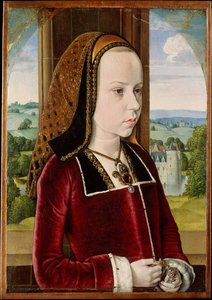
Jean Hey
1475 - 1505 , United Kingdom
Quick Facts
- Artistic Movement Or Style: Early Netherlandish
- Artists Or Movements Influenced By This Artist: ['Bourbon Court']
- Artists Who Influenced This Artist: ['Hugo van der Goes']
- Date Of Death: c. 1505
- Full Name: Jean Hey
- Nationality: Dutch
- Notable Artworks:
- The Annunciation
- Portrait of Charles II of Bourbon
- Meeting at the Golden Gate
- Moulins Triptych
- Place Of Birth: United Kingdom

