

 Preview
 Send
Send Share
Share
 Details

 Download
 Similars
 X-Ray
X-Ray Diaporama
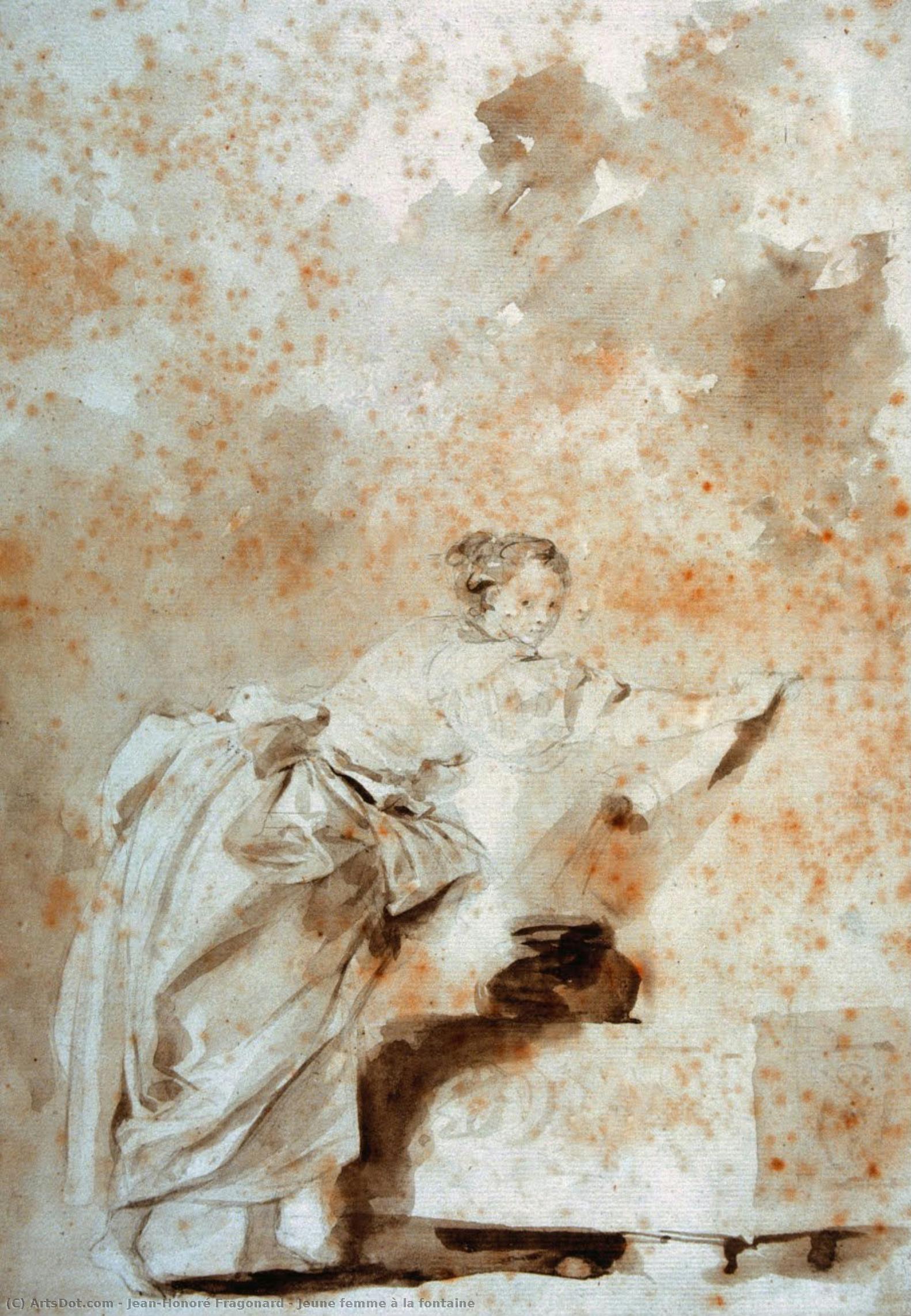
Jeune femme à la fontaine


 Read More
Purchase a high-resolution, enhanced digital image, far superior to the online preview.
Each file is meticulously prepared by our in-house specialists using advanced tools and expert manual retouching. We ensure every image has exceptional clarity, precise color accuracy, and fine detail.
The final file is delivered via email within 72 hours, optimized for immediate use in professional, editorial, and print environments. This is the same quality trusted by top-tier design studios, publishers, and galleries.
Digital Image
Download a high-resolution file for personal display, printing, and creative projects. ( Buy Print Buy Hand Made Painting)
Included in Every Digital Image Order
Expert Digital Delivery, Guaranteed
When you choose ArtsDot.com, you're not just getting an image - you're receiving a professionally enhanced digital artwork, crafted with precision and backed by a satisfaction guarantee. Here's everything that comes with your order, automatically:

Fast Email Delivery
Your high-resolution digital image file will be emailed to you within 72 hours of ordering - ready for immediate use.

AI-Enhanced Digital File
Your artwork is professionally optimized using advanced AI tools and manual editing, ensuring maximum detail, clarity, and color accuracy.

Free Lifetime Re-Delivery
Accidentally deleted or lost your file? No worries - we'll resend it to you anytime, free of charge.

No Import Fees - Ever
Enjoy your artwork instantly with zero customs, duties, or delivery fees - digital downloads are always tax-free.

Color Accuracy Guarantee
We ensure your digital image reflects the original colors as closely as possible using professional tools and color management.

60-Day Satisfaction Guarantee
If you're not satisfied with your digital image, we'll revise it or refund 100% within 60 days - no questions asked.

100% Money-Back Guarantee
Not satisfied? Get a full refund within 60 days of receiving your digital file - no questions asked.

Bulk Order Discounts
Buy 3 images, save 10% - Buy 5, save 15% - Buy 10+, save 20%. Great for creative projects, galleries, and agencies.
A Moment of Grace: Jean-Honoré Fragonard’s *Jeune femme à la fontaine*
Jean-Honoré Fragonard's Jeune femme à la fontaine (Young Woman at the Fountain) is a captivating tableau of youthful beauty and leisurely contemplation, a quintessential example of the Rococo style that flourished in late 18th-century France. Painted around 1769, this work offers a glimpse into a world of aristocratic leisure, where art served as both decoration and a reflection of refined sensibilities. The scene unfolds with an almost dreamlike quality, inviting the viewer to step into the moment captured by Fragonard’s masterful brushwork.
- Subject Matter: The painting depicts a young woman, likely a member of the French aristocracy, standing before a decorative fountain. Her pose is relaxed yet elegant, her hands resting on her hips suggesting both confidence and vulnerability.
- Setting: The backdrop is a classically inspired brick wall, providing a grounding element to the otherwise fantastical scene. Above, a cloudy sky hints at an approaching storm, adding a subtle layer of drama and perhaps foreshadowing a change in fortune – a common motif in Rococo art.
- Color Palette: Fragonard’s use of color is remarkably vibrant, employing rich blues, pinks, and greens to create a luminous effect. These colors were characteristic of the period, reflecting a preference for pastel shades and shimmering tones that evoked feelings of luxury and delight.
The Rococo Spirit: Style and Technique
Fragonard’s style is deeply rooted in the principles of Rococo art – characterized by its emphasis on grace, elegance, and playful subject matter. Unlike the more serious and dramatic works of the Neoclassical movement, which was gaining prominence at the time, Fragonard embraced a lighter, more sensual approach. His brushwork is loose and fluid, creating an impressionistic effect that emphasizes the textures of fabric and skin. The composition itself is asymmetrical, contributing to the painting’s dynamic energy and sense of movement. Note the delicate rendering of the woman's dress, achieved through layering of translucent glazes – a hallmark of Fragonard’s technique.
- Composition: The diagonal placement of the fountain and the woman’s body creates a sense of visual flow, drawing the viewer’s eye across the canvas.
- Brushwork: Loose, expressive strokes contribute to the painting's airy and luminous quality.
- Color Theory: Fragonard expertly utilizes color contrast and complementary hues to heighten the emotional impact of the scene.
Symbolism and Context
Jeune femme à la fontaine reflects the broader cultural context of the late 18th century, a period marked by aristocratic excess and a fascination with pleasure. The fountain itself can be interpreted as a symbol of fertility and abundance – themes frequently explored in Rococo art. The woman’s pose suggests a moment of private contemplation, perhaps a stolen respite from social obligations. It's important to remember that Fragonard was working during a time when portraiture was often commissioned by the wealthy elite, and this painting likely served as a decorative element within a grand salon or private residence.
This artwork offers a poignant glimpse into the world of 18th-century France, showcasing Fragonard’s mastery of light, color, and composition. Its enduring appeal lies in its ability to evoke a sense of timeless beauty and quiet grace – qualities that continue to resonate with art lovers today.Emotional Impact & Reproduction
The painting's serene yet subtly charged atmosphere invites contemplation and evokes feelings of nostalgia and tranquility. The delicate rendering of the young woman’s features, combined with the idyllic setting, creates a sense of idealized beauty. ArtsDot offers meticulously crafted hand-painted reproductions of *Jeune femme à la fontaine*, allowing you to bring this iconic masterpiece into your own space. Our skilled artisans employ traditional techniques and archival quality materials to ensure that each reproduction faithfully captures the original’s vibrancy and detail, providing a stunning addition to any collection or interior design scheme.
Related Artworks
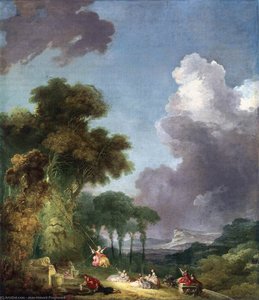

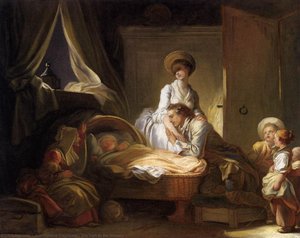
Artist Biography
A Life Bathed in Light: The World of Jean-Honoré Fragonard
Born amidst the fragrant fields of Grasse, France, in 1732, Jean-Honoré Fragonard’s artistic journey began not with grand ambition but a quiet relocation to Paris with his family. It was there, under the initial guidance of Jean Siméon Chardin – a master of everyday life and subtle observation – that young Fragonard first encountered the possibilities of paint and canvas. However, it was within the atelier of François Boucher, the celebrated painter to the court of Louis XV, that his true stylistic foundations were laid. Boucher’s influence instilled in Fragonard a love for graceful forms, delicate colors, and the playful spirit that would come to define his oeuvre. Winning the prestigious Prix de Rome in 1752 marked a pivotal moment, affording him the opportunity to immerse himself in the classical world of Italy for several years. This period wasn’t merely about copying ancient masters; it was an awakening – a chance to absorb the vibrancy and sensuality that would later infuse his own unique vision.The Rococo Master: A Celebration of Pleasure and Intrigue
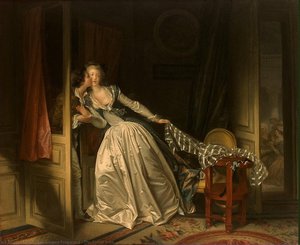
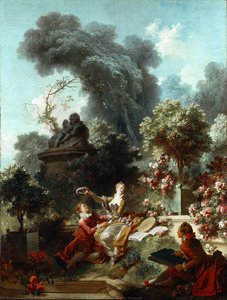
Upon returning to Paris, Fragonard swiftly established himself as a leading figure in the burgeoning Rococo movement. This wasn’t simply about adopting a style; it was about embodying an entire worldview – one that celebrated pleasure, intimacy, and the fleeting beauty of life. His paintings weren't intended for grand public display but rather for the private salons of aristocrats seeking works that whispered secrets and hinted at hidden desires. The Swing, perhaps his most iconic creation, perfectly encapsulates this spirit. A young woman playfully kicks off her shoe as a bishop pushes her swing, while a hidden lover gazes up from below – it’s a scene brimming with mischievous energy and veiled eroticism. Other works like The Bolt and Love Vow continue this exploration of clandestine encounters and the delicate dance between attraction and restraint. Fragonard didn't merely depict scenes of love; he created an atmosphere, a mood – one that was both alluring and slightly dangerous. His brushwork became increasingly fluid and spontaneous, capturing not just appearances but also the very essence of fleeting moments.Beyond the Salon: Experimentation and Evolving Styles
While Fragonard achieved considerable success within the established art world, he wasn’t one to remain confined by its conventions. He experimented with different genres and techniques throughout his career, demonstrating a remarkable versatility. His early attempts at history painting, though initially praised, didn't fully satisfy him; he found greater freedom in exploring more intimate and personal subjects. A brief flirtation with Neoclassicism – evident in portraits like that of Denis Diderot – showcased his willingness to engage with contemporary artistic trends, but it was the Rococo sensibility that ultimately defined his legacy. He also excelled as a draftsman, producing countless sketches and drawings that reveal his masterful command of line and form. These weren’t merely preparatory studies; they were often works of art in their own right, capturing fleeting impressions and intimate moments with remarkable sensitivity.A Legacy Enduring Through Time
The French Revolution brought a dramatic shift in artistic tastes, and Fragonard's lighthearted, aristocratic style fell out of favor. He retreated to his hometown of Grasse for a time, returning to Paris only after the political turmoil subsided. Though he held administrative positions at the Louvre during this period, his creative output diminished. However, his influence continued to resonate through subsequent generations of artists. His emphasis on color, light, and sensuality paved the way for Impressionism, while his playful spirit and rejection of academic constraints inspired a more liberated approach to artmaking. Today, Fragonard’s works are celebrated in museums around the world – from the Louvre in Paris to the National Gallery of Art in Washington D.C. His paintings continue to captivate audiences with their beauty, wit, and enduring appeal, reminding us of a time when life was meant to be savored, and pleasure was considered an art form itself.Notable Works & Collections
- The Swing (L'Escarpolette): Wallace Collection, London – A quintessential example of Rococo exuberance.
- The Bolt: View on ArtsDot - A captivating scene of domestic intrigue and playful tension.
- Love Vow: Discover more about Fragonard’s works on ArtsDot – A tender depiction of romantic commitment.
- Young Girl Reading: Featured in artworks databases, showcasing his mastery of portraiture and light.
- Works are also prominently displayed at the Musée du Louvre, Grasse Cathedral, The Metropolitan Museum of Art, and The Frick Collection.
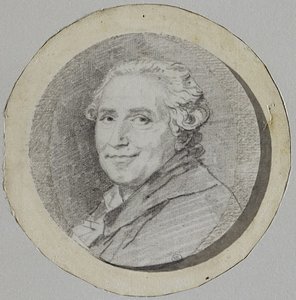
Jean-Honoré Fragonard
1732 - 1806 , France
Quick Facts
- Artistic Movement Or Style: Rococo
- Artists Or Movements Influenced By This Artist: Subsequent art movements
- Artists Who Influenced This Artist:
- François Boucher
- Charles-André van Loo
- Date Of Birth: April 4, 1732
- Date Of Death: August 22, 1806
- Full Name: Jean-Honoré Fragonard
- Nationality: French
- Notable Artworks:
- The Swing
- The Bolt
- Love Vow
- Young Girl Reading
- Place Of Birth: Grasse, France

