 Preview
 Send
Send Share
Share
 Details

 Download
 Similars
 X-Ray
X-Ray Diaporama
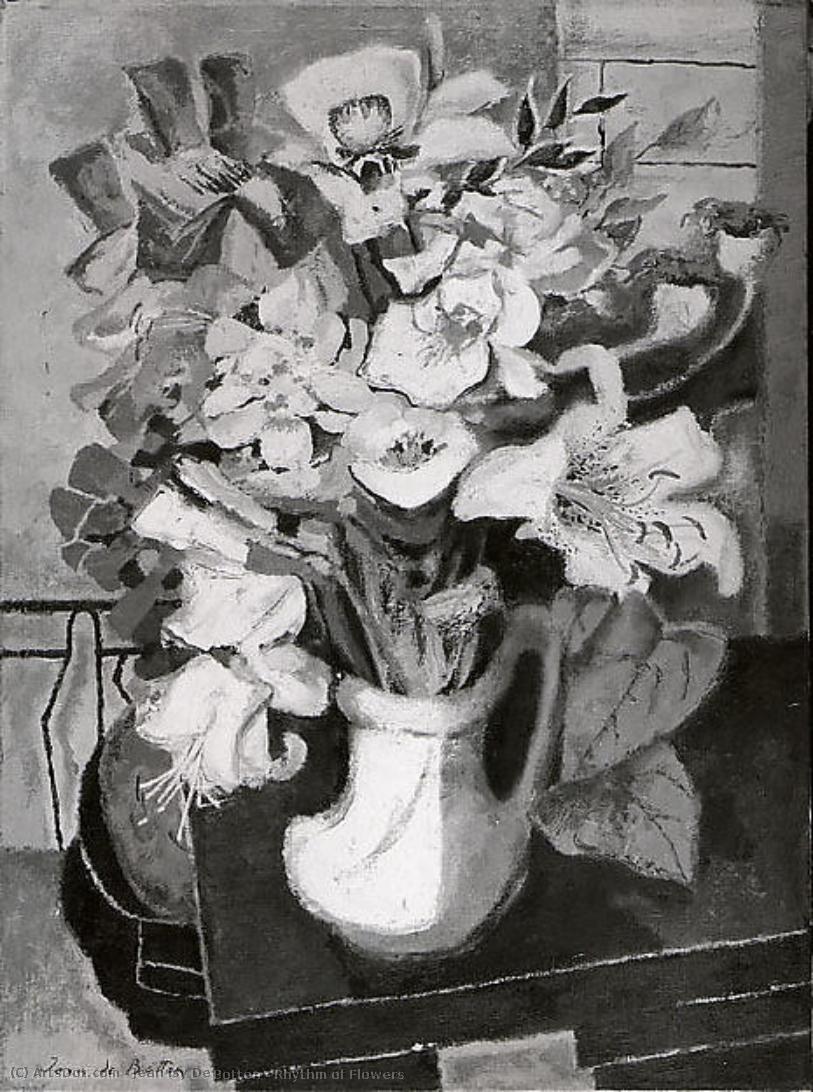
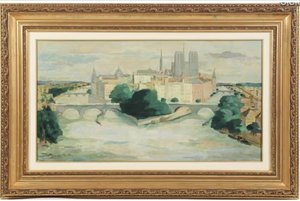
Rhythm of Flowers
 1963
1963 84.0 x 61.0 cm
 Read More
Hand Made Oil Reproduction
Hand-painted oil on canvas in your size and frame, made to order by our artists. ( Buy Print Buy Image)




































Pick from our preset sizes that match the artwork's original proportions.

You may enter your own dimensions to fit a specific frame or space. If your selected size does not match the original image's proportions, we will either crop the artwork or extend the painting with additional hand-painted elements. A digital mockup will be sent for your approval before production begins.
Please note that the on-screen preview does not reflect the actual cropping or extension. Only the mockup will accurately show the final composition.
While custom sizes are available, we recommend selecting a dimension from the predefined list to preserve the original proportions.
After order, ArtsDot.com team will email client for instructions and provide a mockup preview
Worldwide Delivery () in 3/4 weeks instead of standard 5 weeks. (24 August). No compromise on quality.

Free Worldwide Express Shipping

High-Quality Linen Canvas

Full Shipping Insurance

Customs Tax Refund Guarantee

True Color Matching Guarantee

60-Day Return Policy (Defects Only)

100% Money-Back Guarantee

Bulk Discount Offer
 Glass option is only available in size under 110 CM

Rhythm of Flowers
Reproduction Medium
Reproduction Size
-


Total Price
$ 263
Related Artworks




Artist Biography
Jean Isy de Botton: A Symphony of Color and Historical Echoes
Born in Thessaloniki, Greece, in 1898, Jean Isy de Botton’s artistic journey was a testament to the transformative power of travel, observation, and a profound rejection of academic constraints. His early life, steeped in the multicultural atmosphere of a bustling port city, instilled within him an appreciation for diverse cultures and visual traditions – a foundation that would profoundly shape his distinctive style. His parents, hailing from Royan, France, initially envisioned a career in diplomacy for their son, but Jean’s passion lay firmly within the realm of art, leading him to pursue studies at the École des Beaux-Arts de Paris, where he honed his skills under the tutelage of renowned sculptors and painters like Antoine Bourdelle and Bernard Naudin. This rigorous training provided a solid technical base, yet it was de Botton’s relentless pursuit of personal expression that truly defined his artistic trajectory.
Early Influences and Artistic Evolution
De Botton's artistic development wasn't a linear progression; rather, it involved significant shifts in perspective. His initial work reflected the prevailing trends of the early 20th century – a vibrant engagement with “art vivant,” characterized by bold colors and dynamic compositions. However, a pivotal moment arrived in 1933 when he embarked on a transformative journey to Italy. This trip proved to be a watershed experience, profoundly altering his artistic philosophy. He became utterly captivated by the works of Giotto and Piero della Francesca, recognizing their mastery of color and form as a rejection of the dominant “chiaroscuro” technique that had long dominated Western painting. De Botton famously declared that “chiaroscuro killed painting,” articulating his desire to liberate art from the constraints of dark shadows and embrace the expressive potential of pure color. This realization led him to systematically dismantle much of his previous work, a radical act signifying a complete artistic rebirth.
The Reign of Color: Major Works and Techniques
Following this pivotal shift, de Botton embarked on a new period of intense creativity, characterized by what he termed “humanist abstraction.” His paintings became increasingly focused on capturing the essence of his subjects through color and form—a departure from traditional representational techniques. He developed a distinctive style marked by flattened perspectives, simplified shapes, and an almost obsessive attention to detail in rendering textures and surfaces. His murals, particularly "Rhythm of Flowers," exemplify this approach, employing a dazzling array of colors to evoke the energy and vitality of the natural world. His work for the coronation of King George VI showcased his ability to translate historical events into visually arresting compositions, blending meticulous detail with an expressive use of color. The scale of these commissions—including the monumental fresco depicting the coronation ceremony—demonstrated de Botton’s ambition and technical prowess.
Recognition and Legacy
De Botton's artistic reputation steadily grew throughout the 1930s and 40s, culminating in numerous solo exhibitions across Europe and North America. He gained recognition from prominent figures, including Ernest Hemingway, Charlie Chaplin, and members of the Roosevelt and Kennedy families, who collected his work. His paintings were exhibited at prestigious institutions such as the Metropolitan Museum of Art in New York, the Musée d’Orsay in Paris, and the Carnegie Institute in Pittsburgh. Despite facing challenges during World War II, including a period serving as a private in the Moroccan army, de Botton continued to produce significant works. He was appointed to various committees within the French art world, further solidifying his position as a leading figure. His legacy extends beyond his individual paintings; he played a crucial role in fostering cross-cultural exchange and promoting artistic innovation during a period of profound social and political upheaval.
A Lasting Impact on 20th-Century Art
Jean Isy de Botton’s contribution to the art world is significant not only for his distinctive style but also for his philosophical approach to painting. His rejection of chiaroscuro and his embrace of color as the primary means of expression influenced a generation of artists, paving the way for developments in abstract and non-objective painting. His work continues to be studied and admired for its vibrant energy, meticulous detail, and profound exploration of human experience. De Botton’s life and career stand as an inspiring example of artistic freedom, intellectual curiosity, and the transformative power of travel and cultural immersion.
jean isy de botton
1898 - 1978 , Greece
Quick Facts
- Artistic Movement Or Style: École de Paris, Art Deco, Abstract
- Artists Or Movements Influenced By This Artist:
- Naudin
- Bourdelle
- Artists Who Influenced This Artist:
- Piero della Francesca
- El Greco
- Date Of Birth: June 20, 1898
- Date Of Death: June 13, 1978
- Full Name: Jean Isy de Botton
- Nationality: French
- Notable Artworks:
- Rhythm of Flowers
- Monaco 1937
- Place Of Birth: Thessaloniki, Greece