 Send
Send Share
Share
 Details

 Download
 Similars
 Diaporama
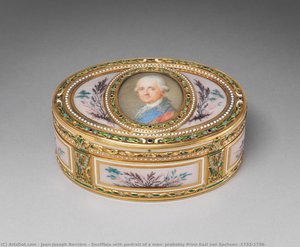
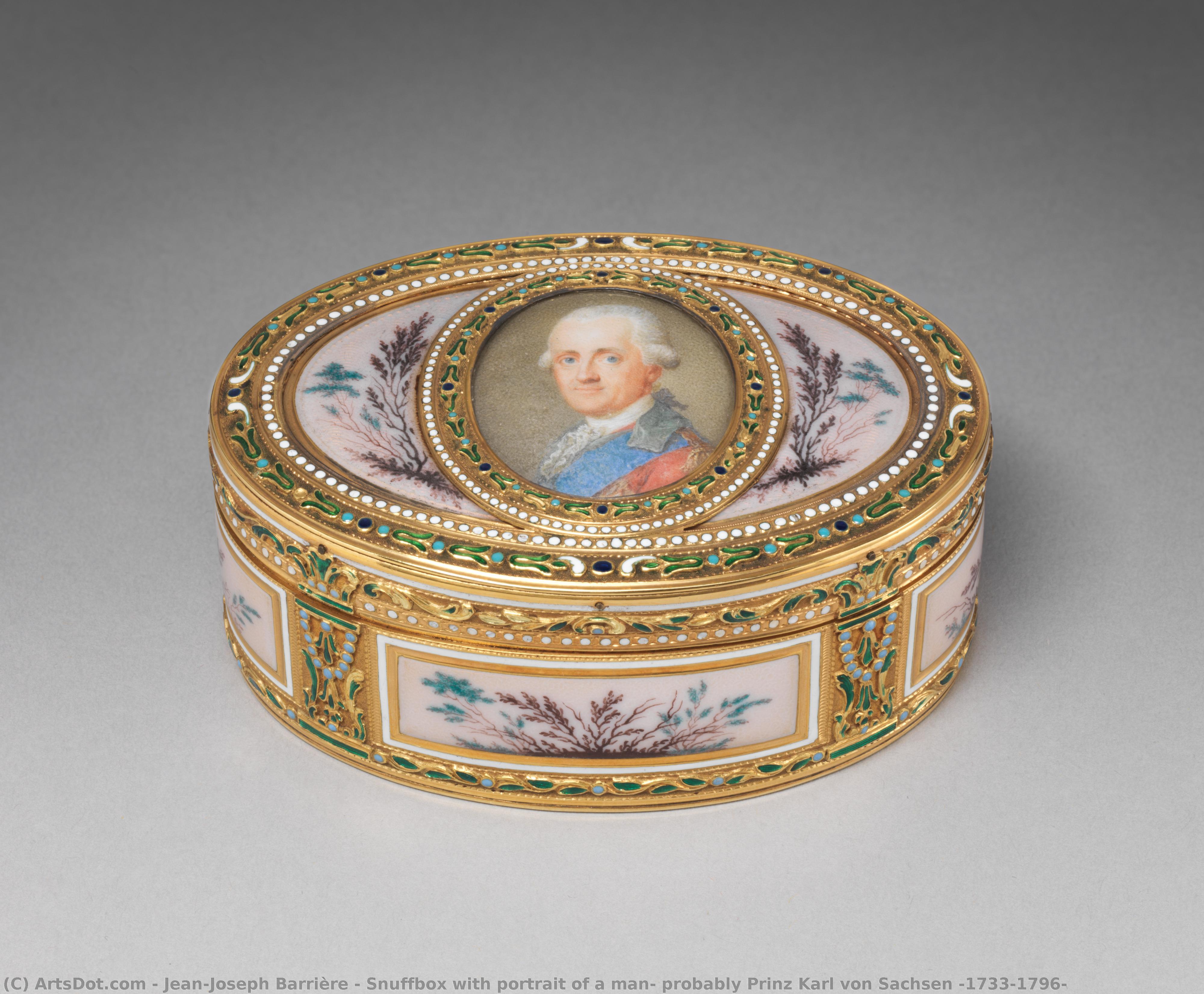
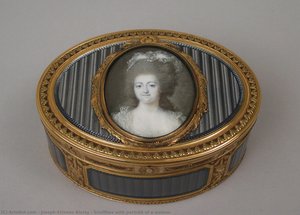
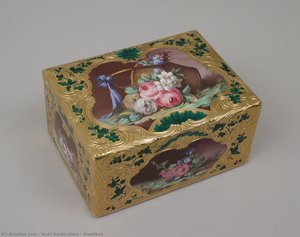
Snuffbox with portrait of a man, probably Prinz Karl von Sachsen (1733–1796)
 Enamel
- Decor
- Impressionistic Realism
 1778
1778 6.0 x 9.0 cm
 Metropolitan Museum of Art
 Read More
Giclée / Art Print
Museum-quality giclée or canvas print with fast production and flexible finish options. ( Buy Hand Made Painting Buy Image)




































Pick from our preset sizes that match the artwork's original proportions.

You may enter your own dimensions to fit a specific frame or space. If your selected size does not match the original image's proportions, we will either crop the artwork or extend the image with a mirrored or solid-fill edge. A digital mockup will be sent for your approval before production begins.
Please note that the on-screen preview does not reflect the actual cropping or extension. Only the mockup will accurately show the final composition.
While custom sizes are available, we recommend selecting a dimension from the predefined list to preserve the original proportions.
Worldwide Delivery () in 2 weeks instead of standard 4/5 weeks. (2 September)

Free Worldwide Express Shipping

High-Quality Linen Canvas

Full Shipping Insurance

Customs Tax Refund Guarantee

True Color Matching Guarantee

60-Day Return Policy (Defects Only)

100% Money-Back Guarantee

Bulk Discount Offer
 Glass option is only available in size under 110 CM

Snuffbox with portrait of a man, probably Prinz Karl von Sachsen (1733–1796)
Giclée / Art Print
Reproduction Size
-


Total Price
$ 63
Snuffbox with Portrait of a Man, Probably Prinz Karl von Sachsen (1733–1796) – A Jewel of Baroque Elegance
The snuffbox, a diminutive container for tobacco smoke, represents more than just practical function; it embodies the opulent tastes and social rituals of eighteenth-century Europe. Jean-Joseph Barrière’s exquisite piece—a gift from J. Pierpont Morgan in 1917—offers a captivating glimpse into this era's artistic sensibilities and aristocratic patronage. Crafted around 1778–79, it exemplifies the Baroque style’s penchant for intricate ornamentation and masterful craftsmanship, securing its place among the treasures of international museums like The Louvre and The Rijksmuseum.- Material & Technique: Constructed primarily from gold—a symbol of wealth and prestige—the snuffbox is adorned with enamel decoration, a technique perfected during this period. Delicate floral motifs intertwine across the surface, painstakingly applied by skilled artisans using powdered glass fused onto metal plates. Furthermore, an ivory tablet nestled within the box serves as a functional element and a testament to the meticulous attention to detail characteristic of Baroque artistry.
- Historical Context: Snuffing was a widespread habit among European elites—particularly in aristocratic circles—during the Enlightenment. The snuffbox functioned not merely as a receptacle for tobacco but also as a social marker, signifying status and demonstrating artistic refinement. Commissions from royal figures like Prinz Karl von Sachsen underscored the importance of decorative arts within the courtly sphere.
- Artist’s Influence: Anton Graff's miniature portrait—executed after a painting by Graff—captures the likeness of Prinz Karl von Sachsen, dressed in formal attire reflecting the fashions of his time. The artist skillfully rendered the subject’s features with precision and subtlety, conveying an aura of dignity and authority.
- Symbolism & Aesthetic Considerations: The oval form of the snuffbox echoes the contours of the portrait frame, creating a harmonious visual balance—a hallmark of Baroque design principles. The gold hue symbolizes royalty and divine grace, while the enamel colors contribute to the overall richness and vibrancy of the artwork.
A Masterpiece of Enamel Artistry
Barrière’s mastery lies in his ability to transform a simple metal container into an object of breathtaking beauty. The enamel technique—a process involving layering powdered glass onto metal surfaces—demands exceptional skill and patience, resulting in luminous colors and astonishing textural effects. The floral designs are rendered with meticulous detail, capturing the delicate nuances of natural forms. This dedication to craftsmanship speaks volumes about the artistic values prevalent during the Baroque period, where beauty was considered paramount.Beyond Decoration: Reflections on Status and Patronage
The snuffbox served as a tangible expression of social hierarchy—a gift from royalty or nobility signifying power and influence. Its presence at court gatherings underscored the importance of decorative arts in shaping cultural identity. Jean-Joseph Barrière’s work exemplifies this tradition, demonstrating how art could elevate status and convey profound symbolic meanings. The enduring fascination with this exquisite object testifies to its ability to transcend time—a testament to Baroque artistry's lasting legacy.Where to Find This Artwork
This remarkable snuffbox is currently housed at The Metropolitan Museum of Art in New York City (Object Number: 17.190.1128). Visitors can admire its beauty firsthand and delve deeper into the artistic context surrounding its creation. For those interested in exploring similar treasures from the Baroque era, a journey through art history with ArtsDot’s extensive collection offers an unparalleled opportunity to immerse oneself in the splendor of European decorative arts.Related Artworks
Artist Biography
early life and training
jean-joseph barrière, a french goldsmith and enameler, was born in paris in 1735. he became a master in 1763, marking the beginning of his illustrious career in the art world.artistic contributions
barrière's work is characterized by its high quality, earning him commissions from the french court and nobility. his expertise in enamel art led to the creation of exquisite pieces that are now held in many international collections and museums, including:- the louvre, paris, france
- the rijksmuseum, amsterdam, netherlands
- the metropolitan museum of art, new york city, usa
notable works and collections
while specific works by barrière are not widely documented, his contributions to the world of enamel art are undeniable. to explore more artworks from this period, visit a journey through art history with ArtsDot’s extensive collection, featuring a vast collection spanning from the 12th to the 20th century.legacy and influence
as a master goldsmith and enameler, barrière's work has influenced generations of artists. his legacy can be seen in the continued appreciation for enamel art, with many museums and collectors seeking out his pieces. discover more about the art world and its masters at ArtsDot:- discover the musée denys-puech (france) and its art collections
- explore the conceptual art of rero, a french artist born in paris
conclusion
jean-joseph barrière's remarkable career as a goldsmith and enameler has left an indelible mark on the world of art. his work, now part of many prestigious collections, continues to inspire artists and art enthusiasts alike.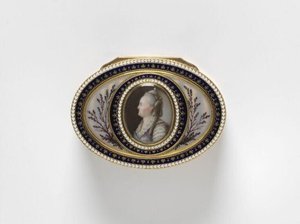
jean-joseph barrière
1735 - 1806 , France
Quick Facts
- Artistic Movement Or Style: Louis XV Style
- Date Of Birth: Paris, France (1735)
- Date Of Death: 1806
- Full Name: Jean-Joseph Barrière
- Nationality: French
- Notable Artworks: ['Snuffbox with portrait of a man']
- Place Of Birth: Paris
Related Articles

Cultivating Prestige: The Strategic Significance of Executive Desk Art as a High-Impact Recognition Gift
Discover the strategic power of executive desk art for impactful recognition gifting. Expert guidance on selecting luxury gifts that foster loyalty, strengthen relationships & elevate your brand. Learn more!

The Canvas of Connection: Quantifying the ROI of Art-Based Gifting on Corporate Relationships and Brand Equity
Discover how strategic art gifting boosts brand loyalty & ROI. Expert insights on personalized gifts, employee recognition, & building lasting corporate relationships. Learn more!

Beyond Corporate Gifts: Scaling Personalized Art Experiences for Enhanced Client Engagement and Brand Loyalty
Elevate client relationships with personalized art experiences. Discover bespoke gifts & expert consulting for lasting impact. Scale thoughtful appreciation & build brand loyalty – learn how!
The Symbolic Canvas: Leveraging Art as a Medium for Expressing Motivation, Inspiration, and Gratitude in Corporate Gifting
Elevate corporate relationships with thoughtful art gifts. Discover bespoke commissions, museum-quality reproductions & expert consultation for lasting impact. ArtsDot – fostering connection through symbolic expression.
Celebrating a Legacy: Famous Artwork Reproductions as Meaningful Retirement Gifts
Find the perfect retirement gift! Explore handmade oil painting reproductions & custom art at ArtsDot. Celebrate a lifetime of achievement with museum-quality artwork that reflects passions and creates lasting memories.