 Preview
 Send
Send Share
Share
 Details

 Download
 Similars
 X-Ray
X-Ray Diaporama
Dam on the Nile
 Oil On Canvas
- WallArt
- Academicism
 1878
1878- 19th Century
 29.0 x 35.0 cm
 Read More
Hand Made Oil Reproduction
Hand-painted oil on canvas in your size and frame, made to order by our artists. ( Buy Print Buy Image)




P118B $10

P118H $10

P118W $10

P438Z $10

P508JH $12

P508YH $12

P805H $10

P805Z $10

P919BZ $10

P919G $10

P919XJ $10

P959ZH $10

P968JZ $12

W106C $8

W218G $10

W218JH $8

W218Y $10

W307PJ $10

W316G $10

W316PJ $8

W316Y $10

W398PJ $8

W4111J $10

W500HY $15

W500JH $15

W692G $12

W849H $8

W940BG $15

W953PJ $8




Pick from our preset sizes that match the artwork's original proportions.

You may enter your own dimensions to fit a specific frame or space. If your selected size does not match the original image's proportions, we will either crop the artwork or extend the painting with additional hand-painted elements. A digital mockup will be sent for your approval before production begins.
Please note that the on-screen preview does not reflect the actual cropping or extension. Only the mockup will accurately show the final composition.
While custom sizes are available, we recommend selecting a dimension from the predefined list to preserve the original proportions.
After order, ArtsDot.com team will email client for instructions and provide a mockup preview
Worldwide Delivery () in 3/4 weeks instead of standard 5 weeks. (16 August). No compromise on quality.

Free Worldwide Express Shipping

High-Quality Linen Canvas

Full Shipping Insurance

Customs Tax Refund Guarantee

True Color Matching Guarantee

60-Day Return Policy (Defects Only)

100% Money-Back Guarantee

Bulk Discount Offer
 Glass option is only available in size under 110 CM

Dam on the Nile
Reproduction Medium
Reproduction Size
-


Total Price
$ 263
Artwork Description
A Journey Through the Sands: Capturing the Exotic Spirit of Jean-Léon Gérôme
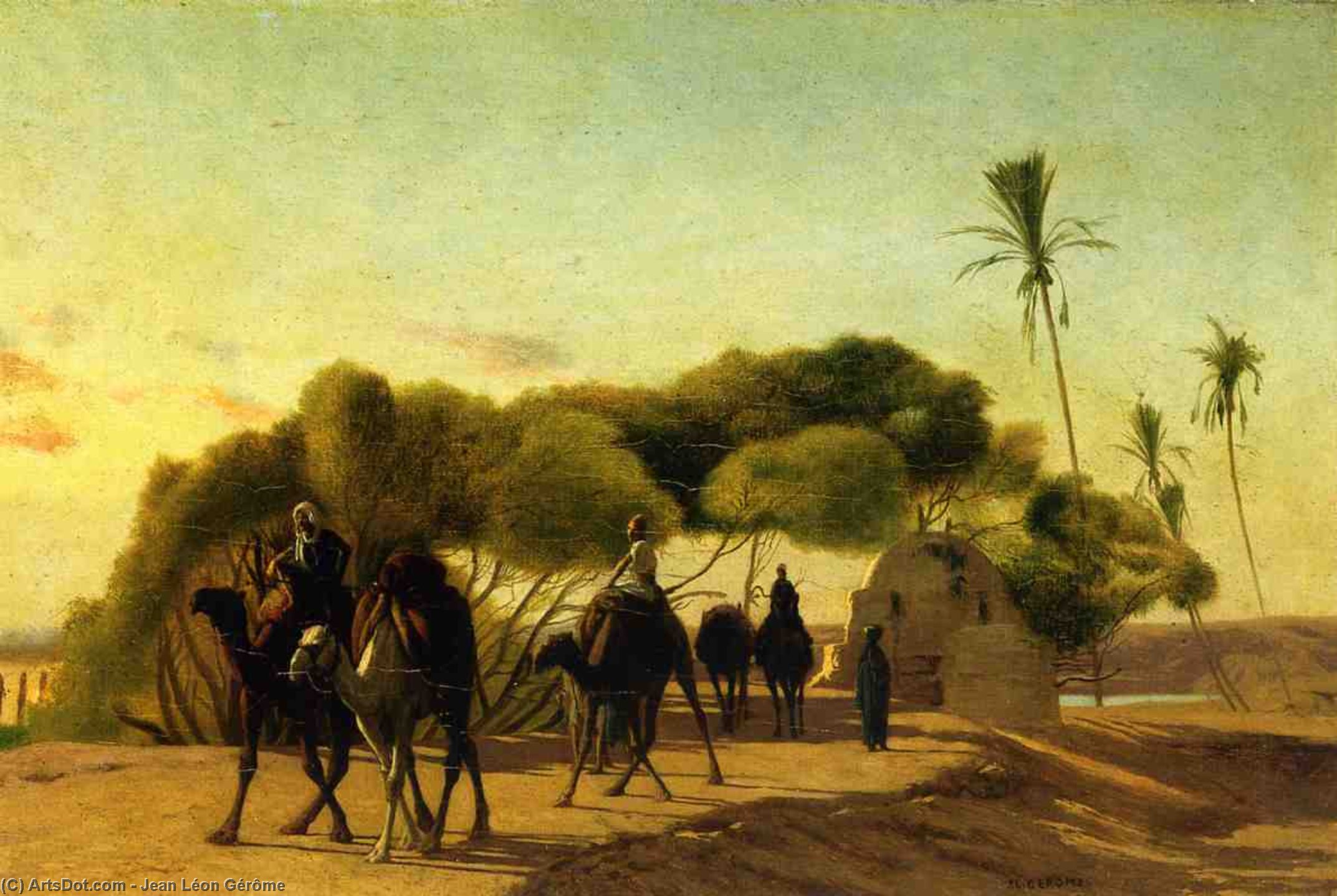
To gaze upon Jean-Léon Gérôme's "Dam on the Nile" is not merely to observe a painting; it is to step through a veil and find oneself immersed in the sun-drenched, storied landscapes of North Africa. Executed in 1878, this masterpiece embodies the height of Academicism while simultaneously whispering tales of adventure and cultural encounter. Gérôme, ever the master chronicler of exotic locales, transports us into a vibrant tableau where human activity intersects with the timeless grandeur of the desert. The composition itself is a carefully orchestrated narrative—a procession of life moving across arid earth under the watchful gaze of towering palm trees.
Mastery in Technique and Detail
Gérôme’s technical prowess is immediately apparent upon viewing this work. His handling of oil on canvas allows for an almost photographic level of realism, yet it remains imbued with a painterly richness that elevates it beyond mere documentation. Observe the interplay of light across the figures; the way the sunlight catches the saddle leather or illuminates the dust kicked up by hooves speaks to an obsessive attention to detail. The depiction of the riders on horseback, alongside the gentle presence of the donkey near the center, creates a dynamic sense of movement. It is this meticulous rendering—the texture of the canvas against the imagined grit of the desert floor—that makes reproductions of "Dam on the Nile" such coveted pieces for any discerning collector.
The Allure of the Orientalist Gaze
Historically, this painting sits within the rich tradition of Orientalism in art. Influenced profoundly by his travels through the Middle East and North Africa, Gérôme possessed an unparalleled ability to capture the perceived mystery and allure of these foreign lands for a European audience. While the subject matter speaks of exploration and passage—a journey perhaps toward a vital destination symbolized by the dam itself—the emotional resonance is one of romantic escapism. The scene suggests both the arduous nature of travel and the inherent joy found in shared human endeavor under an expansive sky.
Symbolism of Passage and Civilization
The elements within "Dam on the Nile" carry symbolic weight. The Nile itself, though perhaps unseen in its full breadth, represents lifeblood and continuity; the dam suggests human intervention—the harnessing of nature's power for civilization’s benefit. Meanwhile, the desert landscape symbolizes both challenge and vast potential. The group traversing this space embodies humanity's persistent spirit of journeying forward, guided by tradition (represented by the animals and modes of transport) yet propelled by an undeniable sense of adventure. Owning a reproduction allows one to bring this potent blend of culture, history, and enduring human movement into the intimate setting of a modern home.
Bringing History Home
For those seeking art that speaks volumes without uttering a word, "Dam on the Nile" offers profound depth. Whether adorning an elegant drawing-room or lending an exotic focal point to a study, this piece by Jean-Léon Gérôme serves as more than decoration; it is a conversation starter, a window into a bygone era of artistic fascination. The enduring quality of its narrative and the flawless execution of its technique ensure that reproductions remain timeless investments for art lovers and interior designers alike.
Related Artworks

Artist Biography
A Master of Narrative Detail: The Life and Art of Jean-Léon Gérôme
Jean-Léon Gérôme, a name synonymous with the academic painting of 19th-century France, was more than just a skilled technician; he was a storyteller who captivated audiences with meticulously rendered scenes brimming with drama and exotic allure. Born in Vesoul in 1824, his artistic journey began under the guidance of local artist Claude-Basile Cariage, laying the foundation for a career that would see him become arguably the most celebrated painter of his time. Moving to Paris at sixteen, he initially studied under Paul Delaroche, a master of historical painting, and later attended the École des Beaux-Arts, absorbing the principles of classical training. However, Gérôme quickly distinguished himself not through slavish imitation but through an innovative blend of meticulous realism and dramatic narrative—a combination that would define his unique style. His early success with *The Cock Fight* in 1847 catapulted him to fame, establishing him as a leading figure within the Neo-Grec movement, which sought to revive classical themes with a newfound attention to archaeological detail.From Historical Grandeur to Orientalist Visions
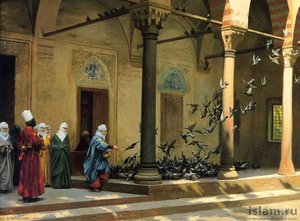
Gérôme’s artistic range was remarkably broad. He tackled historical subjects with an almost cinematic flair, imbuing them with a sense of immediacy and psychological depth. His large-scale mural commission, *The Age of Augustus, the Birth of Christ*, intended as a flattering allegory for Napoleon III, showcased his ability to handle complex compositions and grand narratives. Yet, it was perhaps in his Orientalist paintings that Gérôme truly captured the public imagination. Inspired by travels to Turkey, Egypt, and North Africa, he depicted scenes of harems, bustling marketplaces, and desert landscapes with an exoticism that both fascinated and, viewed through a modern lens, sometimes perpetuated problematic stereotypes. Paintings like *Harem Women Feeding Pigeons in a Courtyard* became immensely popular, offering European audiences a glimpse into a world perceived as mysterious and sensual. These works weren’t simply copies of what he saw; they were carefully constructed fantasies, blending observation with imagination to create compelling visual narratives. He wasn't merely documenting the Orient; he was *creating* it for Western consumption, a practice that would later draw criticism but undeniably contributed to his widespread appeal.A Pedagogue and Influential Teacher
Beyond his own artistic output, Gérôme exerted considerable influence as a teacher at the École des Beaux-Arts. His atelier became a breeding ground for future generations of artists, attracting students from across Europe and America. Among his most notable pupils were Thomas Eakins, John Singer Sargent, and Mary Cassatt—artists who would go on to forge their own distinct paths but whose foundations were undoubtedly shaped by Gérôme’s rigorous training and emphasis on technical skill. He instilled in them a dedication to draftsmanship, composition, and the importance of studying from life. While his conservative artistic views sometimes clashed with the emerging avant-garde movements, his impact on the development of American art, in particular, was profound. His students carried his principles back across the Atlantic, establishing their own ateliers and perpetuating the academic tradition.Legacy and Controversy: A Complex Artistic Inheritance
Jean-Léon Gérôme died in Paris in 1904, leaving behind a vast body of work that continues to provoke discussion and debate. While his technical mastery is undeniable, his artistic legacy remains complex. His meticulous realism, once celebrated as the pinnacle of academic achievement, came to be seen by some as stifling and overly concerned with surface appearances. The Orientalist paintings, while visually stunning, have been criticized for their exoticizing gaze and perpetuation of colonial stereotypes. However, it is crucial to understand Gérôme within his historical context. He was a product of his time, reflecting the prevailing attitudes and interests of 19th-century European society. His work offers valuable insights into the cultural anxieties and fantasies of that era, even as it challenges us to critically examine its underlying assumptions. Today, Gérôme’s paintings are admired not only for their technical brilliance but also for their ability to transport viewers to another time and place, inviting them to contemplate the complexities of history, culture, and representation.Key Moments in a Remarkable Career
- 1824: Born in Vesoul, France.
- 1840: Moves to Paris to study under Paul Delaroche.
- 1847: Achieves early recognition with *The Cock Fight* at the Paris Salon.
- 1852-1854: Receives commission for *The Age of Augustus, the Birth of Christ* and travels to Constantinople, Greece, and Turkey.
- Late Career: Transitions to sculpture, creating polychrome works inspired by classical antiquity.
- 1904: Dies in Paris, leaving behind a significant artistic legacy.
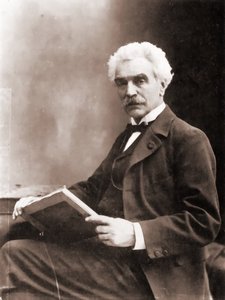
Jean-Léon Gérôme
1824 - 1904 , France
Quick Facts
- Artistic Movement Or Style: Academicism, Orientalism
- Artists Or Movements Influenced By This Artist:
- Thomas Eakins
- John Singer Sargent
- Mary Cassatt
- Artists Who Influenced This Artist: ['Paul Delaroche']
- Date Of Birth: May 11, 1824
- Date Of Death: January 10, 1904
- Full Name: Jean-Léon Gérôme
- Nationality: French
- Notable Artworks:
- The Cock Fight
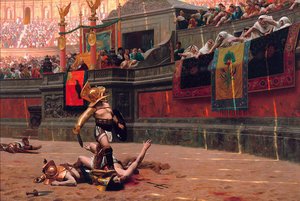
- Pollice Verso
- Snake Charmer
- Place Of Birth: Vesoul, France
Related Articles

Beyond the Horizon: 10 Landscape Masterpieces for Your Home Decor
Journey through 10 breathtaking landscape paintings by Monet, Van Gogh & more! Explore iconic artworks, artistic techniques & find inspiration for your home decor. Museum-quality reproductions at ArtsDot.com. Discover all masterpieces on ArtsDot.com

Evocations of Place: A Historical Journey Through Landscape Art
Explore the rich history of landscape art with ArtsDot. Discover renowned artists, movements like Impressionism & Romanticism, and expert guidance for collecting timeless pieces. Find your perfect serene escape today!

Romantic Landscapes: 10 Masterpieces for Your Home | ArtsDot
Journey through 10 Romantic landscape masterpieces by Friedrich, Turner & Cole. Explore emotional art, sublime nature scenes & iconic 19th-century paintings. Find museum-quality reproductions for your home at ArtsDot.com – discover the full collection online!

John Constable's Masterpieces: Explore 25 Iconic Landscapes for Your Home
Journey through John Constable's 25 most celebrated landscapes. Explore Romanticism, Dedham Vale & his masterful use of light in iconic paintings like 'Hay Wain'. Find museum-quality art reproductions and elevate your home decor on ArtsDot.com.
Evocations of Place: A Historical Journey Through Landscape Art
Explore the rich history of landscape art with ArtsDot. Discover renowned artists, movements like Impressionism & tonalism, and expert guidance for collecting timeless pieces. Find your perfect serene escape today!