

 Preview
 Send
Send Share
Share
 Details

 Download
 Similars
 X-Ray
X-Ray Diaporama
Scène de grève


 Read More
Purchase a high-resolution, enhanced digital image, far superior to the online preview.
Each file is meticulously prepared by our in-house specialists using advanced tools and expert manual retouching. We ensure every image has exceptional clarity, precise color accuracy, and fine detail.
The final file is delivered via email within 72 hours, optimized for immediate use in professional, editorial, and print environments. This is the same quality trusted by top-tier design studios, publishers, and galleries.
Digital Image
Download a high-resolution file for personal display, printing, and creative projects. ( Buy Print Buy Hand Made Painting)
Included in Every Digital Image Order
Expert Digital Delivery, Guaranteed
When you choose ArtsDot.com, you're not just getting an image - you're receiving a professionally enhanced digital artwork, crafted with precision and backed by a satisfaction guarantee. Here's everything that comes with your order, automatically:

Fast Email Delivery
Your high-resolution digital image file will be emailed to you within 72 hours of ordering - ready for immediate use.

AI-Enhanced Digital File
Your artwork is professionally optimized using advanced AI tools and manual editing, ensuring maximum detail, clarity, and color accuracy.

Free Lifetime Re-Delivery
Accidentally deleted or lost your file? No worries - we'll resend it to you anytime, free of charge.

No Import Fees - Ever
Enjoy your artwork instantly with zero customs, duties, or delivery fees - digital downloads are always tax-free.

Color Accuracy Guarantee
We ensure your digital image reflects the original colors as closely as possible using professional tools and color management.

60-Day Satisfaction Guarantee
If you're not satisfied with your digital image, we'll revise it or refund 100% within 60 days - no questions asked.

100% Money-Back Guarantee
Not satisfied? Get a full refund within 60 days of receiving your digital file - no questions asked.

Bulk Order Discounts
Buy 3 images, save 10% - Buy 5, save 15% - Buy 10+, save 20%. Great for creative projects, galleries, and agencies.
Collectible Description
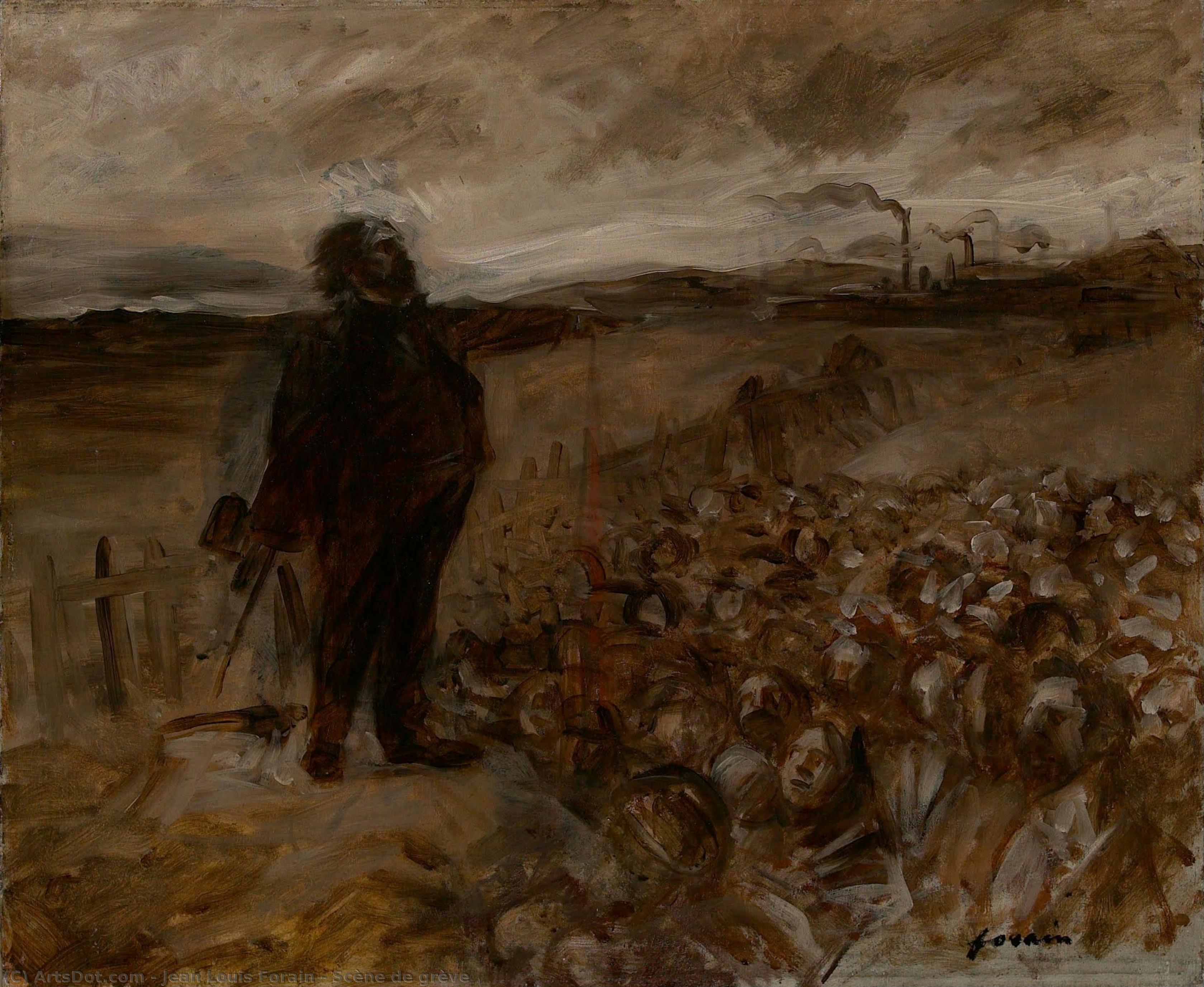
Jean Louis Forain’s ‘Scène de Grève’: A Symphony of Despair
The artwork “Scène de Grève” by Jean Louis Forain, completed in 1897, stands as a visceral testament to the horrors inflicted upon humanity during wartime. More than just a depiction of destruction—though undeniably that—it’s an emotionally charged Expressionist masterpiece imbued with social realism and layered with meticulous artistic technique. Examining its composition, stylistic choices, and historical significance unveils a profound meditation on suffering and resilience.Composition and Perspective: Flattened Chaos
Forain masterfully employs a flattened perspective to amplify the sense of claustrophobia inherent in the scene. The canvas is divided into two dominant zones: a solitary figure positioned centrally in the foreground and a sprawling mass of bodies dominating the background. This deliberate arrangement underscores the isolation experienced by individuals confronting overwhelming adversity while simultaneously conveying the sheer scale of devastation. Lines are rough, gestural, and predominantly horizontal, mirroring the relentless march of destruction and contributing to an atmosphere of palpable unease. The artist’s eye captures not idealized beauty but brutal reality—a stark contrast that powerfully communicates the emotional core of his vision.Technique: Oil Paint Layers and Textured Surface
The painting is executed in oil paints on canvas, utilizing a technique characterized by extensive layering and impasto – applying paint thickly onto the surface to build up texture. Visible brushstrokes dominate the composition, creating a palpable sense of immediacy and conveying the raw emotion of the subject matter. Forain’s masterful manipulation of pigment allows him to capture subtle variations in light and shadow, enhancing the dramatic impact of the scene. The muted color palette—primarily browns, grays, and ochres—further reinforces the pervasive gloom and underscores the bleakness of the depicted landscape. This textural richness isn't merely decorative; it serves as a conduit for conveying psychological depth and mirroring the physical wounds inflicted upon those caught in the crucible of conflict.Historical Context: The Shadow of Industrialization
“Scène de Grève” emerged during a period marked by significant social upheaval—the late 1890s witnessed escalating tensions between labor movements and industrialists across Europe. Forain’s depiction reflects this turbulent climate, capturing the aftermath of a siege – likely referencing the Siege of Paris in 1870-71 – where the Franco-Prussian War left scars on the Parisian landscape and psyche. The inclusion of distant factory chimneys subtly underscores the role of industrialization in exacerbating societal vulnerabilities and contributing to the overall devastation portrayed. Forain’s work serves as a poignant commentary on the human cost of progress and challenges viewers to confront uncomfortable truths about power dynamics and social responsibility.Symbolism: Figures of Suffering and Resilience
The numerous bodies strewn across the canvas symbolize not merely physical injury but profound psychological trauma—the inescapable burden of loss and despair. The solitary figure, gazing upon the carnage with solemn contemplation, embodies resilience amidst overwhelming sorrow. His surveying tool symbolizes an attempt to assess the damage inflicted upon the world – a futile gesture against the inexorable forces of destruction. Forain’s deliberate use of symbolism elevates “Scène de Grève” beyond mere visual representation; it compels viewers to grapple with existential questions about mortality and the enduring human spirit.Emotional Impact: A Profound Lament
Ultimately, “Scène de Grève” resonates deeply with its audience through its unflinching portrayal of suffering and its masterful conveyance of emotional intensity. Forain’s artistic vision transcends stylistic conventions; it communicates a visceral experience—a lament for lost innocence and a recognition of the inescapable realities of human existence. The painting's enduring power lies in its ability to provoke contemplation on themes of vulnerability, resilience, and the transformative capacity of art to confront uncomfortable truths and inspire empathy. It remains an unforgettable masterpiece – a haunting reminder of the devastating consequences of conflict and the unwavering spirit of humanity.Related Artworks

Artist Biography
Early Life and Artistic Beginnings
- Born: Reims, France (1852)
- Died: 1931
- Jean Louis Forain's artistic journey began in Reims, France, on October 23, 1852. His family relocated to Paris when he was eight years old, a pivotal move that shaped his future career.
- His father, an ornamental sign painter, provided initial support and exposure to art.
- Forain started as a caricaturist, contributing satirical drawings to Parisian journals like Le Monde Parisien and Le Rire Satirique. This honed his observational skills and wit.
- Formal training followed at the École des Beaux Arts under Jean-Léon Gérôme and Jean-Baptiste Carpeaux.
Impressionist Influences and Artistic Development
- Forain became involved with the Impressionist movement, participating in several exhibitions between 1879 and 1884.
- He was influenced by core Impressionist principles: capturing fleeting moments, light effects, and scenes from everyday life.
- Unlike some contemporaries focused on landscapes, Forain centered his work on Parisian popular entertainments – bustling cafés, racetracks, ballet.
- His style developed with loose brushwork, bold colors, and a keen eye for urban atmosphere.
Notable Works and Artistic Style
- Forain worked in oils, watercolors, pastels, etchings, and lithographs.
- "On the Verses of Verlaine, A Rogue Takes a Stroll in the Country," exemplifies his ability to capture French life with detail.
- His watercolors are celebrated for vibrant colors and atmosphere.
- Forain’s style blended caricature and Impressionism, creating humorous and insightful works.
- He was skilled at portraying human figures, often exaggerating features for memorable characters.
- His depictions of Parisian nightlife, opera audiences, and racegoers offer a window into late 19th-century French society.
Later Life and Legacy
- During World War I, Forain contributed patriotic illustrations. He even enlisted in the camouflage section.
- In his later years, he depicted scenes of law courts and Parisian institutions.
- He was elected a member of the Royal Academy of Arts in London.
- Jean-Louis Forain passed away on July 11, 1931, leaving behind a significant body of work admired for its wit, observation, and portrayal of Parisian life.
Collections and Further Exploration
- Musée Maurice Denis (France)
- Musée National Jean-Jacques Henner (Paris, France)
- Explore more artworks: Jean Louis Forain | 121 Artworks
- Order paintings reproductions: Order Paintings Reproductions of Jean Louis Forain
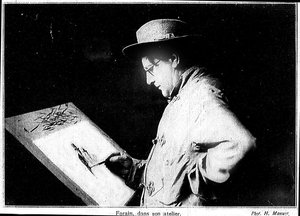
Jean Louis Forain
1852 - 1931 , France
Quick Facts
- Artistic Movement Or Style: Impressionism
- Artists Or Movements Influenced By This Artist: ['Henri de Toulouse-Lautrec']
- Artists Who Influenced This Artist:
- Jean-Léon Gérôme
- Jean-Baptiste Carpeaux
- Edgar Degas
- Honoré Daumier
- Date Of Birth: October 23, 1852
- Date Of Death: July 11, 1931
- Full Name: Jean-Louis Forain
- Nationality: French
- Notable Artworks:
- On the Verses of Verlaine
- La République sur le banc
- Place Of Birth: Reims, France

