 Preview
 Send
Send Share
Share
 Details

 Download
 Similars
 X-Ray
X-Ray Diaporama
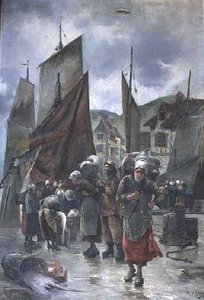
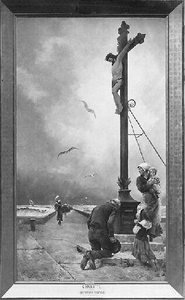
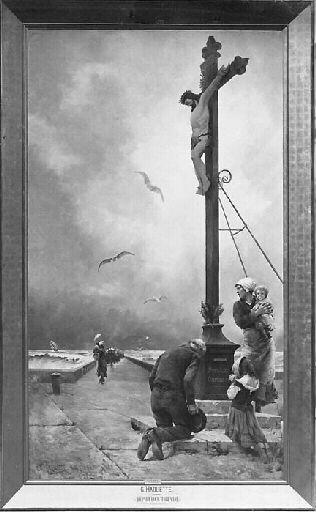
Le départ pour Terre Neuve
 Read More
Hand Made Oil Reproduction
Hand-painted oil on canvas in your size and frame, made to order by our artists. ( Buy Print Buy Image)




































Pick from our preset sizes that match the artwork's original proportions.

You may enter your own dimensions to fit a specific frame or space. If your selected size does not match the original image's proportions, we will either crop the artwork or extend the painting with additional hand-painted elements. A digital mockup will be sent for your approval before production begins.
Please note that the on-screen preview does not reflect the actual cropping or extension. Only the mockup will accurately show the final composition.
While custom sizes are available, we recommend selecting a dimension from the predefined list to preserve the original proportions.
After order, ArtsDot.com team will email client for instructions and provide a mockup preview
Worldwide Delivery () in 3/4 weeks instead of standard 5 weeks. (27 August). No compromise on quality.

Free Worldwide Express Shipping

High-Quality Linen Canvas

Full Shipping Insurance

Customs Tax Refund Guarantee

True Color Matching Guarantee

60-Day Return Policy (Defects Only)

100% Money-Back Guarantee

Bulk Discount Offer
 Glass option is only available in size under 110 CM

Le départ pour Terre Neuve
Reproduction Medium
Reproduction Size
-


Total Price
$ 313
Related Artworks





Artist Biography
Jean Marie Haquette Georges: A Painter of the French Coast
Born in Paris in 1854, Jean Marie Haquette Georges emerged as a significant figure in late 19th-century French marine painting. His work, deeply rooted in observation and a profound connection to the coastal landscapes of France, particularly the region around Dieppe and Aix-en-Provence, offers a captivating glimpse into the lives and livelihoods intertwined with the sea. While his life was relatively short – he passed away in 1906 – Haquette’s artistic legacy endures through a body of work characterized by its realism, emotional depth, and evocative portrayal of maritime scenes.
Haquette's early artistic training proved pivotal to his development. Initially mentored by the sculptor Aime Millet and later influenced by Alexandre Cabanel at the École des Beaux-Arts in Paris, he absorbed a rigorous understanding of form, composition, and classical techniques. However, it was from Cabanel that Haquette truly found his distinctive voice – a fascination with capturing the human figure within a broader narrative, often set against the dramatic backdrop of nature. This influence is evident in his later works, where figures are rendered with remarkable detail and imbued with a sense of dignity and resilience.
The Maritime Subject Matter
Unlike many of his contemporaries who focused on grand historical or mythological themes, Haquette’s artistic passion lay squarely within the everyday lives of French fishermen. He meticulously documented their routines, their struggles, and their deep connection to the sea. His paintings aren't romanticized depictions; instead, they present a raw and honest portrayal of maritime labor – hauling nets, repairing boats, returning with their catch, and simply existing in harmony with the elements. His subjects weren’t idealized heroes but ordinary men, weathered by sun and salt, embodying the spirit of a working life inextricably linked to the rhythms of the ocean.
Haquette's choice of subject matter was not merely aesthetic; it reflected a genuine empathy for his community. He spent considerable time observing these individuals, immersing himself in their world, and translating that experience onto canvas. His paintings are filled with details – the texture of roughspun clothing, the worn hands of fishermen, the glint of sunlight on the water – all contributing to a powerful sense of authenticity.
Technique and Style
Haquette’s artistic style is characterized by a masterful command of light and color. He employed a palette dominated by muted blues, greens, and grays, reflecting the ever-changing moods of the sea. His brushwork is generally smooth and controlled, yet capable of conveying a sense of movement and dynamism – particularly in scenes depicting the action of fishing or the turbulent waves. The use of atmospheric perspective creates a strong sense of depth, drawing the viewer into the heart of the scene.
He was particularly adept at capturing the effects of light on water, skillfully rendering reflections and refractions to create an illusion of shimmering brilliance. His compositions are often carefully balanced, with figures placed strategically within the frame to maximize visual impact. The influence of Realist painters like Courbet is palpable in his commitment to depicting reality without embellishment or idealization.
Notable Works and Recognition
Among Haquette’s most celebrated works are “Le Débarquement du Poisson au Pollet” (The Fish Unloading at Pollet), “Le Départ pour Terre Neuve” (Departure for New Land), and "À la côte" (By the Coast). These paintings, now housed in museums across France – including Rouen, Dieppe, and Brest – exemplify his artistic strengths. He consistently received recognition at the prestigious Paris Salon, earning honorable mentions, medals, and ultimately, a second-place award in 1901, testament to the growing appreciation for his unique vision.
Furthermore, his work was featured in publications like *Famous Paintings of the World*, highlighting his ability to capture the essence of French coastal life. The detailed descriptions accompanying these illustrations underscore Haquette’s meticulous observation and his commitment to portraying the dignity and resilience of the fishermen he depicted.
Legacy and Historical Significance
Jean Marie Haquette Georges' contribution to French marine painting lies not in grand, sweeping narratives but in a quiet, persistent documentation of everyday life. He offered a poignant glimpse into a vanishing world – the world of working-class fishermen who shaped the cultural identity of the French coast. His work serves as a valuable historical record, capturing a specific time and place with remarkable sensitivity and artistic skill.
Today, Haquette’s paintings continue to resonate with viewers, reminding us of the enduring connection between humanity and the sea. His legacy is one of quiet observation, honest representation, and a profound appreciation for the beauty and hardship of life along the French coast – a testament to an artist who truly understood his subject matter.
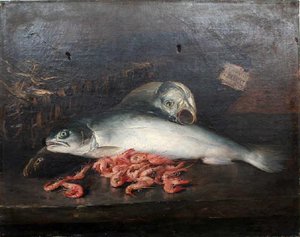
jean marie haquette georges
1854 - 1906
Quick Facts
- Artistic Movement Or Style: Marine painting
- Artists Or Movements Influenced By This Artist:
- Courbet
- French Realism
- Artists Who Influenced This Artist:
- Aime Millet
- Alexandre Cabanel
- Date Of Birth: May 2, 1854
- Date Of Death: 1906
- Full Name: Georges Jean-Marie Haquette
- Nationality: French
- Notable Artworks:
- Un homme à la mer!
- La femme du matelot
- La levée des filets
- Départ pour la pêche
- À la côte
- Le débarquement du poisson au Pollet
- Le départ pour Terre Neuve
- Place Of Birth: Paris, France