

 Preview
 Send
Send Share
Share
 Details

 Download
 Similars
 X-Ray
X-Ray Diaporama
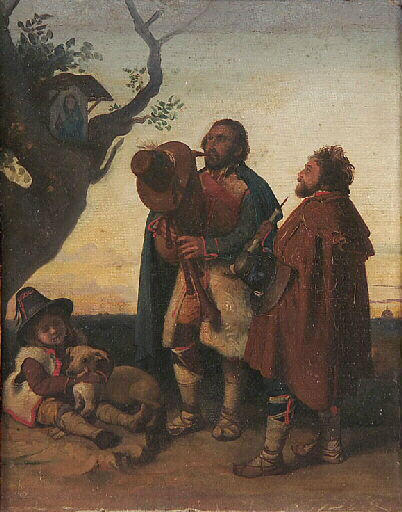
Pifferari Paysans dans la campagne de Rome (autre titre)
 Read More
Purchase a high-resolution, enhanced digital image, far superior to the online preview.
Each file is meticulously prepared by our in-house specialists using advanced tools and expert manual retouching. We ensure every image has exceptional clarity, precise color accuracy, and fine detail.
The final file is delivered via email within 72 hours, optimized for immediate use in professional, editorial, and print environments. This is the same quality trusted by top-tier design studios, publishers, and galleries.
Digital Image
Download a high-resolution file for personal display, printing, and creative projects. ( Buy Print Buy Hand Made Painting)
Included in Every Digital Image Order
Expert Digital Delivery, Guaranteed
When you choose ArtsDot.com, you're not just getting an image - you're receiving a professionally enhanced digital artwork, crafted with precision and backed by a satisfaction guarantee. Here's everything that comes with your order, automatically:

Fast Email Delivery
Your high-resolution digital image file will be emailed to you within 72 hours of ordering - ready for immediate use.

AI-Enhanced Digital File
Your artwork is professionally optimized using advanced AI tools and manual editing, ensuring maximum detail, clarity, and color accuracy.

Free Lifetime Re-Delivery
Accidentally deleted or lost your file? No worries - we'll resend it to you anytime, free of charge.

No Import Fees - Ever
Enjoy your artwork instantly with zero customs, duties, or delivery fees - digital downloads are always tax-free.

Color Accuracy Guarantee
We ensure your digital image reflects the original colors as closely as possible using professional tools and color management.

60-Day Satisfaction Guarantee
If you're not satisfied with your digital image, we'll revise it or refund 100% within 60 days - no questions asked.

100% Money-Back Guarantee
Not satisfied? Get a full refund within 60 days of receiving your digital file - no questions asked.

Bulk Order Discounts
Buy 3 images, save 10% - Buy 5, save 15% - Buy 10+, save 20%. Great for creative projects, galleries, and agencies.
Related Artworks









Artist Biography
The Custodian of Classical Grandeur
In the grand tapestry of nineteenth-century French art, few figures possess a legacy as intimately entwined with the preservation of classical mastery as Jean Paul Étienne Balze. Born in Rome in 1815, his very beginnings were steeped in the intellectual and aristocratic atmosphere of the papal exile. As the son of Joseph Balze, the Grand Chamberlain to Charles IV of Spain, Paul grew up amidst a unique confluence of political upheaval and artistic splendor. This early exposure to the monumental beauty of Italy did more than just provide a scenic backdrop; it instilled in him a profound reverence for the Renaissance masters that would define his entire professional existence. Alongside his brother Raymond, Balze would emerge not merely as a painter, but as a meticulous chronicler of the sublime, dedicated to the art of the faithful reproduction.
The trajectory of Balze’s career was irrevocably shaped by the mentorship of Jean-Auguste-Dominique Ingres. During his formative years at the École des Beaux-Arts in Paris, Balze found himself under the tutelage of the era's most formidable guardian of Neoclassicism. This relationship was far more than a simple teacher-student dynamic; it was a shared mission to uphold the standards of academic excellence against the rising tide of Romanticism. Ingres, recognizing the extraordinary precision and disciplined hand of the young Balze, entrusted him with tasks that required an almost superhuman level of detail. It was through this connection that Balram became a vital instrument in the revival of Raphael scholarship, bridging the gap between the sixteenth-century masters and the nineteenth-century public.
A Legacy Written in Fresco and Faience
The most significant chapter in Balze’s artistic journey remains his monumental undertaking of reproducing the Vatican Loggias. Under the direction of Ingres, Paul and Raymond were dispatched to Rome to capture the essence of Raphael’s legendary frescoes. This was no mere exercise in imitation; it was a grueling, highly technical endeavor that demanded an unparalleled understanding of color, light, and composition. The resulting fifty-two copies, unveiled in 1840 at the École des Beaux-Arts chapel, served as a breathtaking testament to their skill. These works were so impactful that they eventually found a permanent home within the decorative galleries of Paris, enriching the cultural landscape of the city and ensuring that Raphael’s vision could be studied and admired far beyond the walls of the Vatican.
Beyond the grand scale of fresco reproduction, Balze’s versatility allowed him to leave his mark on various artistic mediums. His talent extended into the delicate realm of faience, where he produced Raphael reproductions in ceramic, demonstrating that the grandeur of classical art could be translated into more intimate, decorative forms. His work also touched the very heart of French institutional history, as seen in his contributions to the decorative schemes of the Hôtel de la Banque de France and his meticulous restoration efforts at the Chaalis Abbey. Whether working on the vast vaults of a palace or the intricate surface of a tile, Balze’s hand was always guided by a singular devotion to artistic truth and the preservation of historical beauty.
Historical Significance and Enduring Influence
While history often remembers the original creators of masterpieces, the role of the artist-copyist like Jean Paul Étienne Balze is indispensable to the survival of art history itself. Without his disciplined hand, much of the visual splendor of the High Renaissance might have remained inaccessible to the burgeoning art movements of the nineteenth century. He acted as a vital conduit, transporting the aesthetic values of the past into the modern era. His life’s work represents a bridge between eras—a period where the precision of the old masters met the expanding educational ambitions of the French Academy.
Today, Balze is remembered not just for his technical prowess, but for his role in a larger cultural movement: the rediscovery of Raphael’s legacy. His ability to capture the subtle nuances of Michelangelo and the flowing grace of Raphael helped cement the foundations of classical scholarship. Though he may have operated in the shadow of giants like Ingres, his contribution was foundational, providing the visual vocabulary that allowed subsequent generations to appreciate and understand the heights of human creativity. His death in Paris in 1884 marked the end of an era, but his meticulous reproductions remain as enduring echoes of a golden age.
jean paul etienne balze
1815 - 1884
Quick Facts
- Artistic Movement Or Style: Romanticism
- Artists Or Movements Influenced By This Artist: ['Romanticism']
- Artists Who Influenced This Artist: ['Ingres']
- Date Of Birth: Rome, 1815
- Date Of Death: Paris, 1884
- Full Name: Jean Paul Étienne Balze
- Nationality: French
- Notable Artworks:
- Funérailles de Lope de Vega
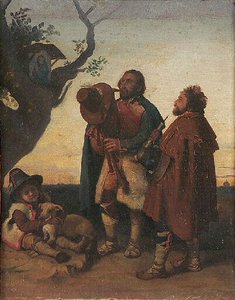
- Pifferari Paysans dans la campagne de Rome
- Portrait d'un personnage flamand du XVIIe siècle
- Place Of Birth: Rome, Italy

