

 Preview
 Send
Send Share
Share
 Details

 Download
 Similars
 X-Ray
X-Ray Diaporama
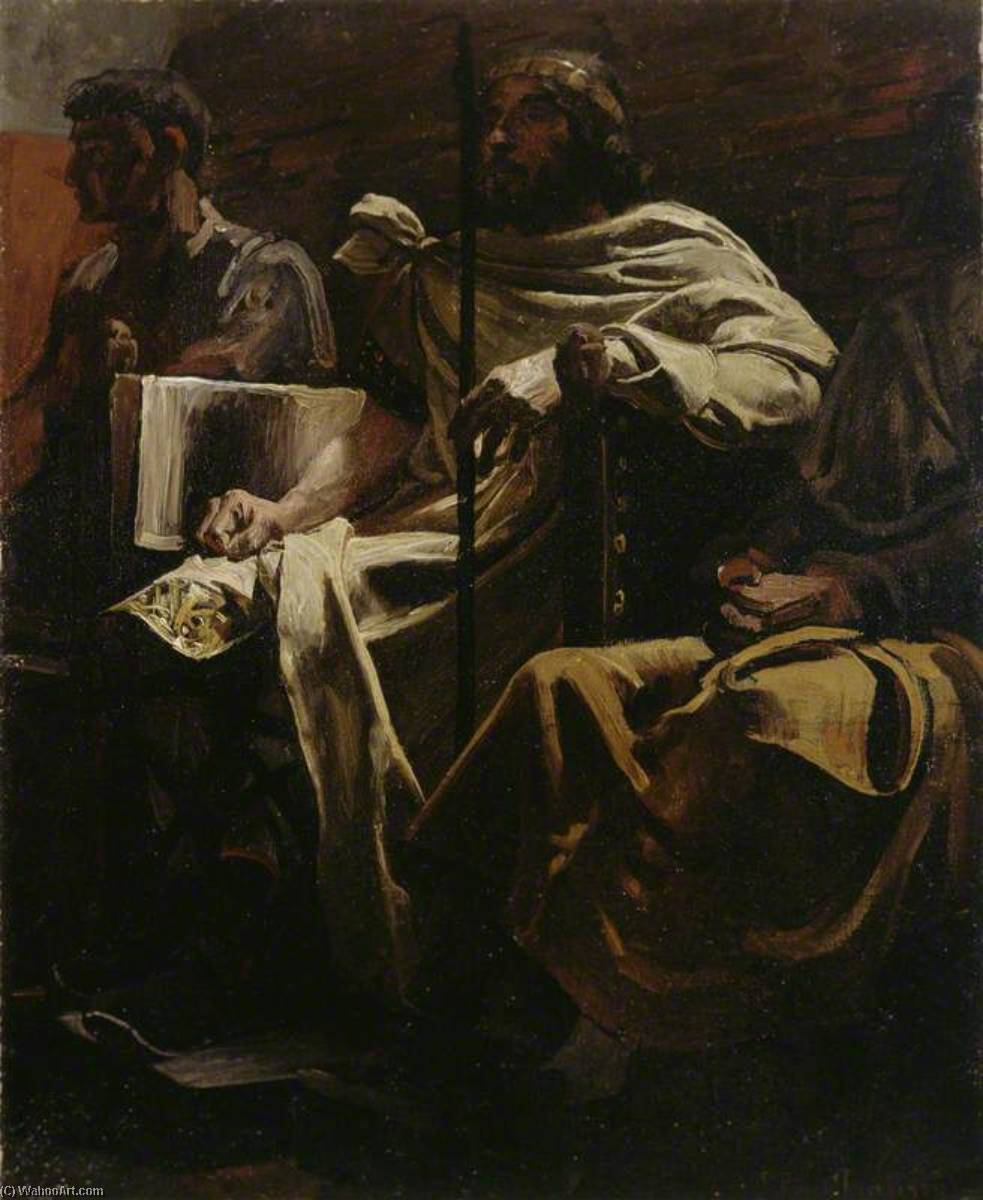
The Judgement of Chilperic
 Acrylic On Canvas
- WallArt
- French Academic History Painting
 1881
1881 45.0 x 37.0 cm
 The Ashmolean Museum of Art And Archaeology
 Read More
Purchase a high-resolution, enhanced digital image, far superior to the online preview.
Each file is meticulously prepared by our in-house specialists using advanced tools and expert manual retouching. We ensure every image has exceptional clarity, precise color accuracy, and fine detail.
The final file is delivered via email within 72 hours, optimized for immediate use in professional, editorial, and print environments. This is the same quality trusted by top-tier design studios, publishers, and galleries.
Digital Image
Download a high-resolution file for personal display, printing, and creative projects. ( Buy Print Buy Hand Made Painting)
Included in Every Digital Image Order
Expert Digital Delivery, Guaranteed
When you choose ArtsDot.com, you're not just getting an image - you're receiving a professionally enhanced digital artwork, crafted with precision and backed by a satisfaction guarantee. Here's everything that comes with your order, automatically:

Fast Email Delivery
Your high-resolution digital image file will be emailed to you within 72 hours of ordering - ready for immediate use.

AI-Enhanced Digital File
Your artwork is professionally optimized using advanced AI tools and manual editing, ensuring maximum detail, clarity, and color accuracy.

Free Lifetime Re-Delivery
Accidentally deleted or lost your file? No worries - we'll resend it to you anytime, free of charge.

No Import Fees - Ever
Enjoy your artwork instantly with zero customs, duties, or delivery fees - digital downloads are always tax-free.

Color Accuracy Guarantee
We ensure your digital image reflects the original colors as closely as possible using professional tools and color management.

60-Day Satisfaction Guarantee
If you're not satisfied with your digital image, we'll revise it or refund 100% within 60 days - no questions asked.

100% Money-Back Guarantee
Not satisfied? Get a full refund within 60 days of receiving your digital file - no questions asked.

Bulk Order Discounts
Buy 3 images, save 10% - Buy 5, save 15% - Buy 10+, save 20%. Great for creative projects, galleries, and agencies.
Collectible Description
A Dramatic Tableau: The Judgement of Chilperic
Jean-Paul Laurens’s “The Judgement of Chilperic,” painted in 1881, isn't merely a depiction of a historical event; it’s a meticulously constructed drama frozen on canvas. The painting plunges the viewer directly into the heart of a turbulent era – the waning days of the Merovingian dynasty in Gaul – where political intrigue, familial betrayal, and religious fervor collide with devastating consequences. Laurens, deeply rooted in the traditions of French Academic art yet fiercely independent in his vision, masterfully blends classical composition with a strikingly modern psychological intensity.
At first glance, the scene unfolds within a richly appointed hall, dominated by three seated figures: Chilperic, the King of Neustria, sits impassively amidst a gathering of advisors and dignitaries. The composition is deliberately formal, echoing the grand historical paintings favored by the French Academy – a testament to Laurens’s training but also a subtle assertion of his own artistic authority. The lighting, carefully orchestrated, casts dramatic shadows that heighten the sense of tension and uncertainty, drawing our attention to the faces of those involved.
A Study in Character: The Figures and Their Roles
Each figure is rendered with painstaking detail, revealing not just their physical appearance but also a complex web of emotions and motivations. Chilperic himself embodies a weary resignation, his gaze fixed on some distant point beyond the immediate drama. His advisors, clad in the robes of authority, are caught in moments of deliberation and suspicion – one gestures emphatically, another listens intently, while a third appears to be wrestling with conflicting loyalties. The painting’s power lies in its ability to convey a sense of unspoken anxieties and hidden agendas.
The central figure, the woman seated between Chilperic and his advisors, is Basina of Neustria, a princess who played a pivotal role in the events depicted. Her posture suggests both vulnerability and defiance – she’s not merely a passive observer but a key player in this unfolding drama. The details surrounding her are particularly striking: her expression hints at a profound sadness mingled with an underlying strength.Technique and Symbolism: Laurens' Masterstroke
Laurens’s technical skill is undeniable, evident in the meticulous rendering of textures – the heavy velvet draperies, the polished stone floors, the intricate folds of the clothing. However, it’s not simply a display of virtuosity; every brushstroke serves a purpose, contributing to the overall narrative and emotional impact. The use of chiaroscuro—the dramatic contrast between light and shadow—is particularly effective in creating a sense of depth and atmosphere.
- Color Palette: Laurens employs a restrained palette dominated by earthy tones – browns, ochres, and grays – punctuated by flashes of crimson and gold. These colors evoke the grandeur of the Merovingian court while simultaneously hinting at the impending doom.
- Compositional Balance: The painting’s balanced composition reflects the formal principles of Academic art, yet Laurens subtly disrupts this balance through the strategic placement of figures and the use of diagonals to create a sense of dynamism.
- Symbolic Elements: The books held by some of the advisors likely represent legal documents or decrees, underscoring the political nature of the judgment. The overall scene is steeped in symbolism, inviting viewers to interpret the events depicted through a lens of historical and religious significance.
A Window into the Past: Historical Context and Legacy
“The Judgement of Chilperic” offers a rare glimpse into the turbulent world of 6th-century Gaul, a period marked by political instability, religious conflict, and social upheaval. It’s a scene drawn from Gregory of Tours' *History of the Franks*, a primary source that provides valuable insights into the lives and times of the Merovingian kings. Laurens’s painting not only faithfully recreates this historical event but also imbues it with a profound sense of drama and emotional resonance.
Laurens, deeply influenced by his republican ideals, used history painting as a vehicle for expressing his political convictions. “The Judgement of Chilperic” stands as a testament to his artistic skill and intellectual depth – a powerful work that continues to captivate viewers with its dramatic intensity and historical significance. Reproductions offer an accessible way to experience the grandeur and complexity of this remarkable masterpiece.
Related Artworks



Artist Biography
The Grandeur of History: The Life and Legacy of Jean-Paul Laurens
Jean-Paul Laurens (1838–1921) stands as a monumental figure in the final flowering of French Academic art, embodying both its grandeur and its inherent contradictions. Born in Fourques, France, he emerged from the prestigious tutelage of Léon Cogniet and Alexandre Bida, inheriting a staunch republican spirit tempered by an unwavering devotion to artistic tradition. Laurens’s worldview was profoundly shaped by his opposition to monarchical authority and clerical dogma—themes that consistently permeated his oeuvre, serving as conduits for a fervent belief in social justice and liberty. His formative years instilled within him a meticulous attention to detail and a profound understanding of anatomy and perspective, skills honed through rigorous self-discipline and fueled by an intellectual curiosity that spanned classical literature and philosophy.
The artistry of Laurens was never merely about visual representation; it was an intellectual endeavor designed to elevate historical moments into moral narratives. His stylistic evolution mirrored the broader currents of Romanticism, yet he resolutely championed a disciplined approach to technique, prioritizing realism alongside theatrical grandeur. This unique synthesis allowed him to breathe life into the past, transforming cold historical records into visceral, emotional experiences for his audience. Whether through the somber shadows of a tragic execution or the luminous sanctity of a religious icon, Laurens utilized light and composition to guide the viewer toward a deeper contemplation of human destiny and political consequence.
Mastery of the Canvas: Themes and Technical Brilliance
Laurens's prolific output encompassed monumental canvases that defined the aesthetic of the Third Republic. His ability to navigate between the sacred and the secular allowed him to command the most prestigious spaces in France. One of his most celebrated achievements includes his religious works, such as the depiction of Saint Genevieve in the apse of the Panthéon, where he utilized a majestic scale to inspire awe. Simultaneously, he was a master of the historical tragedy, capturing moments of profound political upheaval with a realism that felt both immediate and timeless.
His repertoire of significant works demonstrates a remarkable range of emotional depth:
- Emperor Maximilian of Mexico before the Execution: A highly detailed, realistic historical painting that captures a poignant moment of imperial tragedy, showcasing his ability to render intense psychological states.
- The Death of the Duc d'Enghien: A powerful composition that utilizes dramatic lighting and masterful technique to convey the gravity of this pivotal historical event.
- Autoportrait: A striking self-portrait that serves as a testament to his mastery of the human form and his commitment to the republican ideals that defined his identity.
Beyond large-scale oil paintings, Laurens demonstrated an extraordinary capacity for storytelling through his illustrations. His work for Augustin Thierry's Récrits des Temps Mérovingiens showcased a refined ability to translate historical text into evocative imagery, proving that his talent for detail was as effective in the intimate medium of illustration as it was on the massive canvases of Parisian halls.
A National Icon and Historical Significance
The significance of Jean-Paul Laurens extends far beyond the borders of the art gallery. As a commissioned artist for the Third Republic, his work adorned iconic Parisian landmarks such as City Hall and the Odéon Theater, cementing his reputation as a national artist committed to civic duty. He did not merely paint history; he helped construct the visual identity of a nation seeking to define itself through the values of liberty and republicanism.
His legacy remains etched in the annals of art history as a bridge between the rigid traditions of the Academy and the burgeoning realism of the modern era. By infusing classical techniques with a contemporary political consciousness, Laurens ensured that his paintings would serve as more than just decorations; they became enduring monuments to the human struggle for justice. Today, his works continue to captivate collectors and historians alike, offering a window into a transformative period of French history through the eyes of a master who saw the profound drama in every brushstroke.

Jean-Paul Laurens
1838 - 1921 , France
Quick Facts
- Artistic Movement Or Style: French Academic Art
- Artists Or Movements Influenced By This Artist: ['Romanticism']
- Artists Who Influenced This Artist:
- Léon Cogniet
- Alexandre Bida
- Date Of Birth: Fourques, France (1838)
- Date Of Death: 1921
- Full Name: Jean-Paul Laurens
- Nationality: French
- Notable Artworks:
- Portrait of JeanPierre Laurens
- Autoportrait
- Emperor Maximilian of Mexico before the Execution
- Place Of Birth: Fourques

