 Preview
 Send
Send Share
Share
 Details

 Download
 Similars
 X-Ray
X-Ray Diaporama
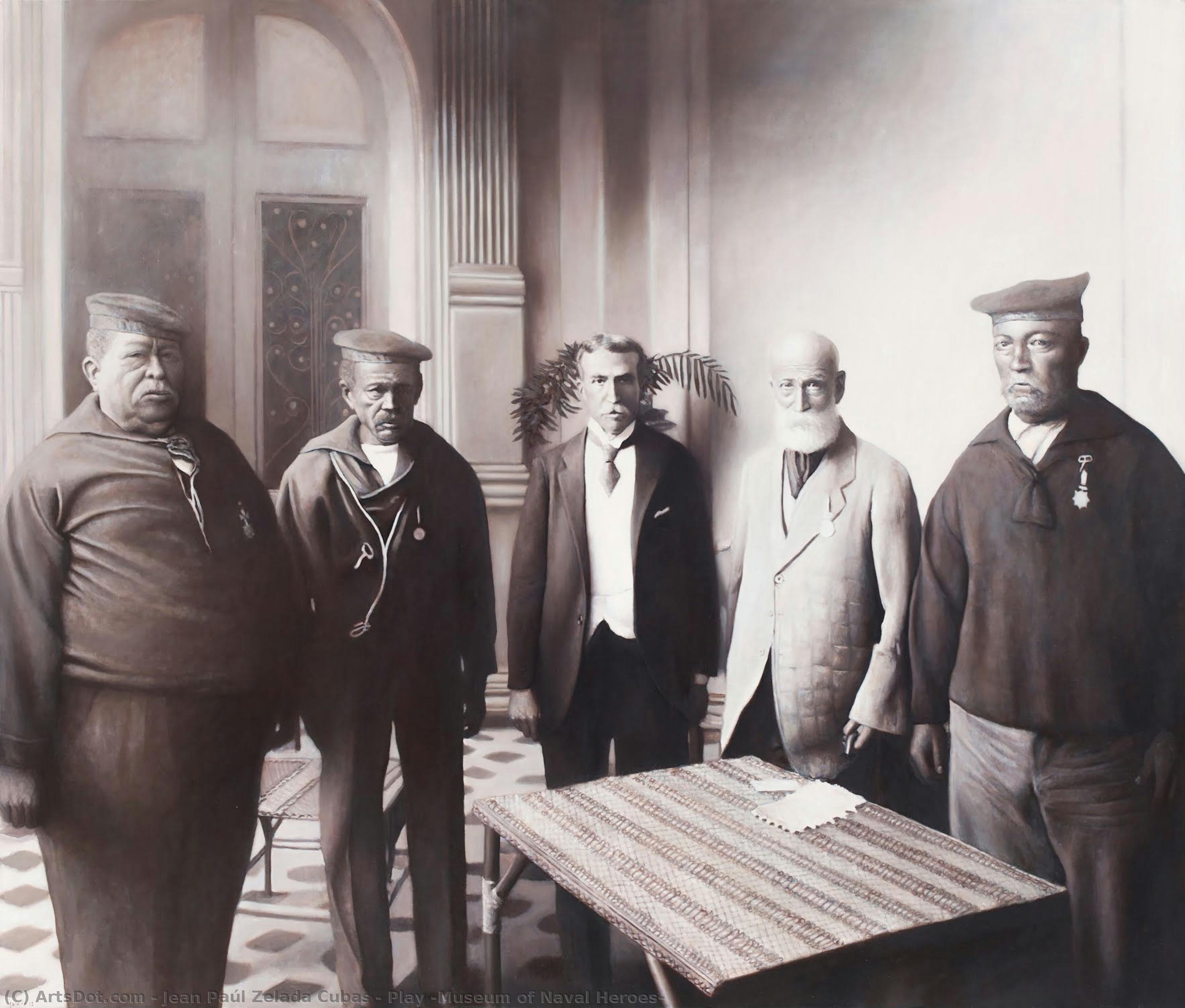
Play (Museum of Naval Heroes)
 2012
2012 145.0 x 170.0 cm
 Museo Central. Banco Central de Reserva del Perú
 Read More
Hand Made Oil Reproduction
Hand-painted oil on canvas in your size and frame, made to order by our artists. ( Buy Print Buy Image)




































Pick from our preset sizes that match the artwork's original proportions.

You may enter your own dimensions to fit a specific frame or space. If your selected size does not match the original image's proportions, we will either crop the artwork or extend the painting with additional hand-painted elements. A digital mockup will be sent for your approval before production begins.
Please note that the on-screen preview does not reflect the actual cropping or extension. Only the mockup will accurately show the final composition.
While custom sizes are available, we recommend selecting a dimension from the predefined list to preserve the original proportions.
After order, ArtsDot.com team will email client for instructions and provide a mockup preview
Worldwide Delivery () in 3/4 weeks instead of standard 5 weeks. (25 August). No compromise on quality.

Free Worldwide Express Shipping

High-Quality Linen Canvas

Full Shipping Insurance

Customs Tax Refund Guarantee

True Color Matching Guarantee

60-Day Return Policy (Defects Only)

100% Money-Back Guarantee

Bulk Discount Offer
 Glass option is only available in size under 110 CM

Play (Museum of Naval Heroes)
Reproduction Medium
Reproduction Size
-


Total Price
$ 263
Artwork Description
Related Artworks






Artist Biography
Jean Paul Zelada Cubas: Echoes of Angamos in the Peruvian Urban Landscape
Jean Paul Zelada Cubas, born in Trujillo, Peru in 1972, is a compelling figure within contemporary Latin American art. His work transcends mere representation; it’s an interrogation of history, memory, and the often-overlooked narratives embedded within seemingly familiar landscapes. Zelada's artistic journey has been deeply intertwined with his Peruvian heritage, particularly through his engagement with the legacy of the War of the Pacific (1879-1883) and its reverberations in the nation’s collective consciousness. His distinctive style—a potent blend of realism and poignant symbolism—has garnered recognition within both national and international art circles, notably through inclusion in the prestigious Imago Mundi Collection.
Zelada's artistic development began with a strong grounding in traditional Peruvian painting techniques, honed during his formative years. However, he quickly moved beyond simple replication, seeking to imbue his canvases with layers of meaning and social commentary. A pivotal influence is undoubtedly the “indigenismo” movement that flourished in Peru throughout the late 19th and early 20th centuries. This artistic current championed indigenous subjects, perspectives, and cultural traditions, challenging the dominant colonial narratives. Zelada’s work directly engages with this legacy, often presenting marginalized figures—particularly Afro-Peruvians—within a broader historical context.
The Battle of Angamos and the Unsung Heroes
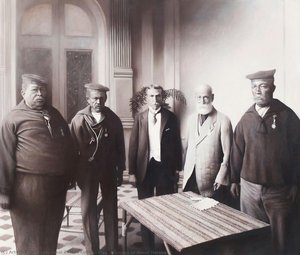
A recurring motif in Zelada's oeuvre is the Battle of Angamos, a pivotal naval engagement that marked a decisive victory for Peru against Chile. While often celebrated as a national triumph, Zelada’s approach diverges significantly from conventional portrayals. He doesn’t depict heroic battles or glorious victories; instead, he focuses on the human cost and the complex social dynamics surrounding this historical event. His most famous work, “Play (Museum of Naval Heroes),” exemplifies this strategy. This large-scale painting features a photograph of Augusto B. Leguía, the Peruvian president at the time, alongside Alberto Medina, a cabin boy who survived the battle, and other Afro-Peruvian sailors.
Zelada’s deliberate choice to reproduce a photograph—a seemingly neutral document—forces viewers to confront the uncomfortable reality that these individuals, despite their participation in a defining moment of Peruvian history, have been largely erased from official narratives. The painting subtly questions the construction of national identity and highlights the systematic exclusion of certain groups from historical recognition. By juxtaposing the prominent figure of Leguía with the marginalized faces of Medina and his comrades, Zelada compels us to reconsider the stories we tell about our past and the heroes we choose to celebrate.
Technique and Style: Realism Infused with Symbolism
Zelada’s artistic style is characterized by a meticulous attention to detail within a framework of realist representation. He employs oil on canvas, utilizing a technique that allows for both subtle gradations of tone and bold, expressive brushstrokes. His figures are rendered with remarkable accuracy, capturing their physical presence and emotional states. However, it's not merely the depiction of reality that defines his work; Zelada strategically incorporates symbolic elements to deepen the narrative layers.
These symbols often draw upon Peruvian folklore, mythology, and historical iconography. Recurring motifs—such as indigenous textiles, traditional instruments, and ancestral figures—are interwoven into the compositions, adding a rich tapestry of cultural references. The use of color is particularly significant; Zelada favors earthy tones—ochres, browns, and grays—that evoke the landscapes and traditions of Peru while simultaneously conveying a sense of melancholy and reflection.
Recognition and Legacy
Jean Paul Zelada’s work has been exhibited extensively throughout Peru and internationally. His inclusion in the Imago Mundi Collection, a prestigious international network of museums dedicated to showcasing art from around the world, is a testament to his artistic merit and significance. His paintings are held in private collections and public institutions alike, ensuring that his vision continues to resonate with audiences.
Beyond his individual achievements, Zelada’s work contributes significantly to the ongoing dialogue about Peruvian identity, historical memory, and social justice. By challenging conventional narratives and amplifying marginalized voices, he invites viewers to engage critically with their own understanding of the past and its enduring impact on the present. Zelada's legacy lies not only in his artistic skill but also in his commitment to using art as a tool for social transformation and historical reckoning.
Quick Facts
- Artistic Movement Or Style: Urban Painting, Realist Painting
- Full Name: Jean Paul Zelada Cubas
- Nationality: Peruvian
- Notable Artworks: ['Play (Museum of Naval Heroes)']
- Place Of Birth: Trujillo, Peru