 Preview
 Send
Send Share
Share
 Details

 Download
 Similars
 X-Ray
X-Ray Diaporama
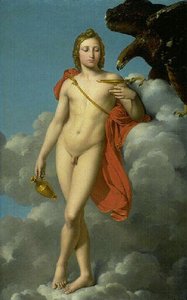
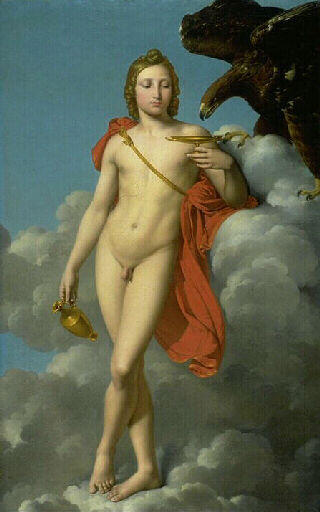
Figure de Ganymède
 Read More
Hand Made Oil Reproduction
Hand-painted oil on canvas in your size and frame, made to order by our artists. ( Buy Print Buy Image)




































Pick from our preset sizes that match the artwork's original proportions.

You may enter your own dimensions to fit a specific frame or space. If your selected size does not match the original image's proportions, we will either crop the artwork or extend the painting with additional hand-painted elements. A digital mockup will be sent for your approval before production begins.
Please note that the on-screen preview does not reflect the actual cropping or extension. Only the mockup will accurately show the final composition.
While custom sizes are available, we recommend selecting a dimension from the predefined list to preserve the original proportions.
After order, ArtsDot.com team will email client for instructions and provide a mockup preview
Worldwide Delivery () in 3/4 weeks instead of standard 5 weeks. (27 August). No compromise on quality.

Free Worldwide Express Shipping

High-Quality Linen Canvas

Full Shipping Insurance

Customs Tax Refund Guarantee

True Color Matching Guarantee

60-Day Return Policy (Defects Only)

100% Money-Back Guarantee

Bulk Discount Offer
 Glass option is only available in size under 110 CM

Figure de Ganymède
Reproduction Medium
Reproduction Size
-


Total Price
$ 263
Related Artworks








Artist Biography
Jean-Pierre Granger: A Neoclassical Echo of Myth and Majesty
Jean-Pierre Granger, a name perhaps less familiar than his contemporaries David or Ingres, nevertheless stands as a significant figure in the vibrant artistic landscape of 18th and early 19th century France. Born in Paris in 1779, Granger’s life was inextricably linked to the burgeoning world of Parisian art, where he honed his skills under the tutelage of masters and ultimately carved out a distinctive niche within the neoclassical movement. His work, characterized by a refined elegance and a masterful command of light and shadow, frequently depicted scenes from mythology, history, and portraiture—subjects that resonated deeply with the aesthetic sensibilities of the era.
Granger’s early life offered little indication of his future artistic pursuits. He began as a drum major in the “Régiment Royal-Bonbons,” a prestigious military band associated with the French court. This seemingly disparate experience, however, instilled within him a disciplined eye for detail and an appreciation for visual spectacle—qualities that would prove invaluable to his later career as a painter. Following this period, he transitioned into engraving, a craft that initially seemed to limit his creative potential but ultimately provided a crucial foundation in technical skill and compositional understanding. It was through the guidance of Louis-Jean Allais, a skilled engraver, that Granger began to develop his artistic voice, eventually leading him to pursue oil painting.
The Influence of Rome and the Royal Court
A pivotal moment in Granger’s artistic development occurred when he traveled to Rome in 1800. Awarded the Prix de Rome—a highly competitive scholarship that provided aspiring artists with the opportunity to study in Italy—Granger spent several years immersed in the city's rich artistic heritage. He was mentored by Jacques-Louis David, a leading figure of the Neoclassical movement, and worked on commissions for Lucien Bonaparte, Napoleon’s brother, including sketches and paintings of antiquities collected within his private collection. This experience profoundly shaped Granger’s style, imbuing it with a sense of classical grandeur and a meticulous attention to detail reminiscent of Roman sculpture and architecture.
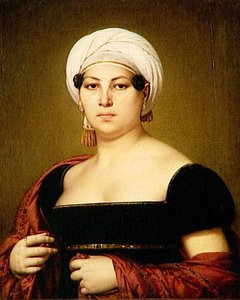
His time in Rome also led to a significant personal connection: he married Jeanne-Catherine Delaigle, the model for one of his most celebrated portraits—a captivating depiction of an anonymous lady of the court. This union not only provided him with a muse but also solidified his commitment to capturing the beauty and grace of women within the neoclassical tradition. The portrait itself, now housed in the Louvre Museum, stands as a testament to Granger’s skill and sensitivity.
A Portfolio of Mythological Grandeur
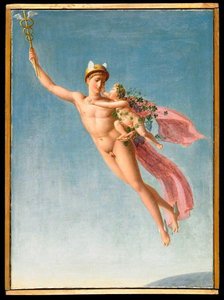
Granger's oeuvre is particularly notable for its depictions of mythological subjects. Works such as “Mercure emporte le jeune Bacchus dans l'Olympe” (Mercury Carrying Off Young Bacchus to Olympus) exemplify his ability to translate complex narratives into visually compelling compositions. The dynamism of the scene, rendered with a masterful use of color and light, captures the essence of the myth while adhering to the principles of neoclassical art—clarity, order, and restraint. Similarly, “Figure de Ganymède” (Ganymede) showcases his talent for portraying idealized figures within a carefully constructed setting, evoking a sense of timeless beauty and mythological drama.
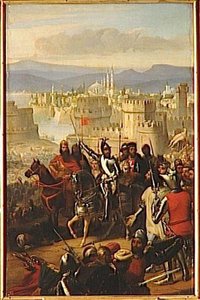
Beyond mythology, Granger excelled in portraiture and historical scenes. His portraits often reveal a keen eye for capturing the personality and character of his subjects, while his historical paintings—such as those commissioned by Lucien Bonaparte—demonstrate his understanding of classical history and his ability to recreate key moments with meticulous detail. His work consistently reflects an appreciation for elegance, balance, and the pursuit of idealized beauty – hallmarks of the Neoclassical style.
Legacy and Recognition
Despite not achieving the widespread fame of some of his contemporaries, Jean-Pierre Granger’s contribution to French art is undeniable. He was recognized throughout his career with several medals from the Académie des Beaux-Arts, a testament to his artistic merit and dedication. His work continues to be exhibited in museums across France and beyond, offering viewers a glimpse into the world of 18th and early 19th century Parisian art. Granger’s legacy lies not only in his individual works but also in his embodiment of the neoclassical ideals—a commitment to classical forms, harmonious composition, and the pursuit of timeless beauty.
Further research can be found on the British Museum website (https://www.britishmuseum.org/collection/term/BIOG185617) and through various online art databases, offering a more comprehensive understanding of his life and artistic output.

jean pierre granger
1779 - 1840
Quick Facts
- Artistic Movement Or Style: Neo-Classical
- Artists Or Movements Influenced By This Artist: ['Ingres']
- Artists Who Influenced This Artist:
- Jean-Baptiste Regnault
- Jacques-Louis David
- Date Of Birth: March 11, 1779
- Date Of Death: December 1, 1840
- Full Name: Jean-Pierre Granger
- Nationality: French
- Notable Artworks:
- Mercure emporte...
- Figure de Ganymède
- Place Of Birth: Paris, France