

 Preview
 Send
Send Share
Share
 Details

 Download
 Similars
 X-Ray
X-Ray Diaporama
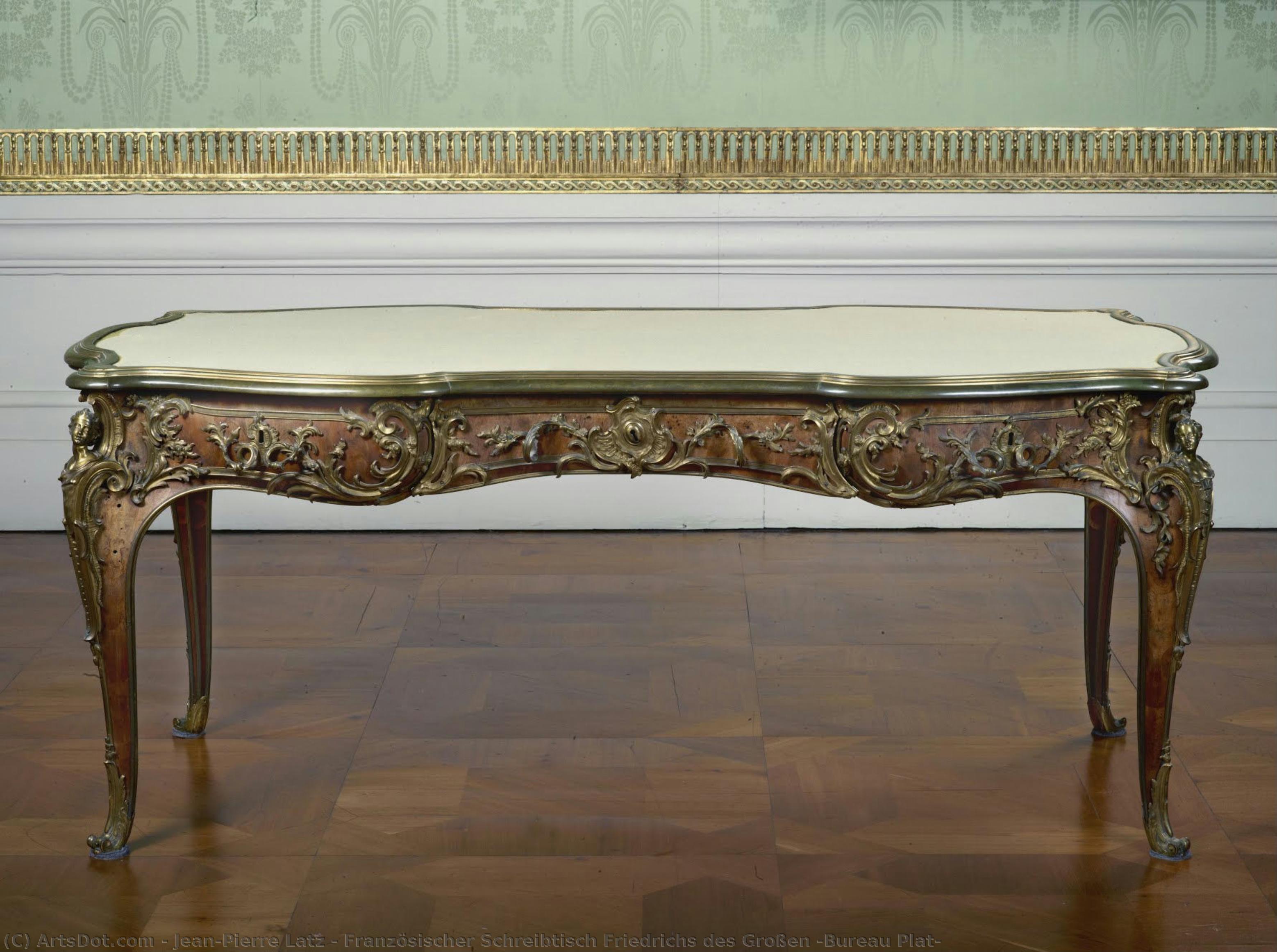
Französischer Schreibtisch Friedrichs des Großen (Bureau Plat)
 Oil On Canvas
- WallArt
- Baroque Rococo
Baroque Rococo
 1745
1745 81.0 x 194.0 cm
 Sanssouci Palace
 Read More
Purchase a high-resolution, enhanced digital image, far superior to the online preview.
Each file is meticulously prepared by our in-house specialists using advanced tools and expert manual retouching. We ensure every image has exceptional clarity, precise color accuracy, and fine detail.
The final file is delivered via email within 72 hours, optimized for immediate use in professional, editorial, and print environments. This is the same quality trusted by top-tier design studios, publishers, and galleries.
Digital Image
Download a high-resolution file for personal display, printing, and creative projects. ( Buy Print Buy Hand Made Painting)
Included in Every Digital Image Order
Expert Digital Delivery, Guaranteed
When you choose ArtsDot.com, you're not just getting an image - you're receiving a professionally enhanced digital artwork, crafted with precision and backed by a satisfaction guarantee. Here's everything that comes with your order, automatically:

Fast Email Delivery
Your high-resolution digital image file will be emailed to you within 72 hours of ordering - ready for immediate use.

AI-Enhanced Digital File
Your artwork is professionally optimized using advanced AI tools and manual editing, ensuring maximum detail, clarity, and color accuracy.

Free Lifetime Re-Delivery
Accidentally deleted or lost your file? No worries - we'll resend it to you anytime, free of charge.

No Import Fees - Ever
Enjoy your artwork instantly with zero customs, duties, or delivery fees - digital downloads are always tax-free.

Color Accuracy Guarantee
We ensure your digital image reflects the original colors as closely as possible using professional tools and color management.

60-Day Satisfaction Guarantee
If you're not satisfied with your digital image, we'll revise it or refund 100% within 60 days - no questions asked.

100% Money-Back Guarantee
Not satisfied? Get a full refund within 60 days of receiving your digital file - no questions asked.

Bulk Order Discounts
Buy 3 images, save 10% - Buy 5, save 15% - Buy 10+, save 20%. Great for creative projects, galleries, and agencies.
A Royal Legacy: The French Desk of Frederick II
This exquisite painting captures “Bureau Plat,” more commonly known as the French desk of Frederick II, King of Prussia, a pivotal artifact in the history of European furniture and a testament to the refined tastes of the Enlightenment. Created by Jean-Pierre Latz around 1745, this piece transcends mere functionality; it’s a tangible link to a monarch's personal space, a window into his world, and a remarkable example of Rococo craftsmanship.
- Subject Matter: The desk itself is the central focus – a meticulously crafted table designed for both work and contemplation. Its substantial size, evidenced by the dimensions of 81 x 194 cm, speaks to Frederick II’s status and the importance placed on his personal affairs.
- Artist's Hand: Jean-Pierre Latz, born in Cologne around 1691 and passing away in Paris in 1754, was a master of his craft. His work exemplifies the Rococo style – characterized by its flowing curves, opulent ornamentation, and playful asymmetry – that dominated French furniture design during the reign of Louis XV.
- Provenance: The desk’s journey through history is as fascinating as its creation. Initially purchased by Frederick II himself in Paris, it became a cherished possession until its eventual acquisition by Kronprinz Wilhelm in the early 20th century. Its subsequent ownership included prominent antiquities dealers and ultimately returned to the German state before being acquired by the Kulturstiftung der Länder in 2006.
The painting itself, executed with a delicate hand, highlights the desk’s key features. The white tabletop provides a pristine canvas for the intricate carvings that adorn the legs and sides – a hallmark of Latz's style. Three large, shallow drawers offer ample storage, while the overall design exudes an air of restrained elegance, reflecting the sophisticated sensibilities of the era.
Rococo Style and Decorative Techniques
Latz’s work is deeply rooted in the Rococo aesthetic. The flowing lines, asymmetrical arrangements, and shell motifs – a recurring symbol of fertility and abundance – are all characteristic of this style. The use of gilded accents, subtly suggested in the painting's frame, would have further enhanced the desk’s luxurious appearance. Latz employed advanced techniques for wood carving, utilizing precisely shaped components to achieve an almost seamless flow of design. The level of detail suggests a workshop employing skilled artisans dedicated to producing a piece of exceptional quality.
- Carving Techniques: Latz likely utilized techniques such as chip carving and incised detailing to create the intricate patterns, demonstrating mastery over wood grain and achieving remarkable precision.
- Materials: The desk was most probably constructed from walnut or rosewood – highly prized hardwoods for their rich color and durability – further contributing to its value and prestige.
Symbolism and Historical Context
The French desk of Frederick II is more than just a beautiful object; it’s a symbol of power, intellect, and refined taste. Frederick II, known as the “Old Lion of Prussia,” was a renowned military strategist, philosopher, and patron of the arts. The desk served as his workspace, reflecting his intellectual pursuits and administrative duties. Its acquisition by the state underscores its importance as a cultural artifact and a tangible link to Prussian history.
The desk’s journey through various owners – from royal princes to antiquities dealers – reflects the fluctuating fortunes of Prussia during the 18th and 20th centuries. Its eventual return to Schloss Sanssouci, Frederick II's beloved retreat, represents a poignant restoration of a lost piece of history.
Emotional Impact and Artistic Value
This painting offers a captivating glimpse into a bygone era, inviting the viewer to imagine Frederick II seated at his desk, contemplating strategy or engaging in scholarly pursuits. The meticulous detail and skillful execution evoke a sense of wonder and appreciation for the artistry of Jean-Pierre Latz and his contemporaries. A reproduction of this artwork would be a stunning addition to any collection, bringing a touch of historical elegance and artistic sophistication to any interior space.
Related Artworks






Artist Biography
The Sculptor of Parisian Rococo Elegance
Jean-Pierre Latz stands as a pivotal figure in the history of French furniture craftsmanship during the reign of Louis XV, embodying the zenith of Rococo style and demonstrating unparalleled technical skill. Born near Cologne, Germany, around 1691, his early life remains shrouded in relative obscurity, yet he swiftly ascended to prominence within Paris’s vibrant artisan community. He established himself as one of the most celebrated ébénistes—royal cabinetmakers—of his era, leaving a legacy that endures not merely for the beauty of his creations but also for his role in shaping the very trends of the decorative arts.
Latz’s formative years were spent honing his craft in Cologne, where he received training as a cabinetmaker, a profession deeply rooted in Germanic tradition. Driven by ambition and the allure of opportunity, he relocated to Paris around 1719, immersing himself in the cosmopolitan atmosphere of the French capital and joining the prestigious guild of artisans. This decisive move proved instrumental in propelling his career forward, allowing him to collaborate with influential patrons and gain access to innovative materials and techniques. Within a decade, Latz had secured a position as ébéniste privilégié du roi—a royal appointment granting him exclusive privileges—underscoring the immense esteem accorded to his artistry by the French court.
A Master of Material and Motion
The furniture produced by Latz is instantly recognizable for its distinctive Rococo aesthetic, characterized by exuberant ornamentation and a masterful fusion of sculptural form and delicate inlay work. Unlike earlier styles that prioritized rigid functionality, Latz embraced the Rococo impulse toward theatricality and sensory delight. He skillfully employed richly figured tropical veneers—such as satinwood, rosewood, ebony, tulipwood, amarante, and purpleheart—to create surfaces that seemed to dance with light. His technique often featured distinctive end-grain cuts, adding a layer of complex texture to his marquetry.
What truly elevated Latz's work was his ability to treat wood as if it were malleable sculpture. He combined these exotic veneers with meticulously crafted gilt-bronze mounts that served both as structural reinforcement and as breathtaking ornamentation. These bold, sculptural bronze elements often depicted flowing floral motifs and leafy sprays, complementing the intricate marquetry patterns. His mastery extended beyond traditional cabinetry into the creation of lacquered pieces and even extraordinary musical furniture, such as his renowned marquetry organ, which demonstrated his ability to marry complex mechanical engineering with high art.
A Royal Legacy and Historical Significance
The historical significance of Jean-Pierre Latz lies in his ability to translate the shifting tastes of the Enlightenment into tangible, luxurious objects. His work was not merely decorative; it was a statement of status and a window into the refined sensibilities of the 18th-century elite. One of his most legendary achievements is the Bureau Plat, often referred to as the French desk of Frederick II, King of Prussia. Created around 1745, this exquisite piece serves as a profound link to a monarch's personal space and remains a testament to the refined tastes that bridged the gap between the French and Prussian courts.
Throughout his career, Latz’s influence resonated through the halls of European palaces, from the splendor of Versailles to the intimate chambers of Sanssouci. His contributions can be summarized by several key pillars of his artistry:
- Technical Innovation: The seamless integration of heavy gilt-bronze mounts with delicate tropical wood veneers.
- Stylistic Mastery: The perfection of the Rococo aesthetic, characterized by asymmetry, flowing curves, and organic motifs.
- Royal Patronage: His status as a preferred craftsman for the most powerful monarchs in Europe, including Louis XV and Frederick the Great.
- Material Artistry: The pioneering use of exotic woods like amarante and tulipwood to create depth and movement in furniture surfaces.
By the time of his death in Paris on August 4, 1754, Latz had left an indelible mark on the history of decorative arts. He transformed the role of the cabinetmaker from a mere craftsman into a true artist, ensuring that the furniture of the Rococo era would be remembered as a pinnacle of human creativity and elegance.
Jean-Pierre Latz
1754 , Germany
Quick Facts
- Artistic Movement Or Style: Rococo
- Artists Or Movements Influenced By This Artist: ['François Boucher']
- Date Of Birth: c. 1691
- Date Of Death: 1754
- Full Name: Jean-Pierre Latz
- Nationality: German
- Notable Artworks:
- Uhr auf Dokumentenschrank
- Regal Parlor Organ
- Französischer Schreibtisch Friedrichs des Großen
- Place Of Birth: Cologne, Germany

