

 Preview
 Send
Send Share
Share
 Details

 Download
 Similars
 X-Ray
X-Ray Diaporama
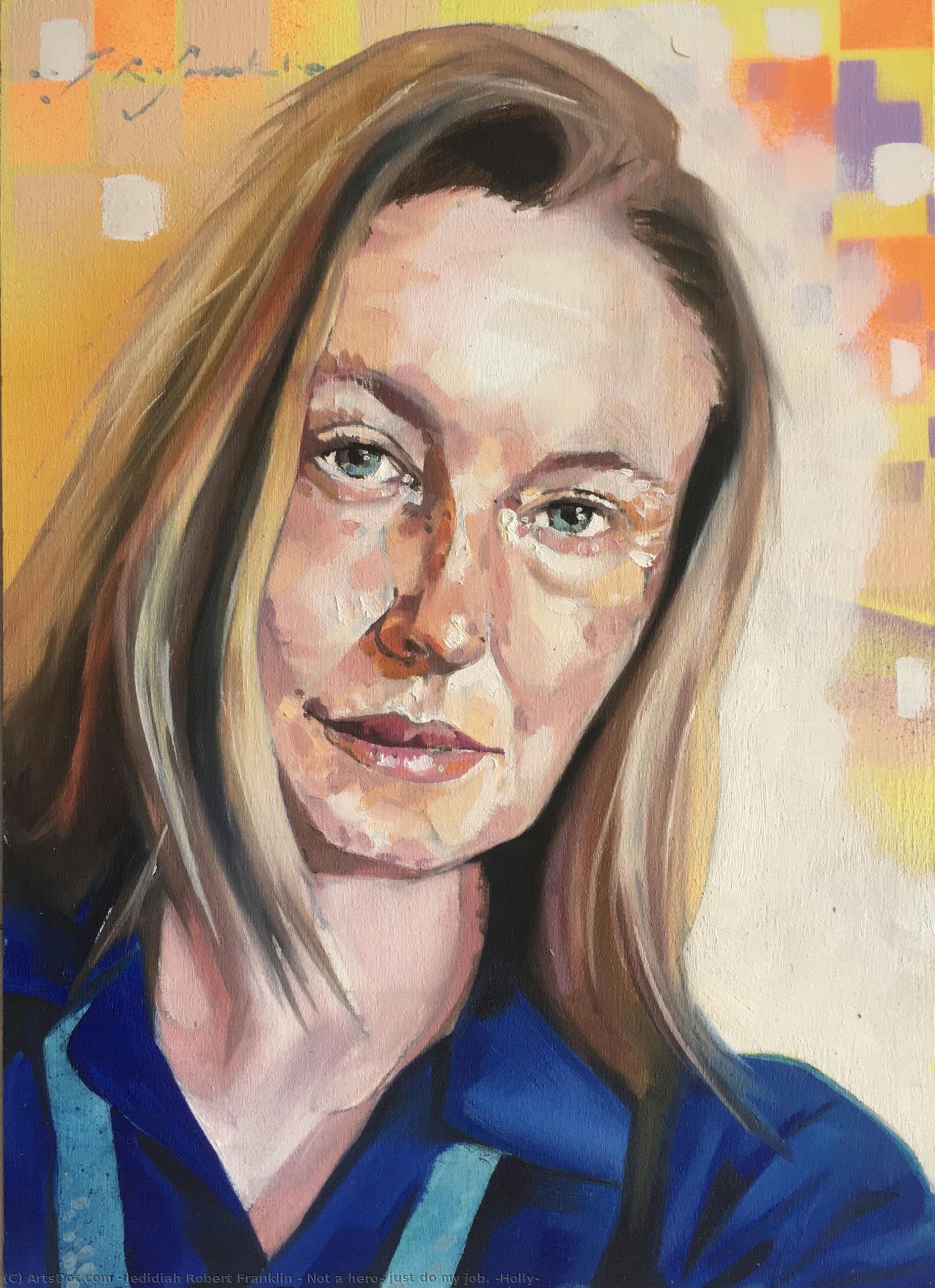
Not a hero, just do my job. (Holly)
 2020
2020 30.0 x 21.0 cm
 Paintings in Hospitals
 Read More
Purchase a high-resolution, enhanced digital image, far superior to the online preview.
Each file is meticulously prepared by our in-house specialists using advanced tools and expert manual retouching. We ensure every image has exceptional clarity, precise color accuracy, and fine detail.
The final file is delivered via email within 72 hours, optimized for immediate use in professional, editorial, and print environments. This is the same quality trusted by top-tier design studios, publishers, and galleries.
Digital Image
Download a high-resolution file for personal display, printing, and creative projects. ( Buy Print Buy Hand Made Painting)
Included in Every Digital Image Order
Expert Digital Delivery, Guaranteed
When you choose ArtsDot.com, you're not just getting an image - you're receiving a professionally enhanced digital artwork, crafted with precision and backed by a satisfaction guarantee. Here's everything that comes with your order, automatically:

Fast Email Delivery
Your high-resolution digital image file will be emailed to you within 72 hours of ordering - ready for immediate use.

AI-Enhanced Digital File
Your artwork is professionally optimized using advanced AI tools and manual editing, ensuring maximum detail, clarity, and color accuracy.

Free Lifetime Re-Delivery
Accidentally deleted or lost your file? No worries - we'll resend it to you anytime, free of charge.

No Import Fees - Ever
Enjoy your artwork instantly with zero customs, duties, or delivery fees - digital downloads are always tax-free.

Color Accuracy Guarantee
We ensure your digital image reflects the original colors as closely as possible using professional tools and color management.

60-Day Satisfaction Guarantee
If you're not satisfied with your digital image, we'll revise it or refund 100% within 60 days - no questions asked.

100% Money-Back Guarantee
Not satisfied? Get a full refund within 60 days of receiving your digital file - no questions asked.

Bulk Order Discounts
Buy 3 images, save 10% - Buy 5, save 15% - Buy 10+, save 20%. Great for creative projects, galleries, and agencies.
Related Artworks










Artist Biography
Jean-Michel Basquiat: A Voice of the Streets and a Revolutionary Artist
Born in Brooklyn, New York City, on December 22, 1960, Jean-Michel Basquiat emerged from the vibrant, often turbulent, cultural landscape of the late 1970s and early 1980s. His life was tragically cut short at the age of 27 in August 1988 due to a heroin overdose, but during his brief career, he left an indelible mark on the art world, becoming one of its most iconic and influential figures. Basquiat’s work wasn't simply about painting; it was a raw, urgent expression of identity, social commentary, and personal experience—a direct response to the inequalities and complexities of American society.
Initially collaborating with Al Diaz under the moniker SAMO (Street Art Movement Organization), Basquiat and Diaz began tagging subway cars in Manhattan during 1976. Their cryptic epigrams, a blend of poetry, social critique, and personal reflections, quickly gained attention within the burgeoning street art scene. These early works established a foundation for Basquiat’s later explorations, laying bare his interest in language, history, and the power of representation. The partnership dissolved in 1978, marking a pivotal shift in Basquiat's artistic trajectory as he began to develop his distinctive solo style.
The Neo-Expressionist Breakthrough
By the early 1980s, Basquiat transitioned from street art to gallery exhibitions, quickly gaining recognition for his unique approach within the burgeoning neo-expressionism movement. This European-born trend rejected the cool detachment of minimalism and embraced a return to subjective expression, often employing bold colors, expressive brushstrokes, and figurative imagery. Basquiat’s work stood apart, however, not merely as a revival of traditional painting techniques but as a potent fusion of graffiti aesthetics, historical references, and personal narratives.
His canvases became layered with symbols—skulls, crowns, musical instruments, anatomical figures, and text—creating complex visual puzzles that demanded interpretation. He drew heavily on his African American heritage, exploring themes of race, identity, power, and social injustice. References to historical figures like Rembrandt and Goya were interwoven with contemporary concerns, reflecting a desire to connect the past with the present. The iconic crown motif, frequently appearing in his work, symbolized both royalty and rebellion—a potent declaration of self-worth amidst systemic oppression.
Themes and Influences
Basquiat’s artistic vision was deeply rooted in the social and political realities of his time. He grappled with issues of poverty, racism, drug addiction, and the commodification of art – a critical examination of the very system he was entering. His work frequently referenced hip-hop culture, reflecting the vibrant energy and rebellious spirit of New York’s underground scene. Furthermore, Basquiat's interest in history—particularly African and European art—informed his stylistic choices and thematic concerns.
Beyond these overt themes, Basquiat’s work also explored personal experiences, including his struggles with addiction and his complex relationship with his father, Vincent Basquiat, a Haitian immigrant who had been involved in organized crime. His use of text—often incorporating fragments of poetry, song lyrics, and historical quotations—added another layer of meaning to his paintings, inviting viewers to engage in a dialogue about the complexities of representation and interpretation.
Legacy and Impact
Despite his tragically short life, Jean-Michel Basquiat’s impact on contemporary art is undeniable. His work continues to resonate with audiences today, not only for its aesthetic qualities but also for its powerful social commentary. He demonstrated the potential of street art as a legitimate form of artistic expression and challenged conventional notions of what constituted “high” art.
His retrospective at the Whitney Museum of American Art in 1992 cemented his place among the most important artists of the late 20th century, and his paintings now command staggering prices at auction. Basquiat’s legacy extends beyond the art world; he became a symbol of artistic rebellion, social activism, and the power of individual expression—a voice that continues to speak volumes across generations.

jedidiah robert franklin
1980 - , United States of America
Quick Facts
- Artistic Movement Or Style: Neo-expressionism
- Artists Or Movements Influenced By This Artist:
- Graffiti art
- Hip-hop culture
- Artists Who Influenced This Artist:
- Andy Warhol
- Keith Haring
- Date Of Birth: December 22, 1960
- Date Of Death: August 12, 1988
- Full Name: Jean-Michel Basquiat
- Nationality: American
- Notable Artworks:
- Irony of Negro Policeman
- Skull of Doom
- Untitled
- Boy and Dog in a Johnnypump
- Defacement
- Hollywood Africans
- Place Of Birth: New York City, U.S.

