 Preview
 Send
Send Share
Share
 Details

 Download
 Similars
 X-Ray
X-Ray Diaporama
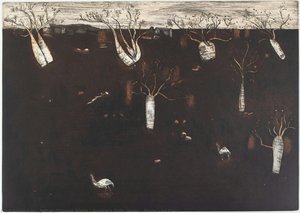
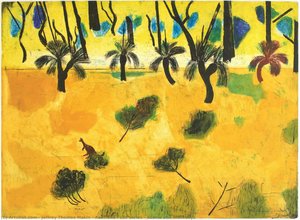
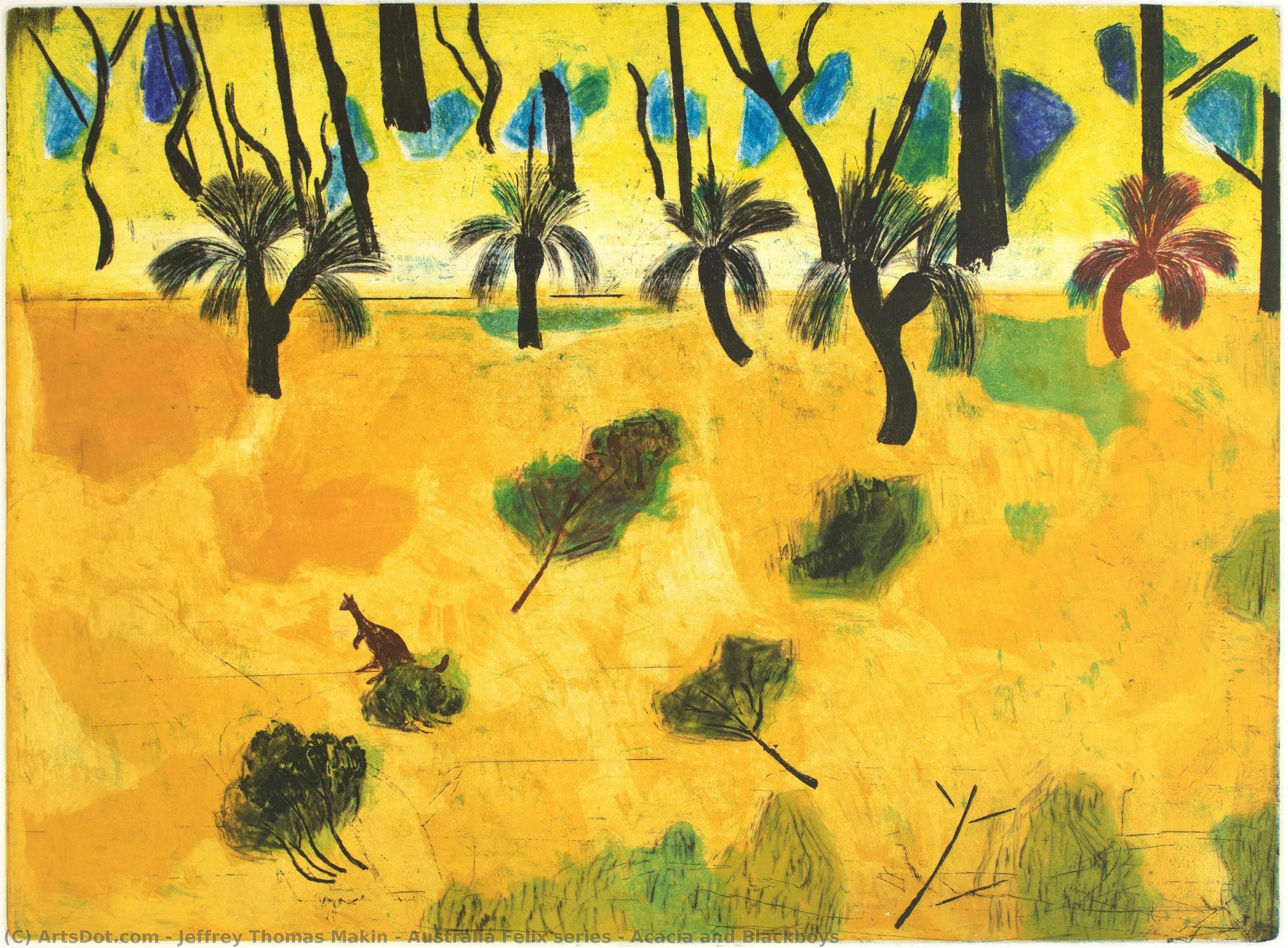
Australia Felix series − Acacia and Blackboys
 Etching
 2004
2004- Contemporary
 76.0 x 56.0 cm
 Central Goldfields Art Gallery
 Read More
Giclée / Art Print
Museum-quality giclée or canvas print with fast production and flexible finish options. ( Buy Hand Made Painting Buy Image)




P118B $10

P118H $10

P118W $10

P438Z $10

P508JH $12

P508YH $12

P805H $10

P805Z $10

P919BZ $10

P919G $10

P919XJ $10

P959ZH $10

P968JZ $12

W106C $8

W218G $10

W218JH $8

W218Y $10

W307PJ $10

W316G $10

W316PJ $8

W316Y $10

W398PJ $8

W4111J $10

W500HY $15

W500JH $15

W692G $12

W849H $8

W940BG $15

W953PJ $8




Pick from our preset sizes that match the artwork's original proportions.

You may enter your own dimensions to fit a specific frame or space. If your selected size does not match the original image's proportions, we will either crop the artwork or extend the image with a mirrored or solid-fill edge. A digital mockup will be sent for your approval before production begins.
Please note that the on-screen preview does not reflect the actual cropping or extension. Only the mockup will accurately show the final composition.
While custom sizes are available, we recommend selecting a dimension from the predefined list to preserve the original proportions.
Worldwide Delivery () in 2 weeks instead of standard 4/5 weeks. (24 August)

Free Worldwide Express Shipping

High-Quality Linen Canvas

Full Shipping Insurance

Customs Tax Refund Guarantee

True Color Matching Guarantee

60-Day Return Policy (Defects Only)

100% Money-Back Guarantee

Bulk Discount Offer
 Glass option is only available in size under 110 CM

Australia Felix series − Acacia and Blackboys
Giclée / Art Print
Reproduction Size
-


Total Price
$ 63
Collectible Description
A Vision of the Golden Land
In the evocative masterpiece Australia Felix series − Acacia and Blackboys, artist Jeffrey Makin invites us into a vibrant, living tapestry of the Australian landscape. This work is part of his celebrated Australia Felix suite, a collection of ten etchings that pays homage to the historical concept of a "fortunate Australia." The title itself draws from the Latin phrase coined by the explorer Major Mitchell in 1836, suggesting a land of abundance and promise. Through his masterful use of color and composition, Makin does more than merely depict flora and fauna; he captures the very soul of the Central Victorian terrain, breathing life into the ancient Acacia and Blackboy trees that anchor the scene.
The painting unfolds as a lively, sun-drenched field where nature and subtle human presence coexist in a delicate dance. The background is dominated by lush, verdant trees, their leaves shimmering with the vitality of the Australian sun. Scattered throughout this emerald expanse are birds, some caught in mid-flight and others resting quietly upon sturdy branches, adding a rhythmic pulse to the composition. This sense of movement is beautifully balanced by the presence of two figures positioned within the landscape, serving as quiet observers of the natural grandeur. Their placement provides a sense of scale, reminding the viewer of the profound connection between humanity and the untamed beauty of the bush.
Technique and Emotional Resonance
Makin’s approach is deeply rooted in the tradition of plein air artistry, a technique where the artist works outdoors to capture the fleeting nuances of light and atmosphere. In this piece, his ability to translate direct observation into a rich, painterly texture is evident. The interplay of light across the field creates a sense of depth and luminosity that draws the eye inward, making the viewer feel as though they are standing amidst the swaying branches themselves. The color palette is both bold and harmonious, utilizing warm tones to evoke the heat of the day alongside cool greens that suggest the refreshing shade of the canopy.
For collectors and interior designers alike, this artwork offers a profound emotional impact. It is a piece that radiates optimism and tranquility, making it an ideal centerpiece for spaces designed to inspire peace or stimulate conversation. The meticulous detail in the depiction of the birds and the textured bark of the trees provides a sophisticated complexity that rewards long-term contemplation. Whether displayed in a contemporary gallery setting or as a soulful addition to a classic study, this reproduction serves as a window into a world where the majesty of the Australian wilderness remains eternally vibrant and full of life.
Related Artworks
Artist Biography
The Soul of the Australian Landscape: The Artistry of Jeffrey Makin
Born in 1943 in Wagga Wagga, New South Wales, Jeffrey Makin has emerged as a profound voice in the realm of Australian landscape painting. His journey is one deeply rooted in both personal heritage and academic rigor, beginning with an early spark of creativity nurtured by his parents and refined under the guidance of his art teacher at Cowra High School. A defining moment in his youth was receiving a set of pastels from his grandmother—a gift that carried the weight of a prestigious lineage tracing back to the legendary English portraitist Sir Joshua Reynolds. This connection to the masters of the past instilled in him a lifelong respect for artistic tradition, even as he sought to forge a modern visual language for the Australian continent.
Makin’s formal evolution began in 1961 at the Julian Ashton School of Art in Sydney, where he studied under the esteemed Desiderius Orban. This period of mentorship was crucial, placing him within a lineage of significant Australian talent, as Orban would also go on to mentor the celebrated artist John Olsen. Seeking deeper technical mastery, Makin pursued a diploma in Painting at the National Art School in Sydney between 1962 and 1966, earning an Art Progression Student Scholarship that allowed him to focus intensely on his craft. However, his approach to art was never merely aesthetic; it was deeply intellectual. Through a Masters by Research at Deakin University, he explored the philosophical depths of his subject matter, producing a thesis titled ‘Meaning, Significance, and the Sublime in the Depiction of the Australian Landscape.’ This academic foundation allowed him to approach the canvas not just as a painter, but as a scholar of the sublime.
Technique and the Spirit of En Plein Air
At the heart of Makin’s practice is a devotion to en plein air painting—the act of working outdoors, directly in the presence of the subject. This method allows him to capture the fleeting nuances of light, atmosphere, and the raw essence of the Australian environment as it unfolds in real-time. His style is a sophisticated tapestry woven from Impressionistic light and Expressionist texture. By blending these two movements, he achieves a sense of movement and vitality that transcends mere representation. He does not simply document a scene; he interprets the emotional resonance of the land, using bold strokes and layered textures to evoke the ruggedness and the quiet majesty of the bush and coastline.
The significance of his work lies in its ability to bridge the gap between traditional observation and modern interpretation. His paintings serve as a meditation on the Australian identity, reflecting a deep-seated connection to the natural world. Through his mastery of color and form, Makin invites the viewer to experience the landscape not as a distant vista, but as a living, breathing entity. His contributions to the Australian art canon are marked by this unique ability to find the eternal within the ephemeral, making him a pivotal figure in contemporary landscape art.
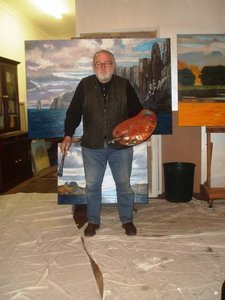
jeffrey thomas makin
1943 - , Australia
Quick Facts
- Artistic Movement Or Style: En plein air painting; Impressionism
- Artists Or Movements Influenced By This Artist: ['Landscape Painting']
- Artists Who Influenced This Artist:
- Desiderius Orban
- Joshua Reynolds
- Date Of Birth: 1943
- Full Name: Jeffrey Thomas Makin
- Nationality: Australian
- Notable Artworks:
- Australia Felix series
- Cape Schanck
- Grand Duke
- Place Of Birth: Wagga Wagga, Australia
Related Articles
Arboreal Echoes: A Historical & Artistic Exploration of Trees in Painting
Explore the rich history of trees in painting! Discover symbolism, Romantic masterpieces by Caspar David Friedrich & beyond. A curated journey for art enthusiasts.

Evocations of Place: A Historical Journey Through Landscape Art
Explore the rich history of landscape art with ArtsDot. Discover renowned artists, movements like Impressionism & Romanticism, and expert guidance for collecting timeless pieces. Find your perfect serene escape today!

Romantic Landscapes: 10 Masterpieces for Your Home | ArtsDot
Journey through 10 Romantic landscape masterpieces by Friedrich, Turner & Cole. Explore emotional art, sublime nature scenes & iconic 19th-century paintings. Find museum-quality reproductions for your home at ArtsDot.com – discover the full collection online!

John Constable's Masterpieces: Explore 25 Iconic Landscapes for Your Home
Journey through John Constable's 25 most celebrated landscapes. Explore Romanticism, Dedham Vale & his masterful use of light in iconic paintings like 'Hay Wain'. Find museum-quality art reproductions and elevate your home decor on ArtsDot.com.
Arboreal Echoes: A Historical & Artistic Exploration of Trees in Painting
Explore the rich history of trees in painting! Discover symbolism, Romantic masterpieces by Caspar David Friedrich & beyond. A curated journey for art enthusiasts.