 Preview
 Send
Send Share
Share
 Details

 Download
 Similars
 X-Ray
X-Ray Diaporama
 Stats
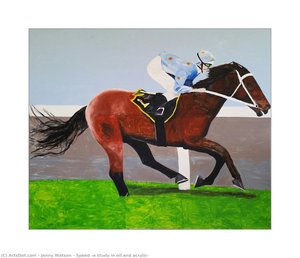
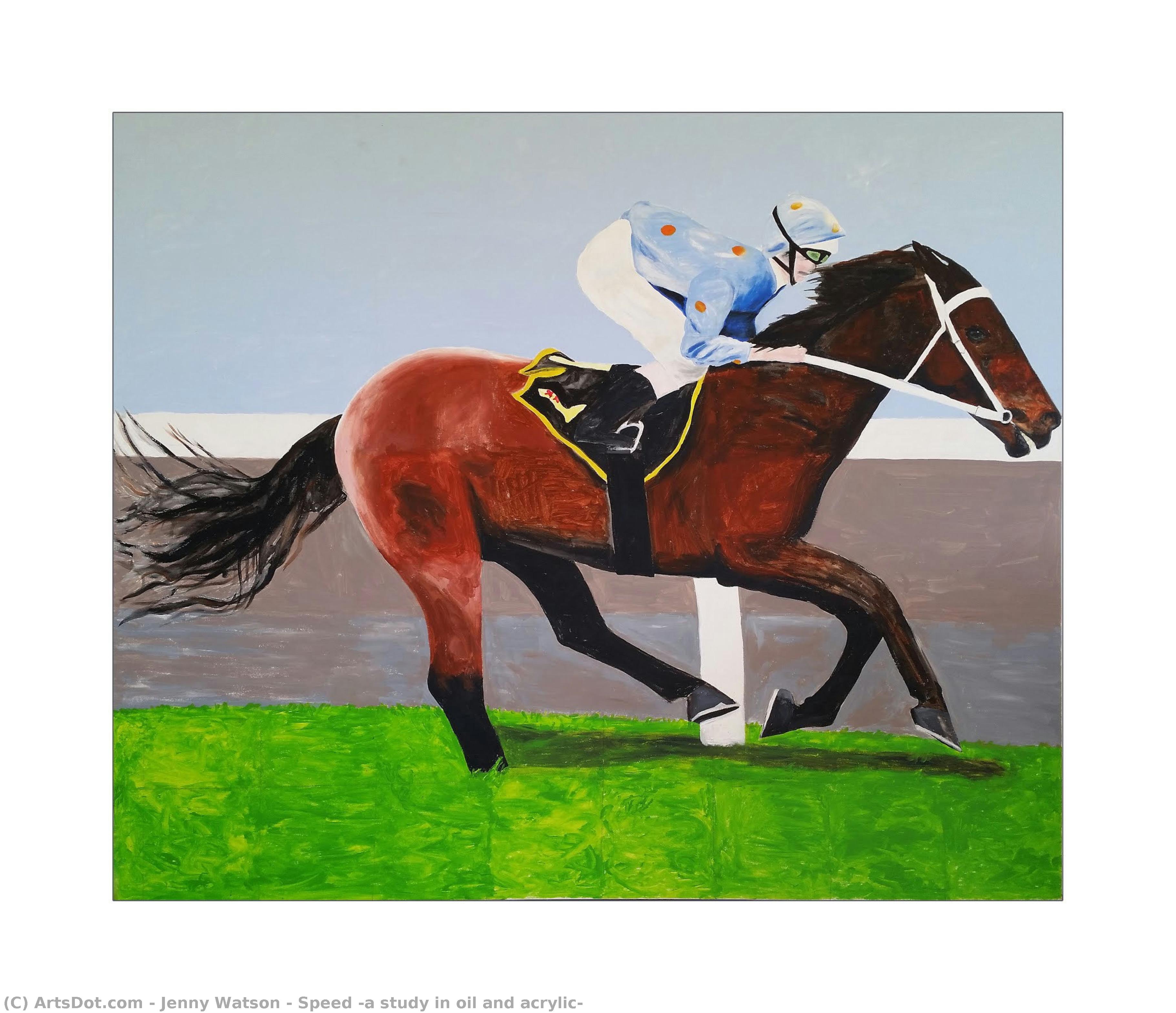
StatsSpeed (a study in oil and acrylic)
 2014
2014 162.0 x 184.0 cm
 Ian Potter Museum of Art
 Read More
Giclée / Art Print
Museum-quality giclée or canvas print with fast production and flexible finish options. ( Buy Hand Made Painting Switch to Digital Image)




































Pick from our preset sizes that match the artwork's original proportions.

You may enter your own dimensions to fit a specific frame or space. If your selected size does not match the original image's proportions, we will either crop the artwork or extend the image with a mirrored or solid-fill edge. A digital mockup will be sent for your approval before production begins.
Please note that the on-screen preview does not reflect the actual cropping or extension. Only the mockup will accurately show the final composition.
While custom sizes are available, we recommend selecting a dimension from the predefined list to preserve the original proportions.
Worldwide Delivery () in 2 weeks instead of standard 4/5 weeks. (12 September)

Free Worldwide Express Shipping

High-Quality Linen Canvas

Full Shipping Insurance

Customs Tax Refund Guarantee

True Color Matching Guarantee

100-Day Return Policy (Defects Only)

100% Money-Back Guarantee

Bulk Discount Offer
 Glass option is only available in size under 110 CM

Speed (a study in oil and acrylic)
Giclée / Art Print
Reproduction Size
-


Total Price
$ 63
Related Artworks









Artist Biography
Early Life and Artistic Foundations
Jennifer Watson, born in Melbourne, Australia, in 1951, emerged as a significant voice in the Australian art landscape during a period of profound change and experimentation. Her formative years in the 1970s were deeply influenced by the burgeoning conceptual art movement, coupled with the raw energy of the punk scene—both in her native Melbourne and during time spent in London. This unique confluence of intellectual rigor and rebellious spirit would become a defining characteristic of her work. Watson’s early education included a Diploma of Painting from the National Gallery of Victoria Art School in 1972, followed by a Diploma of Education at the State College of Victoria in 1973. However, it wasn't merely formal training that shaped her artistic trajectory; rather, it was an instinctive rejection of conventional representation and a desire to explore new modes of visual communication. She held her first solo exhibition in 1973, marking the beginning of a career dedicated to challenging boundaries and forging a distinctly personal aesthetic.A Conceptual Approach to Autobiographical Painting
Watson’s art is often described as ‘conceptual painting,’ but this label only partially captures its complexity. While deeply rooted in conceptual ideas—particularly concerning the relationship between language, image, and subjectivity—her work consistently manifests as intensely personal and emotionally resonant paintings. She strategically moved away from realism in the 1970s, developing a visual language that combines whimsical imagery with fragments of text, often sourced from everyday life or her own internal monologue. This deliberate combination creates a dialogue between the conscious and subconscious, inviting viewers to contemplate the interplay between memory, fantasy, feminism, and personal experience. Her paintings aren’t simply representations *of* things; they are explorations *into* the very nature of representation itself. Watson herself describes her practice as a “painted diary,” suggesting an ongoing process of self-discovery and documentation through art.Influences and Development: Punk, Feminism, and Beyond
The impact of punk on Watson’s work is often underestimated. The DIY ethos, anti-establishment stance, and raw aesthetic of the movement provided a crucial framework for her rejection of traditional artistic norms. This rebellious spirit translated into a willingness to experiment with unconventional materials—particularly fabrics—and a refusal to adhere to established hierarchies within the art world. Simultaneously, the second-wave feminist movement profoundly shaped her perspective, encouraging her to explore themes of female identity, subjectivity, and experience. Watson’s work doesn't explicitly champion any particular political agenda; rather, it subtly interrogates societal norms and challenges patriarchal structures through its intimate and personal narratives. Her paintings frequently feature recurring figures—often self-portraits or representations of women—who embody a sense of resilience, vulnerability, and quiet strength.Major Achievements and International Recognition
Throughout the 1980s, Watson gained prominence in Australia as a leading figure in the investigation of visual representation. Her unique approach to painting—combining text and image with an intimate emotional depth—set her apart from her contemporaries. In 1993, she achieved significant international recognition by representing Australia at the 45th Venice Biennale, a pivotal moment in her career that solidified her position on the global art stage. More recently, a major survey of her work was presented at the Museum of Contemporary Art in Sydney and Heide Museum of Modern Art in Melbourne in 2017, offering a comprehensive overview of her four-decade-long practice. Her paintings are now held in numerous prestigious collections worldwide, including the Art Gallery of New South Wales, the National Gallery of Australia, and the Yokohama Museum of Art.Historical Significance and Lasting Legacy
Jenny Watson’s contribution to Australian art extends beyond her individual body of work. She has paved the way for a generation of artists who embrace autobiographical narratives and challenge conventional notions of representation. Her willingness to blend conceptual rigor with personal emotion, coupled with her distinctive visual language, has had a lasting impact on contemporary painting practice. Watson’s legacy lies in her ability to create art that is both deeply personal and universally relatable, inviting viewers to contemplate the complexities of human experience through a unique and captivating lens. Her work continues to be celebrated for its subtle humor, acerbic emotional detail, and enduring relevance in an ever-changing artistic landscape. She remains a vital force in Australian art, mentoring emerging artists at Queensland College of Art, Griffith University, and continuing to push the boundaries of painting through her ongoing practice.
jenny watson
1951 - , Australia
Quick Facts
- Artistic Movement Or Style: Post-Conceptual Painting
- Artists Who Influenced This Artist:
- Conceptual artists
- Feminist artists
- Punk scene artists
- Date Of Birth: 1951
- Full Name: Jennifer Watson
- Nationality: Australian
- Notable Artworks:
- The Fabric of Fantasy
- Chronicles
- Just a Girl
- Place Of Birth: Melbourne, Australia