 Preview
 Send
Send Share
Share
 Details

 Download
 Similars
 X-Ray
X-Ray Diaporama
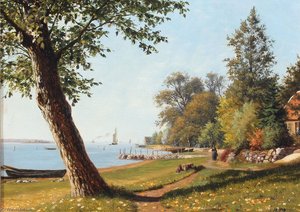
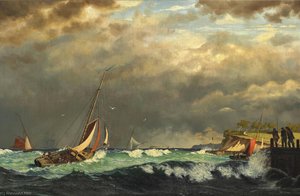
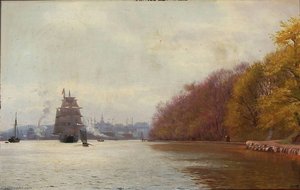
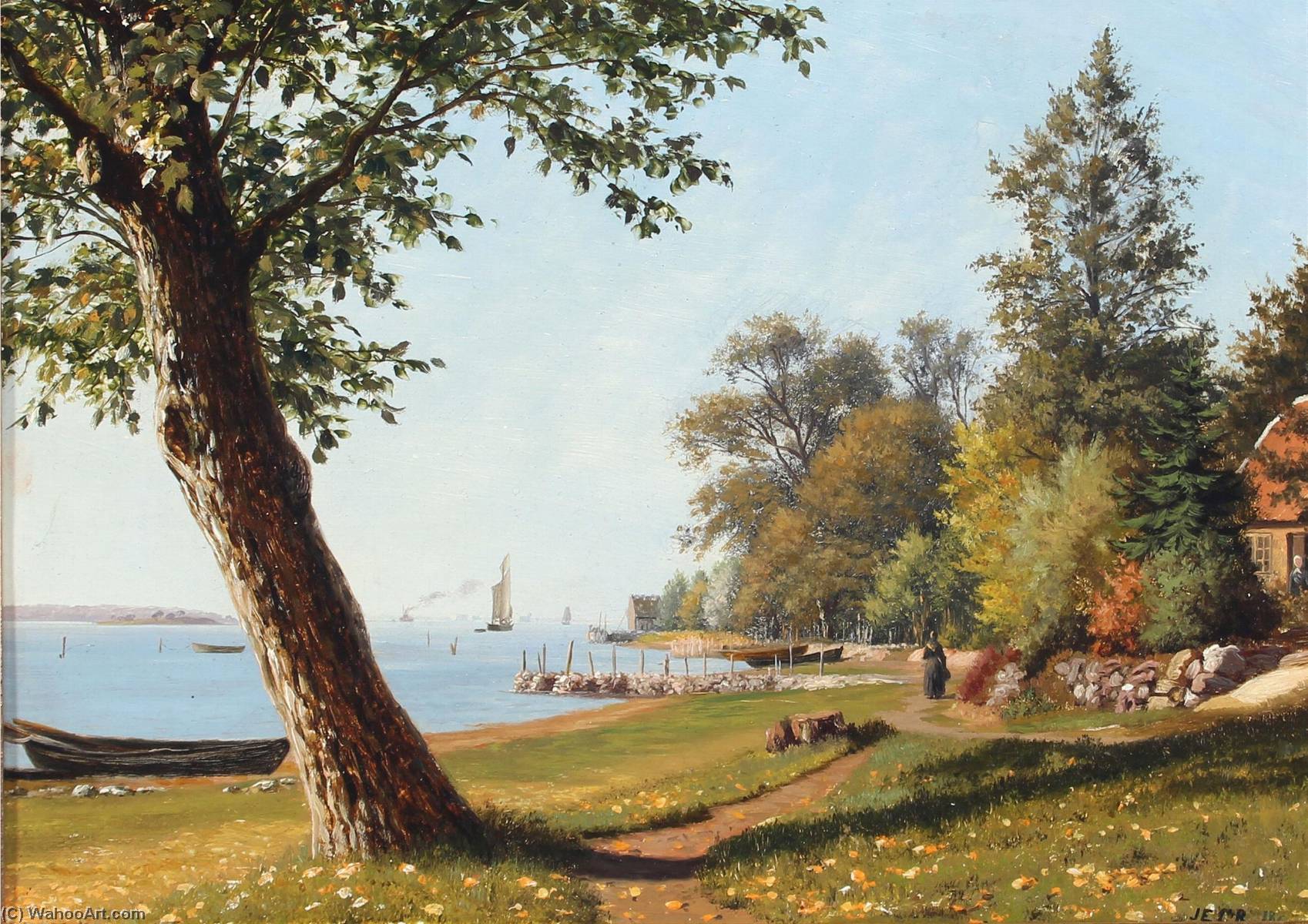
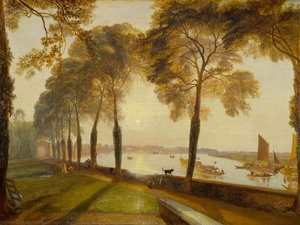
Scenery from Svendborgsund a quiet summer day
 26.0 x 36.0 cm
 Read More
Giclée / Art Print
Museum-quality giclée or canvas print with fast production and flexible finish options. ( Buy Hand Made Painting Buy Image)




































Pick from our preset sizes that match the artwork's original proportions.

You may enter your own dimensions to fit a specific frame or space. If your selected size does not match the original image's proportions, we will either crop the artwork or extend the image with a mirrored or solid-fill edge. A digital mockup will be sent for your approval before production begins.
Please note that the on-screen preview does not reflect the actual cropping or extension. Only the mockup will accurately show the final composition.
While custom sizes are available, we recommend selecting a dimension from the predefined list to preserve the original proportions.
Worldwide Delivery () in 2 weeks instead of standard 4/5 weeks. (26 August)

Free Worldwide Express Shipping

High-Quality Linen Canvas

Full Shipping Insurance

Customs Tax Refund Guarantee

True Color Matching Guarantee

60-Day Return Policy (Defects Only)

100% Money-Back Guarantee

Bulk Discount Offer
 Glass option is only available in size under 110 CM

Scenery from Svendborgsund a quiet summer day
Giclée / Art Print
Reproduction Size
-


Total Price
$ 63
Related Artworks









Artist Biography
The Arctic Visionary: The Life and Legacy of Jens Erik Carl Rasmussen
In the annals of Scandinavian maritime art, few names evoke the raw, untamed spirit of the North as powerfully as Jens Erik Carl Rasmussen. Born in 1841 in Ærøskøbing, Denmark, Rasmussen was a man whose artistic soul was forged by the salt spray of the sea and the silent, crystalline majesty of the Arctic. Though he was born into a family of tailors—a lineage that eventually rose to the prominence of city treasurers—his heart was never tethered to the domesticity of trade. Instead, it belonged to the horizon. His early life was marked by a profound sense of exploration, nurtured by formative voyages aboard merchant ships where the rhythmic motion of the waves and the vastness of the ocean became his first true teachers. These maritime experiences instilled in him an observational prowess that would later allow him to translate the most turbulent seas and the most serene icebergs onto canvas with unparalleled emotional depth.
Rasmussen’s formal artistic journey began in the bustling creative atmosphere of Copenhagen. Seeking to refine his natural talent, he pursued rigorous training under the guidance of esteemed architects such as Hans J. Holm and C.V. Nielsen. This architectural foundation proved vital; it gifted him a meticulous understanding of perspective and structural detail that would later ground his more romanticized landscapes in a sense of undeniable reality. His education continued under the landscape painter C.F. Aagaard at the Royal Danish Academy of Fine Arts, where he learned to manipulate light and shadow to evoke the atmospheric weight of the natural world. This period of academic discipline provided the technical scaffolding upon which he would later build his most ambitious and groundbreaking works.
The Greenland Expedition and the Mastery of Light
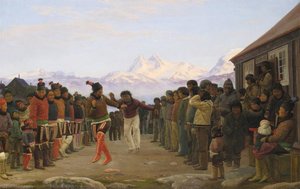
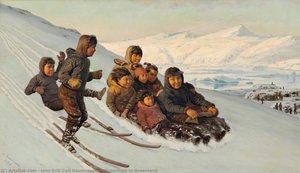
While many of his contemporaries sought inspiration in the sun-drenched landscapes of Southern Europe, Rasmussen turned his gaze toward the frozen frontiers of the North. His expedition to Greenland between 1870 and 1871 remains the defining chapter of his career. Armed with little more than sketching tools and an iron will, he traversed the Arctic wilderness, documenting a world that few Europeans had ever witnessed. This was not merely a journey of geographical discovery, but one of profound artistic revelation. In the stark, alien landscapes of Greenland, Rasmussen found a new vocabulary for his art. He moved beyond simple representation to capture the silent majesty of the ice—the way light refracts through a glacier, the crushing weight of a winter sky, and the resilient spirit of the local communities living on the edge of the habitable world.
His work from this era is characterized by a remarkable duality: it possesses both a scientific accuracy in its depiction of Arctic topography and a deeply moving, almost spiritual, sense of solitude. He was a pioneer in portraying the lives of Greenlanders with a level of realism that avoided the pitfalls of mere exoticism, instead focusing on the everyday joys and sorrows of their existence. Through his eyes, the viewer does not just see a landscape; they feel the biting chill of the wind and the profound stillness of the tundra. This ability to bridge the gap between the physical reality of the Arctic and its emotional resonance is what elevates his work from mere maritime documentation to high art.
A Legacy Carved in Sea and Stone
In his later years, Rasmussen sought a sense of permanence and community, relocating to Marstal on Ærø Island in 1880. Here, he established himself not only as a painter of the sea but as a respected muralist. One of his most enduring contributions to Danish cultural heritage is his monumental fresco in Marstal Church, a breathtaking depiction of Jesus calming the storm. This work serves as a poignant metaphor for his entire oeuvre—the struggle of human endeavor against the overwhelming forces of nature. His ability to command large-scale religious narratives with the same vigor he applied to turbulent seas demonstrates the true breadth of his talent.
Though his life was cut short in 1893, the impact of Jens Erik Carl Rasmussen continues to resonate through the halls of maritime museums and art galleries. His legacy is defined by several key achievements:
- Pioneering Arctic Realism: He was among the first Danish painters to bring the authentic, unvarnished beauty of Greenland to the European consciousness.
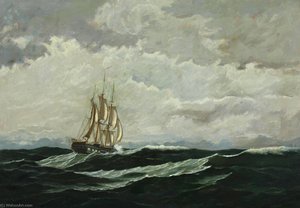
- Mastery of Maritime Drama: His ability to capture the kinetic energy of high seas and warships remains a benchmark for 19th-century marine art.
- Architectural Precision: The integration of his architectural training allowed him to render complex maritime structures and icy terrains with exceptional structural integrity.
- Cultural Documentation: Beyond landscapes, his empathetic portrayal of Arctic life provided a vital historical record of Greenlandic culture during a period of significant change.
Today, when we look upon a Rasmussen seascape, we are not merely looking at water and wood; we are witnessing a lifelong dialogue between an artist and the infinite. He remains a singular figure in Scandinavian history, a painter who found his greatest truths in the coldest reaches of the earth.
jens erik carl rasmussen
1841 - 1893
Quick Facts
- Artistic Movement Or Style: Maritime Art
- Artists Or Movements Influenced By This Artist: ['Romanticism']
- Artists Who Influenced This Artist:
- Didrik Frisch
- Hans J. Holm
- Date Of Birth: 1841
- Date Of Death: 1893
- Full Name: Jens Erik Carl Rasmussen
- Nationality: Danish
- Notable Artworks:
- Wintertime in Greenland
- Scenery from Svendborgsund
- Place Of Birth: Denmark