

 Preview
 Send
Send Share
Share
 Details

 Download
 Similars
 X-Ray
X-Ray Diaporama
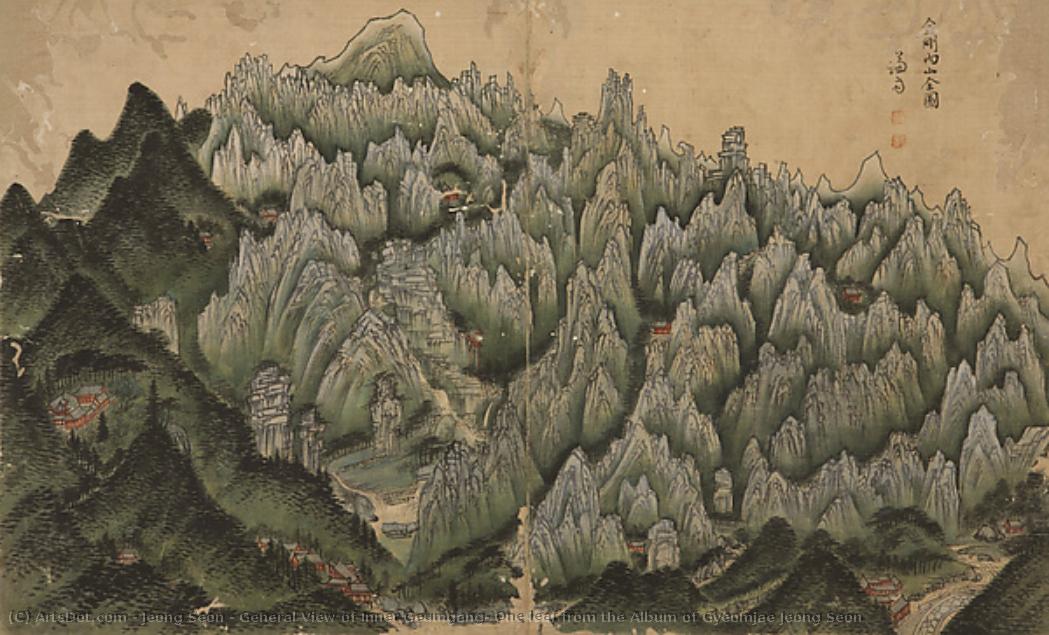
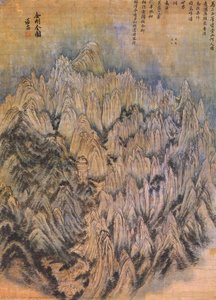
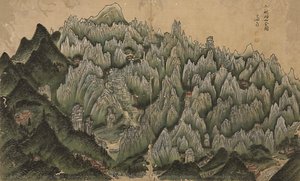
General View of Inner Geumgang; One leaf from the Album of Gyeomjae Jeong Seon
 1740
1740 22.0 x 54.0 cm
 Read More
Giclée / Art Print
Museum-quality giclée or canvas print with fast production and flexible finish options. ( Buy Hand Made Painting Buy Image)




































Pick from our preset sizes that match the artwork's original proportions.

You may enter your own dimensions to fit a specific frame or space. If your selected size does not match the original image's proportions, we will either crop the artwork or extend the image with a mirrored or solid-fill edge. A digital mockup will be sent for your approval before production begins.
Please note that the on-screen preview does not reflect the actual cropping or extension. Only the mockup will accurately show the final composition.
While custom sizes are available, we recommend selecting a dimension from the predefined list to preserve the original proportions.
Worldwide Delivery () in 2 weeks instead of standard 4/5 weeks. (27 August)

Free Worldwide Express Shipping

High-Quality Linen Canvas

Full Shipping Insurance

Customs Tax Refund Guarantee

True Color Matching Guarantee

60-Day Return Policy (Defects Only)

100% Money-Back Guarantee

Bulk Discount Offer
 Glass option is only available in size under 110 CM

General View of Inner Geumgang; One leaf from the Album of Gyeomjae Jeong Seon
Giclée / Art Print
Reproduction Size
-


Total Price
$ 63
Related Artworks










Artist Biography
A Pioneer of Korean Landscape: The Life and Art of Jeong Seon
Jeong Seon, known to the world by his pen name Gyeomjae, emerged from a Korea undergoing subtle yet significant shifts in intellectual and artistic currents during the late 17th and early 18th centuries. Born in 1676 in the heart of Seoul, Jeong Seon’s beginnings were marked not by privilege but by modest circumstances. Though his family boasted an illustrious lineage, they lacked the financial stability to support a traditional scholarly path for their son. This circumstance, however, proved unexpectedly liberating. Denied access to the formal training reserved for the *yangban* class—the scholar-officials—Jeong Seon was free to forge his own artistic direction, unburdened by convention. He began painting daily, driven by an innate talent and a relentless dedication that would define his prolific career. This early immersion in observation and practice laid the foundation for a revolutionary approach to landscape painting in Korea.Breaking with Tradition: The Birth of “True-View” Painting
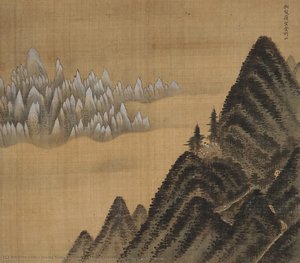
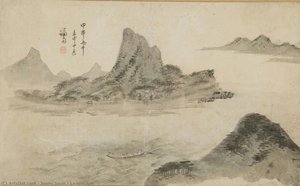
Prior to Jeong Seon, Korean landscape painting was heavily influenced by Chinese styles, often adhering to established conventions that prioritized idealized representations over realistic depictions. Jeong Seon boldly departed from this tradition, pioneering what became known as "true-view" landscape painting (*jingyeong sansuhwa*). This wasn’t merely a stylistic shift; it represented a fundamental change in artistic philosophy. Instead of recreating landscapes based on literary allusions or imagined ideals, Jeong Seon ventured into the Korean countryside, directly observing and meticulously recording the natural world before him. He focused intently on Korea's unique geographical features—its majestic mountains, winding rivers, and dramatic coastlines—imbuing his work with a sense of national identity previously unseen in Korean art. His paintings weren’t simply landscapes; they were portraits of Korea itself. This dedication to realism was not about photographic accuracy but rather capturing the *essence* of a place, its atmosphere, and its spirit.Influences and Artistic Style
While Jeong Seon broke from many traditions, he wasn’t entirely without influences. The intellectual ferment of his time, particularly the *Silhak* movement—a school of thought advocating practical learning and empirical observation—undoubtedly shaped his artistic approach. Silhak scholars emphasized the importance of understanding Korea's geography, economy, and culture, a sentiment that resonated deeply with Jeong Seon’s commitment to depicting the Korean landscape accurately. Artistically, he admired the work of the Chinese painter Mi Fei (1052–1107), known for his expressive brushwork and atmospheric effects. However, Jeong Seon adapted these influences to create a distinctly Korean style characterized by bold brushstrokes, layered ink washes, and a masterful interplay of light and shadow. He skillfully intermixed dark and light areas, creating depth and texture that brought his landscapes to life. His technique involved building up layers of ink, allowing the underlying tones to peek through, resulting in a dynamic and visually compelling effect.Mount Geumgang and Lasting Legacy
Perhaps Jeong Seon’s most celebrated subject was Mount Geumgang (also known as Diamond Mountains), located on the border between Korea and North Korea. He painted this iconic mountain range over one hundred times, each rendition revealing a new perspective or capturing a different mood. Works like “General View of Inner Geumgang” and his album *Pungak-docheop* are considered masterpieces of Korean landscape painting. These paintings weren’t just artistic achievements; they were acts of national pride, showcasing the beauty and grandeur of Korea's natural heritage. Jeong Seon’s innovative style profoundly impacted subsequent generations of Korean artists. He is rightfully regarded as one of the most important figures in Korean art history, inspiring countless others to embrace realism and explore their own cultural identity through landscape painting. His legacy continues to resonate today, influencing contemporary artists and shaping our understanding of Korea's artistic heritage. He died in 1759, leaving behind a body of work that stands as a testament to his vision, skill, and unwavering dedication to capturing the soul of Korea on canvas.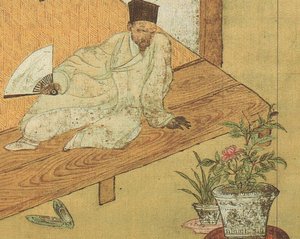
Jeong Seon
1676 - 1759 , South Korea
Quick Facts
- Artistic Movement Or Style: True-view landscape
- Artists Or Movements Influenced By This Artist: ['Korean landscape painters']
- Artists Who Influenced This Artist: ['Mi Fei']
- Date Of Birth: February 16, 1676
- Date Of Death: 1759
- Full Name: Jeong Seon
- Nationality: Korean
- Notable Artworks:
- General View of Inner Geumgang
- Album of Mount Geumgang
- General View of Mt. Geumgangsan
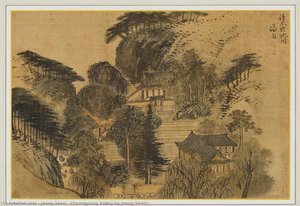
- Cheongpung Valley
- Hyeolmang Peak
- Place Of Birth: Seoul, South Korea
![Manpok Valley, from the Album of Divine Paintings by Gyeomjae [Jeong Seon] and Hyeonjae [Sim Sajeong] (Gyeomhyeon sinpumcheop)](/media/artworks/images-thumb/4d/d4/4dd41834e7fd3b11584e06cc6510ed4c.jpg)

![Hyeolmang Peak, from the Album of Divine Paintings by Gyeomjae [Jeong Seon] and Hyeonjae [Sim Sajeong] (Gyeomhyeon sinpumcheop)](/media/artworks/images-thumb/7b/24/7b246e631e1457a72ecc53dca219642c.jpg)

