

 Preview
 Send
Send Share
Share
 Details

 Download
 Similars
 X-Ray
X-Ray Diaporama
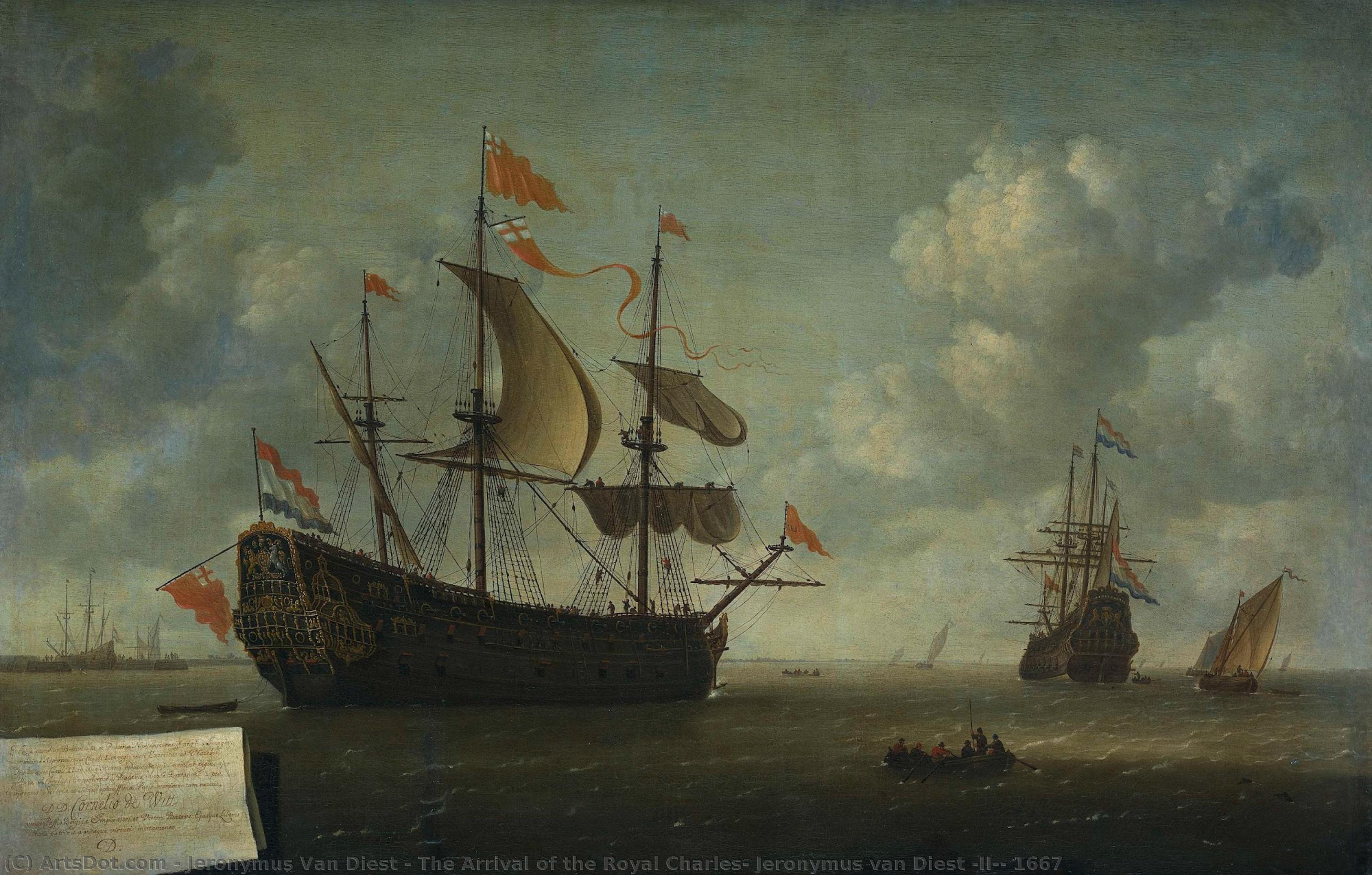
The Arrival of the Royal Charles, Jeronymus van Diest (II), 1667
 1667
1667 68.0 x 104.0 cm
 Read More
Purchase a high-resolution, enhanced digital image, far superior to the online preview.
Each file is meticulously prepared by our in-house specialists using advanced tools and expert manual retouching. We ensure every image has exceptional clarity, precise color accuracy, and fine detail.
The final file is delivered via email within 72 hours, optimized for immediate use in professional, editorial, and print environments. This is the same quality trusted by top-tier design studios, publishers, and galleries.
Digital Image
Download a high-resolution file for personal display, printing, and creative projects. ( Buy Print Buy Hand Made Painting)
Included in Every Digital Image Order
Expert Digital Delivery, Guaranteed
When you choose ArtsDot.com, you're not just getting an image - you're receiving a professionally enhanced digital artwork, crafted with precision and backed by a satisfaction guarantee. Here's everything that comes with your order, automatically:

Fast Email Delivery
Your high-resolution digital image file will be emailed to you within 72 hours of ordering - ready for immediate use.

AI-Enhanced Digital File
Your artwork is professionally optimized using advanced AI tools and manual editing, ensuring maximum detail, clarity, and color accuracy.

Free Lifetime Re-Delivery
Accidentally deleted or lost your file? No worries - we'll resend it to you anytime, free of charge.

No Import Fees - Ever
Enjoy your artwork instantly with zero customs, duties, or delivery fees - digital downloads are always tax-free.

Color Accuracy Guarantee
We ensure your digital image reflects the original colors as closely as possible using professional tools and color management.

60-Day Satisfaction Guarantee
If you're not satisfied with your digital image, we'll revise it or refund 100% within 60 days - no questions asked.

100% Money-Back Guarantee
Not satisfied? Get a full refund within 60 days of receiving your digital file - no questions asked.

Bulk Order Discounts
Buy 3 images, save 10% - Buy 5, save 15% - Buy 10+, save 20%. Great for creative projects, galleries, and agencies.
Related Artworks









Artist Biography
The Enigmatic Vision of Jeronymus Van Diest
Jeronymus Van Diest remains a figure shrouded in mystery, an artist whose work evokes powerful emotions yet whose personal history is sparsely documented. Born in the late 20th century (the exact year remains undisclosed), Van Diest emerged onto the contemporary art scene with a distinctive style that immediately captured attention – and continues to intrigue collectors and critics alike. Unlike many artists who build a public persona alongside their oeuvre, Van Diest deliberately maintains a low profile, allowing the paintings themselves to speak volumes. This intentional obscurity adds another layer of fascination to his already compelling creations. While biographical details are scarce, the impact of his art is undeniable; he has quickly become recognized for his evocative landscapes and haunting portraits that explore themes of isolation, memory, and the human condition.Early Influences and Artistic Development
Though Van Diest resists direct categorization, traces of several artistic traditions can be discerned within his work. Early exposure to the Romantic landscape painters – particularly Caspar David Friedrich and J.M.W. Turner – appears to have instilled a deep appreciation for atmospheric perspective and the sublime power of nature. However, Van Diest’s landscapes are far from mere imitations; they possess a distinctly modern sensibility, often incorporating elements of abstraction and surrealism. The influence of Symbolist painters like Odilon Redon is also palpable in his use of muted colors and dreamlike imagery. His portraits, while rooted in realism, frequently veer into psychological territory, reminiscent of the works of Lucian Freud but with a more ethereal quality. It’s believed Van Diest initially trained at an unnamed European academy before embarking on a period of self-directed study, experimenting with various techniques and materials to develop his unique visual language. This period of experimentation was crucial in forging his signature style – characterized by layered brushstrokes, subtle color gradations, and a remarkable ability to convey emotion through texture and light.Themes and Techniques: A Dialogue with the Inner World
Van Diest’s paintings are not simply representations of external reality; they are explorations of the inner world – the realm of emotions, memories, and subconscious desires. His landscapes often depict desolate or melancholic scenes, suggesting a sense of loss or longing. Recurring motifs include solitary trees, abandoned buildings, and vast, empty skies. These elements serve as metaphors for human isolation and the search for meaning in an indifferent universe. His portraits are equally compelling, focusing on the psychological state of his subjects rather than their physical appearance. Van Diest masterfully employs chiaroscuro – the dramatic contrast between light and shadow – to create a sense of mystery and intrigue, drawing viewers into the emotional depths of each individual depicted. Technically, he favors oil paints applied in thick impasto layers, creating a tactile surface that adds depth and richness to his work. He often utilizes glazing techniques to achieve subtle color variations and luminous effects. The artist’s deliberate use of muted palettes – predominantly blues, grays, and browns – further enhances the melancholic atmosphere of his paintings.Major Achievements and Critical Reception
Despite his reluctance for self-promotion, Van Diest has achieved significant recognition within a relatively short period. His first solo exhibition in 2015 quickly sold out, attracting the attention of prominent art collectors and critics.- Subsequent exhibitions in major European cities have further solidified his reputation.
- His work has been praised for its emotional depth, technical skill, and unique visual language.
- Several notable museums and private collections now feature Van Diest’s paintings.


