 Preview
 Send
Send Share
Share
 Details

 Download
 Similars
 X-Ray
X-Ray Diaporama
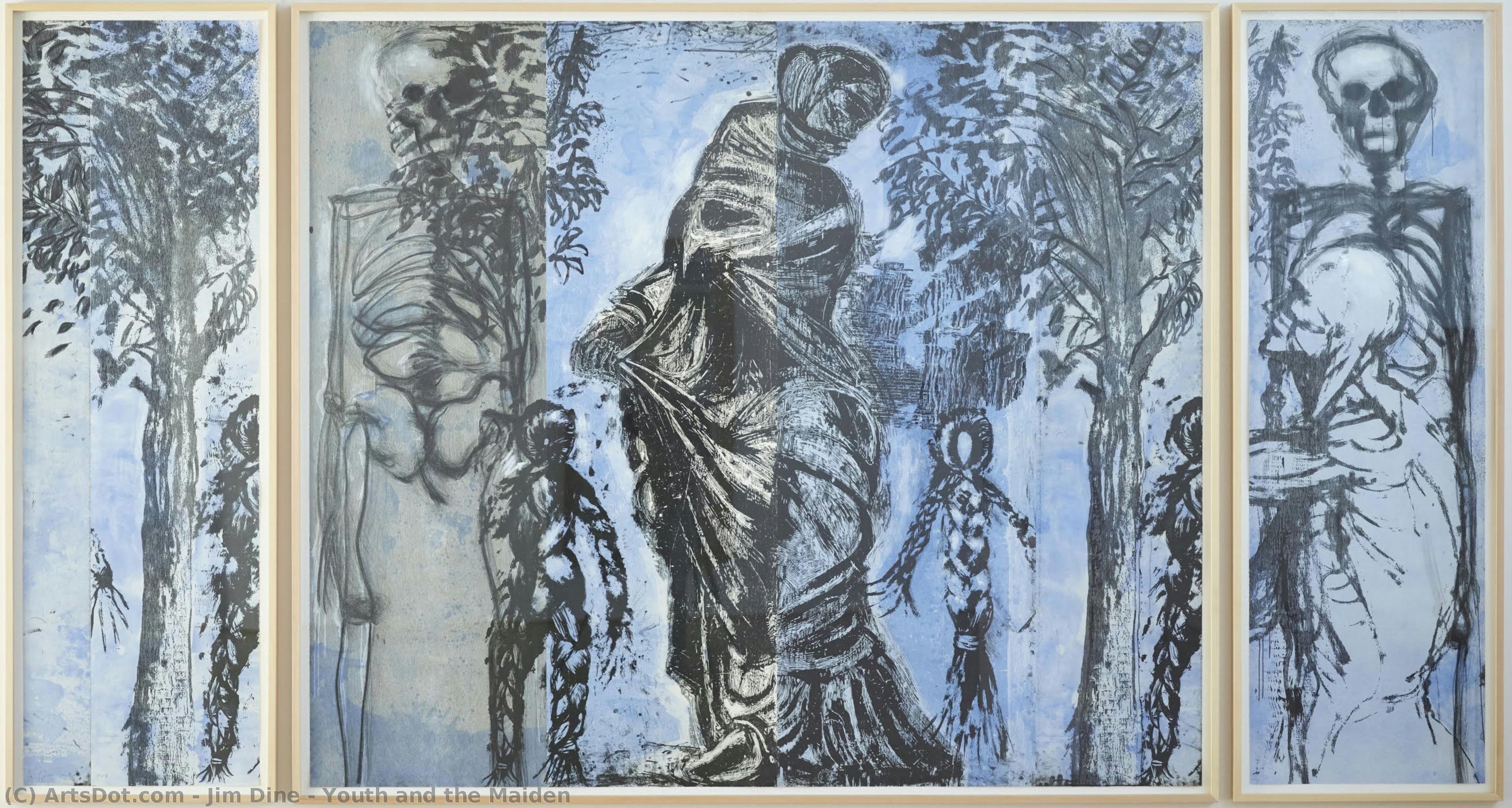
Youth and the Maiden


 Read More
Hand Made Oil Reproduction
Hand-painted oil on canvas in your size and frame, made to order by our artists. ( Buy Print Buy Image)




P118B $10

P118H $10

P118W $10

P438Z $10

P508JH $12

P508YH $12

P805H $10

P805Z $10

P919BZ $10

P919G $10

P919XJ $10

P959ZH $10

P968JZ $12

W106C $8

W218G $10

W218JH $8

W218Y $10

W307PJ $10

W316G $10

W316PJ $8

W316Y $10

W398PJ $8

W4111J $10

W500HY $15

W500JH $15

W692G $12

W849H $8

W940BG $15

W953PJ $8




Pick from our preset sizes that match the artwork's original proportions.

You may enter your own dimensions to fit a specific frame or space. If your selected size does not match the original image's proportions, we will either crop the artwork or extend the painting with additional hand-painted elements. A digital mockup will be sent for your approval before production begins.
Please note that the on-screen preview does not reflect the actual cropping or extension. Only the mockup will accurately show the final composition.
While custom sizes are available, we recommend selecting a dimension from the predefined list to preserve the original proportions.
After order, ArtsDot.com team will email client for instructions and provide a mockup preview
Worldwide Delivery () in 3/4 weeks instead of standard 5 weeks. (20 August). No compromise on quality.

Free Worldwide Express Shipping

High-Quality Linen Canvas

Full Shipping Insurance

Customs Tax Refund Guarantee

True Color Matching Guarantee

60-Day Return Policy (Defects Only)

100% Money-Back Guarantee

Bulk Discount Offer
 Glass option is only available in size under 110 CM

Youth and the Maiden
Reproduction Medium
Reproduction Size
-


Total Price
$ 263
Artwork Description
The Genesis of a Shared Moment
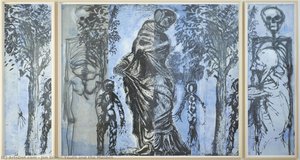
Jim Dine’s “Youth and the Maiden” isn't merely a depiction of two figures within a forest; it’s an invitation into a carefully constructed tableau of quiet intimacy, imbued with a profound sense of unspoken narrative. Created in 1988 as part of the Graphicstudio project – a collaborative printmaking venture that blurred the lines between artist, printer, and viewer – this work exemplifies Dine's signature approach: stripping away artifice to reveal the raw essence of human connection. The six panels, presented together, create an immersive experience, capturing fleeting moments within a single, sustained interaction. The figures, rendered in muted spitbite etching, heliorelief woodcut, and softground etching techniques, possess a remarkable stillness, their gazes averted yet suggesting a deep understanding. The surrounding trees, meticulously detailed with varying degrees of texture and shading, aren’t simply backdrop; they become active participants in the scene, framing the couple and subtly amplifying the feeling of enclosure and shared vulnerability. The choice of materials – each contributing a unique visual quality – speaks to Dine's deliberate control over the process, layering techniques to achieve a complex surface that invites close examination.Pop Art’s Quiet Revolution: Autobiographical Echoes
Dine emerged as a pivotal figure in the late 1950s, navigating the turbulent waters between Abstract Expressionism and the burgeoning Pop Art movement. His early work, deeply rooted in his upbringing – particularly the memory of his grandfather's hardware store – established a recurring motif: the humble tools and materials of everyday life elevated to symbolic significance. “Youth and the Maiden” is no exception; the forest itself can be interpreted as a metaphorical workshop, a space where relationships are forged and tested. This piece resonates with Pop Art’s interest in commonplace subjects, but Dine transcends mere replication. He imbues these familiar elements – trees, figures, light – with an intensely personal quality, drawing on his own experiences of love, loss, and the enduring power of memory. The work's deliberate ambiguity—the lack of explicit narrative—forces the viewer to actively participate in constructing meaning, mirroring Dine’s broader artistic philosophy.Symbolism Woven into the Wood
The imagery within “Youth and the Maiden” is rich with symbolic weight. The trees themselves represent both protection and constraint, suggesting a space where intimacy can flourish but also feels somewhat contained. The figures' averted gazes are particularly compelling; they don’t engage in direct communication, yet their proximity speaks to a shared understanding that transcends words. The subtle details—the placement of hands, the slight tilt of heads—are meticulously rendered, conveying a wealth of unspoken emotion. The inclusion of stars on the maiden’s forehead and crescents on her breasts – a reference to the Albanian folktale “The Jealous Sisters” – adds another layer of complexity, hinting at themes of rivalry, betrayal, and ultimately, resilience. This connection to folklore underscores Dine's fascination with archetypal narratives and their ability to resonate across cultures and generations.A Collaborative Vision: Graphicstudio’s Influence
“Youth and the Maiden” was produced through the Graphicstudio project, a collaborative endeavor that fundamentally altered the traditional relationship between artist, printmaker, and viewer. Dine conceived of the work, but it was executed by a team of skilled printers – Alan Holoubek, Tom Pruitt, Greg Burnet, and others – each contributing their expertise to the intricate process of multi-image printing. This collaborative approach resulted in variations within the edition, adding another layer of intrigue and emphasizing the ephemeral nature of art production. The work’s six panels were printed on three sheets of Arches Cover wove paper, further enhancing the tactile quality and visual richness of the image. The Graphicstudio project demonstrated a shift towards process-oriented art, where the act of creation itself becomes as important as the final product.Finding Resonance: A Timeless Portrait
“Youth and the Maiden” continues to captivate viewers with its quiet intensity and evocative imagery. It’s a work that invites contemplation, prompting us to consider the complexities of human relationships and the enduring power of shared moments. Whether viewed as a meditation on love, loss, or simply the beauty of nature, this piece offers a profound glimpse into Dine's artistic vision—a vision characterized by honesty, vulnerability, and an unwavering commitment to exploring the fundamental questions of human existence. Its timeless appeal makes it a compelling addition to any collection, offering both aesthetic pleasure and intellectual stimulation.Related Artworks
Artist Biography
Early Life and Artistic Foundations
Jim Dine, born in Cincinnati, Ohio, in 1935, emerged as a pivotal figure bridging the gap between Abstract Expressionism and the burgeoning Pop Art movement. His formative years were steeped in artistic exploration, beginning with evening classes at the Art Academy of Cincinnati under the tutelage of Paul Chidlaw – an experience that instilled within him a deep appreciation for draftsmanship and direct observation. This early training was further solidified by his Bachelor of Fine Arts degree from Ohio University in 1957, laying the groundwork for a career defined by its restless innovation and deeply personal iconography.
Dine’s artistic sensibility wasn't solely shaped by formal education; it was profoundly influenced by his upbringing. The sights and textures of his grandfather’s hardware store – the tools, the materials, the very atmosphere of practical utility – would later become recurring motifs in his work, imbued with a poignant sense of memory and personal narrative. These weren’t merely objects to be depicted, but vessels carrying echoes of childhood experience and familial connection.
The Rise of Happenings and Pop Art Pioneer
By the late 1950s, Dine had relocated to New York City, a crucible of artistic experimentation. He quickly became involved in the avant-garde scene, collaborating with artists like Claes Oldenburg, Allan Kaprow, and musician John Cage to create “happenings” – chaotic, multi-sensory performances that challenged conventional notions of art. His own happening, “30-second the smiling worker,” performed in 1959, was a deliberately disruptive event, a rejection of the prevailing seriousness of Abstract Expressionism and a foreshadowing of the playful irreverence that would characterize Pop Art.
Dine’s inclusion in the groundbreaking 1962 exhibition “New Painting of Common Objects” at the Norton Simon Museum alongside artists like Roy Lichtenstein and Andy Warhol cemented his position within this emerging movement. This exhibition is now recognized as a watershed moment, signaling a shift in American art towards embracing popular culture and everyday objects as legitimate subjects for artistic exploration. Dine’s canvases from this period began to incorporate these commonplace items – tools, clothing, domestic implements – transforming them into powerful symbols of identity, memory, and the human condition.
Assemblage, Autobiography, and Artistic Evolution
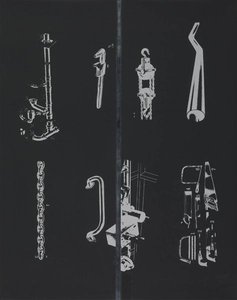
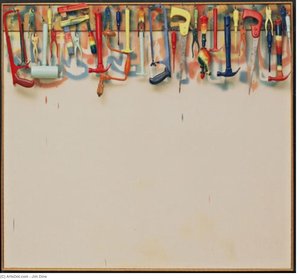
The early 1960s saw Dine develop his signature style of assemblage, attaching real objects directly to painted canvases. Works like “Job #1” (1962), now held in the Honolulu Museum of Art’s collection, exemplify this approach – a chaotic yet carefully arranged composition featuring paint cans, brushes, screwdrivers, and pieces of wood. These assemblages weren't simply about depicting objects; they were about creating a tactile, visceral experience for the viewer, blurring the boundaries between painting and sculpture.
Despite achieving both critical and commercial success with this work, Dine expressed growing dissatisfaction with its perceived limitations. A controversial incident in 1966 – a police raid on an exhibition of his work at Robert Fraser’s gallery in London – further fueled his desire to explore new artistic avenues. Following the raid, he relocated to London for four years, continuing to develop his art under Fraser's representation.
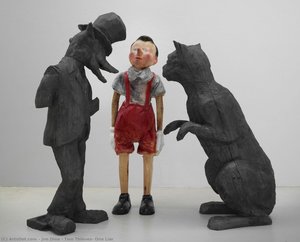
Upon returning to the United States in 1971, Dine embarked on a period of intense drawing, honing his skills and exploring more introspective themes. From the late 1970s onward, sculpture regained prominence in his work, followed by a shift towards depicting nature – landscapes, flowers, and particularly Pinocchio – as opposed to man-made objects. This evolution reflects a deepening engagement with timeless myths and archetypes, alongside an enduring fascination with the power of imagery.
Legacy and Enduring Influence
Jim Dine’s influence extends far beyond the realm of visual art. His work has resonated with artists across disciplines, notably inspiring James Rado, co-writer of the musical “Hair,” who attributed the show’s very name to a Dine piece entitled “Hair.” Throughout his career, Dine has received numerous accolades, including election into the National Academy of Design and major retrospective exhibitions at institutions like the Walker Art Center and the Whitney Museum of American Art.
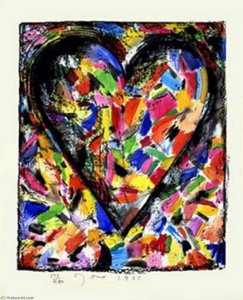
His public art installations – most notably the nine-meter-high bronze statue “Walking to Borås” in Sweden and a similar sculpture of Pinocchio at the Cincinnati Art Museum – demonstrate his ability to translate his artistic vision into monumental forms that engage with public space. The "Technicolor Heart," a vibrant sculpture gracing the campus of Washington State University, further exemplifies his commitment to creating accessible and emotionally resonant art.
Today, Jim Dine continues to create, pushing boundaries and challenging conventions. His work remains a powerful testament to the enduring power of personal experience, memory, and the transformative potential of art – a legacy that ensures his place as one of the most important American artists of the 20th and 21st centuries.

Jim Dine
1935 - , United States of America
Quick Facts
- Artistic Movement Or Style: Pop Art, Neo-Dada
- Artists Or Movements Influenced By This Artist:
- James Rado
- Hair musical
- Artists Who Influenced This Artist: ['Paul Chidlaw']
- Date Of Birth: 1935
- Full Name: Jim Dine
- Nationality: American
- Notable Artworks:
- Job #1
- Untitled (2)
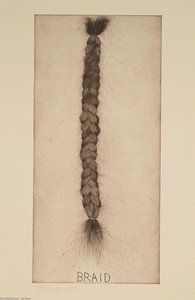
- Braid
- Walking to Borås
- Technicolor Heart
- Place Of Birth: Cincinnati, USA
Related Articles
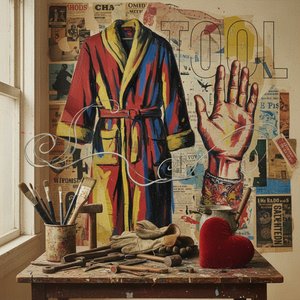
Jim Dine: A Poetic of Everyday Objects – Exploring Autobiographical Narratives & the Evolution of a Pop Art Icon
Explore the captivating world of Jim Dine – Pop Art pioneer & master of autobiographical expression. Discover his iconic tools, robes, and hearts. Expert insights for art collectors.
Arboreal Echoes: A Historical & Artistic Exploration of Trees in Painting
Explore the rich history of trees in painting! Discover symbolism, Romantic masterpieces by Caspar David Friedrich & beyond. A curated journey for art enthusiasts.
Arboreal Echoes: A Historical & Artistic Exploration of Trees in Painting
Explore the rich history of trees in painting! Discover symbolism, Romantic masterpieces by Caspar David Friedrich & beyond. A curated journey for art enthusiasts.

The Enchanted Canopy: Exploring Forests in Art History – From Romantic Idealization to Ecological Consciousness
Explore the rich history of forests in art! Discover Romantic masterpieces by Friedrich & Monet, Symbolist depths, and contemporary visions. Find inspiration & quality reproductions at ArtsDot.
Challenging Conventions: Pop Art's Origins, Evolution & Enduring Legacy
Explore the fascinating history of Pop Art, from its rebellious origins to its enduring influence on contemporary artists. Discover key figures like Warhol & Lichtenstein and learn about collecting this iconic movement.