 Preview
 Send
Send Share
Share
 Details

 Download
 Similars
 X-Ray
X-Ray Diaporama
 Stats
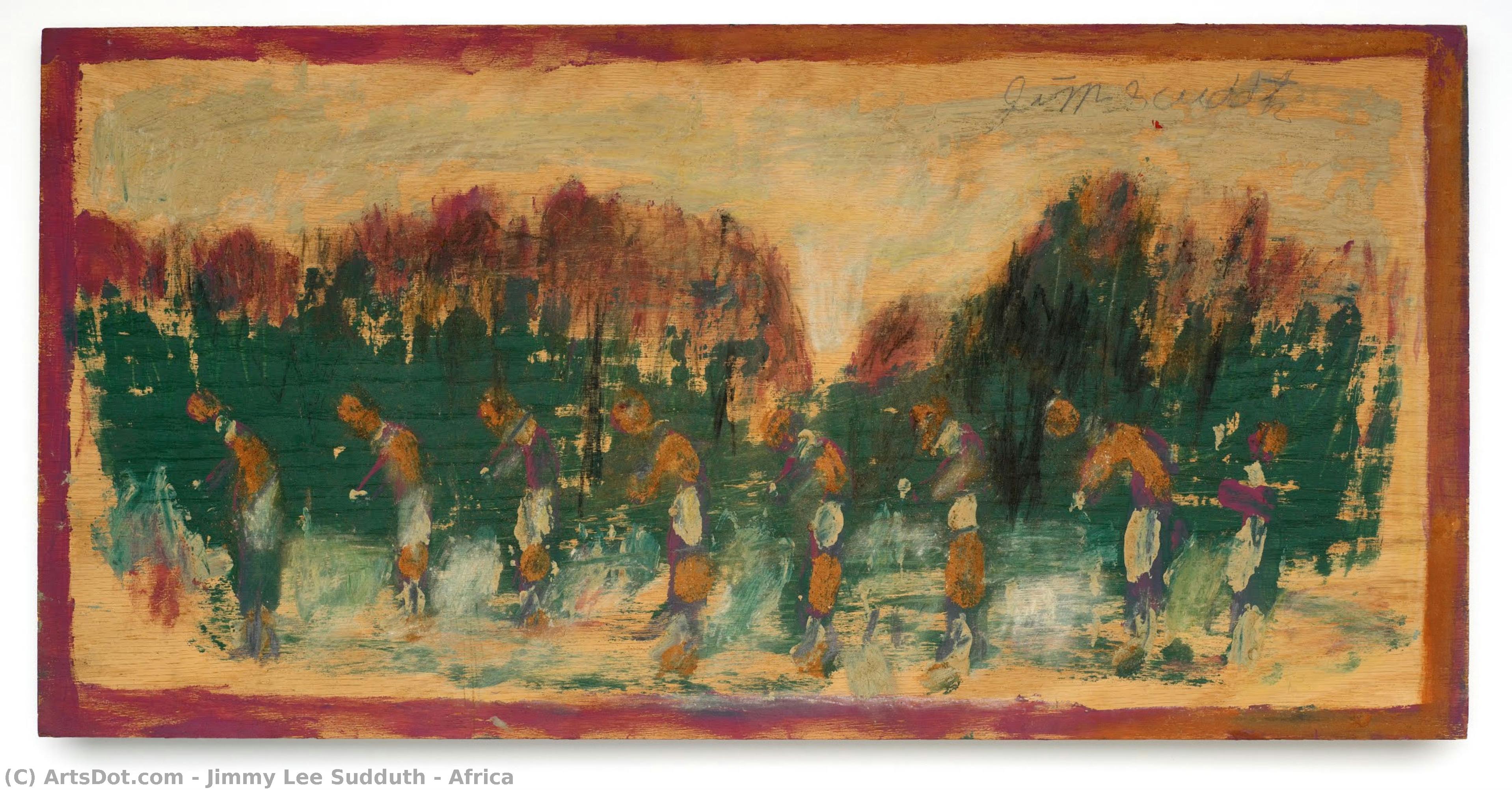
StatsAfrica
 1980
1980 31.0 x 63.0 cm
 Souls Grown Deep
 Read More
Giclée / Art Print
Museum-quality giclée or canvas print with fast production and flexible finish options. ( Buy Hand Made Painting Switch to Digital Image)




































Pick from our preset sizes that match the artwork's original proportions.

You may enter your own dimensions to fit a specific frame or space. If your selected size does not match the original image's proportions, we will either crop the artwork or extend the image with a mirrored or solid-fill edge. A digital mockup will be sent for your approval before production begins.
Please note that the on-screen preview does not reflect the actual cropping or extension. Only the mockup will accurately show the final composition.
While custom sizes are available, we recommend selecting a dimension from the predefined list to preserve the original proportions.
Worldwide Delivery () in 2 weeks instead of standard 4/5 weeks. (7 September)

Free Worldwide Express Shipping

High-Quality Linen Canvas

Full Shipping Insurance

Customs Tax Refund Guarantee

True Color Matching Guarantee

100-Day Return Policy (Defects Only)

100% Money-Back Guarantee

Bulk Discount Offer
 Glass option is only available in size under 110 CM

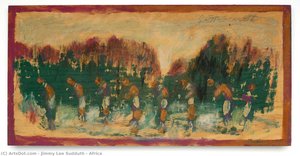
Africa
Giclée / Art Print
Reproduction Size
-


Total Price
$ 63
Related Artworks









Artist Biography
Jimmy Lee Sudduth: A Visionary of the Rural South
Born on March 10, 1910, in Caines Ridge, Alabama—a remote corner of the rural South steeped in folklore and a deep connection to the land—Jimmy Lee Sudduth’s life was one inextricably linked to his art. He wasn't formally trained; he didn’t study technique or theory. Instead, his artistic journey began organically, fueled by observation, instinct, and an intimate understanding of the materials at hand. Sudduth’s story is a remarkable testament to the power of self-taught artistry, revealing a profound connection between place, culture, and creative expression.
Growing up on a farm instilled in Sudduth a reverence for nature—a respect that permeated his work. His early years were spent surrounded by the rhythms of rural life: tending crops, observing animals, and absorbing the colors and textures of the natural world. He began creating rudimentary figures from wood scraps and drawing directly onto tree trunks with charcoal, honing his observational skills and developing a unique visual language. These initial explorations laid the foundation for his later, more ambitious projects – a testament to the enduring human impulse to create, regardless of formal instruction.
The Language of Mud and Found Materials
Sudduth’s artistic process was utterly unconventional, rooted in resourcefulness and an almost alchemical approach to materials. He eschewed traditional paints and canvases, instead utilizing a diverse range of readily available substances: mud, dirt, berries, coffee grounds, soot, pine needles, and even discarded industrial products like syrup and motor oil. His fingers became his brushes—a deliberate rejection of conventional tools that reflected his deep connection to the tactile nature of his materials. He meticulously mixed pigments with sugar water, soft drinks, and caulk to achieve desired hues and textures, demonstrating a remarkable understanding of color mixing through experimentation.
The surfaces he chose were equally significant – discarded plywood, doors salvaged from demolished buildings, and even railroad tracks—each imbued with its own history and character. This practice of utilizing “found” materials wasn’t merely economical; it was deeply symbolic, reflecting Sudduth's connection to the land and his ability to transform the overlooked into something beautiful and meaningful. His work became a visual record of his environment, a celebration of the beauty hidden within the mundane.
Themes and Subjects: A Reflection of Rural Life
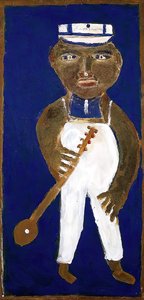
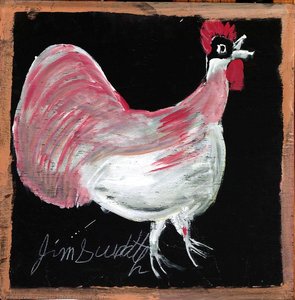
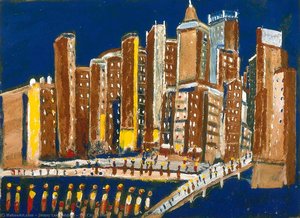
Sudduth’s paintings are populated by figures drawn from his immediate surroundings—family members, farm animals, neighbors, and occasional glimpses of larger cities like New York. He frequently depicted self-portraits, often as a blues musician, reflecting his lifelong passion for music and his deep connection to the African American culture of rural Alabama. His subjects weren’t idealized; they were rendered with an honest and unpretentious quality, capturing the essence of everyday life in the South.
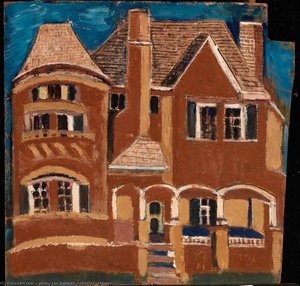
Beyond portraits, Sudduth depicted scenes from rural life—farm machinery, landscapes, and architectural details—all executed with a distinctive visual style characterized by bold colors, simplified forms, and a palpable sense of energy. His work is not simply representational; it’s infused with emotion and memory, offering a poignant glimpse into the soul of a forgotten corner of America.
Recognition and Legacy
Despite his talent and growing recognition, Sudduth remained largely unknown for much of his life. His first public exhibition occurred in 1968 at Stillman College in Tuscaloosa, followed by a significant show in Fayette in 1971 that garnered regional attention. His work gained wider acclaim in the late 1970s and early 1980s, culminating in invitations to exhibit at prestigious institutions such as the Smithsonian Institution’s Bicentennial Festival of American Folk Life (1976) and the New Orleans Museum of Art (1995). He was honored with the Alabama Arts Award in 1995, solidifying his place as a pivotal figure in Southern outsider art.
Today, Jimmy Lee Sudduth’s work is celebrated for its raw honesty, emotional depth, and unique artistic vision. His paintings are featured in collections across the United States, including the Smithsonian American Art Museum, the High Museum of Art, and the Birmingham Museum of Art. Sudduth's legacy extends beyond his individual creations; he represents a powerful reminder that art can emerge from unexpected places—from the hands of those who have no formal training but possess an unwavering passion for expression. He stands as one of the early masters of Southern self-taught art, a testament to the enduring spirit of creativity and the beauty found in the simplest of materials.
jimmy lee sudduth
1910 - 2007
Quick Facts
- Artistic Movement Or Style: Outsider art, Finger painting
- Artists Or Movements Influenced By This Artist: ['']
- Artists Who Influenced This Artist: ['']
- Date Of Birth: March 10, 1910
- Date Of Death: September 2, 2007
- Full Name: Jimmy Lee Sudduth
- Nationality: American
- Notable Artworks:
- Bicycle Man
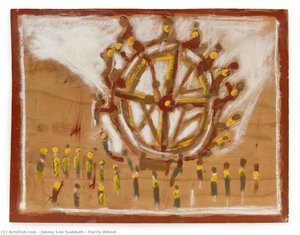
- Ferris Wheel
- Large Blue House
- Large Toto
- New York City Skyline
- Place Of Birth: Fayette, Alabama, USA