

 Preview
 Send
Send Share
Share
 Details

 Download
 Similars
 X-Ray
X-Ray Diaporama
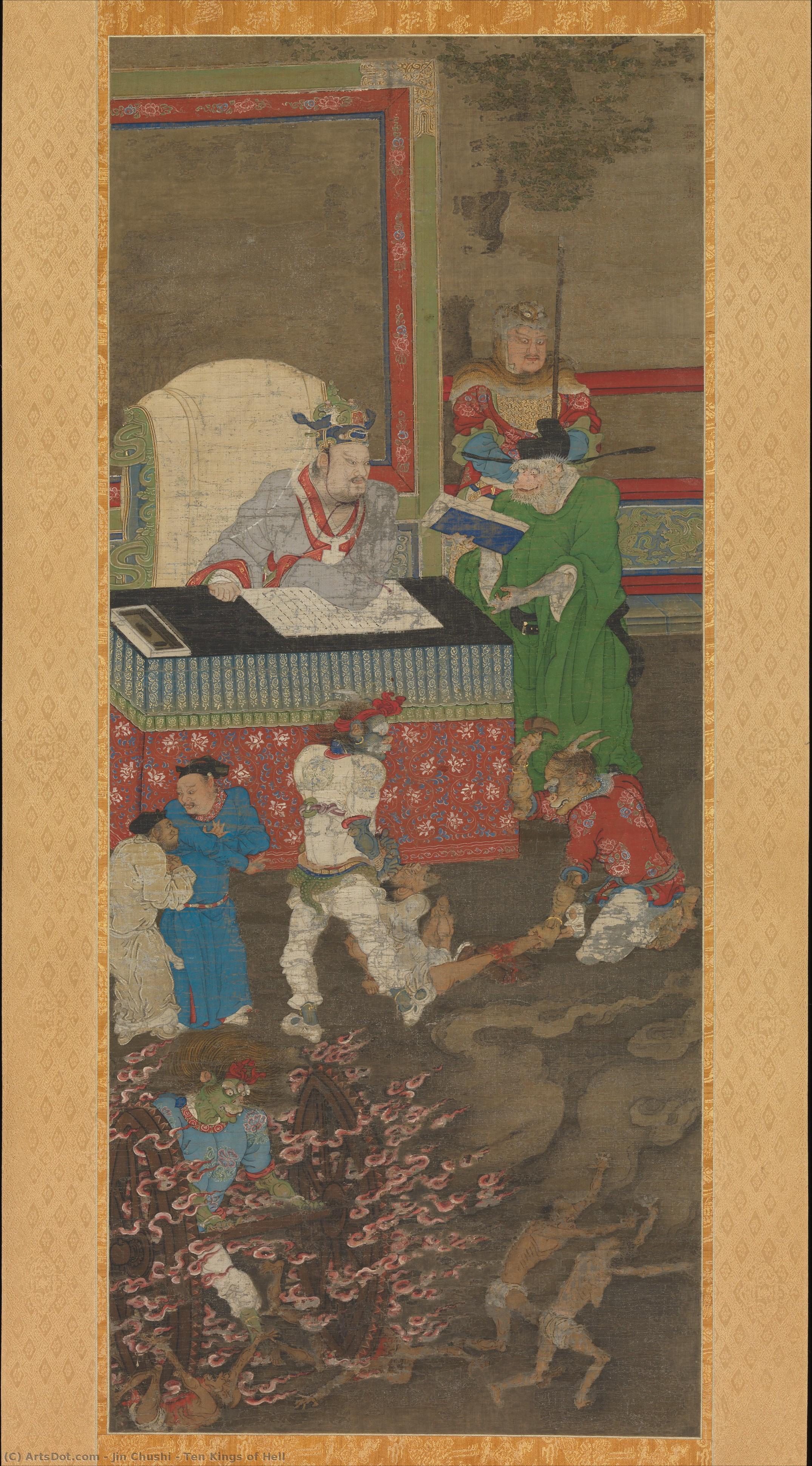
Ten Kings of Hell
 1195
1195 130.0 x 50.0 cm
 Read More
Purchase a high-resolution, enhanced digital image, far superior to the online preview.
Each file is meticulously prepared by our in-house specialists using advanced tools and expert manual retouching. We ensure every image has exceptional clarity, precise color accuracy, and fine detail.
The final file is delivered via email within 72 hours, optimized for immediate use in professional, editorial, and print environments. This is the same quality trusted by top-tier design studios, publishers, and galleries.
Digital Image
Download a high-resolution file for personal display, printing, and creative projects. ( Buy Print Buy Hand Made Painting)
Included in Every Digital Image Order
Expert Digital Delivery, Guaranteed
When you choose ArtsDot.com, you're not just getting an image - you're receiving a professionally enhanced digital artwork, crafted with precision and backed by a satisfaction guarantee. Here's everything that comes with your order, automatically:

Fast Email Delivery
Your high-resolution digital image file will be emailed to you within 72 hours of ordering - ready for immediate use.

AI-Enhanced Digital File
Your artwork is professionally optimized using advanced AI tools and manual editing, ensuring maximum detail, clarity, and color accuracy.

Free Lifetime Re-Delivery
Accidentally deleted or lost your file? No worries - we'll resend it to you anytime, free of charge.

No Import Fees - Ever
Enjoy your artwork instantly with zero customs, duties, or delivery fees - digital downloads are always tax-free.

Color Accuracy Guarantee
We ensure your digital image reflects the original colors as closely as possible using professional tools and color management.

100-Day Satisfaction Guarantee
If you're not satisfied with your digital image, we'll revise it or refund 100% within 100 days - no questions asked.

100% Money-Back Guarantee
Not satisfied? Get a full refund within 100 days of receiving your digital file - no questions asked.

Bulk Order Discounts
Buy 3 images, save 10% - Buy 5, save 15% - Buy 10+, save 20%. Great for creative projects, galleries, and agencies.
Related Artworks










Artist Biography
The Ethereal Legacy of Jin Chushi
In the twilight of the 12th century, amidst the flourishing cultural landscape of China's Song Dynasty, the name Jin Chushi (金處士) emerged as a beacon of spiritual and artistic profoundness. Though much of his early life remains shrouded in the mists of history, we know him as a master whose brush breathed life into the complex tapestries of Buddhist cosmology. Operating from the vibrant port city of Mingzhou—known today as Ningbo—Jin Chushi was more than a mere painter; he was a storyteller of the soul, a creator who utilized the delicate medium of ink and color on silk to bridge the gap between the mortal realm and the divine.
The very name Chushi suggests a life lived in quiet contemplation, often associated with the identity of a recluse scholar. This sense of spiritual detachment likely informed his approach to the canvas, where every stroke was an act of devotion. His work flourished during a period when Ningbo served as a vital gateway for Japanese merchants and pilgrims, a fact that explains why much of his most breathtaking legacy survived through preservation in Japan. Through these scrolls, Jin Chulated a visual language that would resonate across borders and centuries.
A Vision of the Afterlife
The pinnacle of Jin Chushi’s artistic achievement lies in the monumental series known as Ten Kings of Hell. This set of hanging scrolls is not merely a collection of paintings but a vivid, terrifying, and beautiful exploration of the Chinese Buddhist conception of judgment. In these works, the artist masterfully transforms the abstract concept of death into a structured, bureaucratic process. Each scroll depicts a different king presiding over the souls of the deceased, surrounded by scribes, officials, and the haunting presence of demons tasked with punishing the wicked.
Technically, these masterpieces are a triumph of the Song Dynasty style. Jin Chushi employed a sophisticated palette of intense colors and fine, detailed linework that captured the intricate textures of silk and the heavy atmosphere of the underworld. While some of his works lean toward a monochromatic elegance, focusing on the subtle interplay of black ink and shadow, the Ten Kings of Hell showcases a more vibrant, narrative intensity. The compositions are dense with symbolism, where every figure and gesture serves to illustrate the moral weight of one's earthly actions, creating an immersive experience that is as much a theological lesson as it is a visual feast.
Artistic Influence and Enduring Significance
The ripples of Jin Chushi’s artistry extended far beyond the borders of the Song Dynasty. His ability to blend meticulous detail with profound allegorical meaning laid the groundwork for subsequent movements in East Asian art. The stylistic hallmarks found in his work—particularly the use of vivid drawing and intense color—can be seen as precursors to the development of Suiboku Ga (ink wash painting) in Japan, where many of his original scrolls were cherished and studied.
Today, the legacy of Jin Chushi is preserved in some of the world's most prestigious institutions, including the Metropolitan Museum of Art. His work remains a vital touchstone for scholars studying the intersection of art, religion, and history. To look upon a painting by Jin Chushi is to witness a moment where the hand of man meets the infinite, reminding us that even in the depiction of the darkest realms, there is an enduring pursuit of order, justice, and artistic transcendence.
jin chushi
China
Quick Facts
- Artistic Movement Or Style: World Goes Pop
- Artists Or Movements Influenced By This Artist: ['Influenced by pop art and contemporary social commentary']
- Artists Who Influenced This Artist: ['Influenced by diverse artists within the World Goes Pop movement']
- Date Of Death: Living
- Notable Artworks: ['Various works featured in The World Goes Pop exhibition']
- Place Of Birth: WahooArt