 Preview
 Send
Send Share
Share
 Details

 Download
 Similars
 X-Ray
X-Ray Diaporama
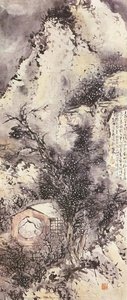
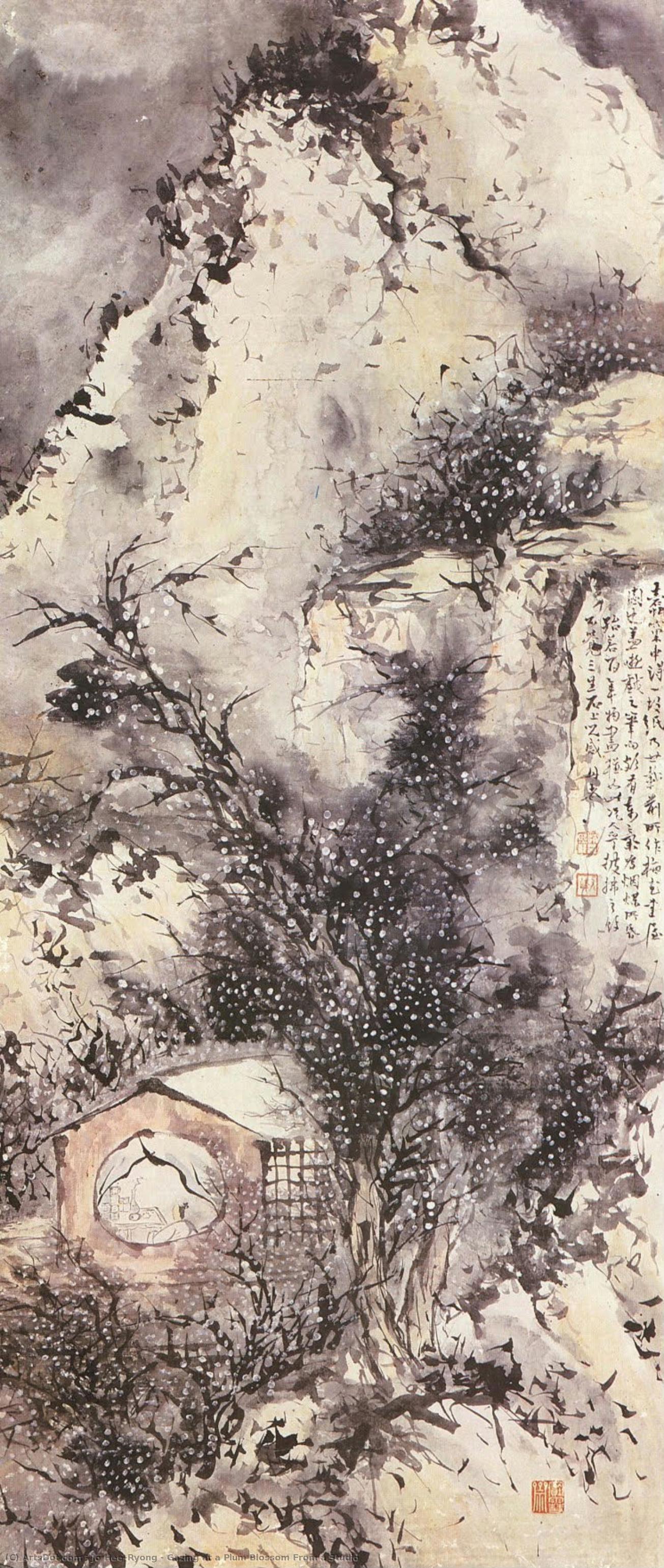
Gazing at a Plum Blossom From a Studio
 45.0 x 106.0 cm
 National Museum of Korea
 Read More
Hand Made Oil Reproduction
Hand-painted oil on canvas in your size and frame, made to order by our artists. ( Buy Print Buy Image)




































Pick from our preset sizes that match the artwork's original proportions.

You may enter your own dimensions to fit a specific frame or space. If your selected size does not match the original image's proportions, we will either crop the artwork or extend the painting with additional hand-painted elements. A digital mockup will be sent for your approval before production begins.
Please note that the on-screen preview does not reflect the actual cropping or extension. Only the mockup will accurately show the final composition.
While custom sizes are available, we recommend selecting a dimension from the predefined list to preserve the original proportions.
After order, ArtsDot.com team will email client for instructions and provide a mockup preview
Worldwide Delivery () in 3/4 weeks instead of standard 5 weeks. (21 August). No compromise on quality.

Free Worldwide Express Shipping

High-Quality Linen Canvas

Full Shipping Insurance

Customs Tax Refund Guarantee

True Color Matching Guarantee

60-Day Return Policy (Defects Only)

100% Money-Back Guarantee

Bulk Discount Offer
 Glass option is only available in size under 110 CM

Gazing at a Plum Blossom From a Studio
Reproduction Medium
Reproduction Size
-


Total Price
$ 263
Related Artworks









Artist Biography
The Soul of the Brush: The Life and Legacy of Jo Hee-ryong
In the twilight of the Joseon Dynasty, a period defined by profound intellectual shifts and a burgeoning urban culture, Jo Hee-ryong (1789–1866) emerged as a luminous figure whose artistry bridged the gap between scholarly tradition and individual expression. Born in Seoul, Jo belonged to the chungin, or middle class—a social stratum positioned between the aristocratic scholar-officials and the common people. This unique social standing allowed him to cultivate a sophisticated mastery of the literati arts while maintaining a connection to the vibrant, evolving pulse of Korean society. His life was not merely a pursuit of aesthetic perfection but a lifelong dialogue with the natural world, expressed through the rhythmic dance of ink on paper.
The trajectory of Jo’s career was irrevocably shaped by his encounter with the legendary Kim Jeong-hui, the preeminent master of Korean calligraphy and painting. Under Kim’s mentorship, Jo absorbed the rigorous disciplines of classical scholarship, learning to treat every brushstroke as an extension of one's moral character. However, where his mentor often sought a restrained, scholarly austerity, Jo Hee-ryong began to cultivate a voice that was distinctly more personal and emotive. While he remained deeply rooted in the traditions of landscape and calligraphy, his work gradually moved away from purely symbolic representations toward a more visceral, worldly appreciation of beauty.
A Symphony of Ink and Nature
To gaze upon a Jo Hee-ryong masterpiece is to enter a realm of profound tranquility and meticulous detail. His oeuvre is most celebrated for its evocative depictions of the natural elements that hold deep symbolic resonance in Korean culture: the resilient bamboo, the steadfast pine, and the delicate apricot blossom. In his hands, these subjects were transformed from mere botanical studies into poetic meditations on existence. His technique was characterized by a masterful command of ink washes, where subtle tonal gradues created an illusion of depth, light, and atmosphere that felt almost tactile.
One of his most breathtaking achievements is the celebrated Mokjukdo (Bamboo in Sunlight), currently held in the National Museum of Korea. In this work, the artist captures the ephemeral magic of dappled sunlight filtering through a dense bamboo grove, demonstrating an extraordinary ability to manipulate light through the medium of black ink. His approach to flora often bypassed the rigid, detached symbolism of the traditional literati; instead, as seen in his orchid paintings, he sought to capture a sense of mundane joy. For Jo, an orchid was not just a symbol of nobility and humility, but a living, breathing entity capable of expressing simple, earthly delight.
Historical Significance and Artistic Triumph
The enduring significance of Jo Hee-ryong lies in his ability to harmonize the disciplined structure of classical East Asian art with a burgeoning sense of individualism. He stood at a historical crossroads, preserving the dignity of the Joseon artistic heritage while infusing it with a new, more accessible vitality. His mastery of calligraphy—a skill inextricably linked to his painting—ensured that his visual compositions were always underpinned by a rhythmic, calligraphic energy that gave his landscapes a unique sense of movement and life.
Today, the legacy of Jo Hee-ryong continues to resonate through the halls of major institutions, from the National Museum of Korea to the Cornell University’s Johnson Museum of Art. His work remains a testament to the power of the brush to capture both the eternal and the fleeting. Through his delicate ink washes and spirited compositions, he left behind a visual record of a soul that found divinity in the simple elegance of a bamboo stalk and the quiet beauty of a blooming flower, securing his place as a true master of Korean art history.
jo hee-ryong
1789 - 1866 , South Korea
Quick Facts
- Artistic Movement Or Style: Joseon Dynasty Art
- Artists Or Movements Influenced By This Artist: ['Korean Painting']
- Artists Who Influenced This Artist: ['Kim Jeong-hui']
- Date Of Birth: 1789 Seoul Korea
- Date Of Death: 1866
- Full Name: Jo Hee-ryong
- Nationality: Korean
- Notable Artworks: ['Mokjukdo']
- Place Of Birth: Seoul Korea