 Preview
 Send
Send Share
Share
 Details

 Download
 Similars
 X-Ray
X-Ray Diaporama
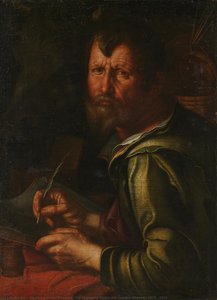
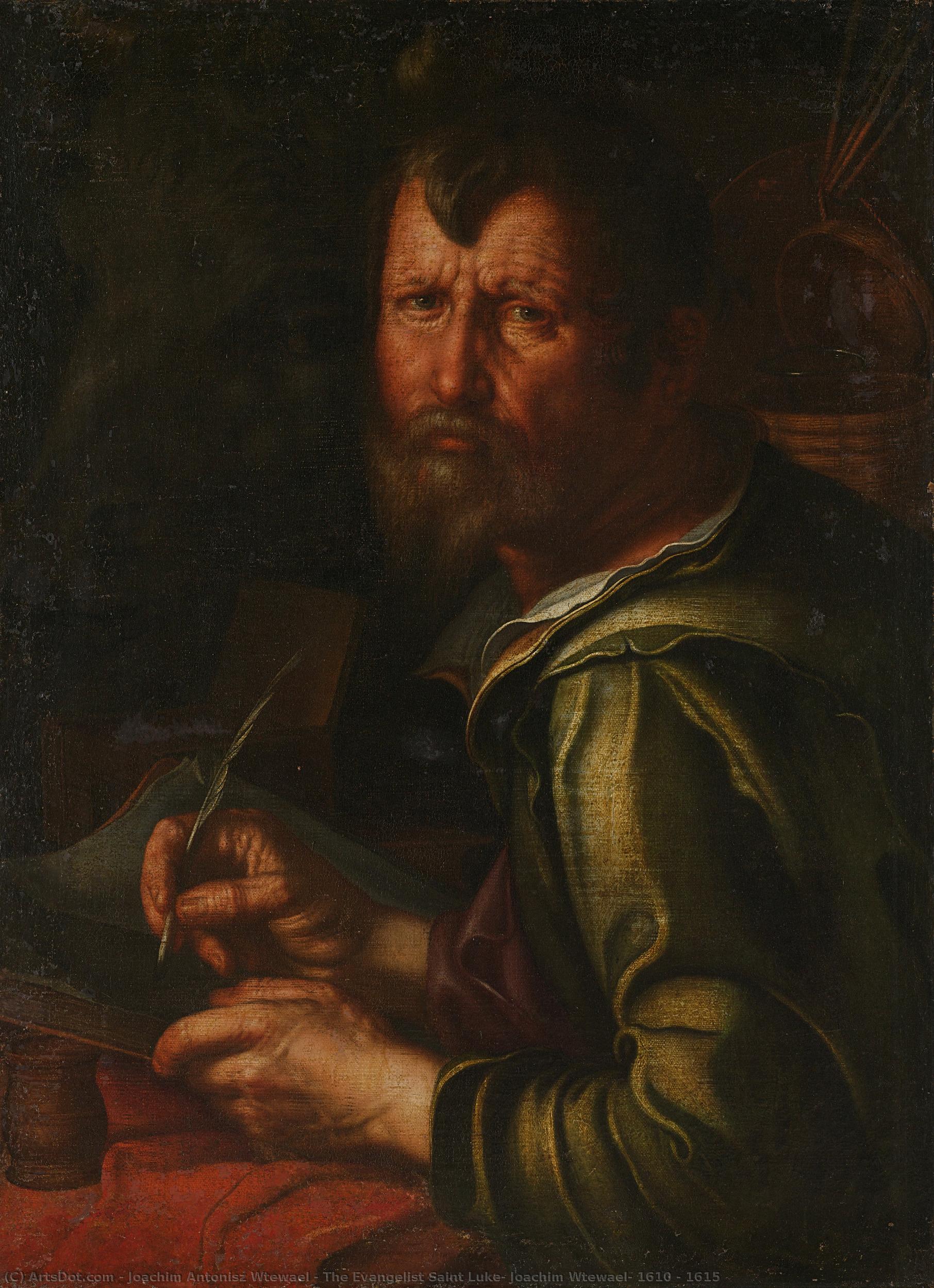
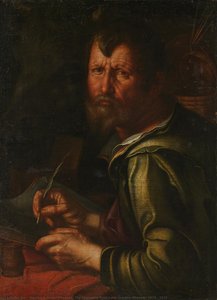
The Evangelist Saint Luke, Joachim Wtewael, 1610 - 1615
 1615
1615 68.0 x 50.0 cm
 Read More
Hand Made Oil Reproduction
Hand-painted oil on canvas in your size and frame, made to order by our artists. ( Buy Print Buy Image)




































Pick from our preset sizes that match the artwork's original proportions.

You may enter your own dimensions to fit a specific frame or space. If your selected size does not match the original image's proportions, we will either crop the artwork or extend the painting with additional hand-painted elements. A digital mockup will be sent for your approval before production begins.
Please note that the on-screen preview does not reflect the actual cropping or extension. Only the mockup will accurately show the final composition.
While custom sizes are available, we recommend selecting a dimension from the predefined list to preserve the original proportions.
After order, ArtsDot.com team will email client for instructions and provide a mockup preview
Worldwide Delivery () in 3/4 weeks instead of standard 5 weeks. (29 August). No compromise on quality.

Free Worldwide Express Shipping

High-Quality Linen Canvas

Full Shipping Insurance

Customs Tax Refund Guarantee

True Color Matching Guarantee

60-Day Return Policy (Defects Only)

100% Money-Back Guarantee

Bulk Discount Offer
 Glass option is only available in size under 110 CM

The Evangelist Saint Luke, Joachim Wtewael, 1610 - 1615
Reproduction Medium
Reproduction Size
-


Total Price
$ 263
Related Artworks

Artist Biography
Early Life and Formation in Utrecht
Joachim Antonisz Wtewael, born around 1566 in Utrecht, Netherlands, emerged into a world steeped in artistic tradition yet poised on the cusp of dramatic change. His father, Anthonis Jansz Wtewael, was a respected glass painter, and young Joachim’s initial training took place within the family workshop. This early exposure to color, design, and meticulous craftsmanship would profoundly shape his later style. However, by the age of eighteen, he transitioned from working alongside his father to formal oil painting studies under Joos de Beer in Utrecht. The influence of Abraham Bloemaert, also a pupil of De Beer, further broadened his artistic horizons during this formative period. A pivotal journey to Italy around 1586 exposed him to the burgeoning Mannerist movement and the works of artists like Parmigianino, leaving an indelible mark on his aesthetic sensibilities. This Italian sojourn ignited a passion for classical mythology and refined figural forms that would become hallmarks of his unique artistic voice.A Dutch Mannerist in a Changing World
Wtewael’s career unfolded during a period of intense political and religious upheaval in the Netherlands. The burgeoning Dutch Republic, newly independent from Spain, fostered an environment of relative tolerance and burgeoning bourgeois values. While many of his contemporaries embraced naturalism—depicting everyday life with meticulous detail—Wtewael resolutely charted a different course. He became a leading figure in Dutch Mannerism, characterized by elongated figures, elegant poses, polished surfaces, and a penchant for complex allegorical scenes drawn from classical mythology and the Bible. His resistance to the prevailing naturalist trends was not merely stylistic; it reflected a broader intellectual and artistic temperament that favored artifice, symbolism, and refined elegance over direct observation. He wasn’t simply *depicting* reality; he was constructing elaborate visual narratives imbued with meaning and philosophical depth.Themes and Techniques: A World of Gods and Sensuality
Wtewael's paintings are immediately recognizable for their distinctive aesthetic qualities. His compositions, often executed on copper plates—a medium that allowed for exceptional detail and luminosity—are densely populated with figures engaged in dynamic interactions. He possessed a remarkable ability to render flesh tones with an almost porcelain-like smoothness, creating a sense of tactile realism despite the overall artificiality of his scenes. Recurring themes include mythological tales – such as the Judgment of Paris or Mercury and Argus – biblical stories reimagined with heightened sensuality, and allegorical representations of virtues and vices. The Meeting of David and Abigail, painted in 1597, exemplifies his masterful composition and polished figures within a richly textured landscape. His works are not simply beautiful; they invite contemplation, prompting viewers to decipher the hidden layers of meaning embedded within their elaborate iconography. He frequently revisited favorite subjects, creating variations on themes across different formats and supports, demonstrating his versatility and commitment to exploring complex narratives from multiple perspectives.Political Life and Artistic Legacy
Beyond his artistic pursuits, Wtewael was an active participant in Utrecht’s civic life. Elected as a member of the city council on several occasions, he demonstrated a keen interest in public affairs. He also played a pivotal role in establishing the Utrecht guild of Saint Luke in 1611, solidifying his position within the artistic community. While highly successful during his lifetime, Wtewael’s reputation waned in subsequent centuries as tastes shifted towards more naturalistic styles. However, recent scholarship has brought renewed attention to his unique contributions to Dutch art history. His paintings offer a fascinating glimpse into a little-seen side of 17th-century Holland—a world where classical mythology coexisted with religious fervor and artistic innovation flourished alongside political upheaval. Pleasure and Piety: The Art of Joachim Wtewael, the first major retrospective exhibition dedicated to his work, has further cemented his place as a significant figure in the Dutch Mannerist movement. His influence can be seen in the works of later artists who embraced artifice and symbolism, ensuring that his legacy continues to resonate today.Major Achievements and Historical Significance
Wtewael’s lasting impact lies not only in the sheer beauty and technical virtuosity of his paintings but also in his ability to synthesize diverse artistic influences into a uniquely personal style. He successfully navigated the complexities of a rapidly changing cultural landscape, resisting the prevailing naturalist trends while simultaneously engaging with classical mythology and religious themes. His mastery of oil painting techniques, particularly his use of copper plates, allowed him to create works of exceptional detail and luminosity.- His innovative compositions and polished figures set him apart from his contemporaries.
- He played a crucial role in establishing the Utrecht guild of Saint Luke.
- His paintings offer valuable insights into the intellectual and artistic climate of 17th-century Holland.
Quick Facts
- Artistic Movement Or Style: Mannerism
- Artists Who Influenced This Artist:
- Karel van Mander
- Joos de Beer
- Cornelis Cornelisz. van Haarlem
- Date Of Birth: 1566
- Date Of Death: 1638
- Full Name: Joachim Antonisz Wtewael
- Nationality: Dutch
- Notable Artworks:
- The Meeting of David and Abigail
- Moses Striking the Rock
- The Judgment of Paris
- Place Of Birth: Utrecht, Netherlands