 Preview
 Send
Send Share
Share
 Details

 Download
 Similars
 X-Ray
X-Ray Diaporama
 Stats
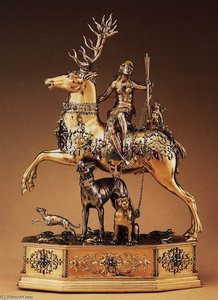
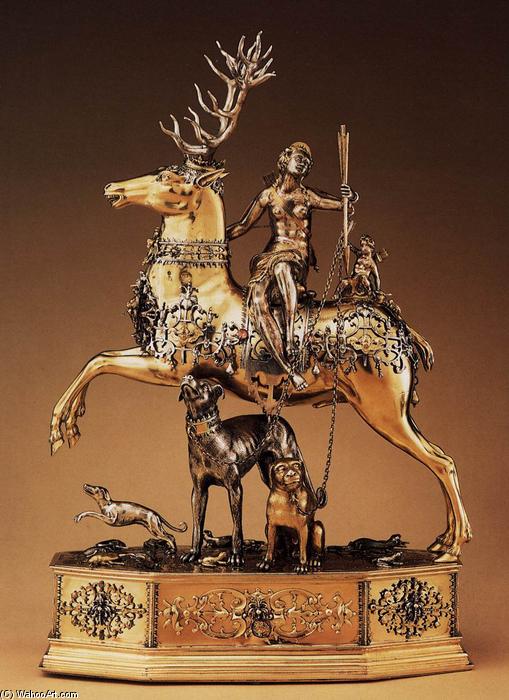
StatsDiana and the Stag


 Read More
Giclée / Art Print
Museum-quality giclée or canvas print with fast production and flexible finish options. ( Buy Hand Made Painting Switch to Digital Image)




































Pick from our preset sizes that match the artwork's original proportions.

You may enter your own dimensions to fit a specific frame or space. If your selected size does not match the original image's proportions, we will either crop the artwork or extend the image with a mirrored or solid-fill edge. A digital mockup will be sent for your approval before production begins.
Please note that the on-screen preview does not reflect the actual cropping or extension. Only the mockup will accurately show the final composition.
While custom sizes are available, we recommend selecting a dimension from the predefined list to preserve the original proportions.
Worldwide Delivery () in 2 weeks instead of standard 4/5 weeks. (13 September)

Free Worldwide Express Shipping

High-Quality Linen Canvas

Full Shipping Insurance

Customs Tax Refund Guarantee

True Color Matching Guarantee

100-Day Return Policy (Defects Only)

100% Money-Back Guarantee

Bulk Discount Offer
 Glass option is only available in size under 110 CM

Diana and the Stag
Giclée / Art Print
Reproduction Size
-


Total Price
$ 63
Related Artworks









Artist Biography
A Life Shrouded in Mystery: Joachim Friess and the Automata of Augsburg
The name Joachim Friess resonates today not through canvases ablaze with color, but through the intricate mechanics of silver and gold. Born around 1579 in Augsburg, a city renowned for its craftsmanship during the late Renaissance and early Baroque periods, Friess was not a painter in the traditional sense, but an *automaton maker* – a creator of self-operating mechanical figures that captivated the courts of Europe. His life remains remarkably elusive; details are scarce, pieced together from inventories, court records, and the surviving examples of his extraordinary work. Unlike many artists whose biographies are filled with documented apprenticeships and patronage networks, Friess emerges as something of an enigma, a master craftsman whose personal story is largely lost to time. What we do know centers around his exceptional skill in bringing inanimate objects to life through ingenious engineering and artistry. Augsburg itself was a crucible of innovation, attracting clockmakers, goldsmiths, and other artisans who pushed the boundaries of technical possibility. Friess flourished within this environment, becoming one of the most celebrated automaton makers of his generation.The Art of Mechanical Marvels: Automata as Symbolic Expression
Friess’s automata were far more than mere curiosities; they were complex allegorical statements rendered in precious materials. He didn't simply build machines—he constructed miniature worlds populated by figures enacting mythological scenes, religious narratives, or courtly entertainments. His most famous creation, an automaton depicting Diana and the stag (circa 1620), exemplifies his mastery. Fashioned from gilded silver, enamel, and jewels, with a movement crafted from iron and wood, this piece wasn’t just visually stunning; it was a testament to Friess's understanding of optics, hydraulics, and clockwork mechanisms. The figure of Diana, goddess of the hunt, would move with remarkable realism, pursuing her prey through a meticulously detailed landscape. These automata were often commissioned by wealthy patrons—emperors, princes, and nobles—as symbols of their power, wealth, and refined taste. They served as diplomatic gifts, objects of wonder in courtly collections, and demonstrations of technological prowess. The symbolism embedded within these creations was crucial. Diana’s hunt could represent the pursuit of knowledge or virtue; other automata might allude to specific dynastic lineages or political alliances. Friess wasn't simply a technician; he was an interpreter of allegorical themes, translating complex ideas into tangible form.Influences and Techniques: A Synthesis of Art and Science
Pinpointing direct artistic influences on Friess is challenging given the unique nature of his craft. However, it’s clear that he drew inspiration from a variety of sources. The tradition of Renaissance clockmaking provided the foundational technical knowledge for his automata's movements. Goldsmithing techniques informed the exquisite detailing and precious materials used in their construction. The Mannerist style, with its emphasis on elongated forms and dramatic poses, may have influenced the figures he created. Furthermore, the burgeoning field of optics—the study of light and lenses—likely played a role in his automata’s realistic effects. Friess's technique was characterized by an extraordinary level of precision and attention to detail. He meticulously crafted each component of his automata, ensuring that every gear, spring, and lever functioned flawlessly. His use of precious materials—gold, silver, enamel, and jewels—elevated his creations beyond the realm of mere mechanics into works of art. The integration of these diverse skills – engineering, goldsmithing, optics, and artistic sensibility – set Friess apart from other automaton makers of his time.Legacy and Historical Significance: A Pioneer of Mechanical Art
Joachim Friess died in 1620, leaving behind a relatively small but profoundly influential body of work. While the number of surviving automata attributed to him is limited, their impact on the development of mechanical art is undeniable. He represents a fascinating intersection of artistic expression and scientific innovation—a pioneer who pushed the boundaries of what was technically possible in the early Baroque period. His creations foreshadowed later developments in robotics and automation, demonstrating the enduring human fascination with bringing inanimate objects to life.- Friess’s automata were highly sought after by European royalty.
- His work embodies the spirit of Augsburg's thriving artisan culture.
- He bridged the gap between art, science, and technology.
joachim friess
1579 - 1620
Quick Facts
- Artistic Movement Or Style: Dutch Expressionism
- Date Of Death: 1620
- Full Name: Joachim Friess
- Nationality: German
- Notable Artworks: ['Diana and the Stag']
- Place Of Birth: Lubeck