

 Preview
 Send
Send Share
Share
 Details

 Download
 Similars
 X-Ray
X-Ray Diaporama
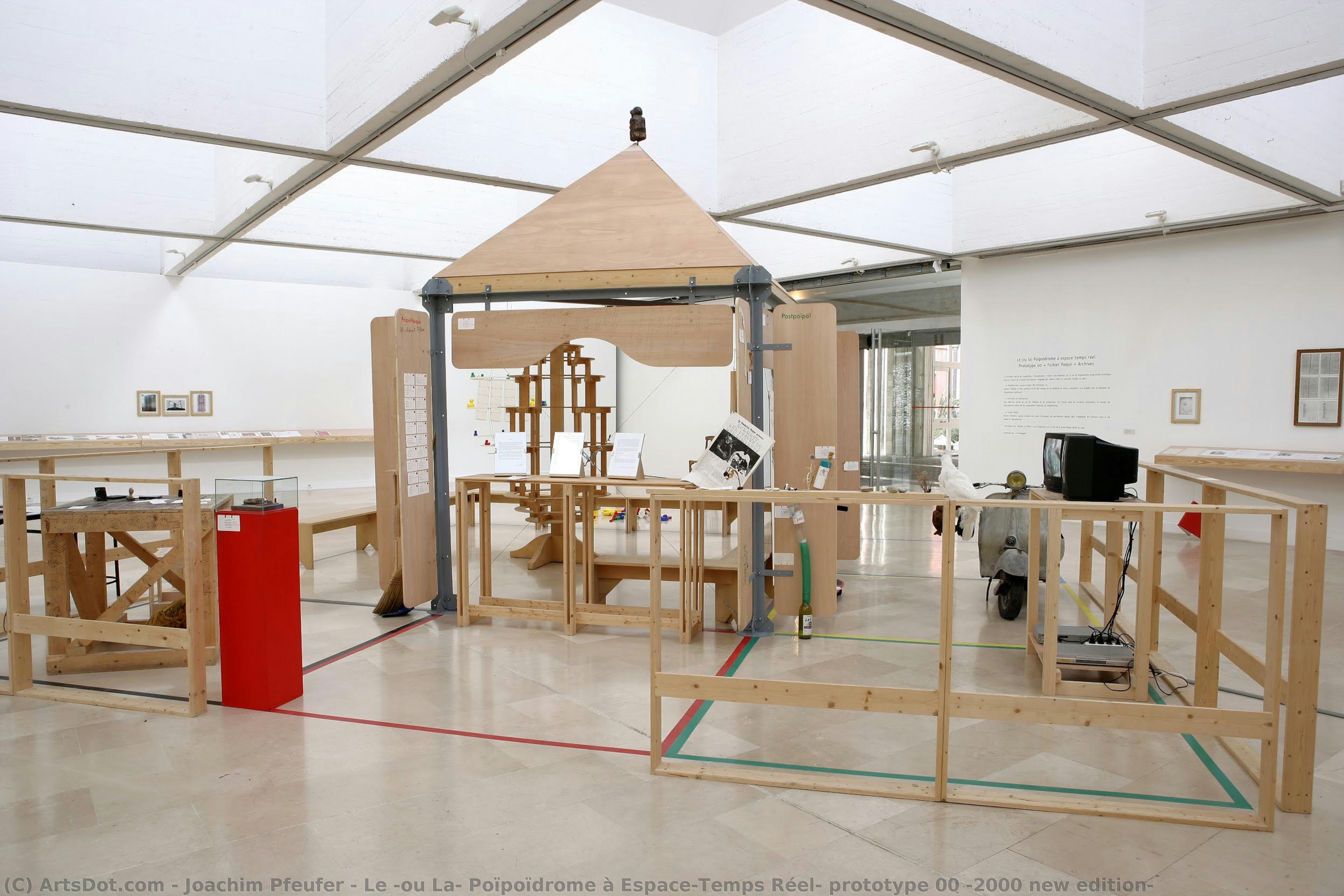
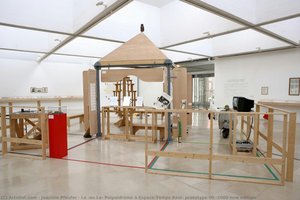
Le (ou La) Poïpoïdrome à Espace-Temps Réel, prototype 00 (2000 new edition)


 Read More
Giclée / Art Print
Museum-quality giclée or canvas print with fast production and flexible finish options. ( Buy Hand Made Painting Buy Image)




































Pick from our preset sizes that match the artwork's original proportions.

You may enter your own dimensions to fit a specific frame or space. If your selected size does not match the original image's proportions, we will either crop the artwork or extend the image with a mirrored or solid-fill edge. A digital mockup will be sent for your approval before production begins.
Please note that the on-screen preview does not reflect the actual cropping or extension. Only the mockup will accurately show the final composition.
While custom sizes are available, we recommend selecting a dimension from the predefined list to preserve the original proportions.
Worldwide Delivery () in 2 weeks instead of standard 4/5 weeks. (23 August)

Free Worldwide Express Shipping

High-Quality Linen Canvas

Full Shipping Insurance

Customs Tax Refund Guarantee

True Color Matching Guarantee

60-Day Return Policy (Defects Only)

100% Money-Back Guarantee

Bulk Discount Offer
 Glass option is only available in size under 110 CM

Le (ou La) Poïpoïdrome à Espace-Temps Réel, prototype 00 (2000 new edition)
Giclée / Art Print
Reproduction Size
-


Total Price
$ 63
Related Artworks
![Scrovegni - [05] - Joachim's Dream — Giotto Di Bondone, Gothic](/media/artworks/images-thumb/8f/67/8f67bb5da87296bd452b3f0b237b528d.jpg)
![Scrovegni - [01] - Expulsion Of Joachim From The Temple — Giotto Di Bondone, Early Renaissance](/media/artworks/images-thumb/04/9e/049e093e294aa0bc1987e574e4910238.jpg)
Artist Biography
The Architect of Conceptual Space: The Life and Legacy of Joachim Pfeufer
In the vibrant, experimental landscape of mid-twentieth-century avant-garde art, few figures embodied the intersection of structural precision and philosophical inquiry as profoundly as Joachim Pfeufer. Born in 1926 in Sauve, France, Pfeufer emerged not merely as a creator of objects, but as an architect of perception. His journey was one defined by a relentless pursuit to bridge the gap between the tangible world of form and the intangible realms of language and thought. Influenced heavily by the existential and linguistic inquiries of thinkers such as Heidegger and Wittgenstein, Pfeufer’s work sought to dismantle the boundaries between art and life, transforming the gallery space into a site of profound philosophical encounter.
Pfeufer’s artistic foundation was uniquely rooted in the rigorous disciplines of architecture and sculpture. During his formative studies at the École Supérieure d'Architecture et de Beaux-Arts in Paris, he developed a sophisticated understanding of spatial design and materiality. This training allowed him to approach the canvas and the installation with a structural intellect, treating space itself as a medium capable of conveying complex meanings. His early explorations into geometric abstraction were more than mere aesthetic exercises; they were deliberate attempts to use form to provoke contemplation and to challenge the viewer's conventional understanding of reality and physical presence.
The Fluxus Spirit and Collaborative Innovation
The trajectory of Pfeufer’s career was irrevocably altered by his immersion in the Fluxus movement, a radical international network of artists dedicated to spontaneity, chance, and the rejection of traditional artistic hierarchies. It was within this spirit of collective creativity that Pfeufer formed his most significant professional bond: a partnership with the legendary Robert Filliou. Together, they moved away from the solitary production of art toward a more communal, process-oriented approach that emphasized the experience over the finished product.
The pinnacle of this collaborative era was the monumental Poïpoïdrome project of 1963. This ambitious architectural installation, a wooden pavilion erected within a Parisian gallery, served as a physical manifestation of their shared vision. The project was not simply a structure to be viewed, but an environment to be inhabited—a prototype for a new kind of real-time space. Through such works, Pfeufer demonstrated how the principles of architecture could be repurposed to create poetic, ephemeral landscapes that invited the audience to participate in the unfolding of art.
Historical Significance and Lasting Impact
Though his life was relatively brief, ending in 1987, Joachim Pfeufer left an indelible mark on the history of conceptual art. His ability to synthesize the rigid logic of architectural design with the fluid, often chaotic energy of the Fluxus movement provided a blueprint for future generations of installation artists. He remains a pivotal figure for those studying the evolution of spatial politics and the role of the artist as a facilitator of experience.
The enduring importance of his work can be summarized through several key contributions:
- Spatial Poetics: The transformation of architectural elements into tools for philosophical and linguistic exploration.
- Collaborative Ethos: A pioneering role in the development of collective art practices that challenged the myth of the individual genius.
- Conceptual Integration: The seamless blending of structural design with the avant-garde pursuit of spontaneity and chance.
Today, as we look back on the era of experimentalism, Pfeufer’s legacy stands as a testament to the power of art to redefine the very space we inhabit, reminding us that every structure holds the potential for profound, transformative meaning.
joachim pfeufer
1926 - 1987 , France
Quick Facts
- Artistic Movement Or Style: Conceptual Art
- Artists Or Movements Influenced By This Artist: ['Robert Filliou']
- Artists Who Influenced This Artist: ['Fluxus']
- Date Of Birth: 1926
- Full Name: Joachim Pfeufer
- Nationality: French
- Notable Artworks: ['Le Poïpoïdrome']
- Place Of Birth: Sauve, France
Related Articles
The Aesthetic Catalyst: Leveraging Art Installations for Guest Engagement & Organic Social Marketing
Discover how strategic art installations elevate hotel experiences & drive organic social visibility. Expert insights on design, ROI, guest engagement, and creating unforgettable spaces for luxury hospitality brands.
Richard Wilson: Deconstructing Landscape & Memory in Contemporary Installation Art
Explore Richard Wilson's groundbreaking landscape paintings & his enduring influence on contemporary installation art. Discover investment opportunities, provenance insights & the materiality of memory in this expert analysis.
Transforming Hospitality Spaces: A Comprehensive Approach to Hotel Art Procurement and Installation for Consistent Brand Aesthetics
Elevate your hotel's aesthetic with expert art procurement & installation services. Discover how strategic artwork enhances guest experiences & reinforces brand identity. Get a free consultation!
F.A.Q.: Wall Murals & Frescoes – Customization, Scale & Installation for Elite Collectors
provides bespoke wall murals & frescoes for elite collectors. Discover custom scale options, professional installation, and expert artistry. Commission a unique masterpiece today.
Pavlo Makov: Deconstructing Soviet Legacy Through Conceptual Photography & Installation Art
Explore the compelling work of Ukrainian artist Pavlo Makov, renowned for his conceptual photography deconstructing Soviet legacy. Discover his unique artistic process and investment potential.

