 Preview
 Send
Send Share
Share
 Details

 Download
 Similars
 X-Ray
X-Ray Diaporama
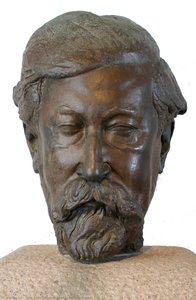
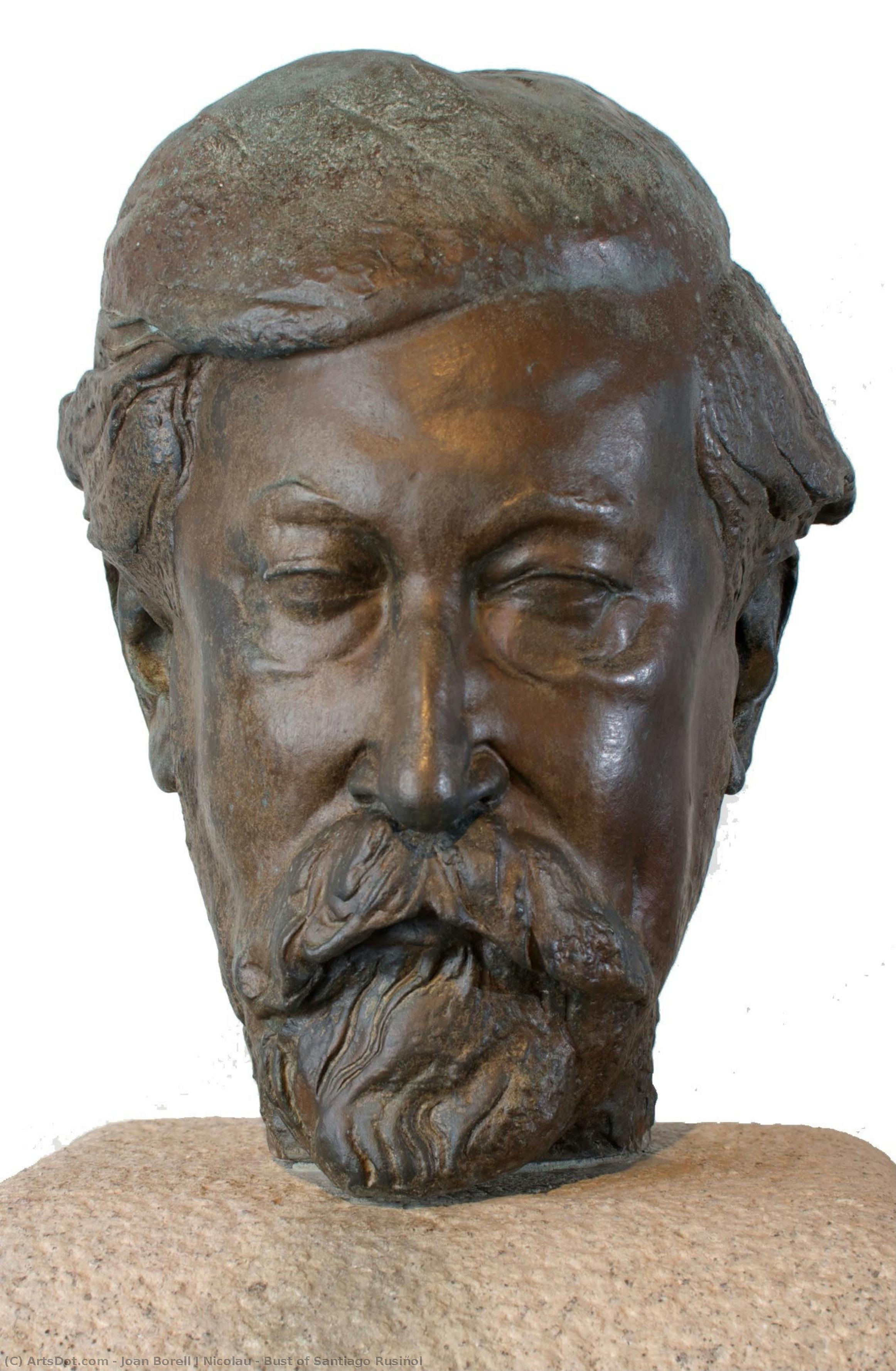
Bust of Santiago Rusiñol
 Modernism
 1932
1932 39.0 x 29.0 cm
 Maricel Museum
 Read More
Giclée / Art Print
Museum-quality giclée or canvas print with fast production and flexible finish options. ( Buy Hand Made Painting Buy Image)




































Pick from our preset sizes that match the artwork's original proportions.

You may enter your own dimensions to fit a specific frame or space. If your selected size does not match the original image's proportions, we will either crop the artwork or extend the image with a mirrored or solid-fill edge. A digital mockup will be sent for your approval before production begins.
Please note that the on-screen preview does not reflect the actual cropping or extension. Only the mockup will accurately show the final composition.
While custom sizes are available, we recommend selecting a dimension from the predefined list to preserve the original proportions.
Worldwide Delivery () in 2 weeks instead of standard 4/5 weeks. (27 August)

Free Worldwide Express Shipping

High-Quality Linen Canvas

Full Shipping Insurance

Customs Tax Refund Guarantee

True Color Matching Guarantee

60-Day Return Policy (Defects Only)

100% Money-Back Guarantee

Bulk Discount Offer
 Glass option is only available in size under 110 CM

Bust of Santiago Rusiñol
Giclée / Art Print
Reproduction Size
-


Total Price
$ 63
Related Artworks

Artist Biography
Edvard Munch: A Soul Painted in Shadow and Light
Edvard Munch (December 12, 1863 – January 23, 1944) was more than just a Norwegian painter; he was a conduit for the anxieties of his time, a visionary who wrestled with mortality, madness, and the very essence of human experience. His art wasn’t merely representation but an intensely personal exploration of the soul, rendered in swirling colors and unsettling forms that continue to resonate deeply with viewers today. Born into a family marked by illness and loss – his mother and sister succumbed to tuberculosis when he was young, and his father and brother died before his twentieth birthday – Munch's early life profoundly shaped his artistic vision, imbuing it with a pervasive sense of melancholy and the awareness of human vulnerability. This formative experience became the bedrock upon which he built his distinctive style, one characterized by raw emotion, symbolic imagery, and a deliberate rejection of conventional beauty.Early Influences and Artistic Development
Munch’s artistic journey began at the Kristiania Kunstakademi (Norwegian National Academy of Fine Arts), where he initially sought to master traditional academic techniques. However, he quickly found himself disillusioned with what he perceived as a stifling emphasis on realism and idealized beauty. Seeking inspiration beyond the confines of Norway, Munch spent time in Paris during 1889, immersing himself in the vibrant artistic scene and encountering the works of Paul Gauguin, Vincent van Gogh, and Henri de Toulouse-Lautrec. These encounters proved pivotal, exposing him to new approaches to color, brushwork, and subject matter – particularly the use of intense colors to convey emotion, a hallmark of his later work. Crucially, he also connected with the nihilistic writer Hans Jæger, who encouraged Munch to “paint his soul,” urging him to express his inner turmoil rather than simply depicting external reality. This philosophical shift proved transformative, laying the groundwork for his exploration of psychological themes and his embrace of Symbolism.The Birth of Iconic Images: *The Scream* and Beyond
1893 marked a watershed moment in Munch’s career with the creation of *The Scream*, arguably the most recognizable image in art history. The genesis of this iconic painting is famously recounted by Munch himself – he was walking along a fjord at sunset when, overwhelmed by an intense feeling of dread and isolation, he “heard the enormous, infinite scream of nature.” *The Scream* isn’t simply a depiction of terror; it's a visceral representation of existential anguish, capturing a moment of profound psychological distress. It became the cornerstone of his artistic output, followed by other intensely personal works such as *Madonna*, *Despair*, and *The Celibacy*. These paintings, often characterized by distorted figures, vibrant yet unsettling colors, and ambiguous narratives, explored themes of love, loss, sexuality, anxiety, and death with unflinching honesty.Style and Technique: A Language of Emotion
Munch’s artistic style evolved significantly throughout his career, but certain key elements remained constant. He employed bold, expressive brushstrokes, often applying paint in thick layers to create a sense of texture and movement. His use of color was particularly striking – he frequently utilized intense reds, yellows, and blues to convey emotion and atmosphere, sometimes employing complementary colors to heighten the visual impact. Munch also experimented with various media, including oil paints, pastels, woodcuts, and lithographs, each medium lending itself to different expressive effects. His work is often described as Symbolist, but it transcends easy categorization, incorporating elements of Expressionism and even hinting at Surrealism in its exploration of the subconscious. He deliberately avoided precise representation, prioritizing instead the conveyance of feeling and psychological state.Legacy and Historical Significance
Edvard Munch’s influence on 20th-century art is undeniable. His unflinching portrayal of human suffering and his innovative use of color and form paved the way for Expressionist artists like Ernst Ludwig Kirchner and Emil Nolde. *The Scream*, in particular, has become a universal symbol of anxiety and alienation, resonating with audiences across cultures and generations. Despite facing criticism and censorship during his lifetime – many of his works were deemed morally objectionable – Munch’s legacy as one of the most important and emotionally resonant artists of the modern era is firmly established. His paintings continue to be exhibited around the world, captivating viewers with their raw honesty, haunting beauty, and profound exploration of the human condition. His work serves as a potent reminder of the enduring power of art to confront difficult truths and illuminate the darkest corners of the soul.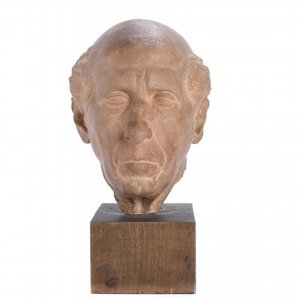
joan borell i nicolau
1893 - 1969 , Spain
Quick Facts
- Artistic Movement Or Style:
- Symbolism
- Expressionism
- Artists Or Movements Influenced By This Artist:
- Henri de Toulouse-Lautrec
- August Strindberg
- Artists Who Influenced This Artist:
- Paul Gauguin
- Vincent van Gogh
- Date Of Birth: December 12, 1863
- Date Of Death: January 23, 1944
- Full Name: Edvard Munch
- Nationality: Norwegian
- Notable Artworks:
- The Scream
- Madonna
- Place Of Birth: Løten, Norway
Related Articles

Bronze Age to Modern Masters: 10 Sculptures That Redefined Art | ArtsDot
Journey through art history with 10 legendary bronze sculptures – from Michelangelo's David to Rodin’s Thinker. Explore the stories, techniques & timeless beauty of these masterpieces. Find museum-quality reproductions & elevate your home decor on ArtsDot.com.

Bronze Sculptures That Defined Art History | ArtsDot
Journey through art history with our Top 10 bronze sculptures! Explore masterpieces by Rodin, Michelangelo & more. Discover stories behind iconic statues and find museum-quality reproductions for your home decor at ArtsDot.com.

The Enduring Legacy of Bronze: A Historical & Artistic Exploration for the Collector
Explore the rich history & enduring appeal of bronze sculpture with expert insights for collectors at ArtsDot. Learn about casting techniques, iconic artists, collecting tips & contemporary interpretations.
Joan Miró's Masterpieces: 25 Iconic Paintings for Art Lovers & Home Decor
Explore 25 iconic Joan Miró paintings! Discover the stories behind his Surrealist masterpieces, vibrant colors & unique style. Find museum-quality Miro reproductions and elevate your home decor with ArtsDot.com. Explore the full collection online.
The Enduring Legacy of Bronze: History, Technique & Artistic Expression for the Collector
Explore the rich history & enduring appeal of bronze sculpture with expert insights for collectors at ArtsDot. Learn about casting techniques, iconic artists, and collecting tips.