

 Preview
 Send
Send Share
Share
 Details

 Download
 Similars
 X-Ray
X-Ray Diaporama
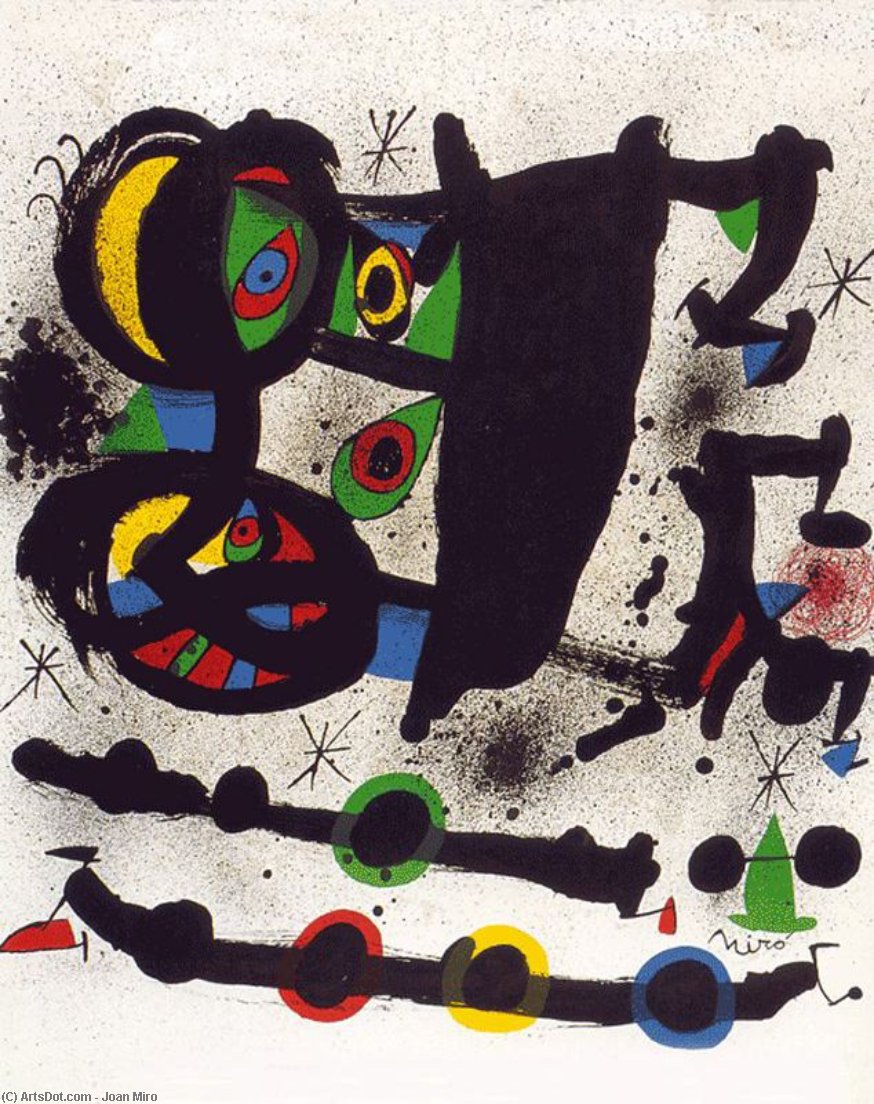
Homenaje a Josep Lluis Sert


 Read More
Purchase a high-resolution, enhanced digital image, far superior to the online preview.
Each file is meticulously prepared by our in-house specialists using advanced tools and expert manual retouching. We ensure every image has exceptional clarity, precise color accuracy, and fine detail.
The final file is delivered via email within 72 hours, optimized for immediate use in professional, editorial, and print environments. This is the same quality trusted by top-tier design studios, publishers, and galleries.
Digital Image
Download a high-resolution file for personal display, printing, and creative projects. ( Buy Print Buy Hand Made Painting)
Included in Every Digital Image Order
Expert Digital Delivery, Guaranteed
When you choose ArtsDot.com, you're not just getting an image - you're receiving a professionally enhanced digital artwork, crafted with precision and backed by a satisfaction guarantee. Here's everything that comes with your order, automatically:

Fast Email Delivery
Your high-resolution digital image file will be emailed to you within 72 hours of ordering - ready for immediate use.

AI-Enhanced Digital File
Your artwork is professionally optimized using advanced AI tools and manual editing, ensuring maximum detail, clarity, and color accuracy.

Free Lifetime Re-Delivery
Accidentally deleted or lost your file? No worries - we'll resend it to you anytime, free of charge.

No Import Fees - Ever
Enjoy your artwork instantly with zero customs, duties, or delivery fees - digital downloads are always tax-free.

Color Accuracy Guarantee
We ensure your digital image reflects the original colors as closely as possible using professional tools and color management.

60-Day Satisfaction Guarantee
If you're not satisfied with your digital image, we'll revise it or refund 100% within 60 days - no questions asked.

100% Money-Back Guarantee
Not satisfied? Get a full refund within 60 days of receiving your digital file - no questions asked.

Bulk Order Discounts
Buy 3 images, save 10% - Buy 5, save 15% - Buy 10+, save 20%. Great for creative projects, galleries, and agencies.
Collectible Description
A Homage to Modernism: Decoding Joan Miró’s ‘Homenaje a Josep Lluis Sert’
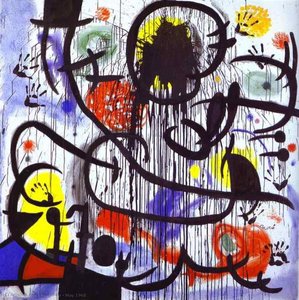
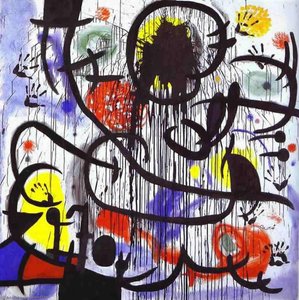
‘Homenaje a Josep Lluis Sert’ by Joan Miró is not merely an abstract composition; it's a vibrant and energetic tribute to a fellow artist and architect, embodying the spirit of post-war Catalan creativity. Created (date unknown), this work serves as a powerful example of Miró’s mature Surrealist style, pushing boundaries of form and color while acknowledging the influence of his peers.Subject & Style: An Abstract Celebration
The artwork eschews traditional representation, diving headfirst into abstraction. There is no discernible subject matter in the conventional sense; instead, Miró presents a dynamic interplay of bold black shapes seemingly caught in perpetual motion against a backdrop of intensely colored fields. This composition isn’t about *what* is depicted but *how* it's felt. The style is distinctly Surrealist, echoing the movement’s fascination with the subconscious and automatism – allowing the hand to move freely and express inner visions. It also reflects Miró’s unique brand of biomorphic abstraction, where organic forms hint at hidden life and energy.Technique & Composition: A Dance of Color and Form
Miró's technique is characterized by loose, expressive brushwork and a layering of paint that creates a textured surface. The flattened perspective deliberately rejects traditional depth, emphasizing the two-dimensional plane and intensifying the visual impact. Large, amorphous black forms dominate the canvas, acting as anchors for the bursts of color – circles, stars, and geometric shapes – scattered across the composition. These elements aren’t randomly placed; they engage in a rhythmic dance, guided by an intuitive sense of balance and harmony. The use of primary and secondary colors is bold and unapologetic, contributing to the painting's overall vibrancy and emotional intensity.Historical Context & Symbolism: A Catalan Connection
The title itself provides crucial context. Josep Lluís Sert was a prominent Spanish architect – a fellow Catalan – known for his modernist designs and collaborations with artists like Miró and Picasso. Sert designed the Fundació Joan Miró in Barcelona, cementing their artistic partnership. This painting is therefore an affectionate homage to Sert’s architectural vision and influence. While specific symbolism remains open to interpretation (a hallmark of Surrealism), the work can be seen as a celebration of Catalan identity and artistic innovation following the Spanish Civil War. The black forms might represent shadows or underlying structures, while the vibrant colors symbolize hope, renewal, and the power of creative expression.Emotional Impact & Interior Design Considerations
‘Homenaje a Josep Lluis Sert’ evokes a sense of playful energy, dreamlike wonder, and emotional depth. Its chaotic yet harmonious composition invites viewers to lose themselves in its abstract world. The painting's bold colors and dynamic forms make it a striking focal point for any interior space.- For Modern Interiors: This artwork complements minimalist or mid-century modern décor, adding a touch of artistic sophistication.
- Color Palette Integration: The vibrant hues can be echoed in accent furniture, textiles, or accessories to create a cohesive design scheme.
- Statement Piece: Its large scale (size unknown) makes it an ideal statement piece for living rooms, offices, or hallways.
- Emotional Resonance: The painting’s uplifting energy can transform a space, fostering creativity and inspiration.
Related Artworks
Artist Biography
A Catalan Visionary: The Life and Art of Joan Miró
Joan Miró i Ferrà, born in Barcelona in 1893, stands as one of the most significant figures in 20th-century art. His journey was not merely a progression through styles but an exploration of inner worlds, translating dreams, memories, and Catalan identity onto canvas with a uniquely poetic visual language. From humble beginnings marked by illness and initial parental reservations about his artistic pursuits, Miró persevered, driven by an innate need to express the intangible—the emotions, sensations, and subconscious currents that lie beneath the surface of reality. His early life was steeped in the traditions of Barcelona, a city brimming with architectural marvels thanks to Antoni Gaudí, whose organic forms would subtly influence Miró’s later abstractions. The goldsmithing profession of his father instilled an appreciation for meticulous craftsmanship, while the rugged Catalan landscape became a recurring motif and source of inspiration throughout his career.Early Influences and the Path to Surrealism
Miró's formal artistic training began at La Llotja in Barcelona, where he honed his skills in traditional techniques. However, it was exposure to the avant-garde movements sweeping through Paris that truly ignited his creative evolution. The vibrant colors of Fauvism and the fragmented forms of Cubism resonated deeply, prompting him to move to Paris in 1920. This period proved pivotal as he encountered artists like Pablo Picasso and began experimenting with increasingly abstract compositions. Yet, Miró didn’t simply adopt these styles; he synthesized them, forging a path toward his own distinctive aesthetic. He sought to distill forms to their essence, stripping away representational details in favor of symbolic shapes and evocative colors. This exploration led him to the Surrealist group in 1924, aligning him with artists such as Max Ernst and Salvador Dalí. While embracing the Surrealist interest in the subconscious, Miró maintained a unique sensibility—his work was less about shocking imagery or Freudian symbolism than it was about creating a world of playful forms and poetic suggestion.The Language of Symbols: Key Works and Artistic Innovations
Throughout the 1920s and 30s, Miró developed his signature visual vocabulary—a universe populated by biomorphic shapes, floating forms, and vibrant colors. The Farm (1922), often considered a cornerstone of his oeuvre, exemplifies this transition. It’s not merely a depiction of rural life but an evocation of Catalan identity and a symbolic representation of the natural world. His collaborative spirit led to innovative techniques like *grattage*, pioneered with Max Ernst in 1926 for designs intended for Sergei Diaghilev's ballet, where textures were revealed by scraping paint across canvas. The Dutch Interiors (1928) series demonstrated his ability to reinterpret the Old Masters through a distinctly modern lens, transforming domestic scenes into dreamlike abstractions. Painting (1933), with its bold colors and simplified forms, encapsulates Miró’s exploration of the subconscious and his rejection of conventional artistic boundaries. Beyond painting, Miró fearlessly experimented with sculpture, ceramics, and printmaking, expanding his creative horizons and demonstrating a remarkable versatility.Legacy and Enduring Influence
Joan Miró's impact on 20th-century art is undeniable. He wasn’t simply a painter; he was a visionary who challenged the very definition of artistic expression. His work paved the way for abstract expressionism and continues to inspire artists across disciplines. He established two foundations—the Fundació Joan Miró in Barcelona (1975) and the Fundació Pilar i Joan Miró in Palma de Mallorca (1981)—ensuring that his legacy would endure, providing spaces for artistic exploration and education. Throughout his long career, he remained committed to pushing boundaries, questioning conventions, and exploring the depths of human imagination. Miró’s art is a testament to the power of abstraction, symbolism, and poetic expression—a vibrant celebration of life, dreams, and the enduring spirit of Catalan culture. His work continues to resonate with audiences worldwide, inviting us to enter a world where anything is possible and the boundaries between reality and fantasy blur into a captivating dance of color and form.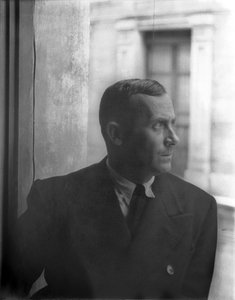
Joan Miró
1893 - 1983 , Spain
Quick Facts
- Artistic Movement Or Style: Surrealism, Abstract Art
- Artists Or Movements Influenced By This Artist:
- Surrealism
- Abstract Art
- Artists Who Influenced This Artist:
- Van Gogh
- Cézanne
- Date Of Birth: 1893
- Date Of Death: 1983
- Full Name: Joan Miró i Ferrà
- Nationality: Spanish
- Notable Artworks:
- The Farm
- Dutch Interiors
- Painting
- Place Of Birth: Barcelona, Spain

