 Preview
 Send
Send Share
Share
 Details

 Download
 Similars
 X-Ray
X-Ray Diaporama
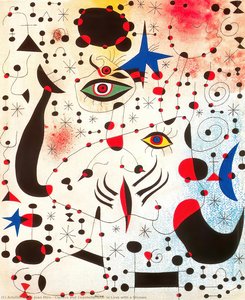
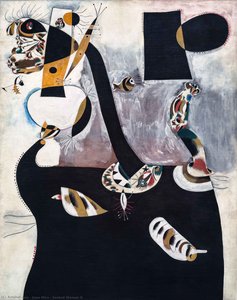
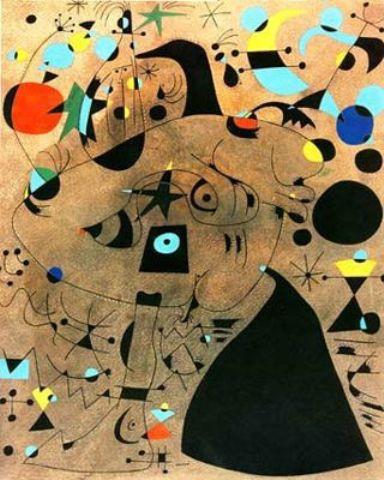
Mujer en la noche


 Read More
Hand Made Oil Reproduction
Hand-painted oil on canvas in your size and frame, made to order by our artists. ( Buy Print Buy Image)




P118B $10

P118H $10

P118W $10

P438Z $10

P508JH $12

P508YH $12

P805H $10

P805Z $10

P919BZ $10

P919G $10

P919XJ $10

P959ZH $10

P968JZ $12

W106C $8

W218G $10

W218JH $8

W218Y $10

W307PJ $10

W316G $10

W316PJ $8

W316Y $10

W398PJ $8

W4111J $10

W500HY $15

W500JH $15

W692G $12

W849H $8

W940BG $15

W953PJ $8




Pick from our preset sizes that match the artwork's original proportions.

You may enter your own dimensions to fit a specific frame or space. If your selected size does not match the original image's proportions, we will either crop the artwork or extend the painting with additional hand-painted elements. A digital mockup will be sent for your approval before production begins.
Please note that the on-screen preview does not reflect the actual cropping or extension. Only the mockup will accurately show the final composition.
While custom sizes are available, we recommend selecting a dimension from the predefined list to preserve the original proportions.
After order, ArtsDot.com team will email client for instructions and provide a mockup preview
Worldwide Delivery () in 3/4 weeks instead of standard 5 weeks. (18 August). No compromise on quality.

Free Worldwide Express Shipping

High-Quality Linen Canvas

Full Shipping Insurance

Customs Tax Refund Guarantee

True Color Matching Guarantee

60-Day Return Policy (Defects Only)

100% Money-Back Guarantee

Bulk Discount Offer
 Glass option is only available in size under 110 CM

Mujer en la noche
Reproduction Medium
Reproduction Size
-


Total Price
$ 263
Artwork Description
A Dreamscape of Form and Shadow
In the evocative masterpiece Mujer en la noche, we are invited into the profound and surreal subconscious of Joan Miró, one of the most transformative visionaries of the twentieth century. This painting serves as a window into a world where the boundaries between reality and dream dissolve, leaving behind a landscape of pure emotion and symbolic resonance. At its heart, the composition centers on a woman draped in a deep, midnight black dress, her presence both grounding and enigmatic. A single, piercing blue eye gazes out from beneath the brim of her hat, acting as a focal point that draws the viewer into a silent dialogue with the unknown. This is not merely a portrait of a person, but an exploration of a state of being—a moment captured in the quiet, transformative hours of the night.
Miró’s unique visual language, which famously danced on the edge of Surrealism without ever being fully tethered to its rigid doctrines, is on full display here. The artist employs a captivating interplay of stark contrasts, juxtaposing heavy, dark silhouettes against a luminous, airy background. Through his signature use of spontaneous gesture and a vibrant yet controlled palette, Miró breathes life into abstract shapes. The presence of scattered stars and a solitary clock floating in the upper reaches of the canvas introduces a sense of cosmic scale and temporal distortion, reminding us that in the realm of dreams, time is fluid and the universe is intimately connected to the individual soul.
Symbolism and the Catalan Spirit
To understand Mujer en la noche, one must look toward the rich tapestry of Miró’s heritage. The painting is infused with the organic rhythms of the Catalan landscape and the meticulous precision he inherited from his father’s goldsmithing background. The inclusion of bright, citrus-like oranges provides a sudden, visceral burst of color that disrupts the monochromatic tension, acting as a symbol of vitality and life amidst the shadows. These small, brilliant pops of pigment are characteristic of Miró’s ability to use color as an emotional anchor, preventing the abstraction from becoming purely cerebral and instead making it deeply felt.
Every element within the frame—from the geometric precision of the shapes to the whimsical placement of objects—contributes to a larger narrative of cosmic interconnectedness. The painting functions as a visual poem, where the woman becomes a vessel for the stars, the earth, and the subconscious. For the collector or the interior designer, this piece offers more than just aesthetic beauty; it provides a profound intellectual and emotional depth. It is an artwork that demands contemplation, making it a sophisticated centerpiece for any space dedicated to creativity, reflection, and the celebration of the avant-garde.
A Timeless Addition to the Modern Interior
For those seeking to curate a collection that speaks to the complexity of the human experience, this reproduction of Miró’s vision offers an unparalleled opportunity. The painting’s ability to harmonize bold, dark masses with delicate, ethereal details allows it to integrate seamlessly into diverse interior styles, from minimalist modernism to eclectic, maximalist galleries. It possesses a rare quality: the ability to command attention through its mystery while providing a sense of calm through its balanced composition.
Owning a piece that captures such a pivotal moment in art history is an investment in atmosphere. Mujer en la noche does not merely decorate a wall; it transforms a room into a sanctuary for thought. It invites guests to linger, to wonder, and to find their own stories within the swirling stars and the silent, watchful eye of the nocturnal woman. As a high-quality hand-painted reproduction, it brings the tactile richness of Miró’s thick impasto and his legendary color theory into the contemporary home, ensuring that the magic of Catalan Surrealism continues to inspire generations to come.
Related Artworks
Artist Biography
A Catalan Visionary: The Life and Art of Joan Miró
Joan Miró i Ferrà, born in Barcelona in 1893, stands as one of the most significant figures in 20th-century art. His journey was not merely a progression through styles but an exploration of inner worlds, translating dreams, memories, and Catalan identity onto canvas with a uniquely poetic visual language. From humble beginnings marked by illness and initial parental reservations about his artistic pursuits, Miró persevered, driven by an innate need to express the intangible—the emotions, sensations, and subconscious currents that lie beneath the surface of reality. His early life was steeped in the traditions of Barcelona, a city brimming with architectural marvels thanks to Antoni Gaudí, whose organic forms would subtly influence Miró’s later abstractions. The goldsmithing profession of his father instilled an appreciation for meticulous craftsmanship, while the rugged Catalan landscape became a recurring motif and source of inspiration throughout his career.Early Influences and the Path to Surrealism
Miró's formal artistic training began at La Llotja in Barcelona, where he honed his skills in traditional techniques. However, it was exposure to the avant-garde movements sweeping through Paris that truly ignited his creative evolution. The vibrant colors of Fauvism and the fragmented forms of Cubism resonated deeply, prompting him to move to Paris in 1920. This period proved pivotal as he encountered artists like Pablo Picasso and began experimenting with increasingly abstract compositions. Yet, Miró didn’t simply adopt these styles; he synthesized them, forging a path toward his own distinctive aesthetic. He sought to distill forms to their essence, stripping away representational details in favor of symbolic shapes and evocative colors. This exploration led him to the Surrealist group in 1924, aligning him with artists such as Max Ernst and Salvador Dalí. While embracing the Surrealist interest in the subconscious, Miró maintained a unique sensibility—his work was less about shocking imagery or Freudian symbolism than it was about creating a world of playful forms and poetic suggestion.The Language of Symbols: Key Works and Artistic Innovations
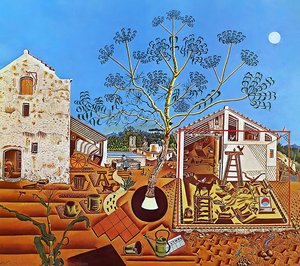
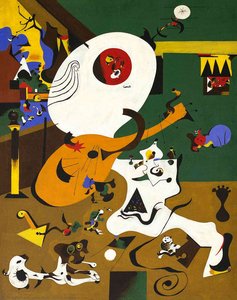
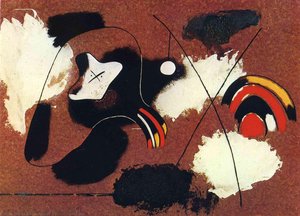
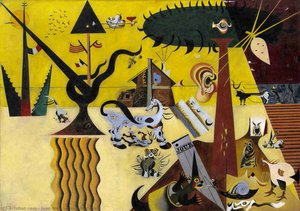
Throughout the 1920s and 30s, Miró developed his signature visual vocabulary—a universe populated by biomorphic shapes, floating forms, and vibrant colors. The Farm (1922), often considered a cornerstone of his oeuvre, exemplifies this transition. It’s not merely a depiction of rural life but an evocation of Catalan identity and a symbolic representation of the natural world. His collaborative spirit led to innovative techniques like *grattage*, pioneered with Max Ernst in 1926 for designs intended for Sergei Diaghilev's ballet, where textures were revealed by scraping paint across canvas. The Dutch Interiors (1928) series demonstrated his ability to reinterpret the Old Masters through a distinctly modern lens, transforming domestic scenes into dreamlike abstractions. Painting (1933), with its bold colors and simplified forms, encapsulates Miró’s exploration of the subconscious and his rejection of conventional artistic boundaries. Beyond painting, Miró fearlessly experimented with sculpture, ceramics, and printmaking, expanding his creative horizons and demonstrating a remarkable versatility.Legacy and Enduring Influence
Joan Miró's impact on 20th-century art is undeniable. He wasn’t simply a painter; he was a visionary who challenged the very definition of artistic expression. His work paved the way for abstract expressionism and continues to inspire artists across disciplines. He established two foundations—the Fundació Joan Miró in Barcelona (1975) and the Fundació Pilar i Joan Miró in Palma de Mallorca (1981)—ensuring that his legacy would endure, providing spaces for artistic exploration and education. Throughout his long career, he remained committed to pushing boundaries, questioning conventions, and exploring the depths of human imagination. Miró’s art is a testament to the power of abstraction, symbolism, and poetic expression—a vibrant celebration of life, dreams, and the enduring spirit of Catalan culture. His work continues to resonate with audiences worldwide, inviting us to enter a world where anything is possible and the boundaries between reality and fantasy blur into a captivating dance of color and form.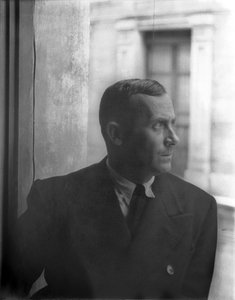
Joan Miró
1893 - 1983 , Spain
Quick Facts
- Artistic Movement Or Style: Surrealism, Abstract Art
- Artists Or Movements Influenced By This Artist:
- Surrealism
- Abstract Art
- Artists Who Influenced This Artist:
- Van Gogh
- Cézanne
- Date Of Birth: 1893
- Date Of Death: 1983
- Full Name: Joan Miró i Ferrà
- Nationality: Spanish
- Notable Artworks:
- The Farm
- Dutch Interiors
- Painting
- Place Of Birth: Barcelona, Spain
Related Articles
Joan Miró's Masterpieces: 25 Iconic Paintings for Art Lovers & Home Decor
Explore 25 iconic Joan Miró paintings! Discover the stories behind his Surrealist masterpieces, vibrant colors & unique style. Find museum-quality Miro reproductions and elevate your home decor with ArtsDot.com. Explore the full collection online.
Abstract Expressionism's 10 Defining Masterpieces |
Explore 10 defining Abstract Expressionism masterpieces by Pollock, Rothko & de Kooning. Discover the stories behind these iconic paintings and find museum-quality art reproductions to elevate your home decor on .

Dark Masterpieces: 10 Iconic Paintings Dominated by Black Tones |
Explore 10 iconic paintings dominated by black tones, from Rembrandt’s chiaroscuro to Goya's dark expressions. Discover the stories behind these masterpieces & find museum-quality art reproductions for your home at .
Kandinsky's Masterpieces: 25 Paintings That Define Abstract Art | ArtsDot
Journey through Wassily Kandinsky's 25 most iconic abstract paintings. Explore his revolutionary use of color, form & spiritual expressionism. Find museum-quality Kandinsky reproductions and elevate your home decor with ArtsDot.com. Discover all masterpieces on ArtsDot.com!
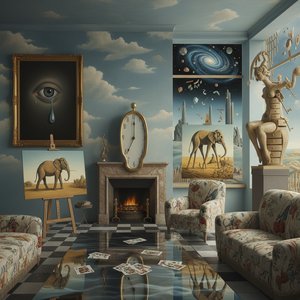
Surrealism's Greatest Hits: 10 Masterpieces for Your Home |
Journey into the dreamlike world of Surrealism! Explore 10 masterpieces by Dali, Magritte & Miró. Discover the stories behind these iconic paintings and find museum-quality art reproductions for your home at .