 Preview
 Send
Send Share
Share
 Details

 Download
 Similars
 X-Ray
X-Ray Diaporama
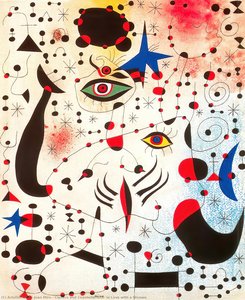
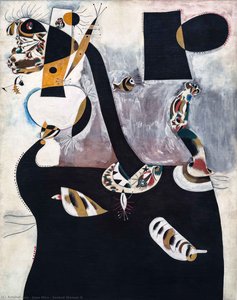
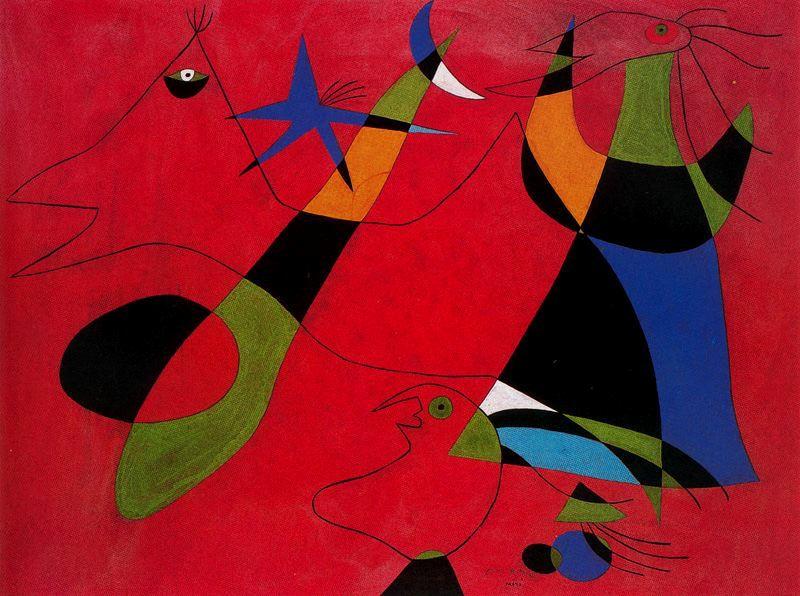
Personajes sobre fondo rojo

 Read More
Hand Made Oil Reproduction
Hand-painted oil on canvas in your size and frame, made to order by our artists. ( Buy Print Buy Image)




P118B $10

P118H $10

P118W $10

P438Z $10

P508JH $12

P508YH $12

P805H $10

P805Z $10

P919BZ $10

P919G $10

P919XJ $10

P959ZH $10

P968JZ $12

W106C $8

W218G $10

W218JH $8

W218Y $10

W307PJ $10

W316G $10

W316PJ $8

W316Y $10

W398PJ $8

W4111J $10

W500HY $15

W500JH $15

W692G $12

W849H $8

W940BG $15

W953PJ $8




Pick from our preset sizes that match the artwork's original proportions.

You may enter your own dimensions to fit a specific frame or space. If your selected size does not match the original image's proportions, we will either crop the artwork or extend the painting with additional hand-painted elements. A digital mockup will be sent for your approval before production begins.
Please note that the on-screen preview does not reflect the actual cropping or extension. Only the mockup will accurately show the final composition.
While custom sizes are available, we recommend selecting a dimension from the predefined list to preserve the original proportions.
After order, ArtsDot.com team will email client for instructions and provide a mockup preview
Worldwide Delivery () in 3/4 weeks instead of standard 5 weeks. (21 August). No compromise on quality.

Free Worldwide Express Shipping

High-Quality Linen Canvas

Full Shipping Insurance

Customs Tax Refund Guarantee

True Color Matching Guarantee

60-Day Return Policy (Defects Only)

100% Money-Back Guarantee

Bulk Discount Offer
 Glass option is only available in size under 110 CM

Personajes sobre fondo rojo
Reproduction Medium
Reproduction Size
-


Total Price
$ 263
Artwork Description
Joan Miró: A Catalan Visionary – Exploring Dreams and Landscapes
Joan Miró i Ferrà, born in Barcelona in 1893, stands as one of the most significant figures in 20th-century art. His journey was not merely a progression through styles but an exploration of inner worlds, translating dreams, memories, and Catalan identity onto canvas with a uniquely poetic visual language. From humble beginnings marked by illness and initial parental reservations about his artistic pursuits, Miró persevered, driven by an innate need to express the intangible—the emotions, sensations, and subconscious currents that lie beneath the surface of reality.
Early influences shaped Miró’s formative years. The architectural grandeur of Antoni Gaudí – whose organic forms would subtly permeate his later abstractions – captivated him from a young age. Furthermore, the rugged Catalan landscape served as a constant source of inspiration and materialized repeatedly in his artwork, embodying the spirit of Catalonia.
Style and Technique: Embracing Surrealism
Miró’s artistic style is inextricably linked to Surrealism, spearheaded by André Breton. Rejecting rational thought and embracing the realm of subconsciousness, Miró sought to liberate art from conventional constraints. He employed a distinctive technique characterized by spontaneous brushstrokes, vibrant colors—particularly reds and yellows—and fantastical imagery.
His approach involved layering paint onto canvas in multiple coats, creating textured surfaces that resembled geological formations or celestial bodies. Recurring motifs included birds – symbolizing freedom and aspiration – fish – representing fertility and the sea’s mysteries – and amorphous shapes reminiscent of dreams and fantasies. The artist deliberately avoided precise representation, prioritizing emotional expression over factual accuracy.
Historical Context: Catalonia Under Franco
Miró's artistic output coincided with a period of significant political upheaval in Spain—the dictatorship of Francisco Franco (1936-1975). This repressive regime imposed strict censorship on cultural activities, yet Miró managed to maintain his creative independence, albeit often operating clandestinely. His art served as a subtle form of resistance against authoritarian rule, conveying themes of exile, longing for liberty, and the preservation of Catalan traditions.
Symbolism: Decoding Dreams and Memories
Miró’s paintings are laden with symbolism—a language of images designed to communicate ideas beyond literal interpretation. Recurring symbols – such as eyes – represent awareness and introspection; geometric shapes – like circles and squares – embody stability and order amidst chaos; and fantastical creatures – blending animal and human forms – symbolize the fusion of conscious and unconscious thought.
The artist meticulously crafted each composition to evoke specific emotions—wonder, melancholy, joy—drawing upon his own personal experiences and delving into the depths of the human psyche. His aim was not merely to depict a scene but to convey a feeling, inviting viewers to embark on their own imaginative journey.
Emotional Impact: A Celebration of Imagination
Ultimately, Miró’s artwork transcends mere visual aesthetics; it possesses an undeniable emotional resonance. It invites contemplation and stimulates the imagination, reminding us that art can serve as a conduit for accessing realms beyond our everyday perceptions. Viewing “Personajes sobre fondo rojo” – or any Miró piece – is akin to stepping into a dreamscape—a space where logic dissolves and beauty reigns supreme.
Reproductions of Miró’s paintings offer an exceptional opportunity to bring his visionary aesthetic into the home, enriching interior design spaces with vibrant color palettes and captivating imagery. They serve as a testament to the enduring power of art to inspire awe and foster connection with the intangible forces that shape our inner lives.
Related Artworks
Artist Biography
A Catalan Visionary: The Life and Art of Joan Miró
Joan Miró i Ferrà, born in Barcelona in 1893, stands as one of the most significant figures in 20th-century art. His journey was not merely a progression through styles but an exploration of inner worlds, translating dreams, memories, and Catalan identity onto canvas with a uniquely poetic visual language. From humble beginnings marked by illness and initial parental reservations about his artistic pursuits, Miró persevered, driven by an innate need to express the intangible—the emotions, sensations, and subconscious currents that lie beneath the surface of reality. His early life was steeped in the traditions of Barcelona, a city brimming with architectural marvels thanks to Antoni Gaudí, whose organic forms would subtly influence Miró’s later abstractions. The goldsmithing profession of his father instilled an appreciation for meticulous craftsmanship, while the rugged Catalan landscape became a recurring motif and source of inspiration throughout his career.Early Influences and the Path to Surrealism
Miró's formal artistic training began at La Llotja in Barcelona, where he honed his skills in traditional techniques. However, it was exposure to the avant-garde movements sweeping through Paris that truly ignited his creative evolution. The vibrant colors of Fauvism and the fragmented forms of Cubism resonated deeply, prompting him to move to Paris in 1920. This period proved pivotal as he encountered artists like Pablo Picasso and began experimenting with increasingly abstract compositions. Yet, Miró didn’t simply adopt these styles; he synthesized them, forging a path toward his own distinctive aesthetic. He sought to distill forms to their essence, stripping away representational details in favor of symbolic shapes and evocative colors. This exploration led him to the Surrealist group in 1924, aligning him with artists such as Max Ernst and Salvador Dalí. While embracing the Surrealist interest in the subconscious, Miró maintained a unique sensibility—his work was less about shocking imagery or Freudian symbolism than it was about creating a world of playful forms and poetic suggestion.The Language of Symbols: Key Works and Artistic Innovations
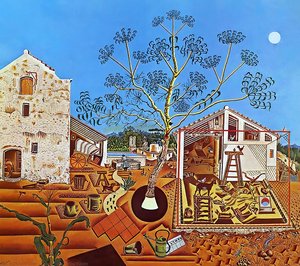
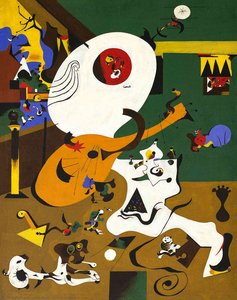
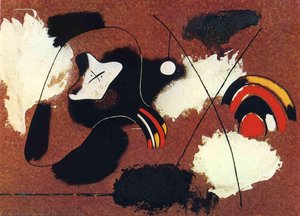
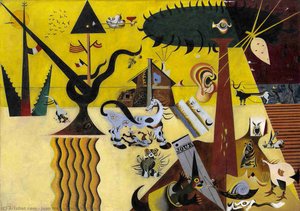
Throughout the 1920s and 30s, Miró developed his signature visual vocabulary—a universe populated by biomorphic shapes, floating forms, and vibrant colors. The Farm (1922), often considered a cornerstone of his oeuvre, exemplifies this transition. It’s not merely a depiction of rural life but an evocation of Catalan identity and a symbolic representation of the natural world. His collaborative spirit led to innovative techniques like *grattage*, pioneered with Max Ernst in 1926 for designs intended for Sergei Diaghilev's ballet, where textures were revealed by scraping paint across canvas. The Dutch Interiors (1928) series demonstrated his ability to reinterpret the Old Masters through a distinctly modern lens, transforming domestic scenes into dreamlike abstractions. Painting (1933), with its bold colors and simplified forms, encapsulates Miró’s exploration of the subconscious and his rejection of conventional artistic boundaries. Beyond painting, Miró fearlessly experimented with sculpture, ceramics, and printmaking, expanding his creative horizons and demonstrating a remarkable versatility.Legacy and Enduring Influence
Joan Miró's impact on 20th-century art is undeniable. He wasn’t simply a painter; he was a visionary who challenged the very definition of artistic expression. His work paved the way for abstract expressionism and continues to inspire artists across disciplines. He established two foundations—the Fundació Joan Miró in Barcelona (1975) and the Fundació Pilar i Joan Miró in Palma de Mallorca (1981)—ensuring that his legacy would endure, providing spaces for artistic exploration and education. Throughout his long career, he remained committed to pushing boundaries, questioning conventions, and exploring the depths of human imagination. Miró’s art is a testament to the power of abstraction, symbolism, and poetic expression—a vibrant celebration of life, dreams, and the enduring spirit of Catalan culture. His work continues to resonate with audiences worldwide, inviting us to enter a world where anything is possible and the boundaries between reality and fantasy blur into a captivating dance of color and form.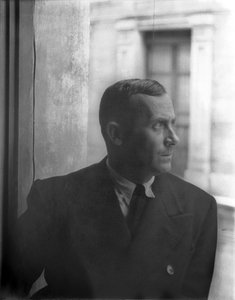
Joan Miró
1893 - 1983 , Spain
Quick Facts
- Artistic Movement Or Style: Surrealism, Abstract Art
- Artists Or Movements Influenced By This Artist:
- Surrealism
- Abstract Art
- Artists Who Influenced This Artist:
- Van Gogh
- Cézanne
- Date Of Birth: 1893
- Date Of Death: 1983
- Full Name: Joan Miró i Ferrà
- Nationality: Spanish
- Notable Artworks:
- The Farm
- Dutch Interiors
- Painting
- Place Of Birth: Barcelona, Spain
Related Articles
Joan Miró's Masterpieces: 25 Iconic Paintings for Art Lovers & Home Decor
Explore 25 iconic Joan Miró paintings! Discover the stories behind his Surrealist masterpieces, vibrant colors & unique style. Find museum-quality Miro reproductions and elevate your home decor with ArtsDot.com. Explore the full collection online.

Kandinsky's Masterpieces: 25 Paintings That Define Abstract Art | ArtsDot
Journey through Wassily Kandinsky's 25 most iconic abstract paintings. Explore his revolutionary use of color, form & spiritual expressionism. Find museum-quality Kandinsky reproductions and elevate your home decor with ArtsDot.com. Discover all masterpieces on ArtsDot.com!

Abstract Expressionism's 10 Defining Masterpieces |
Explore 10 defining Abstract Expressionism masterpieces by Pollock, Rothko & de Kooning. Discover the stories behind these iconic paintings and find museum-quality art reproductions to elevate your home decor on .

Geometric Abstraction's 10 Defining Masterpieces | Art for Your Home - ArtsDot
Explore 10 defining masterpieces of Geometric Abstraction! Discover Kandinsky, Mondrian & Malevich’s iconic works. Find museum-quality art reproductions and curated decor ideas to elevate your home at ArtsDot.com.
Surrealism's Greatest Hits: 10 Masterpieces for Your Home |
Journey into the dreamlike world of Surrealism! Explore 10 masterpieces by Dali, Magritte & Miró. Discover the stories behind these iconic paintings and find museum-quality art reproductions for your home at .