 Preview
 Send
Send Share
Share
 Details

 Download
 Similars
 X-Ray
X-Ray Diaporama
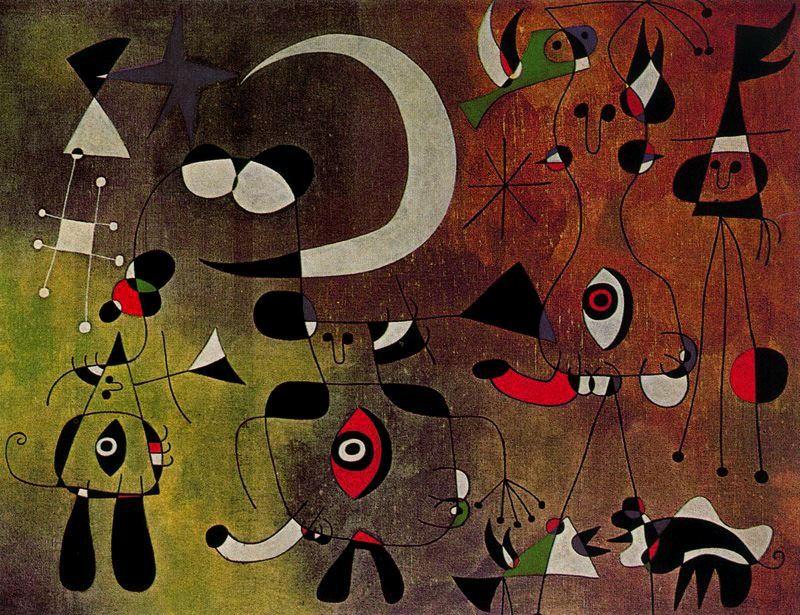
Pintura (Personajes en la noche)


 Read More
Giclée / Art Print
Museum-quality giclée or canvas print with fast production and flexible finish options. ( Buy Hand Made Painting Buy Image)




P118B $10

P118H $10

P118W $10

P438Z $10

P508JH $12

P508YH $12

P805H $10

P805Z $10

P919BZ $10

P919G $10

P919XJ $10

P959ZH $10

P968JZ $12

W106C $8

W218G $10

W218JH $8

W218Y $10

W307PJ $10

W316G $10

W316PJ $8

W316Y $10

W398PJ $8

W4111J $10

W500HY $15

W500JH $15

W692G $12

W849H $8

W940BG $15

W953PJ $8




Pick from our preset sizes that match the artwork's original proportions.

You may enter your own dimensions to fit a specific frame or space. If your selected size does not match the original image's proportions, we will either crop the artwork or extend the image with a mirrored or solid-fill edge. A digital mockup will be sent for your approval before production begins.
Please note that the on-screen preview does not reflect the actual cropping or extension. Only the mockup will accurately show the final composition.
While custom sizes are available, we recommend selecting a dimension from the predefined list to preserve the original proportions.
Worldwide Delivery () in 2 weeks instead of standard 4/5 weeks. (23 August)

Free Worldwide Express Shipping

High-Quality Linen Canvas

Full Shipping Insurance

Customs Tax Refund Guarantee

True Color Matching Guarantee

60-Day Return Policy (Defects Only)

100% Money-Back Guarantee

Bulk Discount Offer
 Glass option is only available in size under 110 CM

Pintura (Personajes en la noche)
Giclée / Art Print
Reproduction Size
-


Total Price
$ 63
Collectible Description
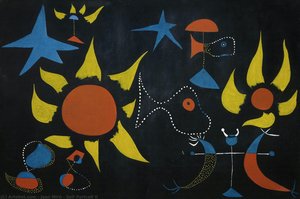
A Nightly Gathering: Decoding Miró’s ‘Pintura (Personajes en la noche)’
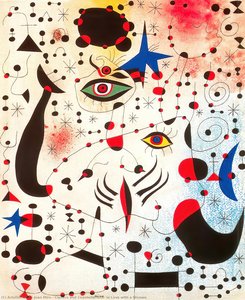
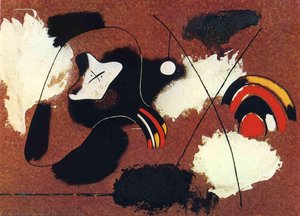
This captivating work by Joan Miró, titled *Pintura (Personajes en la noche)* – meaning “Painting (Characters in the Night)” – invites viewers into a dreamscape brimming with enigmatic figures and celestial wonder. Created during an intensely creative period for the artist, this piece exemplifies Miró’s unique ability to blend Surrealist fantasy with Cubist deconstruction, resulting in a visual language that is both unsettling and profoundly beautiful.Stylistic Fusion: Surrealism Meets Abstraction
Miró stands as a pivotal figure in 20th-century art, bridging the gap between representational painting and complete abstraction. *Pintura (Personajes en la noche)* showcases this perfectly. The artwork is deeply rooted in Surrealism’s exploration of the subconscious, yet it diverges from purely figurative depictions. Instead, Miró employs a distinctly abstract vocabulary – elongated, stylized figures, geometric shapes, and celestial motifs – to evoke a sense of mystery and psychological depth. The influence of Cubism is evident in the fragmented forms and flattened perspective, disrupting traditional spatial relationships and creating a dynamic composition.Technique & Composition: A Dance of Dark Hues
Dominated by a palette of dark browns, blacks, and muted reds, the painting’s color scheme contributes to its nocturnal atmosphere. The technique appears to be a digital rendering based on an original painting, with visible brushstrokes suggesting traditional media like oil paint. The composition is deliberately complex, layering shapes and figures against a backdrop suggestive of a starry night. Angular lines create a sense of movement and tension, while the shallow depth of field draws attention to the central characters, leaving the surrounding environment slightly blurred – as if glimpsed through a dream.Symbolism & Interpretation: Eyes That Watch
Miró’s work is rich in symbolism, often drawing upon Catalan folklore and personal mythology. In *Pintura (Personajes en la noche)*, the recurring motif of eyes scattered throughout the composition is particularly striking. These “watchful eyes” could represent awareness, surveillance, or perhaps even the artist's own gaze observing the unfolding drama within his subconscious. The elongated figures themselves are open to interpretation – they might be distorted human forms, archetypal characters from dreams, or simply abstract representations of emotional states. The crescent moon and star-like elements reinforce the nocturnal setting and hint at themes of transformation and hidden realities.Historical Context: A Pioneer of Modern Art
Born in Barcelona in 1893, Joan Miró was a key player in the avant-garde art movements of the early 20th century. He embraced Surrealism in the 1920s, alongside artists like Salvador Dalí and René Magritte, seeking to unlock the creative potential of the unconscious mind. His work challenged conventional artistic norms and paved the way for future generations of abstract expressionists. Museums worldwide, including the Fundació Joan Miró in Barcelona, the Bechtler Museum of Modern Art in Charlotte, and the MAM Rio, house significant collections of his work, testament to his enduring legacy.Emotional Impact & Interior Design Considerations
*Pintura (Personajes en la noche)* is not merely a visually striking artwork; it’s an emotionally resonant experience. The painting evokes a sense of mystery, unease, and perhaps even a touch of melancholy. Its dark tones and abstract forms make it a compelling focal point for modern interiors, particularly those with minimalist or contemporary aesthetics. The artwork's complexity rewards prolonged viewing, offering new discoveries with each encounter. A high-quality reproduction would be an exceptional addition to any art collection, sparking conversation and inspiring contemplation.Related Artworks
Artist Biography
A Catalan Visionary: The Life and Art of Joan Miró
Joan Miró i Ferrà, born in Barcelona in 1893, stands as one of the most significant figures in 20th-century art. His journey was not merely a progression through styles but an exploration of inner worlds, translating dreams, memories, and Catalan identity onto canvas with a uniquely poetic visual language. From humble beginnings marked by illness and initial parental reservations about his artistic pursuits, Miró persevered, driven by an innate need to express the intangible—the emotions, sensations, and subconscious currents that lie beneath the surface of reality. His early life was steeped in the traditions of Barcelona, a city brimming with architectural marvels thanks to Antoni Gaudí, whose organic forms would subtly influence Miró’s later abstractions. The goldsmithing profession of his father instilled an appreciation for meticulous craftsmanship, while the rugged Catalan landscape became a recurring motif and source of inspiration throughout his career.Early Influences and the Path to Surrealism
Miró's formal artistic training began at La Llotja in Barcelona, where he honed his skills in traditional techniques. However, it was exposure to the avant-garde movements sweeping through Paris that truly ignited his creative evolution. The vibrant colors of Fauvism and the fragmented forms of Cubism resonated deeply, prompting him to move to Paris in 1920. This period proved pivotal as he encountered artists like Pablo Picasso and began experimenting with increasingly abstract compositions. Yet, Miró didn’t simply adopt these styles; he synthesized them, forging a path toward his own distinctive aesthetic. He sought to distill forms to their essence, stripping away representational details in favor of symbolic shapes and evocative colors. This exploration led him to the Surrealist group in 1924, aligning him with artists such as Max Ernst and Salvador Dalí. While embracing the Surrealist interest in the subconscious, Miró maintained a unique sensibility—his work was less about shocking imagery or Freudian symbolism than it was about creating a world of playful forms and poetic suggestion.The Language of Symbols: Key Works and Artistic Innovations
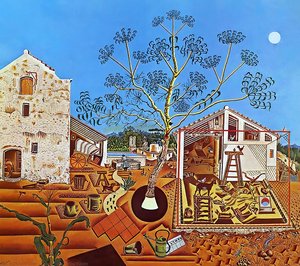
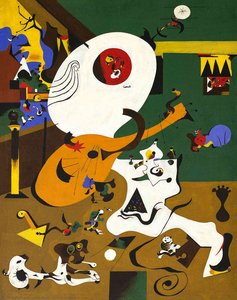
Throughout the 1920s and 30s, Miró developed his signature visual vocabulary—a universe populated by biomorphic shapes, floating forms, and vibrant colors. The Farm (1922), often considered a cornerstone of his oeuvre, exemplifies this transition. It’s not merely a depiction of rural life but an evocation of Catalan identity and a symbolic representation of the natural world. His collaborative spirit led to innovative techniques like *grattage*, pioneered with Max Ernst in 1926 for designs intended for Sergei Diaghilev's ballet, where textures were revealed by scraping paint across canvas. The Dutch Interiors (1928) series demonstrated his ability to reinterpret the Old Masters through a distinctly modern lens, transforming domestic scenes into dreamlike abstractions. Painting (1933), with its bold colors and simplified forms, encapsulates Miró’s exploration of the subconscious and his rejection of conventional artistic boundaries. Beyond painting, Miró fearlessly experimented with sculpture, ceramics, and printmaking, expanding his creative horizons and demonstrating a remarkable versatility.Legacy and Enduring Influence
Joan Miró's impact on 20th-century art is undeniable. He wasn’t simply a painter; he was a visionary who challenged the very definition of artistic expression. His work paved the way for abstract expressionism and continues to inspire artists across disciplines. He established two foundations—the Fundació Joan Miró in Barcelona (1975) and the Fundació Pilar i Joan Miró in Palma de Mallorca (1981)—ensuring that his legacy would endure, providing spaces for artistic exploration and education. Throughout his long career, he remained committed to pushing boundaries, questioning conventions, and exploring the depths of human imagination. Miró’s art is a testament to the power of abstraction, symbolism, and poetic expression—a vibrant celebration of life, dreams, and the enduring spirit of Catalan culture. His work continues to resonate with audiences worldwide, inviting us to enter a world where anything is possible and the boundaries between reality and fantasy blur into a captivating dance of color and form.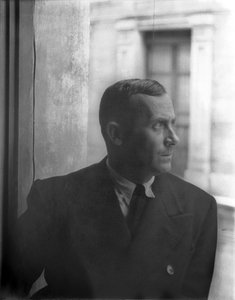
Joan Miró
1893 - 1983 , Spain
Quick Facts
- Artistic Movement Or Style: Surrealism, Abstract Art
- Artists Or Movements Influenced By This Artist:
- Surrealism
- Abstract Art
- Artists Who Influenced This Artist:
- Van Gogh
- Cézanne
- Date Of Birth: 1893
- Date Of Death: 1983
- Full Name: Joan Miró i Ferrà
- Nationality: Spanish
- Notable Artworks:
- The Farm
- Dutch Interiors
- Painting
- Place Of Birth: Barcelona, Spain
Related Articles
Joan Miró's Masterpieces: 25 Iconic Paintings for Art Lovers & Home Decor
Explore 25 iconic Joan Miró paintings! Discover the stories behind his Surrealist masterpieces, vibrant colors & unique style. Find museum-quality Miro reproductions and elevate your home decor with ArtsDot.com. Explore the full collection online.
Surrealist Painting Masterpieces: 10 Artworks That Redefined Reality | ArtsDot
Journey into the dreamlike world of Surrealism! Explore 10 masterpieces by Dali, Magritte & Miró that redefined art. Discover their stories & find museum-quality reproductions to elevate your home decor on ArtsDot.com.

Geometric Abstraction's 10 Defining Masterpieces | Art for Your Home - ArtsDot
Explore 10 defining masterpieces of Geometric Abstraction! Discover Kandinsky, Mondrian & Malevich’s iconic works. Find museum-quality art reproductions and curated decor ideas to elevate your home at ArtsDot.com.
Abstract Expressionism's 10 Defining Masterpieces |
Explore 10 defining Abstract Expressionism masterpieces by Pollock, Rothko & de Kooning. Discover the stories behind these iconic paintings and find museum-quality art reproductions to elevate your home decor on .
Surrealism's Visionaries: 10 Masterpieces for Your Home | ArtsDot
Journey into the dreamlike world of Surrealism! Explore 10 masterpieces by Dali, Magritte & Miró that redefined art. Discover their stories & find museum-quality reproductions to elevate your home decor on ArtsDot.com.