

 Preview
 Send
Send Share
Share
 Details

 Download
 Similars
 X-Ray
X-Ray Diaporama
Guarulhos Gymnasium


 Read More
Purchase a high-resolution, enhanced digital image, far superior to the online preview.
Each file is meticulously prepared by our in-house specialists using advanced tools and expert manual retouching. We ensure every image has exceptional clarity, precise color accuracy, and fine detail.
The final file is delivered via email within 72 hours, optimized for immediate use in professional, editorial, and print environments. This is the same quality trusted by top-tier design studios, publishers, and galleries.
Digital Image
Download a high-resolution file for personal display, printing, and creative projects. ( Buy Print Buy Hand Made Painting)
Included in Every Digital Image Order
Expert Digital Delivery, Guaranteed
When you choose ArtsDot.com, you're not just getting an image - you're receiving a professionally enhanced digital artwork, crafted with precision and backed by a satisfaction guarantee. Here's everything that comes with your order, automatically:

Fast Email Delivery
Your high-resolution digital image file will be emailed to you within 72 hours of ordering - ready for immediate use.

AI-Enhanced Digital File
Your artwork is professionally optimized using advanced AI tools and manual editing, ensuring maximum detail, clarity, and color accuracy.

Free Lifetime Re-Delivery
Accidentally deleted or lost your file? No worries - we'll resend it to you anytime, free of charge.

No Import Fees - Ever
Enjoy your artwork instantly with zero customs, duties, or delivery fees - digital downloads are always tax-free.

Color Accuracy Guarantee
We ensure your digital image reflects the original colors as closely as possible using professional tools and color management.

60-Day Satisfaction Guarantee
If you're not satisfied with your digital image, we'll revise it or refund 100% within 60 days - no questions asked.

100% Money-Back Guarantee
Not satisfied? Get a full refund within 60 days of receiving your digital file - no questions asked.

Bulk Order Discounts
Buy 3 images, save 10% - Buy 5, save 15% - Buy 10+, save 20%. Great for creative projects, galleries, and agencies.
Collectible Description
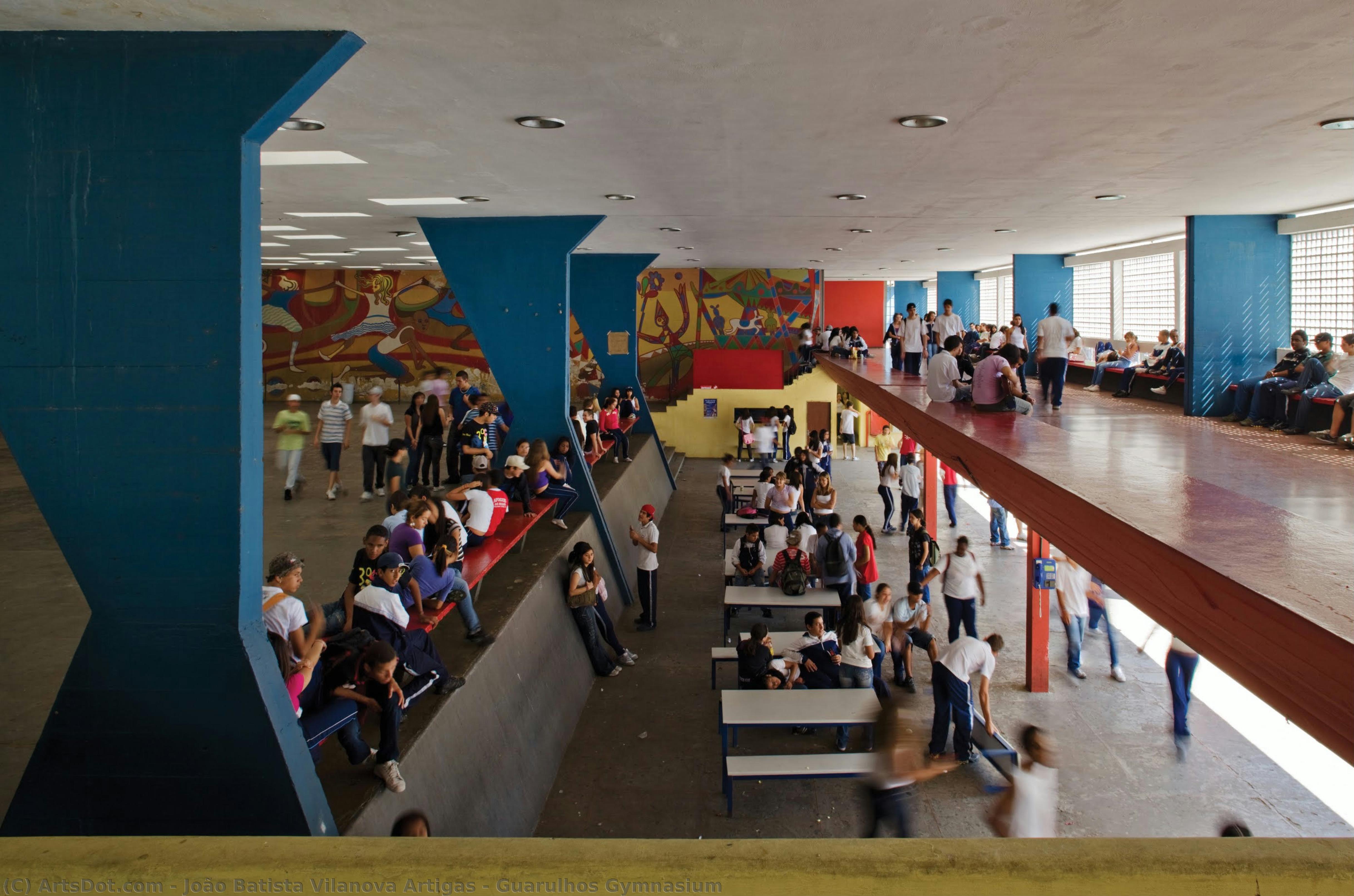
João Batista Vilanova Artigas’s Guarulhos Gymnasium: A Concrete Manifesto of Brazilian Modernism
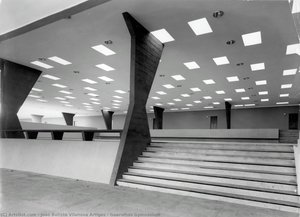
The black and white photograph before us offers more than just an image; it's a portal into the heart of Brazilian Modernism, meticulously crafted by João Batista Vilanova Artigas. Completed in 1960, the Guarulhos Gymnasium stands as a testament to his profound belief that architecture could be a powerful instrument for social reform and artistic expression – a conviction forged during a turbulent period of political upheaval in Brazil. Far from a simple school building, it’s a dynamic, almost sculptural space, reflecting Artigas's commitment to functionality interwoven with an undeniable sense of dramatic form.
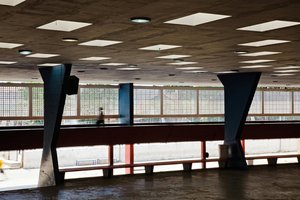
Artigas, born in Curitiba and educated at the University of São Paulo, emerged as a pivotal figure within the Paulista School, a movement that sought to redefine Brazilian architecture by embracing Brutalist principles – celebrating exposed concrete, raw materials, and geometric forms. This gymnasium embodies those ideals perfectly. The interior is dominated by vast, open spaces punctuated by a network of robust, blue-painted pillars that rise from the floor like colossal sentinels. These aren’t merely structural supports; they are integral elements of the design, creating a sense of verticality and drawing the eye upwards. Linear seating arrangements, arranged in deliberate patterns, contribute to the building's overall dynamism, suggesting movement and activity.
The Language of Concrete: Form and Function
Artigas’s approach was deeply rooted in his belief that architecture should be both beautiful and socially responsible. The gymnasium’s design cleverly addresses its challenging site – a slightly sloping terrain – by utilizing pilotis (supporting columns) to elevate the building, creating an open ground plane below. This clever solution not only mitigates the unevenness of the land but also contributes to the building's sense of lightness and openness. The use of exposed concrete is deliberate; it’s not merely a construction material but a visual statement – a celebration of industrial processes and a rejection of ornate decoration.
Notice, too, the subtle interplay of light and shadow within the space. The large windows and strategically placed openings flood the interior with natural light, while the concrete surfaces create a rich tapestry of textures and tones. Cobogós – recessed panels in the walls – further enhance this effect, creating a sense of depth and visual interest. These elements work together to transform the gymnasium into a vibrant, engaging space that fosters learning and community.
A Legacy Forged in Protest
Artigas’s career was tragically cut short by the military dictatorship in 1969, when he was expelled from the University of São Paulo. Despite facing persecution, his architectural vision continued to inspire generations of Brazilian architects. The Guarulhos Gymnasium stands as a powerful symbol of this legacy – a testament to Artigas's unwavering commitment to social justice and artistic innovation. His work during this period reflects a deep engagement with the political realities of Brazil, using architecture as a means of challenging established power structures.
Collecting the Spirit: Reproductions and Beyond
ArtsDot offers meticulously crafted hand-painted reproductions of Artigas’s Guarulhos Gymnasium, allowing you to bring this iconic piece of Brazilian Modernism into your own space. These reproductions capture not only the building's striking visual elements but also its underlying spirit – a sense of dynamism, social responsibility, and artistic ambition. Consider how this bold design can inject energy and purpose into any setting, echoing Artigas’s original vision for a truly transformative architectural experience.
Related Artworks
Artist Biography
A Pioneer of Brazilian Modernism: The Life and Legacy of João Batista Vilanova Artigas
João Batista Vilanova Artigas, born in Curitiba, Brazil, in 1915, stands as a monumental figure in the evolution of Brazilian architecture. More than simply a builder of structures, Artigas was a visionary who sought to imbue his designs with social responsibility and artistic expression, ultimately becoming the founding father of the Paulista School. His journey began at the Polytechnic School of the University of São Paulo, where he earned his degree in 1937, an education that would serve as the bedrock for a career defined by innovation and a deep commitment to the Brazilian people. An early formative experience was his collaboration with Gregori Warchavchik on the ambitious remodeling of Praça da República, a project that hinted at the modernist sensibilities he would soon champion. From 1941 to 1947, Artigas dedicated himself to academia, shaping young minds as a professor of aesthetics, architecture, and planning at the University of São Paulo. This period culminated in the prestigious Guggenheim Fellowship awarded in 1946, solidifying his growing reputation within architectural circles and providing him with invaluable opportunities for international exposure.Evolving Styles and Defining Works
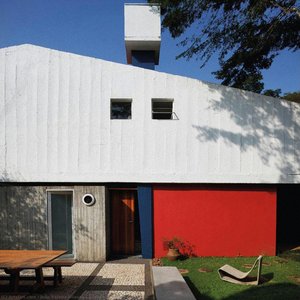
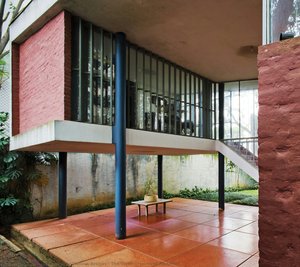
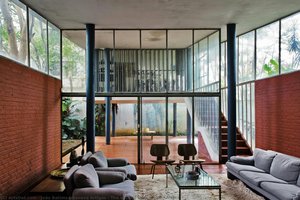
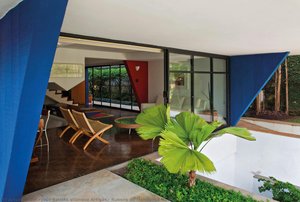
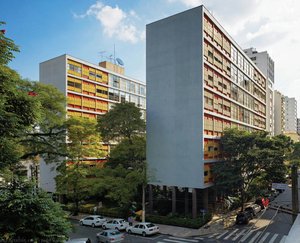
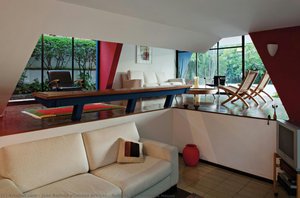
Artigas’s architectural style wasn't static; it was a dynamic process of exploration and refinement, reflecting both the changing currents of global design and his own evolving artistic vision. His work is generally understood through three distinct phases. The initial period, from 1937 to 1945, clearly demonstrates the influence of Frank Lloyd Wright, particularly in his residential designs—a focus on organic forms and a harmonious integration with the surrounding landscape. This was followed by a transitional phase, spanning roughly from 1945 to the mid-1950s, where Artigas began incorporating elements of the International Style, experimenting with curtain walls and pilotis in larger projects. However, it was during his final period, from the 1960s through the 1970s, that he truly found his voice—a dramatic style heavily influenced by Brutalism, characterized by its raw concrete aesthetic and monumental scale. This phase saw him tackle large-scale public buildings with a boldness and expressiveness that would become his signature. Among his most celebrated works are the House Ariosto Martirani, an early example showcasing Wright’s influence; the House Elza Berquó, demonstrating a minimalist aesthetic infused with striking geometric abstraction and Brutalist undertones; and the Guarulhos Gymnasium, representing his later, more dramatic style characterized by concrete expressionism. These projects collectively highlight his mastery of materials—particularly reinforced concrete—and his unwavering commitment to addressing social needs through thoughtful architectural design.Political Conviction and Artistic Expression
Artigas’s life was inextricably linked with political activism. A dedicated member of the Brazilian Communist Party, he believed that architecture had a crucial role to play in shaping a more just and equitable society. This conviction led to his removal from his teaching position at the University of São Paulo in 1969, alongside fellow architect Paulo Mendes da Rocha, during a period of intense political repression in Brazil. Despite this setback, Artigas remained steadfast in his beliefs, continuing to advocate for social change through his work. His commitment was eventually recognized; both he and Mendes da Rocha were reinstated to their positions in the 1980s, a testament to their enduring influence and the eventual triumph of democratic ideals. The Guggenheim Fellowship received earlier in his career further acknowledged his significant contributions to architecture. Today, his works are preserved in institutions like the Museu Antonio Parreiras and the Oscar Niemeyer Museum in Curitiba, ensuring that his legacy continues to inspire future generations. He believed deeply in the power of “minutiae”—the small details—to elevate a building from mere structure to a work of art, infusing each project with a unique character and sense of place.The Paulista School and Lasting Influence
João Batista Vilanova Artigas’s impact on Brazilian architecture is immeasurable. He wasn't just an architect; he was a teacher, a political activist, and a cultural icon who helped define the identity of a nation. The Paulista School, which he founded, emphasized functional design, expressed structural elements—particularly reinforced concrete—and a profound concern for social needs. This approach challenged conventional architectural norms and paved the way for a new generation of Brazilian architects to explore innovative forms and materials. His emphasis on creating spaces that were both aesthetically pleasing and socially responsible continues to resonate with contemporary practitioners around the world. Artigas’s work stands as a powerful reminder of the potential of architecture to reflect artistic vision, societal values, and a deep commitment to improving the lives of those it serves. He left behind not just buildings, but a philosophy—a belief that architecture could be a force for positive change in the world. His legacy endures, inspiring architects to create spaces that are both beautiful and meaningful.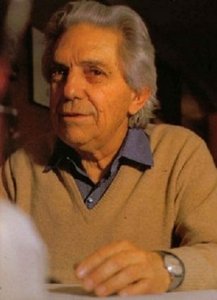
João Batista Vilanova Artigas
1915 - 1985 , Brazil
Quick Facts
- Artistic Movement Or Style: Modernism, Brutalism
- Artists Or Movements Influenced By This Artist: ['Paulista School']
- Artists Who Influenced This Artist: ['Frank Lloyd Wright']
- Date Of Birth: 1915
- Date Of Death: 1985
- Full Name: João Batista Vilanova Artigas
- Nationality: Brazilian
- Notable Artworks:
- House Ariosto Martirani
- House Elza Berquó
- Guarulhos Gymnasium
- Place Of Birth: Curitiba, Brazil

