

 Preview
 Send
Send Share
Share
 Details

 Download
 Similars
 X-Ray
X-Ray Diaporama
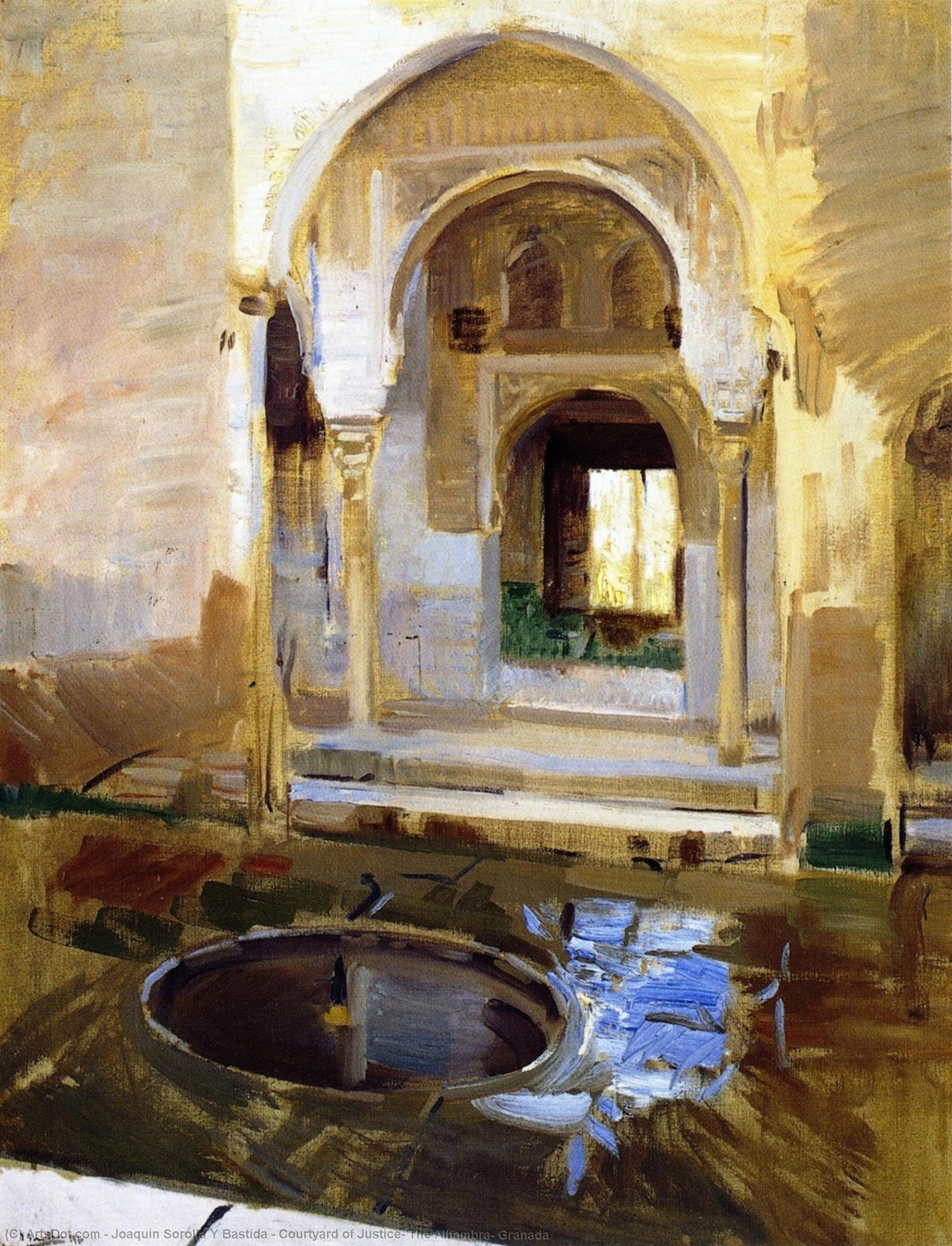
Courtyard of Justice, The Alhambra, Granada


 Read More
Purchase a high-resolution, enhanced digital image, far superior to the online preview.
Each file is meticulously prepared by our in-house specialists using advanced tools and expert manual retouching. We ensure every image has exceptional clarity, precise color accuracy, and fine detail.
The final file is delivered via email within 72 hours, optimized for immediate use in professional, editorial, and print environments. This is the same quality trusted by top-tier design studios, publishers, and galleries.
Digital Image
Download a high-resolution file for personal display, printing, and creative projects. ( Buy Print Buy Hand Made Painting)
Included in Every Digital Image Order
Expert Digital Delivery, Guaranteed
When you choose ArtsDot.com, you're not just getting an image - you're receiving a professionally enhanced digital artwork, crafted with precision and backed by a satisfaction guarantee. Here's everything that comes with your order, automatically:

Fast Email Delivery
Your high-resolution digital image file will be emailed to you within 72 hours of ordering - ready for immediate use.

AI-Enhanced Digital File
Your artwork is professionally optimized using advanced AI tools and manual editing, ensuring maximum detail, clarity, and color accuracy.

Free Lifetime Re-Delivery
Accidentally deleted or lost your file? No worries - we'll resend it to you anytime, free of charge.

No Import Fees - Ever
Enjoy your artwork instantly with zero customs, duties, or delivery fees - digital downloads are always tax-free.

Color Accuracy Guarantee
We ensure your digital image reflects the original colors as closely as possible using professional tools and color management.

60-Day Satisfaction Guarantee
If you're not satisfied with your digital image, we'll revise it or refund 100% within 60 days - no questions asked.

100% Money-Back Guarantee
Not satisfied? Get a full refund within 60 days of receiving your digital file - no questions asked.

Bulk Order Discounts
Buy 3 images, save 10% - Buy 5, save 15% - Buy 10+, save 20%. Great for creative projects, galleries, and agencies.
Collectible Description
A Moment Frozen in Andalusian Tranquility: Sorolla’s Courtyard of Justice
The painting “Courtyard of Justice, The Alhambra, Granada” by Joaquín Sorolla y Bastida stands as a testament to Impressionism's ability to capture not just visual appearances but also the very essence of atmosphere. Completed in 1909 and currently residing within the Museo Sorolla in Valencia, Spain, this canvas transcends mere depiction; it invites contemplation on beauty, serenity, and the enduring legacy of Moorish artistry.The Scene Unfolds: Composition and Setting
Sorolla’s masterful eye immediately draws the viewer into a meticulously crafted courtyard scene. Dominating the composition are soaring arches adorned with intricate carvings—a hallmark of Alhambra architecture—that frame the central focus: a tranquil fountain bubbling gently amidst lush greenery. Strategically positioned benches invite stillness, encouraging viewers to imagine themselves enveloped in the cool shade and fragrant air of this Andalusian oasis. The artist’s careful attention to detail extends beyond the architectural elements; potted plants strategically placed around the fountain contribute significantly to the overall ambiance, reinforcing the feeling of cultivated peace.Impressionistic Brilliance: Technique and Style
Sorolla's artistic style is unmistakably Impressionist, prioritizing fleeting impressions of light over precise realism. He achieves this remarkable feat through a technique characterized by loose brushstrokes—bold yet delicate—that dance across the canvas surface. These strokes aren’t intended to meticulously render every contour but rather to convey the shimmering quality of sunlight filtering through the arches and illuminating the foliage. Sorolla skillfully utilizes chiaroscuro – the interplay between light and shadow – creating depth and dimensionality that imbues the courtyard with palpable warmth. The palette leans heavily on warm hues—ochres, yellows, and reds—further enhancing the painting’s inviting character and transporting the viewer to a sun-drenched Andalusian afternoon.Historical Resonance: Alhambra's Legacy
The Alhambra, Granada’s magnificent Moorish palace complex, served as Sorolla’s inspiration. Constructed during the Nasrid Dynasty in the 13th and 14th centuries, it embodies Islamic artistic ideals—geometric patterns, vegetal motifs, and a profound reverence for nature—principles that Sorolla skillfully incorporated into his artwork. The courtyard itself represents a deliberate echo of these traditions, symbolizing harmony between humanity and the natural world – a concept central to Sorolla’s broader philosophical outlook.Emotional Impact: A Balm for the Soul
“Courtyard of Justice” isn't merely aesthetically pleasing; it possesses an undeniable emotional resonance. Sorolla succeeds in conveying a profound sense of tranquility and contemplation, inviting viewers to escape the pressures of daily life and immerse themselves in a moment of serene beauty. The painting’s luminous colors and dynamic brushstrokes evoke feelings of warmth, optimism, and nostalgia—a timeless reminder that art can transport us back to moments of pure joy and wonder. It's a piece designed not just to be seen but felt – a visual meditation on the sublime.Related Artworks
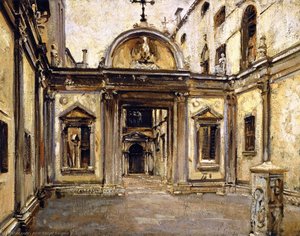
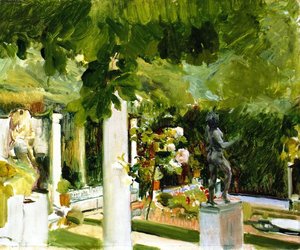
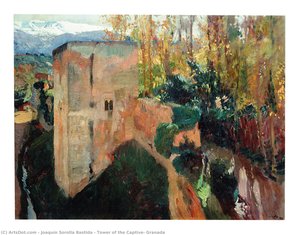
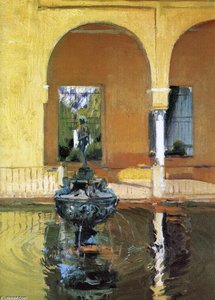
Artist Biography
A Life Bathed in Light: The World of Joaquín Sorolla
Joaquín Sorolla y Bastida, a name synonymous with the radiant light and vibrant energy of Spain, was more than just a painter; he was a chronicler of his nation’s soul. Born in Valencia in 1863, Sorolla's early life was marked by tragedy. Orphaned at the tender age of two following a cholera epidemic that claimed both parents, young Joaquín and his sister were raised by their maternal aunt and uncle. This early experience with loss perhaps instilled within him a profound appreciation for the fleeting beauty of life – a sentiment that would permeate his art. Though hardship shadowed his beginnings, it did not dim the spark of artistic talent that quickly became apparent. He received initial instruction in Valencia, demonstrating an aptitude that led to studies under established artists like Cayetano Capuz and José Benlliure, eventually culminating in a four-year grant to study in Rome. It was there, amidst the classical grandeur of Italy, that Sorolla began to forge his unique artistic path, absorbing influences while simultaneously developing a style distinctly his own.From Historical Narratives to Sun-Drenched Realism
Sorolla’s early work reflected the prevailing academic trends of the time – large-scale historical and mythological scenes. However, a pivotal shift occurred as he returned to Spain and began to truly observe the world around him. He found himself captivated by the everyday lives of his countrymen, particularly those along the Valencian coast. The intense Mediterranean sunlight, the shimmering sea, and the vibrant energy of the people became his primary subjects. This transition wasn’t immediate; Sorolla continued to explore social realism with works like Sad Inheritance (1899), a powerful depiction of children afflicted by polio bathing in the sea – a painting that garnered significant acclaim but also revealed a darker, more compassionate side to his artistic vision. Sad Inheritance, exhibited at the Universal Exhibition in Paris, brought him widespread recognition and cemented his position as a leading figure in Spanish art. Yet, it was his increasingly focused exploration of light and color, inspired by Impressionism though never fully embracing its tenets, that would define his legacy. He wasn’t merely *depicting* light; he was attempting to *capture* its very essence, the way it danced on water, illuminated skin, and transformed ordinary moments into scenes of extraordinary beauty.Master of Luminism: A Unique Artistic Voice
Sorolla's technique became instantly recognizable – a bravura display of brushwork, characterized by loose, energetic strokes that conveyed movement and atmosphere. He worked *en plein air* whenever possible, directly confronting the challenges of capturing fleeting light conditions. This dedication to painting outdoors resulted in canvases brimming with life and immediacy. His beach scenes, perhaps his most iconic works, are not simply picturesque representations of leisure; they are studies in luminosity, reflections, and the joyful interaction between people and their environment. Paintings like Children on the Seashore and Sewing the Sail exemplify this mastery – figures bathed in golden light, rendered with a remarkable sense of spontaneity and vitality. He wasn’t interested in meticulous detail; rather, he sought to convey the *impression* of reality, prioritizing atmosphere and emotion over precise representation. This approach earned him comparisons to Impressionists like Monet and Renoir, but Sorolla's work possessed a unique Spanish character – a warmth, intensity, and emotional depth that set it apart.Legacy and Enduring Influence
By the early 20th century, Joaquín Sorolla was internationally renowned. He exhibited widely throughout Europe and the United States, receiving numerous accolades and commissions. His most ambitious undertaking, Vision of Spain, a series of fourteen monumental murals commissioned by the Hispanic Society of America, remains a testament to his artistic vision and technical skill. Though he suffered a stroke in 1920 that curtailed his painting activity, Sorolla’s influence continued to grow after his death in 1923. His work inspired generations of artists, not only in Spain but around the world. Today, his paintings are held in major museums globally, including the Museo Sorolla in Madrid – a former home transformed into a dedicated space for showcasing his art. Sorolla’s legacy extends beyond his technical brilliance; he captured a specific moment in Spanish history and culture, immortalizing the beauty of its landscapes and the spirit of its people. He remains a master of light, color, and emotion—a painter whose work continues to resonate with audiences today, reminding us of the power of art to illuminate our world.Key Achievements & Recognition
- 1892: Gold medal at the National Exhibition in Madrid for Another Marguerite.
- 1894: Acclaimed for The Return from Fishing: Hauling the Boat, acquired by the Musée du Luxembourg.
- 1899: Grand Prix and medal of honor at the Universal Exhibition in Paris for Sad Inheritance.
- 1900-1923: Extensive exhibitions throughout Europe and the United States, establishing international recognition.
- 1912-1928: Commissioned to create Vision of Spain for the Hispanic Society of America (completed posthumously).
- Present Day: Works held in major museums worldwide, including the Museo Sorolla in Madrid.
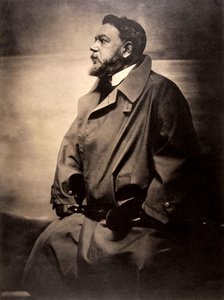
Joaquín Sorolla y Bastida
1863 - 1923 , Spain
Quick Facts
- Artistic Movement Or Style: Realism, Luminism, Impressionism
- Artists Who Influenced This Artist:
- Francisco Pradilla
- Jules Bastien-Lepage
- Adolph von Menzel
- Date Of Birth: February 27, 1863
- Date Of Death: August 10, 1923
- Full Name: Joaquín Sorolla y Bastida
- Nationality: Spanish
- Notable Artworks:
- Italian Girl with Flowers
- Bathing Time
- White Slave Trade
- Typical Sorianos
- Children on the Seashore
- Sewing the Sail
- Place Of Birth: Valencia, Spain

