

 Preview
 Send
Send Share
Share
 Details

 Download
 Similars
 X-Ray
X-Ray Diaporama
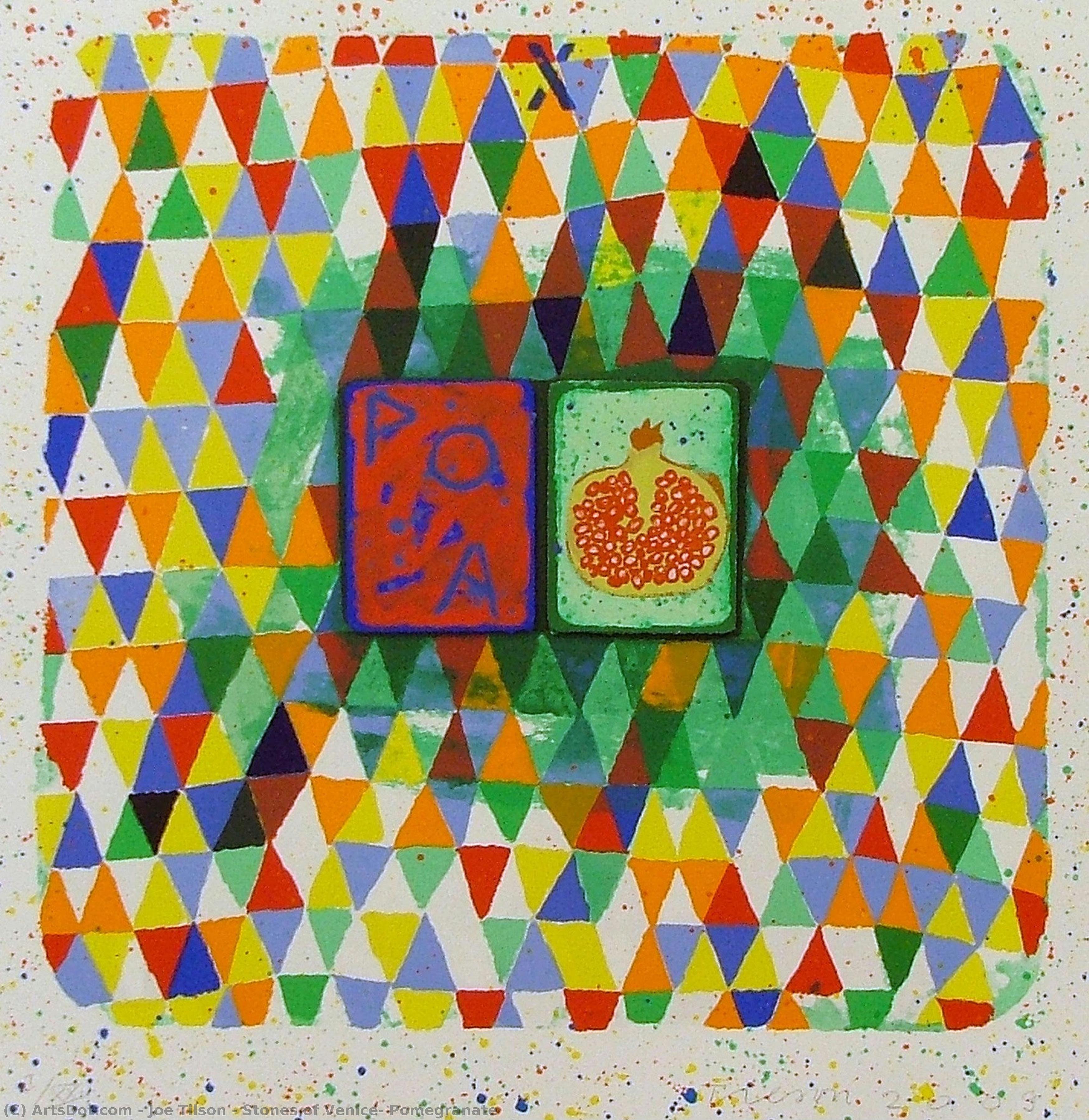
Stones of Venice, Pomegranate
 Print
Print- WallArt
 2009
2009- Contemporary
 124.0 x 120.0 cm
 Paintings in Hospitals
 Read More
Purchase a high-resolution, enhanced digital image, far superior to the online preview.
Each file is meticulously prepared by our in-house specialists using advanced tools and expert manual retouching. We ensure every image has exceptional clarity, precise color accuracy, and fine detail.
The final file is delivered via email within 72 hours, optimized for immediate use in professional, editorial, and print environments. This is the same quality trusted by top-tier design studios, publishers, and galleries.
Digital Image
Download a high-resolution file for personal display, printing, and creative projects. ( Buy Print Buy Hand Made Painting)
Included in Every Digital Image Order
Expert Digital Delivery, Guaranteed
When you choose ArtsDot.com, you're not just getting an image - you're receiving a professionally enhanced digital artwork, crafted with precision and backed by a satisfaction guarantee. Here's everything that comes with your order, automatically:

Fast Email Delivery
Your high-resolution digital image file will be emailed to you within 72 hours of ordering - ready for immediate use.

AI-Enhanced Digital File
Your artwork is professionally optimized using advanced AI tools and manual editing, ensuring maximum detail, clarity, and color accuracy.

Free Lifetime Re-Delivery
Accidentally deleted or lost your file? No worries - we'll resend it to you anytime, free of charge.

No Import Fees - Ever
Enjoy your artwork instantly with zero customs, duties, or delivery fees - digital downloads are always tax-free.

Color Accuracy Guarantee
We ensure your digital image reflects the original colors as closely as possible using professional tools and color management.

60-Day Satisfaction Guarantee
If you're not satisfied with your digital image, we'll revise it or refund 100% within 60 days - no questions asked.

100% Money-Back Guarantee
Not satisfied? Get a full refund within 60 days of receiving your digital file - no questions asked.

Bulk Order Discounts
Buy 3 images, save 10% - Buy 5, save 15% - Buy 10+, save 20%. Great for creative projects, galleries, and agencies.
Collectible Description
A Vibrant Intersection of Pop Art and Texture
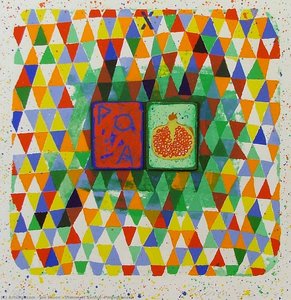
In the mesmerizing work "Stones of Venice, Pomegranate," created in 2009 by the esteemed British artist Joe Tilson, we are invited into a world where the boundaries between graphic precision and organic warmth dissolve. At first glance, the viewer is captivated by the striking presence of two deep red forms—reminకిing one of ripe apples or perhaps the bursting seeds of a pomegranate—nestled centrally within the composition. This piece serves as a masterful testament to Tilson’s ability to bridge the gap between the bold, commercial aesthetics of the Pop Art movement and a more profound, tactile exploration of pattern and color. The arrangement is deceptively simple, yet it possesses an architectural weight that commands the space it inhabits.
The technique employed in this work reflects Tilson’s unique background; his early years as a carpenter and cabinet maker are subtly echoed in the structural integrity of the composition. While the subject matter feels immediate and accessible, the execution involves a complex interplay of colorful patterns that dance around the central motifs. These intricate designs create a rhythmic backdrop, suggesting the mosaic-like splendor of Venetian architecture or the kaleidoscopic textures found in nature. The way the light seems to interact with the vibrant pigments creates a sense of depth, making the artwork feel less like a flat surface and more like a window into a richly layered dimension.
Symbolism and the Legacy of British Pop
To understand "Stones of Venice, Pomegranate," one must look toward the historical context of Tilson’s illustrious career. As a contemporary of legends such as Peter Blake and David Hockney, Tilson brought a sculptural sensibility to the canvas. The title itself suggests a dialogue between the permanent—the "stones" of a historic city—and the ephemeral, succulent life of the pomegranate. This juxtaposition invites collectors to contemplate themes of endurance versus decay, and the beauty found in both the man-made and the organic. The pomegranate, historically a symbol of fertility, abundance, and even rebirth, finds a modern, graphic reincarnation through Tilson’s lens.
For the discerning interior designer or art collector, this piece offers an unparalleled emotional impact. It possesses a rare versatility; it can serve as a bold, energetic focal point in a contemporary minimalist gallery, or add a layer of sophisticated warmth to a classic, richly textured study. The high-contrast palette and the meticulous attention to detail ensure that the work remains engaging from every angle, offering new visual discoveries upon every viewing. Owning a reproduction of such a significant piece is not merely about decoration; it is about bringing a fragment of art history’s most vibrant era into the modern home, fostering an atmosphere of creativity, intellect, and timeless elegance.
Related Artworks




Artist Biography
Early Life and Artistic Foundations
Joseph Charles Tilson, born in London on August 24, 1928, embarked on a life journey that would firmly establish him as a pivotal figure within the British Pop Art movement and beyond. His early years were marked by practical experience; from 1944 to 1946 he honed his skills as a carpenter and cabinet maker, a formative period that instilled in him a deep appreciation for materials and construction—a sensibility that would profoundly shape his artistic expression. A brief stint in the Royal Air Force followed (1946-1949), before Tilson dedicated himself to formal art training at St Martin’s School of Art from 1949 to 1952, then continuing at the Royal College of Art until 1955. It was during his time at the RCA that he forged lasting connections with a generation of artists who would become synonymous with the burgeoning Pop Art scene: Frank Auerbach, Leon Kossoff, R.B. Kitaj, Peter Blake, Allen Jones, and David Hockney. The award of the Rome Prize in 1955 provided him with an invaluable opportunity to immerse himself in Italian art and culture, a sojourn that would leave an indelible mark on his aesthetic development.The Rise of British Pop Art
Returning to London in 1957, Tilson began teaching at St Martin’s School of Art, later extending his influence to the Slade School of Fine Art, University College London, and institutions in New York and Hamburg. The early 1960s witnessed Tilson's emergence as a leading force within British Pop Art. He distinguished himself by seamlessly blending painting, printmaking, and sculpture—particularly wooden reliefs and constructions that reflected his background in carpentry. Unlike some of his American counterparts who focused on the iconography of mass consumerism, Tilson’s early work often incorporated elements of collage and textiles, creating a unique visual language that was both bold and playful. His first solo exhibition at the Marlborough Gallery in 1962 signaled his arrival as a significant new voice in contemporary art. In 1964, he represented Britain at the prestigious Venice Biennale, catapulting him onto the international stage and solidifying his reputation within the global art community.A Shift Towards Mythology and Transcendence
As the decade progressed, Tilson began to express growing disillusionment with the superficiality of consumer culture. This shift in perspective prompted a profound transformation in his artistic practice during the 1970s. In 1972, he relocated to Wiltshire, seeking a more contemplative environment conducive to exploring deeper themes. He expanded his repertoire of materials, incorporating stone, straw, and rope into his work—a deliberate attempt to transcend the limitations of time and culture by drawing inspiration from pre-Classical mythology. This period saw the birth of “Alchera,” a body of work characterized by its intricate symbolism and evocative textures. The Alchera works represent a departure from the overt Pop aesthetic of his earlier years, revealing a fascination with ancient archetypes and universal narratives.International Recognition and Legacy
Throughout his career, Joe Tilson’s work was exhibited extensively in solo shows around the world, including Cortona Centro Culturale Fontanella Borghese (1990), Plymouth City Museum (1991), Palazzo Pubblico, Siena (1995) and Galleria Comunale d'Arte, Cesena (2000). He received numerous accolades, notably the Gulbenkian Foundation Prize in 1960 and the Grand Prix d’Honneur at the Biennale of Ljubljana in 1996. A major retrospective exhibition at the Royal Academy of Arts in London in 2002—titled “Joe Tilson: Pop to Present”—provided a comprehensive overview of his artistic journey, highlighting the remarkable evolution of his style and subject matter. Tilson’s enduring legacy lies in his refusal to be confined by stylistic boundaries. He consistently challenged conventional notions of art-making, embracing experimentation and drawing inspiration from diverse sources—from classical mythology to contemporary social issues. His work continues to resonate with audiences today, offering a compelling reflection on the complexities of modern life and the search for meaning in an ever-changing world. He passed away peacefully at his home in London on November 9, 2023, leaving behind a rich artistic heritage.Key Characteristics & Influences
- Early Training: A background as a carpenter and cabinet maker profoundly influenced his use of materials and construction techniques.
- Pop Art Association: He was a central figure in the British Pop Art movement, alongside artists like David Hockney and Peter Blake.
- Material Experimentation: Tilson consistently explored new materials—wood, textiles, stone, straw, rope—to create unique textures and forms.
- Mythological Themes: A shift in the 1970s led to a fascination with pre-Classical mythology and ancient cultures, embodied in his “Alchera” series.
- Printmaking Prowess: He was a prolific printmaker, utilizing a wide range of techniques throughout his career.
joe tilson
1928 -
Quick Facts
- Artistic Movement Or Style: Pop Art, Sculptural Reliefs
- Artists Or Movements Influenced By This Artist: British Pop Art movement
- Artists Who Influenced This Artist:
- Frank Auerbach
- Leon Kossoff
- Peter Blake
- David Hockney
- Date Of Birth: August 24, 1928
- Date Of Death: November 9, 2023
- Full Name: Joseph Charles Tilson
- Nationality: British
- Notable Artworks:
- Stones of Venice
- Secret Wood Relief
- Liknon Red
- Alchera Artwork
- Place Of Birth: London, England

