 Preview
 Send
Send Share
Share
 Details

 Download
 Similars
 X-Ray
X-Ray Diaporama
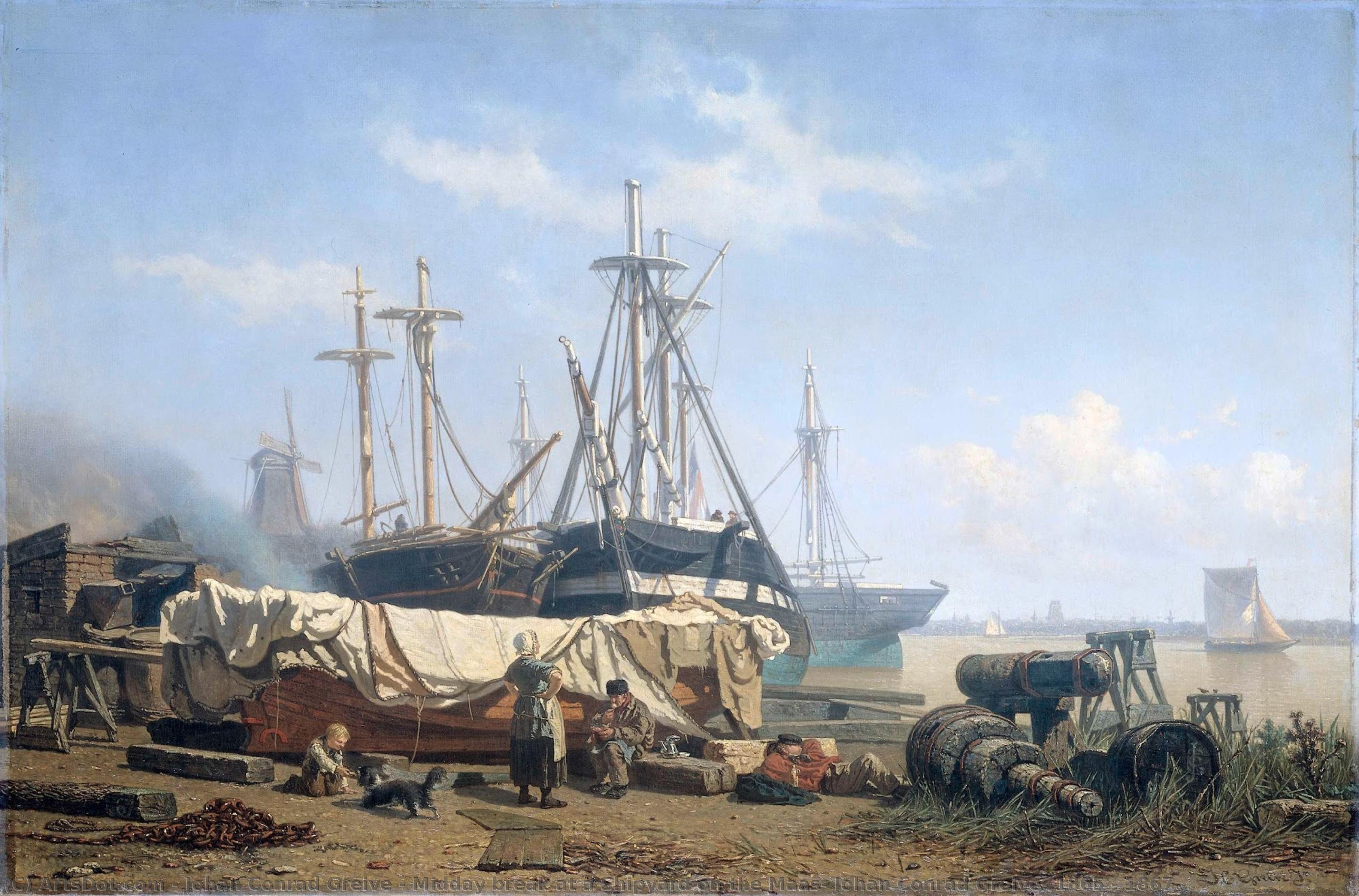
Midday break at a Shipyard on the Maas, Johan Conrad Greive, 1865 - 1867
 1867
1867 119.0 x 13.0 cm
 Read More
Purchase a high-resolution, enhanced digital image, far superior to the online preview.
Each file is meticulously prepared by our in-house specialists using advanced tools and expert manual retouching. We ensure every image has exceptional clarity, precise color accuracy, and fine detail.
The final file is delivered via email within 72 hours, optimized for immediate use in professional, editorial, and print environments. This is the same quality trusted by top-tier design studios, publishers, and galleries.
Digital Image
Download a high-resolution file for personal display, printing, and creative projects. ( Buy Print Buy Hand Made Painting)
Included in Every Digital Image Order
Expert Digital Delivery, Guaranteed
When you choose ArtsDot.com, you're not just getting an image - you're receiving a professionally enhanced digital artwork, crafted with precision and backed by a satisfaction guarantee. Here's everything that comes with your order, automatically:

Fast Email Delivery
Your high-resolution digital image file will be emailed to you within 72 hours of ordering - ready for immediate use.

AI-Enhanced Digital File
Your artwork is professionally optimized using advanced AI tools and manual editing, ensuring maximum detail, clarity, and color accuracy.

Free Lifetime Re-Delivery
Accidentally deleted or lost your file? No worries - we'll resend it to you anytime, free of charge.

No Import Fees - Ever
Enjoy your artwork instantly with zero customs, duties, or delivery fees - digital downloads are always tax-free.

Color Accuracy Guarantee
We ensure your digital image reflects the original colors as closely as possible using professional tools and color management.

60-Day Satisfaction Guarantee
If you're not satisfied with your digital image, we'll revise it or refund 100% within 60 days - no questions asked.

100% Money-Back Guarantee
Not satisfied? Get a full refund within 60 days of receiving your digital file - no questions asked.

Bulk Order Discounts
Buy 3 images, save 10% - Buy 5, save 15% - Buy 10+, save 20%. Great for creative projects, galleries, and agencies.
Related Artworks









Artist Biography
The Enigmatic Landscapes of Johan Conrad Greive
Johan Conrad Greive remains a somewhat elusive figure in the pantheon of landscape painters, yet his contributions to 19th-century Dutch Romanticism are increasingly recognized for their atmospheric depth and subtle emotional power. Born in The Hague, Netherlands (the exact year is currently undocumented), Greive dedicated his life to capturing the nuanced beauty of the Low Countries’ natural world. Unlike many of his contemporaries who favored grand historical or mythological scenes, Greive found inspiration in the quiet dignity of marshes, expansive skies, and the play of light on water – subjects often overlooked but rendered with remarkable sensitivity in his work. His continued artistic activity into the present day speaks to a long and dedicated career, though detailed biographical information remains scarce, adding an intriguing layer of mystery to his oeuvre.Early Influences and Artistic Development
Greive’s early training is not extensively documented, however, it's clear that he emerged within a tradition deeply rooted in the Dutch Golden Age landscape painting. The influence of artists like Jacob van Ruisdael and Aert van der Neer is palpable in his initial works – a shared appreciation for meticulous detail, realistic depictions of cloud formations, and a restrained palette dominated by earthy tones and cool greys. However, Greive quickly moved beyond mere imitation. He absorbed the burgeoning Romantic sensibilities sweeping across Europe, particularly the work of English painters like J.M.W. Turner and John Constable.- Shift in Focus: While initially adhering to a more traditional Dutch style, Greive gradually embraced a looser brushstroke and a greater emphasis on atmospheric effects.
- Color Palette Evolution: His palette expanded to include richer blues and purples, reflecting the influence of Romantic color theory and a desire to convey mood rather than simply record visual reality.
- Subject Matter Preference: He increasingly focused on scenes that evoked a sense of solitude and contemplation – often depicting remote marshes, desolate coastlines, and dramatic weather conditions.