

 Preview
 Send
Send Share
Share
 Details

 Download
 Similars
 X-Ray
X-Ray Diaporama
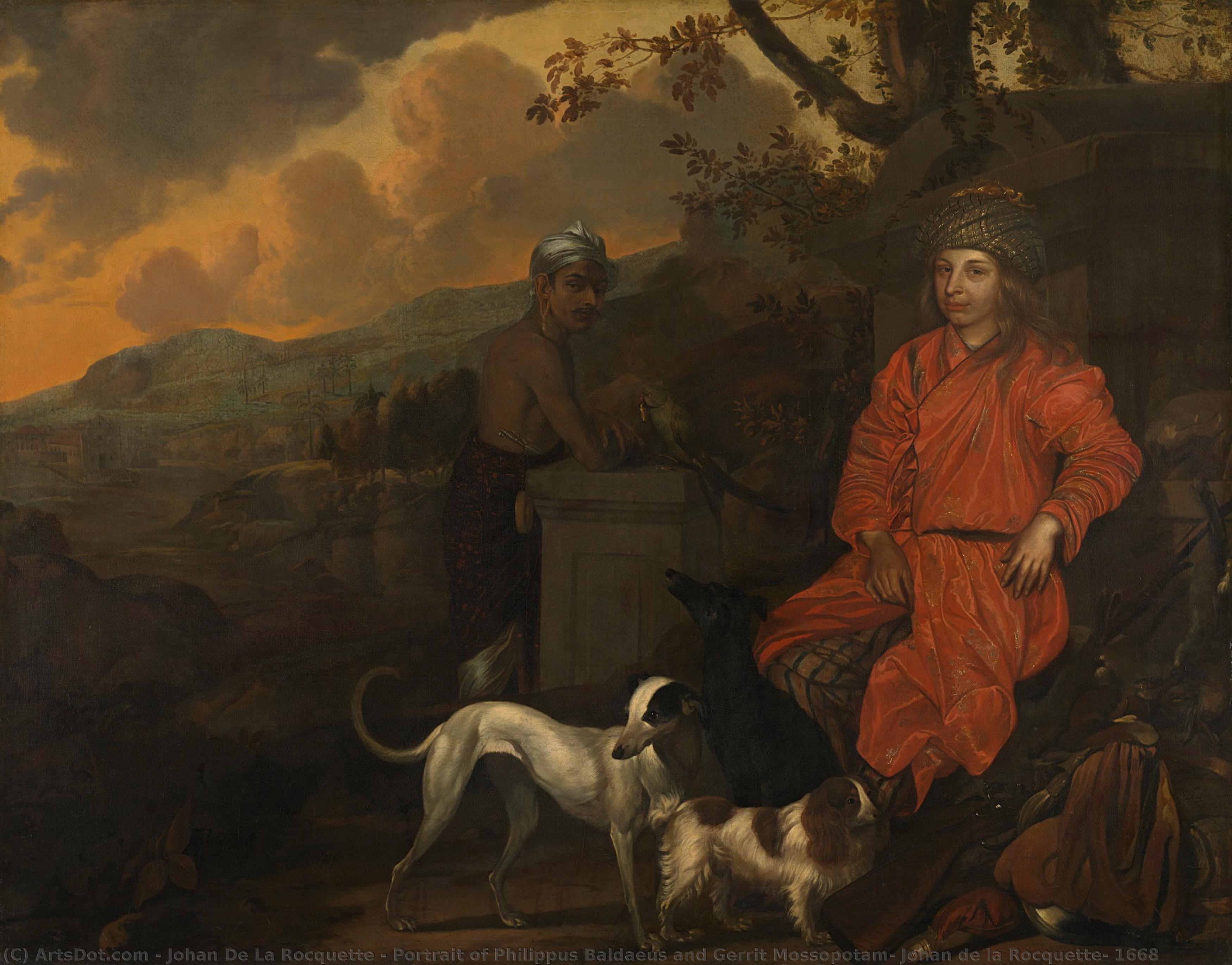
Portrait of Philippus Baldaeus and Gerrit Mossopotam, Johan de la Rocquette, 1668
 1668
1668 141.0 x 176.0 cm
 Read More
Hand Made Oil Reproduction
Hand-painted oil on canvas in your size and frame, made to order by our artists. ( Buy Print Buy Image)




































Pick from our preset sizes that match the artwork's original proportions.

You may enter your own dimensions to fit a specific frame or space. If your selected size does not match the original image's proportions, we will either crop the artwork or extend the painting with additional hand-painted elements. A digital mockup will be sent for your approval before production begins.
Please note that the on-screen preview does not reflect the actual cropping or extension. Only the mockup will accurately show the final composition.
While custom sizes are available, we recommend selecting a dimension from the predefined list to preserve the original proportions.
After order, ArtsDot.com team will email client for instructions and provide a mockup preview
Worldwide Delivery () in 3/4 weeks instead of standard 5 weeks. (23 August). No compromise on quality.

Free Worldwide Express Shipping

High-Quality Linen Canvas

Full Shipping Insurance

Customs Tax Refund Guarantee

True Color Matching Guarantee

60-Day Return Policy (Defects Only)

100% Money-Back Guarantee

Bulk Discount Offer
 Glass option is only available in size under 110 CM

Portrait of Philippus Baldaeus and Gerrit Mossopotam, Johan de la Rocquette, 1668
Reproduction Medium
Reproduction Size
-


Total Price
$ 263
Artwork Description
Related Artworks








Artist Biography
The Quiet Elegance of Johan de la Rocquette
In the golden age of seventeenth-century Holland, a period defined by profound scientific inquiry and the blossoming of humanist ideals, there emerged a painter whose work captured the very soul of Dutch dignity. Johan de la Rocquette (1640–1694) was not merely a chronicler of faces, but a master of atmosphere, weaving light and shadow into portraits that resonate with a serene, contemplative power. Born in Utrecht, his life unfolded during an era when the Netherlands stood as a beacon of artistic innovation, yet Rocquette chose a path of restrained sophistication rather than the theatrical flamboyance often associated with the broader Baroque movement.
The foundations of his artistry were laid through a prestigious apprenticeship under Gerrit Dou, one of the most celebrated figures of the Leiden school. From Dou, Rocquette inherited the mastery of chiaroscuro—that breathtaking technique where light emerges from deep, velvety shadows to sculpt form and texture. This lineage is evident in his meticulous approach to anatomical precision and compositional balance. While many of his contemporaries sought to overwhelm the viewer with grandiosity, Rocquette utilized these techniques to foster an intimate connection between the subject and the observer, focusing on the subtle gradations of tone that suggest a profound psychological depth.
A Mastery of Light and Texture
Rocquette’s stylistic signature is defined by a deliberate and restrained palette. He eschewed garish colors in favor of muted tones and soft transitions, creating canvases that feel less like static images and certainly more like windows into a moment of quiet reflection. His ability to manipulate light allowed him to emphasize the tactile reality of his subjects—the heavy weight of velvet drapery, the crispness of a linen collar, or the gentle warmth of human skin. This focus on texture served to ground his portraits in a palpable reality, lending them an enduring sense of authenticity.
His technical prowess is perhaps most vividly realized in his notable works, such as the “Portrait of Philippus Baldaeus and Gerrit Mossopotam,” executed in 1668. In this double portrait, one can observe the hallmarks of the Leiden tradition: a masterful rendering of fabric and a sophisticated use of landscape to frame the subjects. The painting does more than record the likenesses of the pastor and his interpreter; it captures a sense of status and character through the careful interplay of light upon their features and the inclusion of symbolic elements, such as the dogs resting at the feet of Baldaeus, which add layers of narrative complexity to the composition.
Legacy of the Dutch Portraitist
Though biographical records from this era can be elusive, the artistic legacy of Johan de la Rocquette remains a vital thread in the tapestry of Dutch Old Masters. He represents a specific, refined branch of portraiture that valued understated beauty over ostentation. His work serves as a bridge between the intense realism of the early seventeenth century and the more polished, elegant styles that would follow.
To study Rocquette is to appreciate the power of subtlety. His contributions to the genre include:
- Refined Chiaroscuro: The seamless integration of light and shadow inherited from the Leiden school.
- Psychological Depth: A focus on capturing the internal character and dignity of his sitters.
- Textural Realism: An extraordinary ability to render the physical world through meticulous brushwork.
Ultimately, Rocquette’s significance lies in his ability to transform a formal commission into an emotive experience, leaving behind a body of work that continues to invite viewers into the quiet, dignified world of the Dutch Golden Age.
johan de la rocquette
1640 - 1694 , Netherlands
Quick Facts
- Artistic Movement Or Style: Baroque Portraits
- Date Of Birth: Dutch, Netherlands (1640)
- Date Of Death: 1694
- Full Name: Johan de la Rocquette
- Nationality: Dutch
- Notable Artworks: ['Portrait of Philippus Baldaeus and Gerrit Mossopotam']
- Place Of Birth: Netherlands

