

 Send
Send Share
Share
 Details

 Download
 Similars
 Diaporama
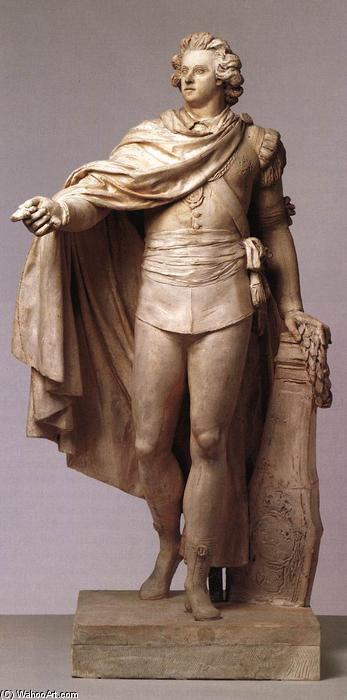
King Gustavus III of Sweden


 Read More
Purchase a high-resolution, enhanced digital image, far superior to the online preview.
Each file is meticulously prepared by our in-house specialists using advanced tools and expert manual retouching. We ensure every image has exceptional clarity, precise color accuracy, and fine detail.
The final file is delivered via email within 72 hours, optimized for immediate use in professional, editorial, and print environments. This is the same quality trusted by top-tier design studios, publishers, and galleries.
Digital Image
Download a high-resolution file for personal display, printing, and creative projects. ( Buy Print Buy Hand Made Painting)
Included in Every Digital Image Order
Expert Digital Delivery, Guaranteed
When you choose ArtsDot.com, you're not just getting an image - you're receiving a professionally enhanced digital artwork, crafted with precision and backed by a satisfaction guarantee. Here's everything that comes with your order, automatically:

Fast Email Delivery
Your high-resolution digital image file will be emailed to you within 72 hours of ordering - ready for immediate use.

AI-Enhanced Digital File
Your artwork is professionally optimized using advanced AI tools and manual editing, ensuring maximum detail, clarity, and color accuracy.

Free Lifetime Re-Delivery
Accidentally deleted or lost your file? No worries - we'll resend it to you anytime, free of charge.

No Import Fees - Ever
Enjoy your artwork instantly with zero customs, duties, or delivery fees - digital downloads are always tax-free.

Color Accuracy Guarantee
We ensure your digital image reflects the original colors as closely as possible using professional tools and color management.

60-Day Satisfaction Guarantee
If you're not satisfied with your digital image, we'll revise it or refund 100% within 60 days - no questions asked.

100% Money-Back Guarantee
Not satisfied? Get a full refund within 60 days of receiving your digital file - no questions asked.

Bulk Order Discounts
Buy 3 images, save 10% - Buy 5, save 15% - Buy 10+, save 20%. Great for creative projects, galleries, and agencies.
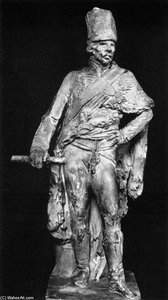
King Gustavus III of Sweden
Johan Tobias Sergel’s sculpture of King Gustavus III embodies the spirit of Enlightenment Sweden—a blend of regal grandeur and intellectual curiosity—captured with remarkable precision in plaster. Commissioned by Stockholm City Council in 1790, this monumental piece stands as a testament to Sergel's mastery of neoclassical sculptural technique and his profound understanding of historical portraiture.
- Subject Matter: The sculpture depicts Gustavus III in a dynamic pose, reflecting the King’s active role in shaping Sweden’s political landscape during his reign. His outstretched arm conveys determination and leadership, while his gaze directs towards the viewer with an air of solemn contemplation.
- Style & Technique: Sergel drew inspiration from classical sculpture, specifically the Apollo Belvedere, adapting its idealized form to represent Gustavus III. The sculptor skillfully employed plaster casting—a technique favored during the period—to achieve a lifelike depiction of the King’s musculature and drapery folds. Careful attention was paid to anatomical accuracy and textural detail, demonstrating Sergel's commitment to realism.
- Historical Context: Gustavus III ascended to the throne in 1771 amidst considerable political upheaval, challenging the entrenched privileges of the Swedish nobility. His reign witnessed significant reforms aimed at bolstering Sweden’s economy and promoting intellectual discourse—a period marked by a fervent embrace of Enlightenment ideals. Sergel's sculpture reflects this cultural milieu, symbolizing Gustavus III’s ambition to elevate Sweden’s status as a European power.
- Symbolism: The pose itself carries symbolic weight. Sergel deliberately mirrored the stance of Apollo Belvedere—a figure revered for his strength and artistic prowess—suggesting that Gustavus III possessed both physical vigor and intellectual brilliance. Furthermore, the King's attire incorporates elements reminiscent of military dress, signifying his role as commander-in-chief and defender of Sweden’s interests.
- Emotional Impact: Sergel succeeded in conveying Gustavus III’s seriousness and dignity—qualities deemed essential for a monarch presiding over turbulent times. The sculpture captures not merely the King's physical appearance but also his inner character, inviting viewers to contemplate his leadership and legacy. Its enduring presence in Stockholm’s Sergels torg serves as a poignant reminder of Sweden’s illustrious past.
The sculpture’s neutral background ensures that the focus remains squarely on Gustavus III himself—a masterful embodiment of neoclassical artistry and historical significance. The lighting highlights the contours of the plaster, enhancing its three-dimensional form and revealing Sergel's meticulous craftsmanship.
Related Artworks

Artist Biography
Johan Tobias Sergel: Sculptor of Emotion and Myth
Johan Tobias Sergel (1740-1814) stands as a pivotal figure in 18th and 19th-century Swedish art, a sculptor whose expressive portraits and dramatic mythological scenes captured the spirit of his time. Born in Stockholm, he rose from humble beginnings to become one of Sweden’s most celebrated artists, leaving behind a legacy that continues to resonate through his powerful works. Sergel's career unfolded during a period of significant artistic transition – moving from the Rococo’s ornate flourishes towards the burgeoning Neoclassical ideals while retaining a distinctly personal and emotionally charged style.
His early training was shaped by a diverse range of influences. Initially apprenticed to Pierre Hubert L’Archevêque, he later benefited from instruction in Paris, absorbing the techniques and aesthetics of the era. Crucially, his time in Rome proved transformative. There, amidst the ruins of antiquity, Sergel immersed himself in classical sculpture, developing a profound understanding of form, anatomy, and narrative. This experience fueled his ambition to create works that not only depicted beauty but also conveyed complex emotions and stories – a hallmark of his later career.
A Life Shaped by Art and Emotion
Sergel’s life was far from solely dedicated to artistic pursuits; it was interwoven with personal drama, melancholy, and a deep connection to the world around him. Born into a family of artists—his father, Christoffer Sergel, was a decorator—he inherited a creative lineage that profoundly shaped his path. However, his early years were marked by financial struggles and a sense of displacement, contributing to a lifelong tendency towards introspection and occasional bouts of despair.
A pivotal moment arrived when he was summoned to Stockholm by King Gustav III, who recognized Sergel’s talent and offered him a position at the Royal Palace. This appointment brought both prestige and responsibility, but also exposed Sergel to the pressures of court life. Despite his success, he struggled with personal demons, experiencing periods of intense sadness and contemplating suicide – a struggle reflected in some of his most poignant works. His relationship with Anna-Rella Hellström, an innkeeper who became his mistress and muse, provided a source of profound joy and inspiration, culminating in the birth of four children. Her untimely death in 1796 marked a devastating blow, leaving Sergel deeply affected for the remainder of his life.
Sculpting Myth and Majesty
Sergel’s artistic output spanned a remarkable range of subjects, encompassing portraits, mythological scenes, historical monuments, and even satirical drawings. His sculptures are characterized by their dramatic intensity, expressive gestures, and meticulous attention to detail. He skillfully employed marble and bronze to capture the essence of his subjects – whether regal figures like King Gustav III or tormented heroes from classical tales.
Among his most celebrated works are the monumental “Diomedes Stealing the Palladium,” a powerful depiction of a legendary hero’s transgression, and “The Muse of History Recording the Deeds of Gustavus Adolphus,” a complex allegorical composition celebrating the achievements of King Gustav II Adolf. His portrait of King Gustav III, later cast in bronze and installed in Stockholm's Sergels torg, remains an iconic representation of the Swedish monarch. Furthermore, his work extended beyond grand monuments; he created intimate portraits that captured the personalities and emotions of his subjects with remarkable sensitivity.
Legacy and Influence
Johan Tobias Sergel’s impact on Swedish art is undeniable. He bridged the gap between Rococo and Neoclassical styles, forging a unique artistic voice characterized by emotional depth and dramatic flair. His sculptures continue to be admired for their technical skill, expressive power, and ability to evoke profound human experiences.
Sergels torg, named in his honor, stands as a testament to his enduring legacy – a public space designed to reflect the spirit of the artist and celebrate Swedish history. His influence can also be seen in the works of subsequent generations of Swedish sculptors, who drew inspiration from his innovative approach to portraying human emotion and mythic narratives. Sergel’s work remains a vital part of Sweden's cultural heritage, offering a window into the artistic sensibilities of a transformative era.
Further Exploration: Plunging into Despair (1795) – A dramatic black & white Romantic drawing showcasing expressive lines and intense emotion. Johan Tobias Sergel - Explore his significant contributions to 18th & 19th century European art.
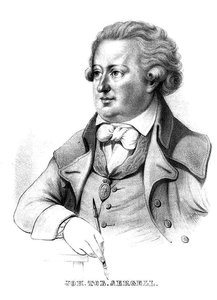
Johan Tobias Sergel
1740 - 1814 , Sweden
Quick Facts
- Artistic Movement Or Style: Neoclassical & Rococo
- Artists Or Movements Influenced By This Artist:
- Gustav III
- Romanticism
- Artists Who Influenced This Artist:
- Pierre Hubert Larchevêsque
- Thomas Rowlandson
- Date Of Birth: September 7, 1740
- Date Of Death: February 26, 1814
- Full Name: Johan Tobias Sergel
- Nationality: Swedish
- Notable Artworks:
- Plunging into Despair
- Diomedes Stealing Palladium
- Muse of History Recording Deeds
- Place Of Birth: Stockholm, Sweden

