

 Preview
 Send
Send Share
Share
 Details

 Download
 Similars
 X-Ray
X-Ray Diaporama
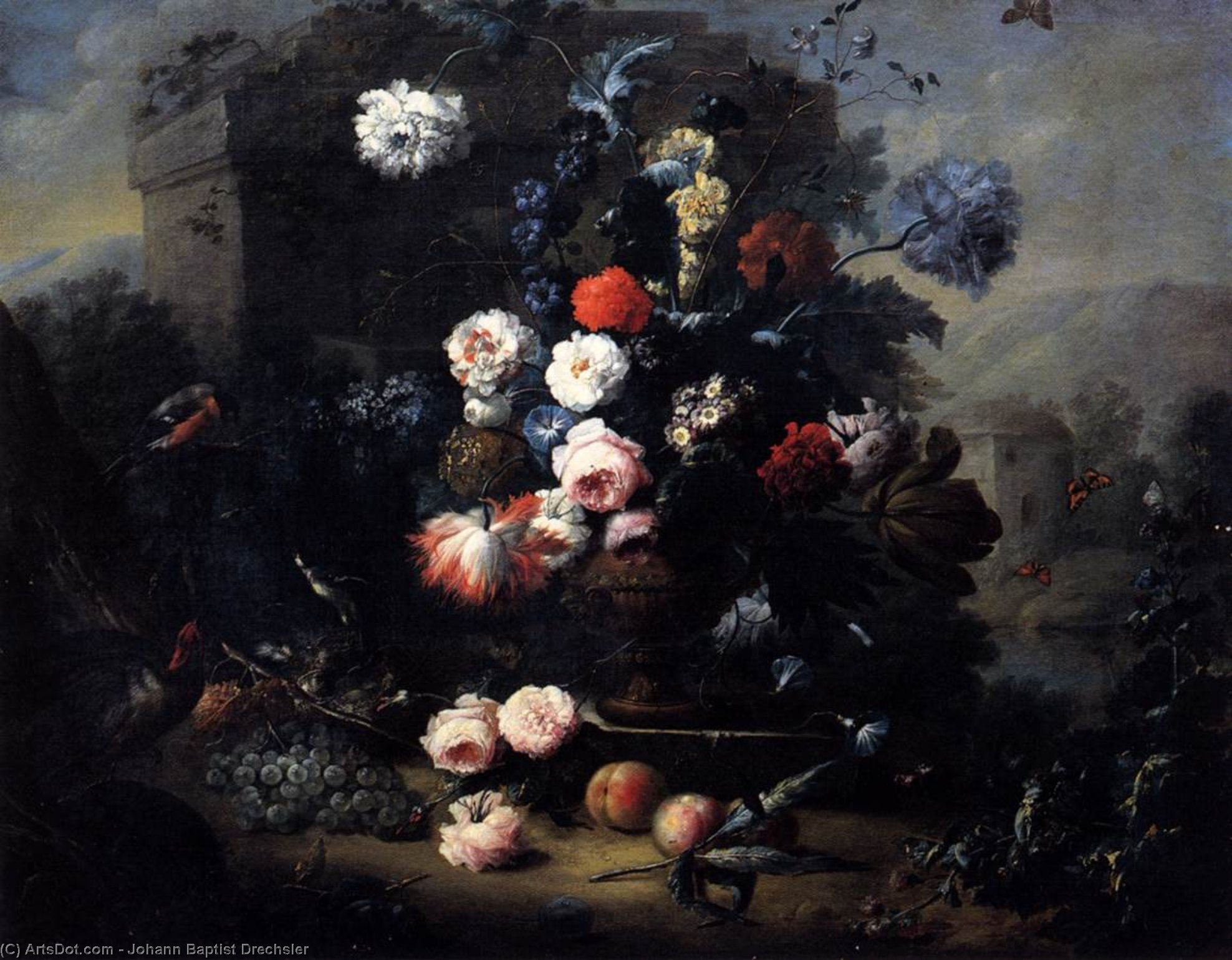
Still-Life with Flowers, Fruit and Birds in the Open
 Oil
Oil- WallArt
- Baroque
 1789
1789- Early Modern
 111.0 x 143.0 cm
 Academy of Fine Arts Vienna
 Read More
Purchase a high-resolution, enhanced digital image, far superior to the online preview.
Each file is meticulously prepared by our in-house specialists using advanced tools and expert manual retouching. We ensure every image has exceptional clarity, precise color accuracy, and fine detail.
The final file is delivered via email within 72 hours, optimized for immediate use in professional, editorial, and print environments. This is the same quality trusted by top-tier design studios, publishers, and galleries.
Digital Image
Download a high-resolution file for personal display, printing, and creative projects. ( Buy Print Buy Hand Made Painting)
Included in Every Digital Image Order
Expert Digital Delivery, Guaranteed
When you choose ArtsDot.com, you're not just getting an image - you're receiving a professionally enhanced digital artwork, crafted with precision and backed by a satisfaction guarantee. Here's everything that comes with your order, automatically:

Fast Email Delivery
Your high-resolution digital image file will be emailed to you within 72 hours of ordering - ready for immediate use.

AI-Enhanced Digital File
Your artwork is professionally optimized using advanced AI tools and manual editing, ensuring maximum detail, clarity, and color accuracy.

Free Lifetime Re-Delivery
Accidentally deleted or lost your file? No worries - we'll resend it to you anytime, free of charge.

No Import Fees - Ever
Enjoy your artwork instantly with zero customs, duties, or delivery fees - digital downloads are always tax-free.

Color Accuracy Guarantee
We ensure your digital image reflects the original colors as closely as possible using professional tools and color management.

60-Day Satisfaction Guarantee
If you're not satisfied with your digital image, we'll revise it or refund 100% within 60 days - no questions asked.

100% Money-Back Guarantee
Not satisfied? Get a full refund within 60 days of receiving your digital file - no questions asked.

Bulk Order Discounts
Buy 3 images, save 10% - Buy 5, save 15% - Buy 10+, save 20%. Great for creative projects, galleries, and agencies.
A Symphony of Nature: The Botanical Mastery of Johann Baptist Drechsler
In the delicate interplay of light and shadow captured within Still-Life with Flowers, Fruit and Birds in the Open, we encounter the profound mastery of Johann Baptist Drechsler. Created in 1789, this breathtaking composition serves as a window into the lush, vibrant world of the late eighteenth century. The painting is not merely a collection of botanical specimens but a carefully orchestrated dance of color and life. Pink roses, soft and velvety, mingle with the ethereal bluebells, creating a chromatic harmony that draws the eye through a landscape of abundance. As one wanders through the canvas, the presence of ripe apples and sun-drenched oranges provides a tactile richness, their skins seemingly glowing with an inner light that suggests the warmth of a Viennese afternoon.
The brilliance of this work lies in Drechsler’s ability to breathe life into the inanimate. His technique, rooted in the rigorous training of the Vienna Academy of Fine Arts, allows for an almost scientific precision paired with a romantic sensibility. Every petal, every drop of dew, and the subtle texture of fruit skin is rendered with such meticulous care that the viewer can almost sense the fragrance of the blooms. The inclusion of birds—perched with quiet grace atop the bounty of the earth—introduces a narrative element of movement and vitality, breaking the stillness of the composition and inviting the observer to contemplate the fleeting beauty of the natural world.
Symbolism and the Elegance of the Baroque Spirit
Beyond its surface beauty, this masterpiece is steeped in the symbolic language of the Baroque era. During Drechsler’s time, still lifes were rarely just decorative; they were profound meditations on the concept of vanitas—the transient nature of life. The ripe fruit, at the very peak of its perfection, serves as a poignant reminder of the inevitable passage of time. Yet, amidst this theme of transience, there is an overwhelming sense of celebration. The abundance of the harvest and the lively presence of the birds suggest a deep reverence for the divine order and the bountiful generosity of nature.
For the discerning collector or interior designer, this painting offers more than just visual splendor; it provides a focal point of historical depth and emotional resonance. The composition’s remarkable sense of depth and dimension makes it an ideal centerpiece for a sophisticated space, whether placed in a sunlit morning room or a stately library. A high-quality reproduction of this work allows the timeless elegance of Drechsler’s vision to inhabit modern interiors, bridging the gap between the classical grandeur of 1789 and the contemporary pursuit of beauty and tranquility.
Related Artworks
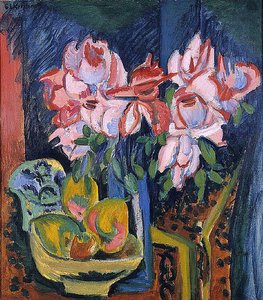
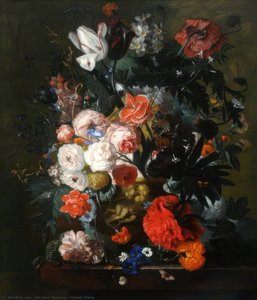
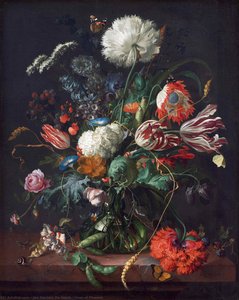
Artist Biography
The Viennese Master of Botanical Precision
Johann Baptist Drechsler stands as a singular figure in the history of Austrian Baroque painting, a master whose brush breathed life into the ephemeral beauty of the natural world. Born in Vienna in 1766 to a family deeply rooted in the delicate traditions of porcelain artistry, his very lineage was steeped in the pursuit of meticulous detail. As the son of a renowned porcelain painter, Drechsler’s early years were likely spent amidst the fine pigments and fragile ceramics of the Viennese tradition, an upbringing that instilled in him an unparalleled sensitivity to texture, light, and form. This foundational connection to the decorative arts would later become the cornerstone of his revolutionary approach to botanical realism.
His artistic journey was marked by a profound technical evolution, moving from the controlled surfaces of ceramic decoration to the expansive possibilities of oil on canvas. Between 1772 and 1782, Drechsler’s tenure at the Vienna Porcelain Manufactory served as a rigorous training ground, demanding an exacting level of precision that would define his later masterpieces. It was during this period that he began to refine the luminous color palettes and painstaking textures that would eventually distinguish him from his contemporaries. His work did not merely represent flowers; it sought to capture their very essence—the velvet touch of a petal, the translucent glow of a dewdrop, and the fleeting vitality of a bloom in full splendor.
A Legacy of Academic Excellence and Influence
The ascent of Drechsler within the European art hierarchy was both rapid and prestigious. His mastery of the still-life genre led him to the Academy of Fine Arts in Vienna, where his talent was recognized not just as a skill, but as a discipline worthy of formal instruction. In 1787, he achieved a landmark milestone by becoming the first professor of flower painting at the Academy, effectively establishing a new pedagogical standard for botanical art. His influence extended far beyond his own canvases, as he mentored a new generation of artists, including notable figures such as Josef Nigg and Franz Xaver Petter, ensuring that his meticulous approach to naturalism would endure through his students.
Beyond his role as an educator, Drechsler’s administrative and artistic contributions reached the highest echelons of the Viennese art world. His eventual appointment as the Director of the Academy stands as a testament to his profound impact on the institution and the broader cultural landscape of Austria. This period of his life was characterized by a transition from the decorative flourishes of the late Baroque toward a more disciplined, detailed naturalism. By bridging these two eras, he helped steer the Viennese School of flower painting away from mere ornamentation and toward a scientific and aesthetic reverence for the botanical world.
The Spirit of the Dutch Masters in Austrian Soil
While his heart and home were firmly planted in Vienna, the soul of Drechsler’s technique drew deep inspiration from the Northern traditions. He was profoundly moved by the works of the great Dutch flower painter Jan van Huysum, whose ability to arrange complex botanical compositions with both grace and scientific accuracy served as a primary stylistic North Star. From Van Huysum, Drechsler adopted the art of capturing subtle tonal gradations and the dramatic interplay of light and shadow, which allowed his floral arrangements to appear as though they were emerging from the darkness into the viewer's space.
This synthesis of Dutch precision and Viennese elegance resulted in works that are both scientifically fascinating and emotionally resonant. His compositions often featured a vibrant array of species—from the soft pinks of roses to the delicate blues of bluebells—interspersed with exotic birds and ripe fruits, creating a sense of abundance and life. Today, his legacy is preserved in some of the world's most esteemed collections, including the Hermitage Museum in St. Petersburg and the Kunsthistorisches Museum in Vienna. Through his eyes, the fleeting moments of nature were granted a permanent, breathtaking immortality.
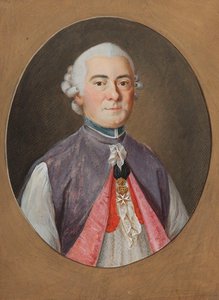
johann baptist drechsler
1766 - 1811 , Austria
Quick Facts
- Artistic Movement Or Style: Baroque Painting
- Artists Or Movements Influenced By This Artist: ['Dutch Baroque']
- Artists Who Influenced This Artist: ['Jan van Huysum']
- Date Of Birth: January 28, 1766
- Date Of Death: April 28, 1811
- Full Name: Johann Baptist Drechsler
- Nationality: Austrian
- Notable Artworks: ['Still-Life with Flowers, Fruit and Birds in the Open']
- Place Of Birth: Vienna, Austria

