

 Preview
 Send
Send Share
Share
 Details

 Download
 Similars
 X-Ray
X-Ray Diaporama
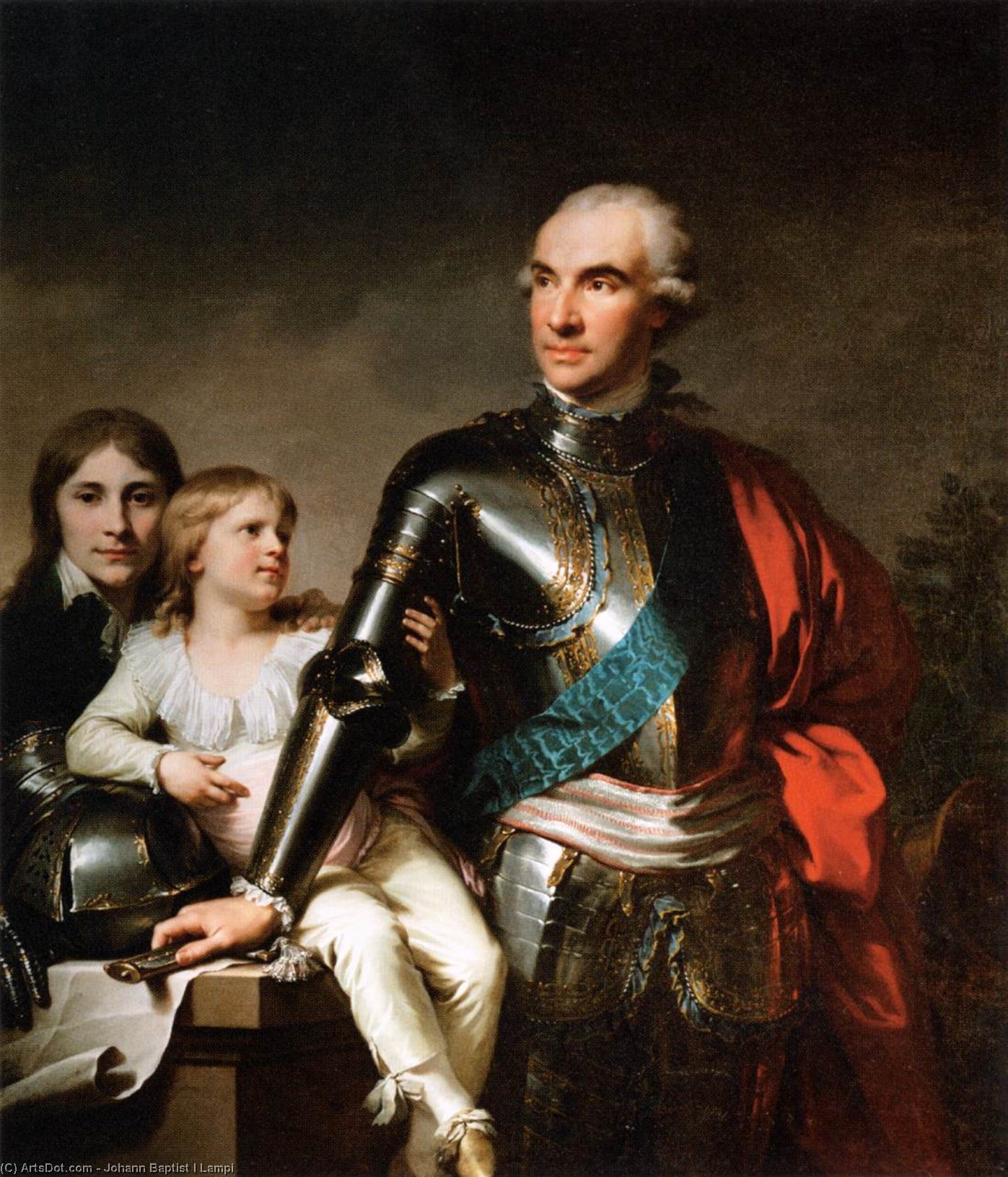
Count Stanislas Felix Potocki and his Two Sons
 Oil On Canvas
- WallArt
- Neoclassical
 1789
1789- Early Modern
 138.0 x 119.0 cm
 The Louvre
 Read More
Purchase a high-resolution, enhanced digital image, far superior to the online preview.
Each file is meticulously prepared by our in-house specialists using advanced tools and expert manual retouching. We ensure every image has exceptional clarity, precise color accuracy, and fine detail.
The final file is delivered via email within 72 hours, optimized for immediate use in professional, editorial, and print environments. This is the same quality trusted by top-tier design studios, publishers, and galleries.
Digital Image
Download a high-resolution file for personal display, printing, and creative projects. ( Buy Print Buy Hand Made Painting)
Included in Every Digital Image Order
Expert Digital Delivery, Guaranteed
When you choose ArtsDot.com, you're not just getting an image - you're receiving a professionally enhanced digital artwork, crafted with precision and backed by a satisfaction guarantee. Here's everything that comes with your order, automatically:

Fast Email Delivery
Your high-resolution digital image file will be emailed to you within 72 hours of ordering - ready for immediate use.

AI-Enhanced Digital File
Your artwork is professionally optimized using advanced AI tools and manual editing, ensuring maximum detail, clarity, and color accuracy.

Free Lifetime Re-Delivery
Accidentally deleted or lost your file? No worries - we'll resend it to you anytime, free of charge.

No Import Fees - Ever
Enjoy your artwork instantly with zero customs, duties, or delivery fees - digital downloads are always tax-free.

Color Accuracy Guarantee
We ensure your digital image reflects the original colors as closely as possible using professional tools and color management.

60-Day Satisfaction Guarantee
If you're not satisfied with your digital image, we'll revise it or refund 100% within 60 days - no questions asked.

100% Money-Back Guarantee
Not satisfied? Get a full refund within 60 days of receiving your digital file - no questions asked.

Bulk Order Discounts
Buy 3 images, save 10% - Buy 5, save 15% - Buy 10+, save 20%. Great for creative projects, galleries, and agencies.
A Portrait of Nobility Anchored in Tradition: Johann Baptist II Lampi’s Masterpiece
Johann Baptist II Lampi (1751-1830) stands as a pivotal figure in Austrian Baroque portraiture, embodying the grandeur and refinement characteristic of his era. Born into an artistic lineage – his father, Matteo Lampi, was celebrated for monumental frescoes – Lampi honed his craft under Salzburg’s influential tutelage before establishing himself in Vienna, where he secured a prestigious professorship at the Academy and captivated Emperor Joseph II with his talent. This article delves into the intricacies of “Count Stanislas Felix Potocki and his Two Sons,” examining its stylistic brilliance, technical mastery, and enduring legacy as a testament to Lampi’s artistic vision.Stylistic Influences & Compositional Harmony
Lampi's oeuvre is deeply rooted in classicizing principles, reflecting the broader artistic currents of Enlightenment Vienna. He skillfully employed chiaroscuro—the dramatic interplay of light and shadow—to sculpt the figures within the canvas, creating a palpable sense of depth and realism. The composition itself is meticulously balanced; Count Potocki dominates the central space, flanked by his two sons, establishing a hierarchy that speaks to the social conventions of the time. Notably, Lampi’s gaze directs towards the viewer, fostering an intimate connection between subject and observer—a hallmark of aristocratic portraiture intended to convey status and dignity. The subtle inclusion of a clock serves as a poignant reminder of temporal passage, subtly reinforcing the painting's contemplative mood.Technique & Material Considerations
Lampi’s technique demonstrates exceptional skill in capturing texture and detail. He achieved this through painstaking layering of thin glazes—a hallmark of Baroque oil painting—allowing for nuanced tonal variations and luminous effects. The artist meticulously rendered fabrics, particularly Potocki's suit and waistcoat, demonstrating an acute understanding of drapery and its ability to convey movement and form. Furthermore, the use of a warm earth pigment palette contributes to the painting’s overall atmosphere, evoking warmth and solidity—qualities associated with noble lineage and enduring values. The canvas itself was stretched taut and primed with gesso, ensuring optimal adhesion for the paint layers and preserving the artwork's integrity over centuries.Historical Context & Symbolic Significance
“Count Stanislas Felix Potocki and his Two Sons” emerged during a period of significant artistic patronage in Vienna—the Habsburg court actively commissioned artworks to bolster its prestige and solidify its cultural influence. The portrait reflects the aristocratic preoccupation with lineage, virtue, and social standing—themes prevalent throughout Baroque art. Count Potocki’s attire—a costume or armor—symbolizes military prowess and nobility, highlighting his position within the Austro-Hungarian aristocracy. The presence of the two sons underscores familial continuity and reinforces the importance of heritage. Moreover, the painting's serene setting—the interior of a stately home—contrasts sharply with the turbulent political landscape of Poland at the time, encapsulating a moment of stability amidst broader societal upheaval.Emotional Resonance & Legacy
Beyond its formal qualities, “Count Stanislas Felix Potocki and his Two Sons” possesses an undeniable emotional resonance. Lampi’s masterful depiction captures not only physical likeness but also psychological character—revealing Potocki's composure and paternal affection. The painting transcends mere representation; it embodies the ideals of aristocratic culture—honor, duty, and familial devotion. Today, reproductions of this masterpiece continue to inspire admiration for its artistic excellence and offer a glimpse into the opulent world of 18th-century Habsburg Vienna. Its enduring appeal testifies to Lampi’s ability to distill complex ideas into a visually compelling narrative that resonates across time.Related Artworks





Artist Biography
Johann Baptist II Lampi: Life and Legacy
Early Life and Artistic Training
- Johann Baptist II Lampi was born on December 31, 1751, in Romeno, Tyrol (modern-day Italy/Austria).
- He came from a family of artists; his father, Matteo (Mattia) Lampi, was a decorative painter known for frescoes.
- Lampi initially studied art under his father in Verona and later continued his education in Salzburg.
- In 1773, he moved to Trento where he honed his skills as a portraitist working with canvases and miniatures.
Career Development & Vienna
- Lampi traveled through Innsbruck and eventually settled in Vienna in 1786.
- His talent was recognized, and Emperor Joseph II appointed him a professor at the Vienna Academy.
- That same year, he received an invitation to work for King Stanisław II Augustus in Warsaw, marking a significant turning point in his career.
Warsaw & The Russian Empire
- Lampi flourished in Warsaw until the partitions of Poland disrupted artistic life there.
- In 1791, he relocated to St. Petersburg, Russia, where Empress Catherine II bestowed upon him a hereditary knighthood.
- This move proved incredibly lucrative; Lampi became highly sought after for his portraiture skills among the Russian nobility.
- He painted prominent figures including Empress Catherine II and Empress Maria Feodorovna.
Return to Vienna & Later Life
- Lampi returned to Vienna in 1797, becoming an honorary citizen of the city in 1799.
- He received a pension in 1822 and passed away on February 11, 1830, in Vienna.
Artistic Style & Influences
- Lampi’s style is characterized by realistic portraiture with attention to detail and a refined elegance.
- He was influenced by his father's decorative painting skills and the prevailing artistic trends of the late 18th century, including Neoclassicism.
- His work often reflects the grandeur and status of his aristocratic sitters.
Family Legacy & Sons
- Both of Lampi’s sons followed in his footsteps as accomplished painters.
- Johann Baptist III Lampi spent time with his father in Russia, continuing the family tradition there.
- Francesco (Franz Xaver) Lampi settled in Warsaw and became known as Franciszek Ksawery Lampi, establishing himself as a prominent artist in Poland.
Major Achievements & Historical Significance
- Lampi’s portraits provide valuable insights into the lives and appearances of European nobility during a period of significant political and social change.
- His success in both Vienna, Warsaw, and St. Petersburg demonstrates his adaptability and artistic skill.
- He played a key role in establishing portraiture as a prestigious art form within the Russian Imperial court.
- His work remains an important part of the artistic heritage of Austria, Poland, and Russia.

Johann Baptist II Lampi
1751 - 1830 , Austria
Quick Facts
- Birth Date: 1751-12-31
- Birth Place: Romeno, Tyrol
- Death Date: 1830-02-11
- Influenced:
- Johann Baptist III Lampi
- Francesco (Franz Xaver) Lampi
- Influenced By: Matteo (Mattia) Lampi
- Movement: Historical painting, Portraiture
- Name: Johann Baptist II Lampi
- Nationality: Austrian-Italian
- Notable Works:
- Portrait of Catherine II
- Count Stanislas Felix Potocki and his Two Sons

