 Preview
 Send
Send Share
Share
 Details

 Download
 Similars
 X-Ray
X-Ray Diaporama
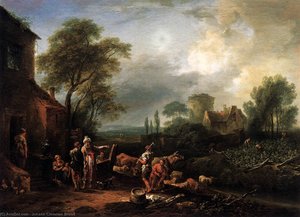
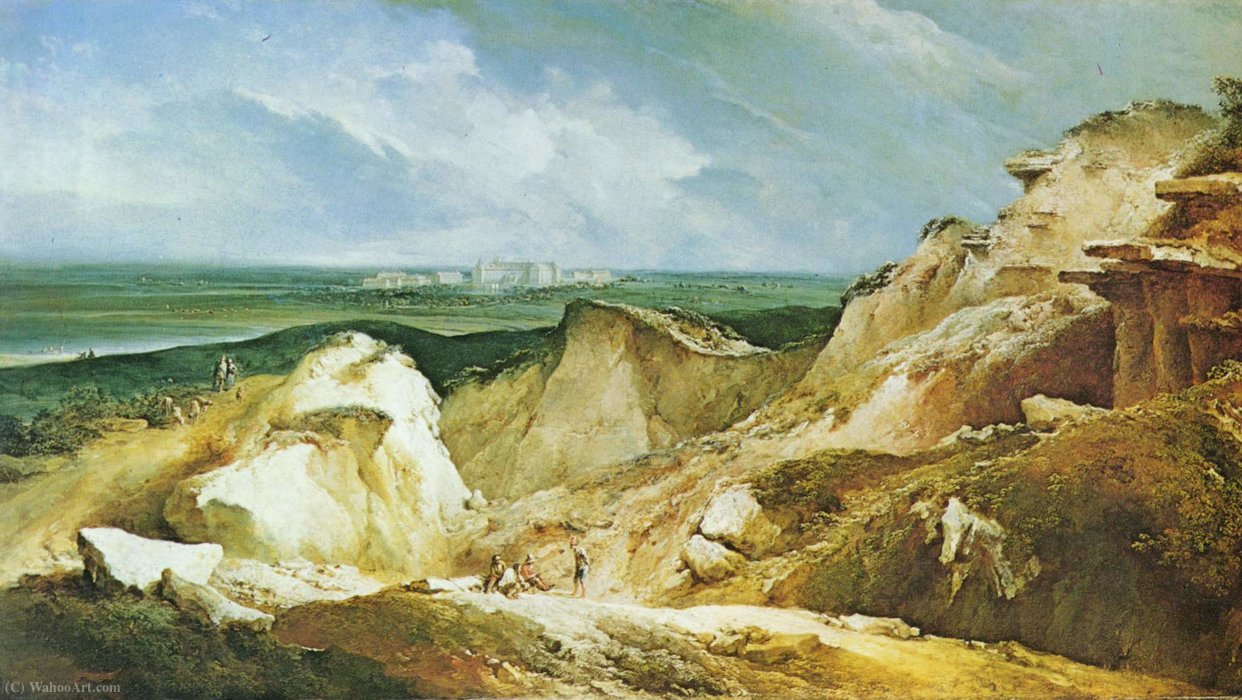
The sand pit
 Read More
Hand Made Oil Reproduction
Hand-painted oil on canvas in your size and frame, made to order by our artists. ( Buy Print Buy Image)




































Pick from our preset sizes that match the artwork's original proportions.

You may enter your own dimensions to fit a specific frame or space. If your selected size does not match the original image's proportions, we will either crop the artwork or extend the painting with additional hand-painted elements. A digital mockup will be sent for your approval before production begins.
Please note that the on-screen preview does not reflect the actual cropping or extension. Only the mockup will accurately show the final composition.
While custom sizes are available, we recommend selecting a dimension from the predefined list to preserve the original proportions.
After order, ArtsDot.com team will email client for instructions and provide a mockup preview
Worldwide Delivery () in 3/4 weeks instead of standard 5 weeks. (23 August). No compromise on quality.

Free Worldwide Express Shipping

High-Quality Linen Canvas

Full Shipping Insurance

Customs Tax Refund Guarantee

True Color Matching Guarantee

60-Day Return Policy (Defects Only)

100% Money-Back Guarantee

Bulk Discount Offer
 Glass option is only available in size under 110 CM

The sand pit
Reproduction Medium
Reproduction Size
-


Total Price
$ 263
Related Artworks




Artist Biography
The Architect of Light: The Life and Legacy of Johann Christian Brand
In the heart of eighteenth-century Vienna, a period defined by the transition from the theatrical grandeur of the Baroque to the intimate whispers of Romanticism, lived an artist who served as a vital bridge between two worlds. Johann Christian Brand (1722–1795) was not merely a painter of landscapes; he was a chronicler of atmosphere, a master who understood that the true soul of nature lies in the subtle interplay of light and shadow. Born into an artistic lineage as the son of the esteemed German-Austim painter Christian Hilgott Brand, Johann’s very existence was steeped in the traditions of his craft. Under the watchful eye of his father and the guidance of masters like Karl Aigen, he began a journey that would eventually redefine the Austrian landscape tradition.
Brand’s early years were marked by rigorous discipline at the Vienna Academy, where he absorbed the classical precepts of his predecessors. Yet, even within the structured confines of academic training, a unique sensibility began to emerge. While the Baroque masters often relied on dramatic chiaroscuro and sweeping, monumental compositions to evoke awe, Brand found himself drawn to a more delicate reality. He possessed an uncanny ability to capture the quietude of the countryside, moving away from the staged drama of the past toward a meticulous realism that celebrated the organic textures of the earth, the softness of distant hills, and the ephemeral quality of light filtering through a canopy of trees.
A Mastery of Atmosphere and Technique
The technical brilliance of Brand lies in his ability to marry classical precision with an almost impressionistic sensitivity to atmosphere. His works are characterized by a remarkable attention to detail that honors the observational rigor of the Baroque era, yet they are infused with a softness that foreshadows the Romantic movement. He moved away from harsh contrasts, opting instead for a luminous palette that allowed for a seamless transition between light and shadow. This technique created a sense of depth and airiness, inviting the viewer to step into his worlds—whether it be a serene corner of the Vienna Woods or a sun-drenched southern vista.
His development as an artist was punctuated by significant professional milestones that solidified his standing in the European art scene. The following achievements reflect his ascent within the imperial artistic hierarchy:
- Kammermaler Appointment: In 1766, his skill and dedication were formally recognized when he was awarded the prestigious title of Court Painter.
- Academic Distinction: By 1772, his influence on the next generation of artists was cemented through his appointment as the Professor of Landscape Drawing.
- Stylistic Innovation: He successfully navigated the shift from the heavy, ornate styles of the early 18th century to a more naturalistic and emotive approach to nature.
The Enduring Impression of a Transitional Master
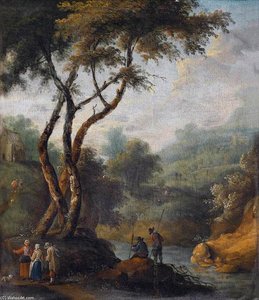
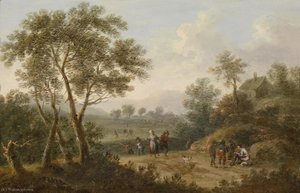
To look upon a Brand landscape is to witness a moment of profound stillness. In masterpieces such as "On Mödlingbach in the Vienna Woods," one does not simply see a forest; one feels the humidity of the air and hears the rustle of leaves. His ability to integrate human figures—such as those seen in his "Wooded Landscape with Travellers"—into the natural environment without disrupting the landscape's primacy allowed him to tell stories of journey and solitude. He did not treat humans as conquerors of nature, but as quiet participants within its vast, enduring cycle.
Though he passed away in Vienna in 1795, the ripples of his influence continued to expand long after his death. By tempering the opulence of the Baroque with a burgeoning interest in emotional resonance and atmospheric perspective, Brand paved the way for the 19th-century landscape painters who would later seek to capture the sublime. Today, his works remain held in the most esteemed collections, including the Belvedere Palace and the Kunsthistorisches Museum, serving as a testament to an artist who found the extraordinary within the ordinary, and the eternal within a single, fleeting moment of light.
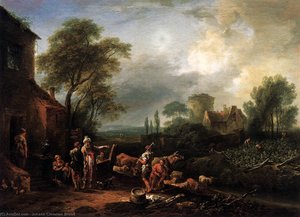
Johann Christian Brand
1723 - 1795 , Austria
Quick Facts
- Artistic Movement Or Style: Landscape painting; Rococo
- Artists Or Movements Influenced By This Artist: Romantic art
- Artists Who Influenced This Artist: Christian Hilgott Brand
- Date Of Birth: March 6, 1722
- Date Of Death: June 12, 1795
- Full Name: Johann Christian Brand
- Nationality: Austrian
- Notable Artworks:
- Salami seller
- On Mödlingbach in the Vienna Woods
- Wooded Landscape with Travellers
- Place Of Birth: Vienna, Austria