

 Preview
 Send
Send Share
Share
 Details

 Download
 Similars
 X-Ray
X-Ray Diaporama
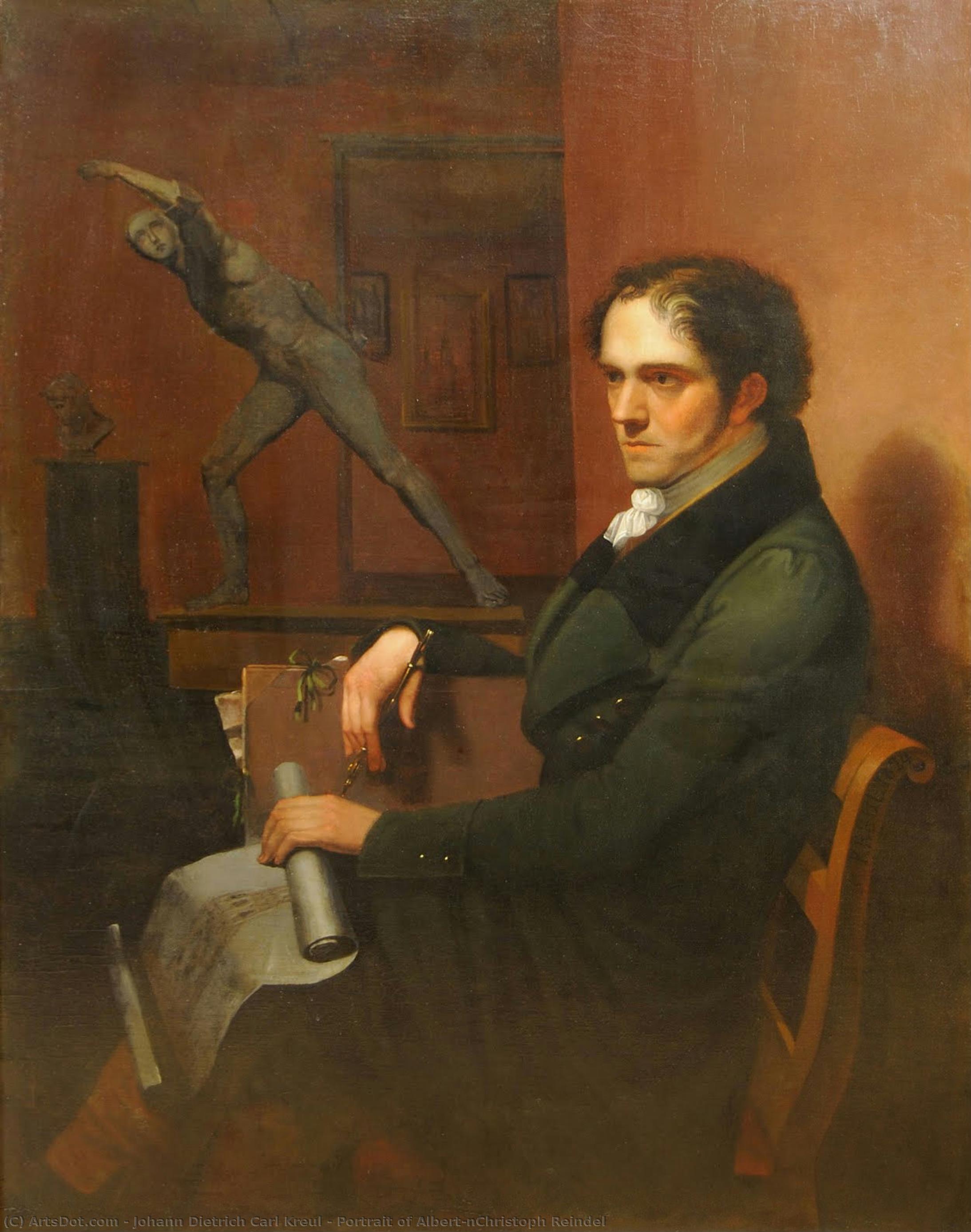
Portrait of Albert\nChristoph Reindel


 Read More
Purchase a high-resolution, enhanced digital image, far superior to the online preview.
Each file is meticulously prepared by our in-house specialists using advanced tools and expert manual retouching. We ensure every image has exceptional clarity, precise color accuracy, and fine detail.
The final file is delivered via email within 72 hours, optimized for immediate use in professional, editorial, and print environments. This is the same quality trusted by top-tier design studios, publishers, and galleries.
Digital Image
Download a high-resolution file for personal display, printing, and creative projects. ( Buy Print Buy Hand Made Painting)
Included in Every Digital Image Order
Expert Digital Delivery, Guaranteed
When you choose ArtsDot.com, you're not just getting an image - you're receiving a professionally enhanced digital artwork, crafted with precision and backed by a satisfaction guarantee. Here's everything that comes with your order, automatically:

Fast Email Delivery
Your high-resolution digital image file will be emailed to you within 72 hours of ordering - ready for immediate use.

AI-Enhanced Digital File
Your artwork is professionally optimized using advanced AI tools and manual editing, ensuring maximum detail, clarity, and color accuracy.

Free Lifetime Re-Delivery
Accidentally deleted or lost your file? No worries - we'll resend it to you anytime, free of charge.

No Import Fees - Ever
Enjoy your artwork instantly with zero customs, duties, or delivery fees - digital downloads are always tax-free.

Color Accuracy Guarantee
We ensure your digital image reflects the original colors as closely as possible using professional tools and color management.

60-Day Satisfaction Guarantee
If you're not satisfied with your digital image, we'll revise it or refund 100% within 60 days - no questions asked.

100% Money-Back Guarantee
Not satisfied? Get a full refund within 60 days of receiving your digital file - no questions asked.

Bulk Order Discounts
Buy 3 images, save 10% - Buy 5, save 15% - Buy 10+, save 20%. Great for creative projects, galleries, and agencies.
A Study in Dualities: Johann Dietrich Carl Kreul’s Portrait of Albert Christoph Reindel
This compelling portrait, painted in 1824 by the esteemed Johann Dietrich Carl Kreul, offers a profound glimpse into the character and intellectual life of Albert Christoph Reindel, a prominent figure at the Nuremberg Kunstakademie. More than a simple likeness, the painting is a carefully constructed meditation on duality – a theme subtly woven through its composition and symbolic elements. Kreul, known for his ability to capture both the outward appearance and inner temperament of his subjects, presents Reindel as a man of considerable seriousness and contemplative nature, evident in his direct gaze and the firm set of his jaw. The artist’s masterful handling of light and shadow further emphasizes this solemnity, drawing the viewer's attention to the subject's face and creating a sense of quiet intensity within the room.The Setting: A Chamber of Thought
The meticulously rendered interior contributes significantly to the painting’s overall effect. The scene unfolds within a richly appointed study – a space designed for intellectual pursuits. A green suit, indicative of the period and Reindel's status, sits comfortably on a chair, suggesting both formality and ease. A statue of a nude woman holding a vase adds an element of classical allusion, perhaps representing beauty or artistic inspiration, while simultaneously serving as a counterpoint to Reindel’s own serious demeanor. The inclusion of a piano and a book reinforces the idea of learning and contemplation – elements central to Reindel's role as a teacher. The carefully arranged objects are not merely decorative; they actively participate in shaping the narrative of the portrait, creating a layered environment that invites interpretation.Technique and Style: Romantic Realism
Kreul’s technique exemplifies the burgeoning style of Romantic Realism prevalent during this era. While rooted in classical training – evident in the precise rendering of Reindel's features and the careful attention to detail within the room – the painting avoids overly idealized representations, opting instead for a more naturalistic approach. The brushwork is smooth yet possesses a subtle dynamism, particularly noticeable in the folds of the fabric and the play of light on the surfaces. Kreul’s use of color is restrained but effective, relying on tonal variations to create depth and atmosphere. This careful balance between realism and emotional expression aligns with the broader Romantic movement's emphasis on individual experience and subjective perception.Symbolism and Emotional Impact
Beyond its technical merits, the portrait resonates with deeper symbolic meanings. The statue of the nude woman can be interpreted as a reminder of classical ideals while simultaneously highlighting Reindel’s own intellectual detachment. The empty chair suggests contemplation and perhaps a yearning for knowledge. The overall mood is one of quiet introspection – inviting the viewer to engage in their own reflections on themes of learning, beauty, and the complexities of human character. Kreul's portrait transcends a simple likeness; it is a powerful statement about the nature of intellect and the pursuit of wisdom, capturing a moment of profound contemplation within the confines of a richly detailed interior. This piece offers an exceptional opportunity to acquire a significant work of 19th-century art, perfect for collectors seeking a nuanced exploration of portraiture and its capacity to convey complex emotions.Related Artworks



Artist Biography
Eugène Isabey: A Painter of Light and Movement
Eugène Isabey, born in Paris on July 22nd, 1803, was a pivotal figure in the transition from Romanticism to Realism. His life, marked by both artistic ambition and personal challenges, culminated in a prolific career as a painter, lithographer, and watercolorist. Unlike many of his contemporaries who sought fame through grand historical narratives or idealized portraits, Isabey’s focus lay in capturing fleeting moments of light, movement, and the everyday experiences of modern life – particularly those connected to the sea and its associated activities. His early influences were deeply rooted in his family's artistic lineage; his father, Jean-Baptiste Isabey, was a renowned miniature painter who had enjoyed patronage from Napoleon Bonaparte himself. This exposure instilled in young Eugène a rigorous training in classical techniques and an appreciation for meticulous detail, though he ultimately rejected the constraints of academic art to forge his own distinctive style. Isabey’s artistic journey began with formal instruction at the Louvre under François André Vincent, a respected history painter. However, it was his time working alongside Xavier Leprince, a landscape artist who tragically died in 1824, that proved crucial. This experience exposed Isabey to the challenges and rewards of plein air painting – working directly from nature – a technique he embraced wholeheartedly. He quickly developed a remarkable ability to render atmospheric effects, particularly the shimmering quality of water and light on the sea, skills that would become hallmarks of his oeuvre. His early works, often depicting scenes of coastal life, demonstrated an acute sensitivity to color and composition, foreshadowing his later successes. Notably, he was selected to accompany a diplomatic mission to Morocco in 1831, though he politely declined, citing concerns about the instability of the region. This decision, however, provided him with invaluable firsthand experience of North African landscapes and cultures, which would inform many of his subsequent paintings. Isabey’s career truly flourished during the reign of King Louis-Philippe, a period marked by significant social and political change in France. He was appointed as a court painter in 1832, receiving the prestigious title of Knight in the Legion of Honor – an honor that reflected not only his artistic talent but also his connections within the royal circles. This appointment afforded him access to influential patrons and commissions, allowing him to expand his subject matter beyond maritime scenes. He produced numerous portraits of prominent figures, including members of the aristocracy, politicians, and military officers. However, Isabey’s most celebrated works are arguably those depicting naval engagements and voyages – dramatic scenes rendered with a dynamic sense of movement and an impressive command of light and shadow. His painting *An Avalanche in the Alps* (1846), for example, vividly captures the raw power of nature, while his depiction of Napoleon's return from Saint Helena aboard the *Belle Poule* is a testament to his ability to convey both historical significance and emotional intensity. Isabey’s artistic style evolved considerably throughout his career. Initially influenced by the Romantic tradition, particularly the works of David and Turner, he gradually developed a more nuanced approach, incorporating elements of Realism and Impressionism. He was a master of capturing fleeting moments – the glint of sunlight on water, the billowing sails of a ship, the expressions of human emotion – often using loose brushstrokes and vibrant colors to create a sense of immediacy and spontaneity. His lithographs, produced in collaboration with other artists, further demonstrated his versatility and technical skill. He was particularly adept at rendering textures – the rough surface of wood, the shimmering scales of fish, the billowing fabric of sails – with remarkable accuracy. Isabey’s work reflects a deep engagement with the world around him, a desire to capture its beauty and drama in all its complexity. Despite his considerable success, Isabey's life was not without its challenges. His personal relationships were often turbulent, marked by both passionate love affairs and painful separations. He married twice, but his marriages ultimately ended in divorce. His later years were spent largely in exile, traveling throughout Europe and North Africa, seeking inspiration and respite from the pressures of Parisian society. Eugène Isabey died in Paris on April 25th, 1886, at the age of 82, leaving behind a substantial body of work that continues to be admired for its beauty, dynamism, and insightful portrayal of modern life. His legacy as one of France’s most important artists of the 19th century endures, with his paintings and lithographs displayed in museums and private collections around the world.Adélaïde Labille-Guiard: A Pioneer in Portraiture
Born in Paris in 1749, Adélaïde Labille-Guiard’s life was a testament to both artistic talent and the significant obstacles faced by women artists during the late 18th century. Unlike many of her contemporaries who enjoyed privileged access to formal training through aristocratic patronage, Labille-Guiard's path to recognition was more arduous, requiring dedication, skill, and a shrewd understanding of the art market. Her father, a shopkeeper, provided her with an initial education in drawing, which she supplemented by studying under various masters, including the miniaturist Maurice Quentin de La Tour. This early training laid the foundation for her distinctive style – characterized by its elegance, naturalism, and subtle psychological insight. Labille-Guiard’s career began modestly, exhibiting miniatures at the Salon de la Correspondance in 1774 and 1779. However, she quickly recognized that success as a portraitist required a broader scope of practice. She transitioned to full-scale portraits, mastering techniques such as oil painting and pastel – skills typically reserved for male artists. In 1783, she achieved a landmark accomplishment by being admitted to the Académie Royale de Peinture et de Sculpture, a rare honor for a woman at that time. This admission was largely due to the efforts of her patron, the sculptor Nicolas-Joseph Nicodé, who championed her talent and advocated for her inclusion within the prestigious institution. Labille-Guiard’s portraits were not merely technical exercises; they offered a nuanced portrayal of her sitters – often members of the Parisian elite – revealing their personalities, social standing, and aspirations. She was particularly adept at capturing the subtle nuances of female beauty, portraying women with grace, intelligence, and dignity. Her self-portrait, painted in 1785, is a remarkable example of her artistic skill and psychological insight, offering a glimpse into her own personality and ambitions. The painting depicts Labille-Guiard seated before her easel, surrounded by two young pupils – a deliberate gesture that underscored her role as both an artist and a teacher. During the French Revolution, Labille-Guiard continued to work prolifically, producing portraits of prominent figures from all walks of life. She embraced the revolutionary ideals, depicting members of the National Assembly and other key figures in the new government. Her commitment to artistic excellence remained unwavering throughout this tumultuous period. In 1791, she exhibited a series of portraits at the Salon de la Correspondance, including depictions of several academicians – a testament to her influence within the art world. Despite facing continued discrimination as a woman artist, Labille-Guiard persevered, leaving behind a significant body of work that continues to be celebrated for its beauty, elegance, and historical significance. Her legacy is particularly noteworthy as one of the few female artists to achieve recognition and success during a period when women were largely excluded from the formal art establishment.Thomas Jones: A Welsh Romantic Landscape Painter
Born in Trevonen, Radnorshire, Wales, on September 26th, 1742, Thomas Jones was a pivotal figure in the development of British landscape painting during the late 18th and early 19th centuries. His life and career were inextricably linked to his Welsh heritage, and his paintings often evoke a sense of nostalgia for the rugged beauty of his native land. Jones’s artistic journey began with a formal education at Christ College School in Brecon, where he developed an early passion for drawing and painting. He later moved to Jesus College, Oxford, but ultimately abandoned his academic pursuits to pursue a career as an artist. Following his departure from Oxford, Jones entered the studio of William Hook, a landscape painter who had spent several years studying in Italy. This experience proved invaluable, exposing him to the techniques and principles of Italianate landscape painting – characterized by its emphasis on atmospheric perspective, dramatic lighting, and idealized depictions of nature. Jones quickly established himself as a skilled painter, exhibiting his works at the Royal Academy from 1764 until his death in 1803. He also participated regularly in the exhibitions of the Society of Artists, demonstrating his versatility and technical proficiency. Jones’s paintings often depict scenes of Welsh landscapes – rolling hills, dramatic coastlines, and picturesque villages – imbued with a sense of romanticism and nostalgia. His works are notable for their meticulous detail, vibrant colors, and skillful rendering of atmospheric effects. He was particularly adept at capturing the changing light and weather conditions in his landscapes, creating paintings that evoke a strong emotional response in the viewer. Jones’s artistic style evolved over time, influenced by both his Italianate training and his own unique vision. While he initially adhered to the conventions of landscape painting, he gradually developed a more expressive approach, incorporating elements of Romanticism – characterized by its emphasis on emotion, imagination, and the sublime beauty of nature. Throughout his career, Jones received numerous awards and accolades for his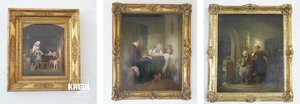
johann dietrich carl kreul
1803 - 1867 , Germany
Quick Facts
- Artistic Movement Or Style: Romanticism
- Artists Or Movements Influenced By This Artist:
- Eugène Delacroix
- Turner
- Artists Who Influenced This Artist:
- François Gérard
- Xavier Leprince
- Date Of Birth: 22 July 1803
- Date Of Death: 25 April 1886
- Full Name: Eugène Isabey
- Nationality: French
- Notable Artworks:
- Return of Napoleon's remains
- An Avalanche in the Alps
- Portrait of Napoleon Bonaparte
- Place Of Birth: Paris, France

