 Preview
 Send
Send Share
Share
 Details

 Download
 Similars
 X-Ray
X-Ray Diaporama
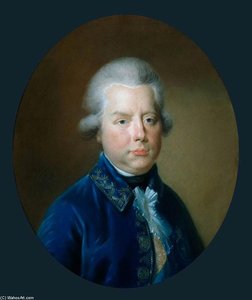
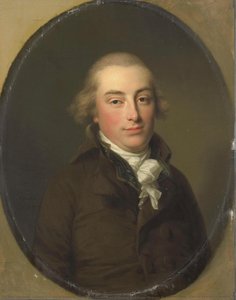
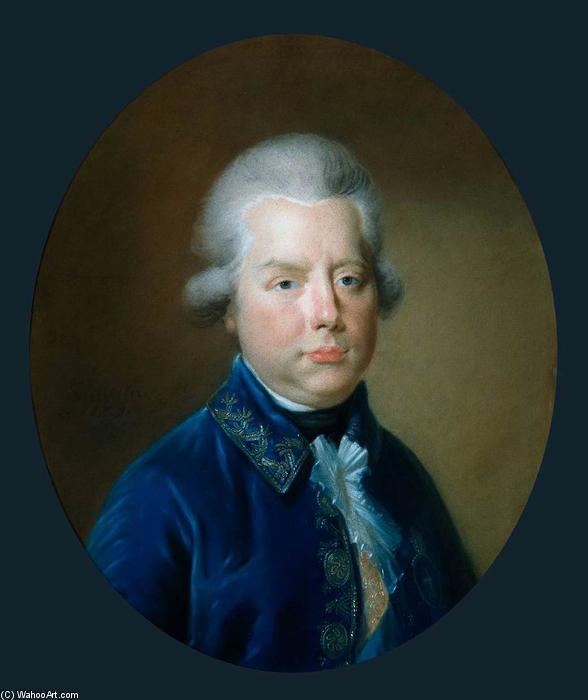
William V, Prince of Orange-Nassau
 Oil On Canvas
- WallArt
- Rococo
 1789
1789- Early Modern
 62.0 x 52.0 cm
 Rijksmuseum
 Read More
Hand Made Oil Reproduction
Hand-painted oil on canvas in your size and frame, made to order by our artists. ( Buy Print Buy Image)




P118B $10

P118H $10

P118W $10

P438Z $10

P508JH $12

P508YH $12

P805H $10

P805Z $10

P919BZ $10

P919G $10

P919XJ $10

P959ZH $10

P968JZ $12

W106C $8

W218G $10

W218JH $8

W218Y $10

W307PJ $10

W316G $10

W316PJ $8

W316Y $10

W398PJ $8

W4111J $10

W500HY $15

W500JH $15

W692G $12

W849H $8

W940BG $15

W953PJ $8




Pick from our preset sizes that match the artwork's original proportions.

You may enter your own dimensions to fit a specific frame or space. If your selected size does not match the original image's proportions, we will either crop the artwork or extend the painting with additional hand-painted elements. A digital mockup will be sent for your approval before production begins.
Please note that the on-screen preview does not reflect the actual cropping or extension. Only the mockup will accurately show the final composition.
While custom sizes are available, we recommend selecting a dimension from the predefined list to preserve the original proportions.
After order, ArtsDot.com team will email client for instructions and provide a mockup preview
Worldwide Delivery () in 3/4 weeks instead of standard 5 weeks. (31 August). No compromise on quality.

Free Worldwide Express Shipping

High-Quality Linen Canvas

Full Shipping Insurance

Customs Tax Refund Guarantee

True Color Matching Guarantee

60-Day Return Policy (Defects Only)

100% Money-Back Guarantee

Bulk Discount Offer
 Glass option is only available in size under 110 CM

William V, Prince of Orange-Nassau
Reproduction Medium
Reproduction Size
-


Total Price
$ 263
A Glimpse into the Grandeur of the House of Orange
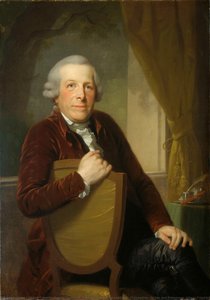
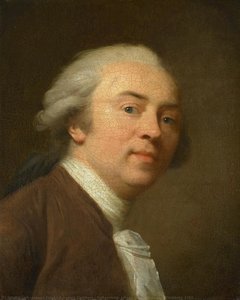
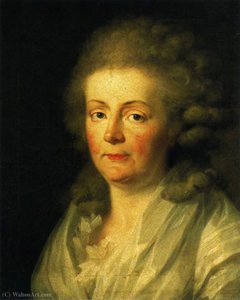
In this exquisite portrait from 1789, we are invited into the intimate yet formal world of William V, Prince of Orange-Nassau. Captured by the masterful hand of Johann Friedrich August Tischbein, the painting serves as more than a mere likeness; it is a window into an era of profound political transition and aristocratic elegance. The subject sits with a dignified presence, his features illuminated by a dramatic, directional light that sweeps across the canvas from the left. This chiaroscuro effect does not merely highlight the contours of his face but breathes life into the very fabric of the composition, casting deep, thoughtful shadows that suggest the weight of leadership and the solemnity of his station.
The artistry of the Leipziger Tischbein is on full display through a meticulous application of oil on canvas. Every brushstroke serves a purpose, from the soft, realistic rendering of the subject's skin to the heavy, tactile texture of his formal attire. The color palette, dominated by deep, regal blues and crisp whites, creates a somber yet sophisticated atmosphere that commands respect. There is a rhythmic quality to the way the light interacts with the folds of his clothing, creating a sense of three-dimensional depth that pulls the viewer into the subject's immediate presence, making the encounter feel both personal and monumental.
The Language of Status and Neoclassical Grace
Beyond the technical brilliance, the portrait is rich with the subtle symbolism characteristic of late 18th-century European nobility. The elaborate wig and the structured, formal jacket are not merely fashion choices; they are carefully curated signifiers of wealth, lineage, and social permanence. Tischbein utilizes a Neoclassical approach, where clarity of line and balance of form reflect the Enlightenment ideals of order and reason. The oval framing—a hallmark of the era—encapsulates the subject in a timeless bubble, focusing our attention entirely on his character and the quiet strength of his gaze.
For the discerning collector or interior designer, this piece offers an unparalleled opportunity to introduce a sense of historical gravity and classical beauty into a space. Whether placed in a library filled with leather-bound volumes or as a focal point in a contemporary hallway, the portrait provides a sophisticated anchor. It evokes a sense of nostalgia for the grandeur of the past while maintaining a timeless aesthetic that complements both traditional and modern decor. Owning a reproduction of such caliber is not simply about decorating a wall; it is about curating an atmosphere of intellectual depth and enduring elegance.
Related Artworks
Artist Biography
The Legacy of the Leipziger Tischbein
Johann Friedrich August Tischbein, a name whispered with reverence in the corridors of German art history, remains an enduring symbol of late 18th-century refinement. Known affectionately as the Leipziger Tischbein, his life was a tapestry woven from the threads of a distinguished artistic lineage. Born in Maastricht, Netherlands, in 1750, he was the son of the celebrated set painter Johann Valentin Tischbein. This early immersion in the theatrical and visual arts provided him with a unique foundation, blending the grand scale of stagecraft with the intimate precision required for portraiture. His formative years were shaped under the watchful eye of his uncle, Johann Heinrich Tischbein, in Kassel, where he mastered the lingering elegance of Baroque principles before the winds of Neoclassicism began to reshape the European landscape.
The trajectory of Tischbein’s genius was irrevocably altered by his wanderlust and his pursuit of excellence beyond German borders. In 1768, a transformative journey took him to Paris, the beating heart of artistic innovation. Within the vibrant studios of Johann Georg Wille, Tischbein underwent a profound stylistic evolution. He moved away from the heavy ornamentation of his youth, embracing instead the clarity, structure, and meticulous detail that defined the emerging Neoclassical movement. This Parisian sojourn did more than refine his brushwork; it expanded his intellectual horizons, allowing him to absorb the very essence of French sophistication which he would later translate into his German commissions.
A Journey Through the Heart of Europe
Tischbein’s artistic maturation continued through an ambitious expedition across Italy in 1777, a voyage that served as both a pilgrimage and a professional milestone. It was during this period of intense cultural immersion that he encountered the burgeoning talent of Jacques-Louis David. This meeting of minds between two masters of the era fostered a lasting collaboration, linking Tischbein to the vanguard of the Napoleonic artistic revolution. The influence of the Italian landscape and the classical ideals found in Rome infused his work with a timelessness, blending the structural rigor learned in Paris with a newfound sense of grace and historical depth.
Upon his return to Germany, Tischbein’s reputation preceded him, leading to a prestigious appointment as court painter to Friedrich Karl August, Prince of Waldeck and Pyrmont. His role was not merely that of a decorator of faces but a custodian of status and identity. As he settled into the artistic circles of Weimar, his work became a bridge between the old world of aristocratic splendor and the new era of enlightened portraiture. His ability to capture both the physical likeness and the psychological nuance of his subjects made him a sought-after figure among the European elite.
Artistic Mastery and Educational Influence
Beyond the canvas, Tischbein’s contribution to the art world was deeply rooted in his commitment to pedagogy and institutional growth. His influence extended far beyond his own studio through his leadership roles in Leipzig. As a director and overseer of the academy’s visual arts program, he played a crucial role in shaping the next generation of German painters. His dedication to formalizing art education ensured that the technical precision and aesthetic values he championed would endure long after his passing in 1812.
The significance of Johann Friedrich August Tischbein lies in his unique position as a transitional figure. His oeuvre represents a masterful synthesis of several eras:
- The Baroque Foundation: A lingering appreciation for drama and depth inherited from his father’s theatrical legacy.
- Neoclassical Precision: The disciplined, clean lines and anatomical accuracy acquired in the studios of Paris.
- The Spirit of Enlightenment: A focus on clarity, truth, and the dignified representation of the individual.
Today, his works stand as a testament to an era of profound cultural shift, reminding us of a time when portraiture was not merely about capturing a likeness, but about documenting the very soul of an age in transition.
Johann Friedrich August Tischbein
1750 - 1812 , Netherlands
Quick Facts
- Artistic Movement Or Style: Classical Rococo
- Artists Or Movements Influenced By This Artist: ['Jacob David']
- Artists Who Influenced This Artist:
- Johann Valentin Tischbein
- Johannes Georg Wille
- Date Of Birth: March 9, 1750
- Date Of Death: June 21, 1812
- Full Name: Johann Friedrich August Tischbein
- Nationality: German
- Notable Artworks:
- Portrait of Salomon Rendorp
- Portrait of Willem Arnold Alting
- William V
- Place Of Birth: Maastricht, Netherlands
Related Articles
Neo-Classicism's Greatest Hits: 10 Masterpieces for Your Home |
Journey through Neo-Classicism's finest! Explore 10 iconic masterpieces by David, Ingres & Canova. Discover art history, techniques & timeless beauty – perfect for inspiring your home decor. Find museum-quality reproductions at
18th Century Masters: 10 Artworks That Define an Era | ArtsDot
Journey through 18th century art! Explore 10 iconic paintings – from Rococo elegance to Neoclassical grandeur. Discover Fragonard, David & more. Find museum-quality reproductions and elevate your home decor on ArtsDot.com.
Reflecting Nobility & Nuance: 18th-Century Portraiture as a Window into Societal Values
Explore the world of 18th-century portraiture with ArtsDot. Discover symbolism, artistic innovation & societal values reflected in masterpieces by Reynolds, Hogarth & more. Expert insights for collectors.
The Enduring Legacy of Classicism: Principles, Evolution & Influence in Western Art
Explore the enduring legacy of Classicism in Western art! Discover its historical context, key principles, iconic masterpieces & lasting influence. Learn about Renaissance and Neoclassical movements with ArtsDot.

Dutch Baroque Masters: 10 Paintings That Shaped an Era | ArtsDot
Journey through the Golden Age with our guide to the Top 10 Dutch Baroque masterpieces! Explore iconic paintings by Rembrandt, Vermeer & Frans Hals. Find museum-quality art reproductions and elevate your home decor at ArtsDot.com.