

 Preview
 Send
Send Share
Share
 Details

 Download
 Similars
 X-Ray
X-Ray Diaporama
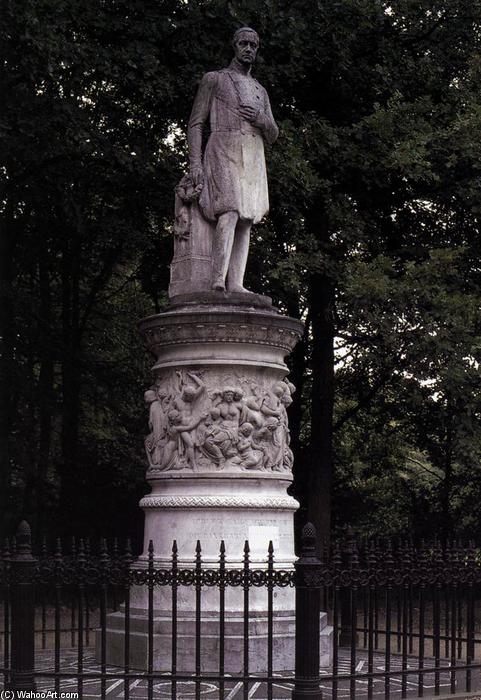
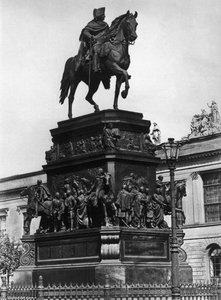
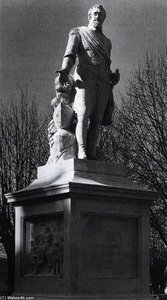
Monument to King Frederick William III of Prussia


 Read More
Hand Made Oil Reproduction
Hand-painted oil on canvas in your size and frame, made to order by our artists. ( Buy Print Buy Image)




































Pick from our preset sizes that match the artwork's original proportions.

You may enter your own dimensions to fit a specific frame or space. If your selected size does not match the original image's proportions, we will either crop the artwork or extend the painting with additional hand-painted elements. A digital mockup will be sent for your approval before production begins.
Please note that the on-screen preview does not reflect the actual cropping or extension. Only the mockup will accurately show the final composition.
While custom sizes are available, we recommend selecting a dimension from the predefined list to preserve the original proportions.
After order, ArtsDot.com team will email client for instructions and provide a mockup preview
Worldwide Delivery () in 3/4 weeks instead of standard 5 weeks. (3 September). No compromise on quality.

Free Worldwide Express Shipping

High-Quality Linen Canvas

Full Shipping Insurance

Customs Tax Refund Guarantee

True Color Matching Guarantee

60-Day Return Policy (Defects Only)

100% Money-Back Guarantee

Bulk Discount Offer
 Glass option is only available in size under 110 CM

Monument to King Frederick William III of Prussia
Reproduction Medium
Reproduction Size
-


Total Price
$ 263
Related Artworks

Artist Biography
The Sculptor of Prussian Grandeur
Johann Friedrich Drake stands as a towering figure in the annals of German sculpture, a master whose hands breathed life into stone and metal to embody the very spirit of Prussia during the Romantic era. Born in Hamburg in 1805, Drake’s journey from the son of a humble mechanic to a celebrated Royal Professor is a testament to an extraordinary innate creativity. His early years were defined by the practical, tactile world of a turner's apprenticeship in Minden, where the precision of mechanical skill would later inform his unparalleled mastery over sculptural detail. It was through the serendipitous discovery of his clay models by a relative of the great Christian Daniel Rauch that Drake’s destiny shifted, leading him to the prestigious Berlin studio of Rauch, where he began to absorb the sophisticated techniques of the era's most influential masters.
The trajectory of Drake’s career was profoundly shaped by his exposure to the classical ideals of Italy and the mentorship of legendary figures. A pivotal study trip in 1836, funded by Rauch’s generous patronage, allowed Drake to immerse himself in the timeless beauty of Classical sculpture. This period of exploration was further enriched by his encounter with Bertel Thorvaldsen, whose recognition of Drake's potential provided the artist with the momentum needed to ascend within the Prussian Academy of Arts. By blending the restrained, idealized forms of Weimar Classicism with the emotional intensity and realism characteristic of Romanticism, Drake developed a unique aesthetic language. His work did not merely replicate reality; it elevated historical figures into eternal icons of national identity.
A Legacy in Stone and Metal
Drake’s workshop became a crucible of Prussian commemoration, constantly producing works that captured the essence of the century's most significant personalities. His ability to manipulate diverse materials allowed him to execute everything from intimate, soulful busts to colossal, awe-inspiring monuments. His technical prowess was so profound that he even applied his mechanical background to invent specialized frames for nude models, ensuring the anatomical precision that became a hallmark of his style. The breadth of his subject matter reflected the intellectual and political landscape of his time, as seen in his various notable commissions:
- The Monument to King Frederick William III of Prussia, a somber and powerful tribute rendered in stone and metal.
- A colossal statue of Justus Möser in Osnabrück, which served as his first major professional triumph.
- Commemorative works for scientific and political giants, including Alexander von Humboldt and Otto von Bismarck.
- The triumphant figure of Victory atop the iconic Berlin Victory Column.
Beyond his individual sculptures, Drake’s historical significance lies in his role as a custodian of German cultural memory. As Vice-chancellor of the Academy and a recipient of the Order of Merit of the Prussian Crown, he occupied a central position in the artistic establishment. His works served as much more than mere decorations; they were political and cultural anchors that helped define the prestige of the Prussian state. Through his meticulous attention to detail and his ability to weave historical narrative into physical form, Johann Friedrich Drake ensured that the faces and triumphs of his era would remain etched in the collective consciousness of the world.
Johann Friedrich Drake
1805 - 1882 , Germany
Quick Facts
- Artistic Movement Or Style: Classical Sculpture
- Artists Or Movements Influenced By This Artist: ['Neoclassicism']
- Artists Who Influenced This Artist: ['Bertel Thorvaldsen']
- Date Of Birth: Hamburg, Germany (1805)
- Date Of Death: 1882
- Full Name: Johann Friedrich Drake
- Nationality: German
- Notable Artworks:
- Monument to King Frederick William III of Prussia
- Victory on top of the Berlin Victory Column
- Eight Provinces of Prussia
- Stiftskirche St. Johann
- Place Of Birth: Hamburg
Related Articles

Bronze Sculptures That Defined Art History | ArtsDot
Journey through art history with our Top 10 bronze sculptures! Explore masterpieces by Rodin, Michelangelo & more. Discover stories behind iconic statues and find museum-quality reproductions for your home decor at ArtsDot.com.

The Enduring Form: Exploring Themes & Techniques in Sculpture Across Historical Periods
Explore the rich history of sculpture from ancient masterpieces to contemporary innovations. Discover key techniques, influential artists & investment potential for discerning art collectors.

The Enduring Form: Sculpture Across History, Technique & Emotional Resonance
Explore the rich history of sculpture with ArtsDot. Discover key techniques, influential artists & investment potential for discerning collectors. Expert insights into valuing and collecting timeless masterpieces.

Bronze Age to Modern Masters: 10 Sculptures That Redefined Art | ArtsDot
Journey through art history with 10 legendary bronze sculptures – from Michelangelo's David to Rodin’s Thinker. Explore the stories, techniques & timeless beauty of these masterpieces. Find museum-quality reproductions & elevate your home decor on ArtsDot.com.
The Enduring Legacy of Bronze Sculpture: History, Techniques & Contemporary Interpretations
Explore the rich history & enduring appeal of bronze sculpture. Learn about casting techniques, iconic artists, collecting tips, & contemporary interpretations. Expert insights for discerning art collectors.

