 Preview
 Send
Send Share
Share
 Details

 Download
 Similars
 X-Ray
X-Ray Diaporama
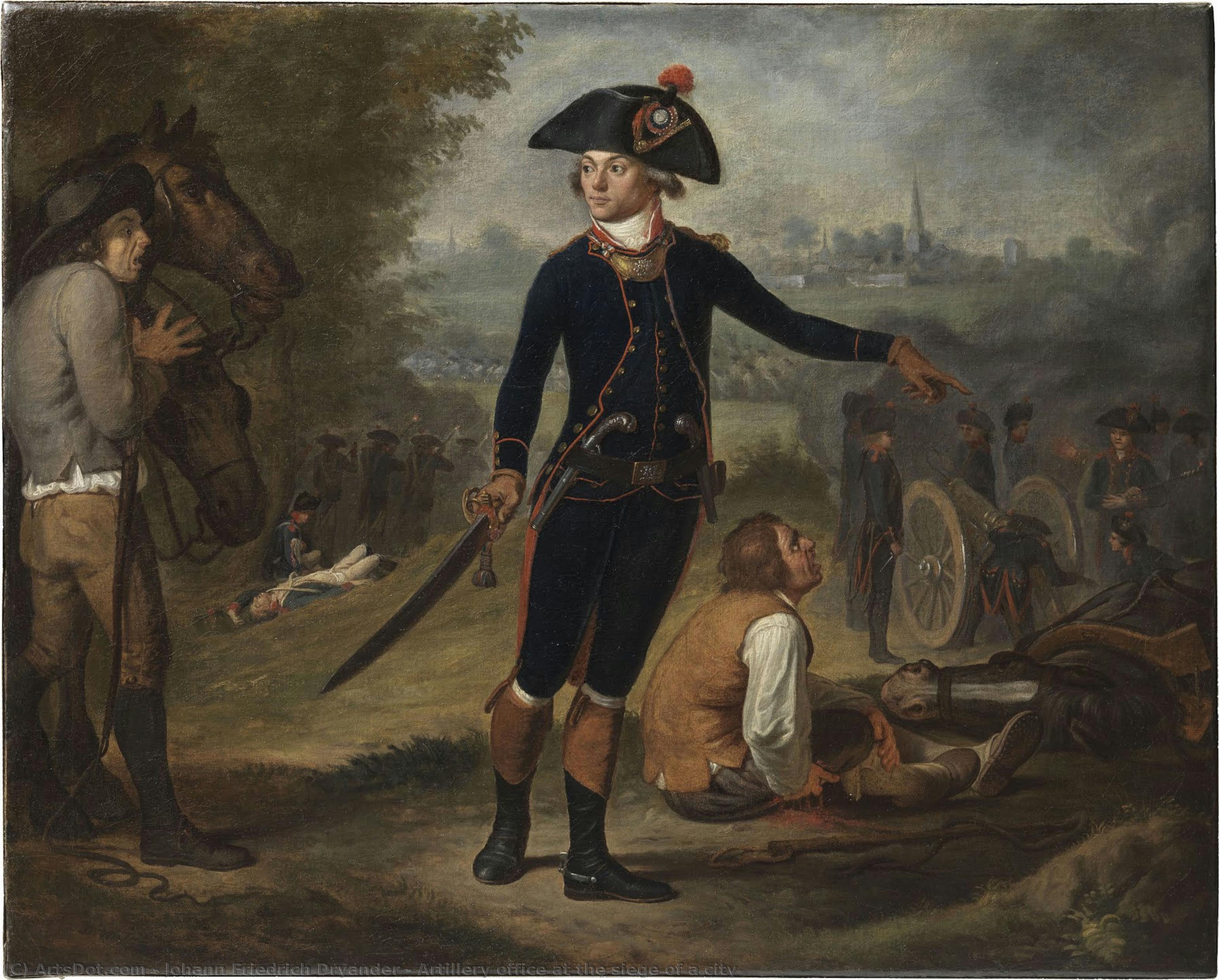
Artillery office at the siege of a city


 Read More
Hand Made Oil Reproduction
Hand-painted oil on canvas in your size and frame, made to order by our artists. ( Buy Print Buy Image)




































Pick from our preset sizes that match the artwork's original proportions.

You may enter your own dimensions to fit a specific frame or space. If your selected size does not match the original image's proportions, we will either crop the artwork or extend the painting with additional hand-painted elements. A digital mockup will be sent for your approval before production begins.
Please note that the on-screen preview does not reflect the actual cropping or extension. Only the mockup will accurately show the final composition.
While custom sizes are available, we recommend selecting a dimension from the predefined list to preserve the original proportions.
After order, ArtsDot.com team will email client for instructions and provide a mockup preview
Worldwide Delivery () in 3/4 weeks instead of standard 5 weeks. (30 August). No compromise on quality.

Free Worldwide Express Shipping

High-Quality Linen Canvas

Full Shipping Insurance

Customs Tax Refund Guarantee

True Color Matching Guarantee

60-Day Return Policy (Defects Only)

100% Money-Back Guarantee

Bulk Discount Offer
 Glass option is only available in size under 110 CM

Artillery office at the siege of a city
Reproduction Medium
Reproduction Size
-


Total Price
$ 263
Related Artworks






Artist Biography
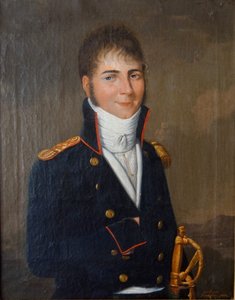
The Life and Legacy of Johann Friedrich Dryander
In the turbulent landscape of late eighteenth-century Europe, few artists captured the shifting tides of political identity as intimately as Johann Friedrich Dryander. Born in 1756 in St Johann im Pongau, Germany, Dryander emerged from a modest background—the son of a posamentenmacher, or maker of ornamental objects—to become a chronicler of the era's most dramatic transformations. His journey from a young apprentice to a painter of historical significance is a testament to the enduring power of classical training and the profound impact of historical upheaval on the creative spirit.
Dryander’s artistic foundation was laid through rigorous discipline under the guidance of the court painter Johann Jakob Samhammer. Between 1772 and 1774, alongside his contemporary Johann Heinrich Schmidt, Dryander underwent an apprenticeship that instilled in him the technical precision required for high-society portraiture. This period of formative training eventually led him to Darmstadt, where he began his life as a wandering painter throughout southern Hesse. These early years were characterized by a pursuit of mastery, moving through the provinces and honing a style that would later bridge the gap between the refined elegance of the Ancien Régime and the gritty realism of a continent in revolution.
A Witness to Revolution
While Dryander’s early career was rooted in the traditional service of the nobility, the seismic shifts caused by the French Revolution in 1789 fundamentally redirected his artistic focus. As the old social orders crumbled, Dryander found himself drawn to a new kind of subject: the officers of the French military. This transition marked a departure from the static, aristocratic portraits of the Nassau-Saarbrücken court toward more dynamic, historically charged compositions that captured the essence of a changing world.
His work during this period serves as a vital visual record of the Napoleonic era and the French Revolutionary wars. Through his brush, we encounter figures such as General Jourdan and his adjutant, rendered with a sense of presence that transcends mere likeness. His ability to imbue these military portraits with both individual character and historical weight allowed him to document the rise of new political icons. Notable works from this era include:
- Portrait du Général Bella (1795): A striking example of his ability to capture the gravity of command.
- Portrait du Citoyen Laboucly (1794): An intriguing glimpse into the lives of the revolutionary citizenry.
- Portrait of Dominique Joseph Garat (1794): A depiction of a key political figure during the height of the Revolution.
- French Troops before Saint-Jean-lès-Sarrebruck (1804): A larger-scale work that captures the movement and tension of military presence.
Artistic Significance and Enduring Presence
The historical significance of Johann Friedrich Dryander lies in his role as a visual bridge between two eras. He possessed the rare ability to maintain the technical sophistication of the German portrait tradition while adapting his subject matter to reflect the burgeoning nationalism and military fervor of France. His paintings do not merely depict faces; they capture the atmosphere of an age defined by conflict, duty, and the birth of modern Europe.
Today, Dryander’s legacy is preserved within the hallowed halls of Europe's most prestigious institutions. His works are held in collections such as the Saarlandmuseum in Saarbrücken, the Musée Historique Lorraine in Nancy, and the Musée des Beaux-Arts in Rouen. For the modern viewer, his portraits offer more than just aesthetic beauty; they provide a window into the soul of the eighteenth century, reminding us that art is often the most enduring witness to the triumphs and tragedies of human history.
Johann Friedrich Dryander
1756 - 1812 , Germany
Quick Facts
- Artistic Movement Or Style: Portraiture
- Artists Or Movements Influenced By This Artist:
- Caravaggio
- Rubens
- Artists Who Influenced This Artist: ['Johann Jakob Samhammer']
- Date Of Birth: 1756
- Date Of Death: 1812
- Full Name: Johann Friedrich Dryander
- Nationality: German
- Notable Artworks:
- French troops before saint-jean-lès-sarrebruck
- Portrait of general jourdan and his adjutant
- Place Of Birth: St Johann im Pongau, Germany