

 Preview
 Send
Send Share
Share
 Details

 Download
 Similars
 X-Ray
X-Ray Diaporama
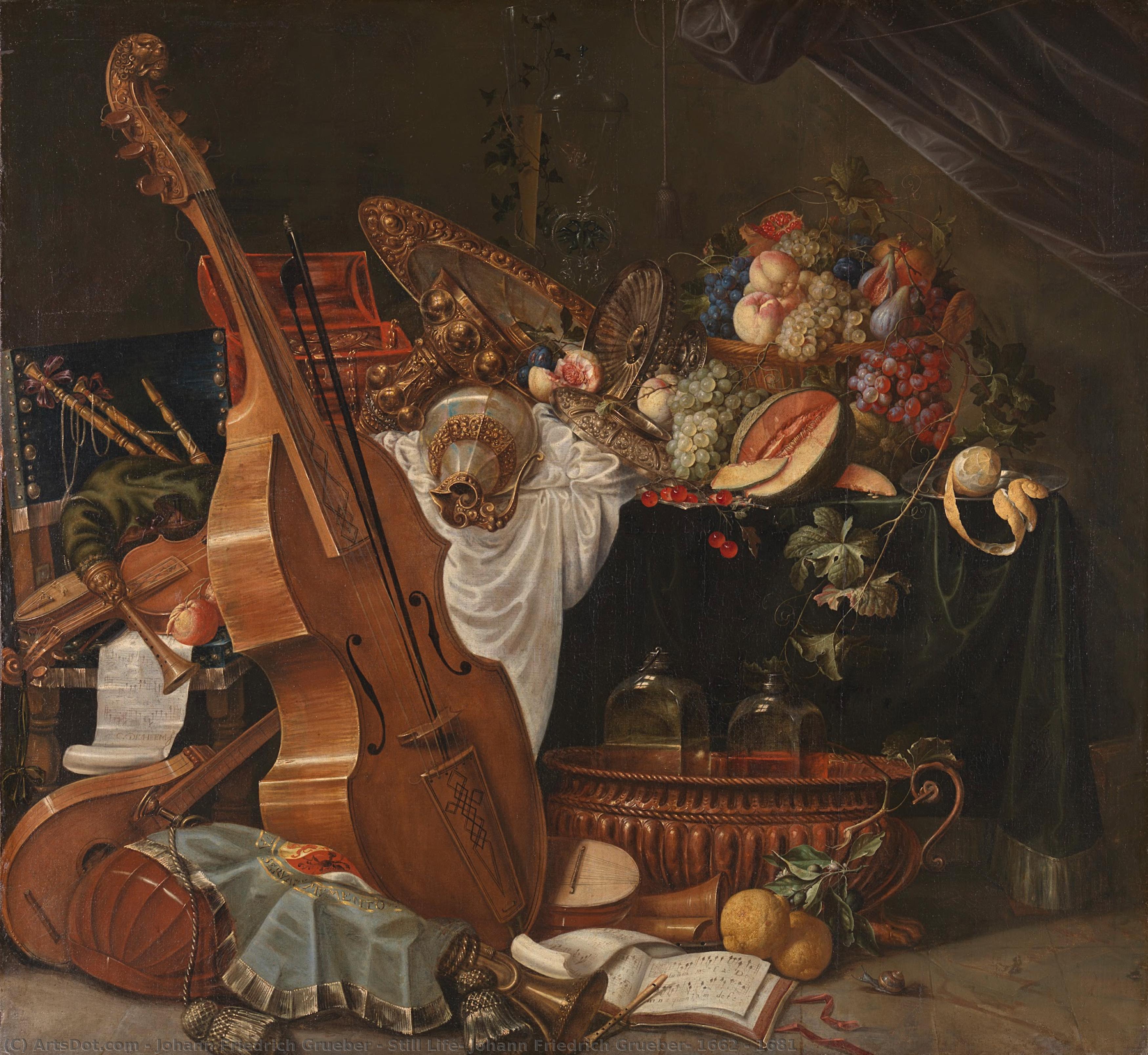
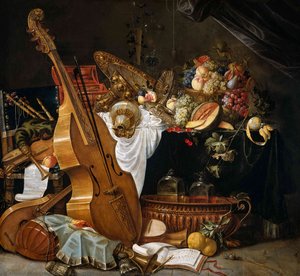
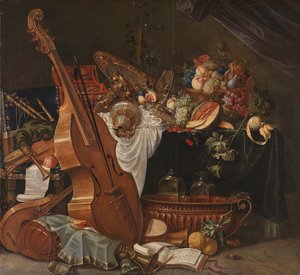
Still Life, Johann Friedrich Grueber, 1662 - 1681
 1681
1681 153.0 x 166.0 cm
 Read More
Hand Made Oil Reproduction
Hand-painted oil on canvas in your size and frame, made to order by our artists. ( Buy Print Buy Image)




































Pick from our preset sizes that match the artwork's original proportions.

You may enter your own dimensions to fit a specific frame or space. If your selected size does not match the original image's proportions, we will either crop the artwork or extend the painting with additional hand-painted elements. A digital mockup will be sent for your approval before production begins.
Please note that the on-screen preview does not reflect the actual cropping or extension. Only the mockup will accurately show the final composition.
While custom sizes are available, we recommend selecting a dimension from the predefined list to preserve the original proportions.
After order, ArtsDot.com team will email client for instructions and provide a mockup preview
Worldwide Delivery () in 3/4 weeks instead of standard 5 weeks. (28 August). No compromise on quality.

Free Worldwide Express Shipping

High-Quality Linen Canvas

Full Shipping Insurance

Customs Tax Refund Guarantee

True Color Matching Guarantee

60-Day Return Policy (Defects Only)

100% Money-Back Guarantee

Bulk Discount Offer
 Glass option is only available in size under 110 CM

Still Life, Johann Friedrich Grueber, 1662 - 1681
Reproduction Medium
Reproduction Size
-


Total Price
$ 263
Related Artworks




Artist Biography
The Quiet Brilliance of Johann Friedrich Grueber
In the golden light of the Dutch Golden Age, amidst the bustling canals and intellectual fervor of Leiden, there existed a painter who found profound majesty in the most humble of subjects. Johann Friedrich Grueber (1620–1681) was not a chronicler of grand historical battles or sweeping epic narratives; instead, he was a master of the intimate. As a prominent figure of the Leiden School, Grueber dedicated his life to the meticulous observation of the world around him, transforming everyday objects into vessels of light, texture, and silent poetry. His work stands as a testament to the beauty found in stillness, capturing the fleeting essence of life through the precise rendering of fruit, flowers, and musical instruments.
Born in Leiden, Grueber was immersed from birth in an environment defined by humanist thought and artistic innovation. The city was a crucible of creativity, where the shadows of masters like Rembrandt Harmensz van Rijn loomed large. While historical records suggest Grueber may have studied under Rembrandt, his stylistic departure from the master’s dramatic psychological portraits is notable. Rather than focusing on the heavy chiaroscuro of human emotion, Grueber applied those same principles of light and shadow to the inanimate. He mastered the art of tonal gradation, using light to breathe life into a lemon's zest or the velvet skin of a peach, creating a sense of presence that feels almost tactile to the modern viewer.
Technique and the Art of Illusion
The enduring allure of Grueber’s oeuvre lies in his extraordinary technical command. His surviving works, numbering approximately eighty paintings, reveal an artist obsessed with the physics of light. To achieve such luminous results, Grue ber employed a painstaking process of layering glazes. This technique allowed him to build up translucent layers of oil paint, capturing the way light penetrates the surface of a grape or reflects off the polished rim of a silver plate. Through this method, he achieved an astonishing level of realism that transcends mere imitation.
Beyond color and texture, Grueber was a master of spatial depth. He utilized atmospheric perspective to subtly blur the edges of objects in the background, simulating the natural effect of air and distance. This prevented his compositions from feeling flat or staged, instead creating a window into a real, breathing space. His ability to balance complex arrangements—such as those featuring a diverse array of musical instruments like the lute, cello, and bagpipe alongside delicate crockery—demonstrates a sophisticated understanding of composition that guides the viewer's eye through a rhythmic dance of shapes and shadows.
Symbolism and Lasting Legacy
To look upon a Grueber still life is to engage in a silent dialogue with symbolism. In the 17th century, nothing was purely decorative; every element carried a weight of meaning. A ripe fruit might represent the fleeting nature of youth, while the presence of musical instruments could evoke the harmony of the spheres or the ephemeral nature of sound itself. Grueber’s compositions often juxtapose the organic with the man-made, creating a tension between the enduring strength of ceramics and the inevitable decay of biological specimens.
Though he may not have sought the international fame of his more flamboyant contemporaries, Johann Friedrich Grueber secured his place in the pantheon of the Old Masters through his unwavering commitment to truth in representation. His legacy is found in the quiet moments of observation that define the Leiden School—a reminder that there is deep, spiritual significance to be found in the careful study of the world's smallest details. Today, his works continue to captivate collectors and historians alike, serving as luminous windows into the soul of the Dutch Golden Age.
johann friedrich grueber
1620 - 1681 , Netherlands
Quick Facts
- Artistic Movement Or Style: Leiden School Painting
- Date Of Birth: Leiden, Netherlands (1620)
- Date Of Death: 1681
- Full Name: Johann Friedrich Grueber
- Nationality: Dutch
- Notable Artworks: ['Still Life']
- Place Of Birth: Leiden

