 Preview
 Send
Send Share
Share
 Details

 Download
 Similars
 X-Ray
X-Ray Diaporama
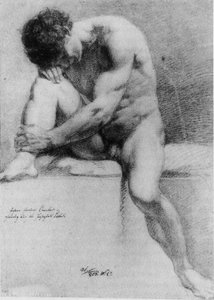
Untitled (870)
 Read More
Hand Made Oil Reproduction
Hand-painted oil on canvas in your size and frame, made to order by our artists. ( Buy Print Buy Image)




































Pick from our preset sizes that match the artwork's original proportions.

You may enter your own dimensions to fit a specific frame or space. If your selected size does not match the original image's proportions, we will either crop the artwork or extend the painting with additional hand-painted elements. A digital mockup will be sent for your approval before production begins.
Please note that the on-screen preview does not reflect the actual cropping or extension. Only the mockup will accurately show the final composition.
While custom sizes are available, we recommend selecting a dimension from the predefined list to preserve the original proportions.
After order, ArtsDot.com team will email client for instructions and provide a mockup preview
Worldwide Delivery () in 3/4 weeks instead of standard 5 weeks. (17 August). No compromise on quality.

Free Worldwide Express Shipping

High-Quality Linen Canvas

Full Shipping Insurance

Customs Tax Refund Guarantee

True Color Matching Guarantee

60-Day Return Policy (Defects Only)

100% Money-Back Guarantee

Bulk Discount Offer
 Glass option is only available in size under 110 CM

Untitled (870)
Reproduction Medium
Reproduction Size
-


Total Price
$ 263
Related Artworks
Artist Biography
A Life Dedicated to Religious Revival
Johann Friedrich Overbeck, a name synonymous with the Nazarene movement and 19th-century German Romanticism, was more than just a painter; he was a spiritual seeker who believed art held the key to restoring faith and moral integrity to a world he perceived as increasingly corrupted. Born in Lübeck, Germany, in 1789, Overbeck’s upbringing within a family of Protestant pastors instilled in him a profound sense of piety and intellectual rigor that would permeate his entire artistic journey. His father, Christian Adolph Overbeck, was not only a respected legal scholar but also a poet and mystic, fostering an environment where both reason and faith were deeply valued. This foundation shaped young Johann’s worldview, leading him to believe that art had lost its sacred purpose and needed to be reclaimed for the glory of God.From Vienna's Disillusionment to Roman Renaissance
Overbeck’s formal artistic training began in 1806 at the Academy of Fine Arts in Vienna, under the tutelage of Heinrich Füger. While he diligently acquired technical skills rooted in Neoclassical principles, a growing disillusionment took hold. He found the academy's emphasis on secular themes and its perceived lack of spiritual depth deeply unsatisfying. The artistic environment felt vulgar and uninspired, a stark contrast to the purity and reverence he believed art should embody. This discontent fueled his conviction that European art had strayed from its true path centuries before, losing its Christian orientation in the wake of societal shifts and Enlightenment ideals. He yearned for a return to the principles of early Italian Renaissance painting – the works of Raphael, Perugino, Pinturicchio, and Francesco Francia – artists he believed possessed an authentic spiritual vision. In 1809, alongside Franz Pforr, Overbeck established the Brotherhood of St. Luke, an artistic fraternity dedicated to honest work, devout living, and a rejection of contemporary artistic trends. Their radical views led to expulsion from the Vienna Academy, but it was a sacrifice they willingly made in pursuit of their ideals. The pivotal moment arrived in 1810 when Overbeck relocated to Rome, which would become the central hub of his artistic endeavors for nearly six decades.The Nazarenes and Artistic Community
Rome provided fertile ground for Overbeck and his fellow artists – including Peter von Cornelius, Friedrich Wilhelm Schadow, and Philipp Veit – to establish a communal living and working space in the old Franciscan convent of San Isidoro. This collective earned them the descriptive epithet "Nazarenes," reflecting their commitment to a lifestyle reminiscent of early Christian communities. Their artistic principles emphasized hard work, moral integrity, and a deliberate rejection of both antique paganism and what they considered the false values of the High Renaissance. They sought inspiration not in the grandeur of Michelangelo or Raphael’s later works, but in the simplicity and piety of earlier masters like Fra Angelico. In 1813, Overbeck's personal spiritual journey took a profound turn with his conversion to Roman Catholicism, an act he believed imbued his art with renewed purpose and “Christian baptism.” This deepened faith became inextricably linked to his artistic expression, guiding his choice of subjects and influencing the very essence of his style.Frescoes, Sacraments, and Lasting Legacy
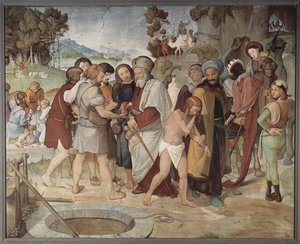
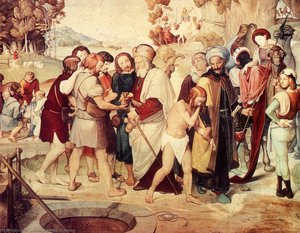
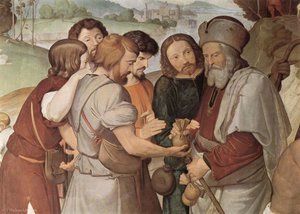
Overbeck’s career blossomed in Rome, marked by significant commissions that allowed him to translate his ideals into tangible form. The frescoes at Palazzo Zuccari (Casa Bartholdy) from 1818, depicting episodes from the story of Joseph, showcased his meticulous technique and narrative skill. His contribution to the Casino Massimo frescoes (1818-1830), particularly “The Meeting of Godfrey de Bouillon and Peter the Hermit” inspired by Tasso’s *Jerusalem Delivered*, demonstrated his ability to imbue historical scenes with religious symbolism. However, it was the fresco "Vision of St. Francis" created for the Porziuncola in the Basilica of Santa Maria degli Angeli near Assisi (1830) that truly exemplified Overbeck’s commitment to depicting religious themes with reverence and clarity. Perhaps his most ambitious undertaking was the “Seven Sacraments” project, begun in 1862 – a monumental series of paintings intended to restore the didactic power of images in conveying spiritual truth. Johann Friedrich Overbeck passed away in Rome in 1869, leaving behind a legacy that profoundly influenced 19th-century religious art. He championed a renewed focus on spirituality and moral values, inspiring generations of artists to seek deeper meaning in their work. His dedication to fresco technique helped revive this ancient medium, while his unwavering commitment to the principles of the Nazarene movement continues to resonate with those who believe in the power of art to uplift the soul. He was elected a foreign honorary member of the American Academy of Arts and Sciences in 1864. Even his nephew, Johannes Overbeck, contributed significantly to the field through his work as an archaeology professor at the University of Leipzig, furthering scholarship on classical art and culture.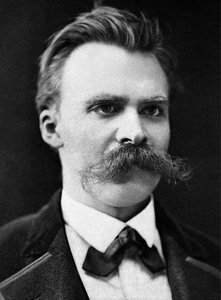
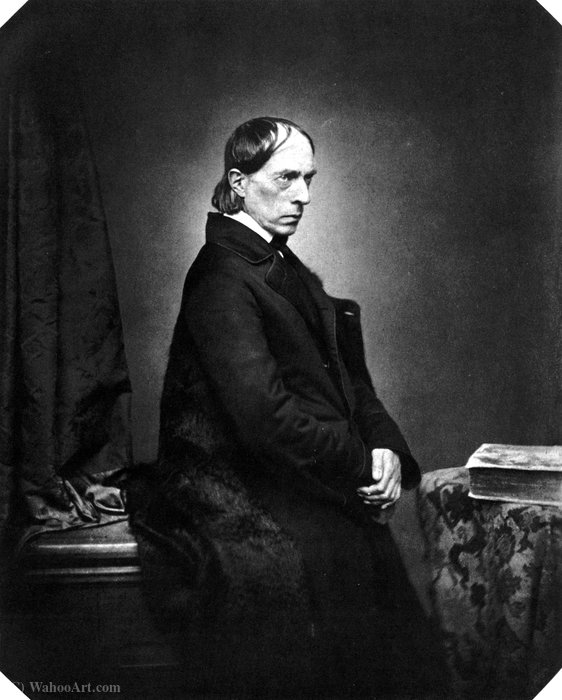
Johann Friedrich Overbeck
1789 - 1869 , Germany
Quick Facts
- Artistic Movement Or Style: Nazarene, Romanticism
- Artists Or Movements Influenced By This Artist:
- Pre-Raphaelite Brotherhood
- Religious art of 19th century
- Artists Who Influenced This Artist:
- Raphael
- Perugino
- Pinturicchio
- Francesco Francia
- Date Of Birth: July 3, 1789
- Date Of Death: November 12, 1869
- Full Name: Johann Friedrich Overbeck
- Nationality: German
- Notable Artworks:
- Joseph Sold by His Brethren
- Vision of St. Francis
- Seven Sacraments Project
- Place Of Birth: Lübeck, Germany