

 Preview
 Send
Send Share
Share
 Details

 Download
 Similars
 X-Ray
X-Ray Diaporama
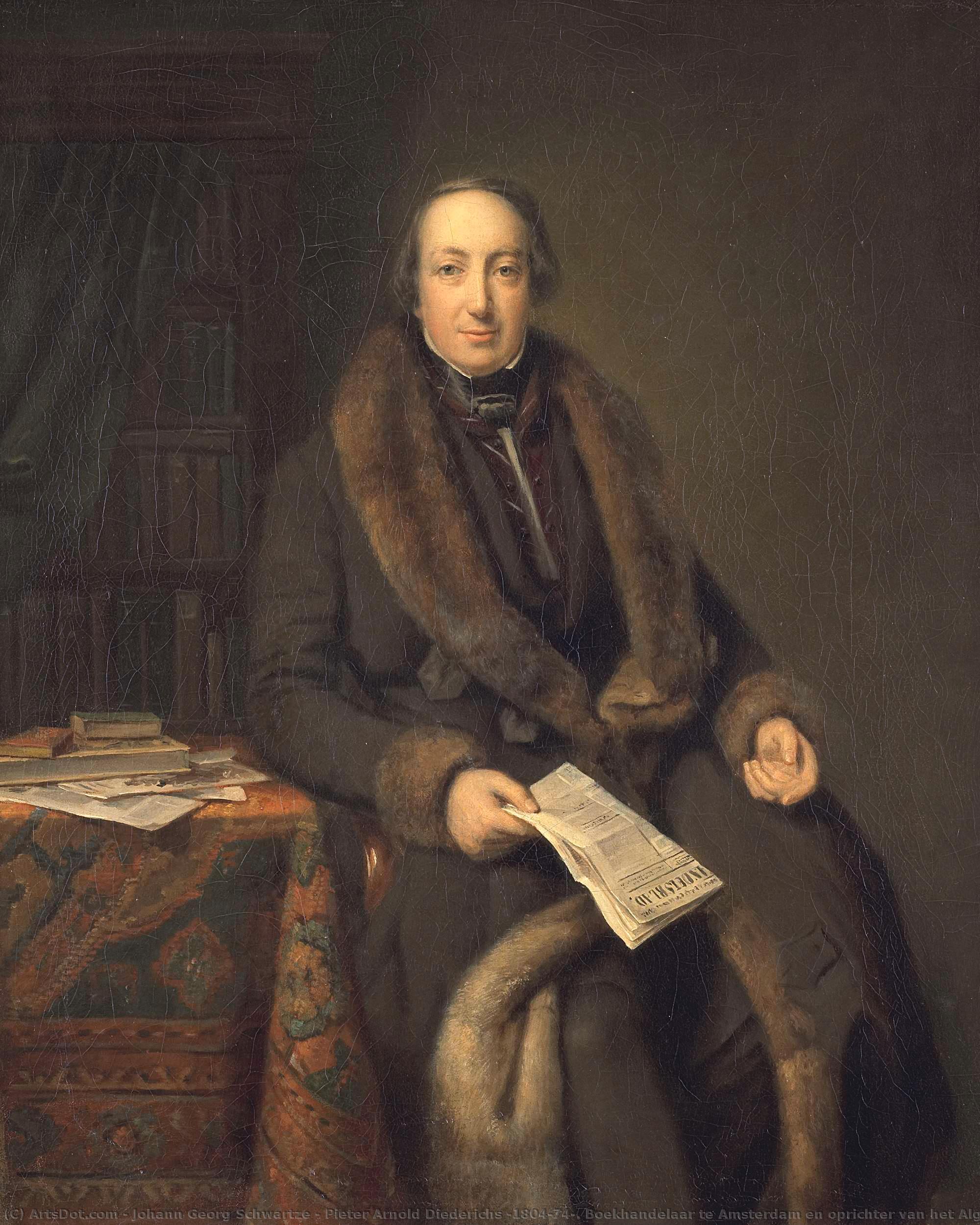
Pieter Arnold Diederichs (1804-74). Boekhandelaar te Amsterdam en oprichter van het Algemeen Handelsblad in 1828, Johann Georg Schwartze (attributed to), 1850 - 1860
 1860
1860 72.0 x 68.0 cm
 Read More
Purchase a high-resolution, enhanced digital image, far superior to the online preview.
Each file is meticulously prepared by our in-house specialists using advanced tools and expert manual retouching. We ensure every image has exceptional clarity, precise color accuracy, and fine detail.
The final file is delivered via email within 72 hours, optimized for immediate use in professional, editorial, and print environments. This is the same quality trusted by top-tier design studios, publishers, and galleries.
Digital Image
Download a high-resolution file for personal display, printing, and creative projects. ( Buy Print Buy Hand Made Painting)
Included in Every Digital Image Order
Expert Digital Delivery, Guaranteed
When you choose ArtsDot.com, you're not just getting an image - you're receiving a professionally enhanced digital artwork, crafted with precision and backed by a satisfaction guarantee. Here's everything that comes with your order, automatically:

Fast Email Delivery
Your high-resolution digital image file will be emailed to you within 72 hours of ordering - ready for immediate use.

AI-Enhanced Digital File
Your artwork is professionally optimized using advanced AI tools and manual editing, ensuring maximum detail, clarity, and color accuracy.

Free Lifetime Re-Delivery
Accidentally deleted or lost your file? No worries - we'll resend it to you anytime, free of charge.

No Import Fees - Ever
Enjoy your artwork instantly with zero customs, duties, or delivery fees - digital downloads are always tax-free.

Color Accuracy Guarantee
We ensure your digital image reflects the original colors as closely as possible using professional tools and color management.

60-Day Satisfaction Guarantee
If you're not satisfied with your digital image, we'll revise it or refund 100% within 60 days - no questions asked.

100% Money-Back Guarantee
Not satisfied? Get a full refund within 60 days of receiving your digital file - no questions asked.

Bulk Order Discounts
Buy 3 images, save 10% - Buy 5, save 15% - Buy 10+, save 20%. Great for creative projects, galleries, and agencies.
Related Artworks








Artist Biography
Early Life and Transatlantic Roots
Johann Georg Schwartze, born in Amsterdam on October 20th, 1814, embarked on a life that beautifully intertwined Dutch artistic traditions with the burgeoning art scene of America and the rigorous training of the Düsseldorf school. His early years were steeped in the atmosphere of a recovering Netherlands, still finding its footing after the Napoleonic era. However, this initial grounding in Amsterdam was short-lived; at the tender age of three, his family made a pivotal move to Philadelphia, Pennsylvania. This emigration wasn’t merely a change of scenery but a strategic decision by his father, Johann Engelbert Schwartze, who sought to establish a paint and varnish factory, escaping the uncertainties of post-war Europe.
The young Johann's artistic inclinations were nurtured early on in this new environment. He received foundational instruction from Emanuel Leutze, a name synonymous with American historical painting—best known for his iconic “Washington Crossing the Delaware.” This initial exposure to Leutze’s dramatic style and patriotic themes undoubtedly left an imprint on Schwartze’s developing sensibilities, though his path would ultimately lead him toward a more intimate and refined aesthetic. The family's entrepreneurial spirit was also formative; witnessing his father build a business instilled in Schwartze a sense of independence and dedication that would characterize his artistic career.
Formal Training and the Düsseldorf Influence
In 1838, driven by a desire to hone his skills and immerse himself in established artistic practices, Schwartze returned to Europe. He chose Düsseldorf as his center for study, enrolling at the prestigious Düsseldorf Academy. This institution was a powerhouse of Romantic painting, particularly renowned for its emphasis on portraiture and historical subjects. Under the tutelage of influential figures like Karl Ferdinand Sohn, Carl Friedrich Lessing, and Peter von Schadow, Schwartze absorbed the principles of meticulous realism, detailed observation, and narrative clarity.
The Düsseldorf school’s influence is palpable in his subsequent work. He mastered the technique of capturing likenesses with remarkable precision, a skill that would become central to his professional success. However, he wasn't merely a copyist of academic styles; he also benefited from private lessons with landscape painter Lessing, broadening his artistic vocabulary and introducing him to the subtleties of atmospheric perspective and natural light. This period was crucial in shaping his approach—a blend of rigorous technique and an emerging sensitivity to individual character.
A Life Dedicated to Portraiture and Family
Schwartze’s return to Europe in 1844 marked a turning point, as he integrated into the Dutch art world. He quickly gained recognition, becoming a member of both the Koninklijke Academie (Royal Academy) in Amsterdam in 1845 and Arti et Amicitiae in 1847—two highly esteemed artistic societies. He established himself as a freelance portraitist, building a thriving studio that became not only a place of work but also a vibrant hub for his family.
His personal life was deeply intertwined with his art. In 1846, he married Maria Elisabeth Therese Herrmann, and together they had six children. Remarkably, Schwartze actively fostered the artistic talents within his family. His daughters, particularly Thérèse Schwartze (a celebrated portrait painter in her own right) and Georgine Schwartze (a prominent sculptor), received their initial training from their father. Even his son, George Washington Schwartze, pursued a career as an artist. This dedication to nurturing artistic talent within the family created a lasting legacy that extended through multiple generations.
Style, Technique, and Lasting Significance
Schwartze’s paintings are characterized by their refined realism and psychological depth. He specialized in portraits of bourgeois and aristocratic subjects, often employing dark backgrounds to accentuate the sitter's features and create a sense of intimacy. His attention to detail was meticulous—every fabric fold, every strand of hair rendered with painstaking accuracy. However, his work wasn’t simply about technical skill; he possessed an ability to capture not just physical likeness but also the inner character and personality of his subjects.
His influence extended beyond his immediate family. He is remembered as a dedicated teacher, mentoring artists like Maria Vos and shaping the next generation of Dutch painters. Schwartze’s career bridged American and European traditions, contributing significantly to 19th-century Dutch portraiture. His works, including self-portraits and depictions of his daughters, are now held in prestigious collections such as the Rijksmuseum in Amsterdam, serving as a testament to his enduring artistic legacy.
- Key Characteristics: Refined realism, psychological depth, dark backgrounds, meticulous detail.
- Influences: Emanuel Leutze, Düsseldorf School of Painting (Karl Ferdinand Sohn, Carl Friedrich Lessing, Peter von Schadow).
- Notable Students: Thérèse Schwartze, Georgine Schwartze, Maria Vos.
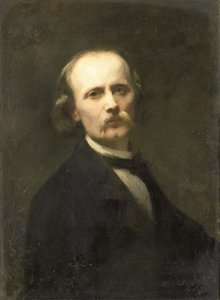
johann georg schwartze
1814 - 1874 , Netherlands
Quick Facts
- Artistic Movement Or Style: Portrait & Historical Painting
- Artists Or Movements Influenced By This Artist:
- Therese Schwartze
- Georgine Schwartze
- Artists Who Influenced This Artist:
- Von Schadow
- Lessing
- Date Of Birth: October 20, 1814
- Date Of Death: August 28, 1874
- Full Name: Johann Georg Schwartze
- Nationality: Dutch
- Notable Artworks:
- Self-Portrait (1869)
- Portrait of Thérèse Schwartze (1868)
- Portrait of Hermann, Ida Schwartze (1844)
- Place Of Birth: Amsterdam, Netherlands

