

 Preview
 Send
Send Share
Share
 Details

 Download
 Similars
 X-Ray
X-Ray Diaporama
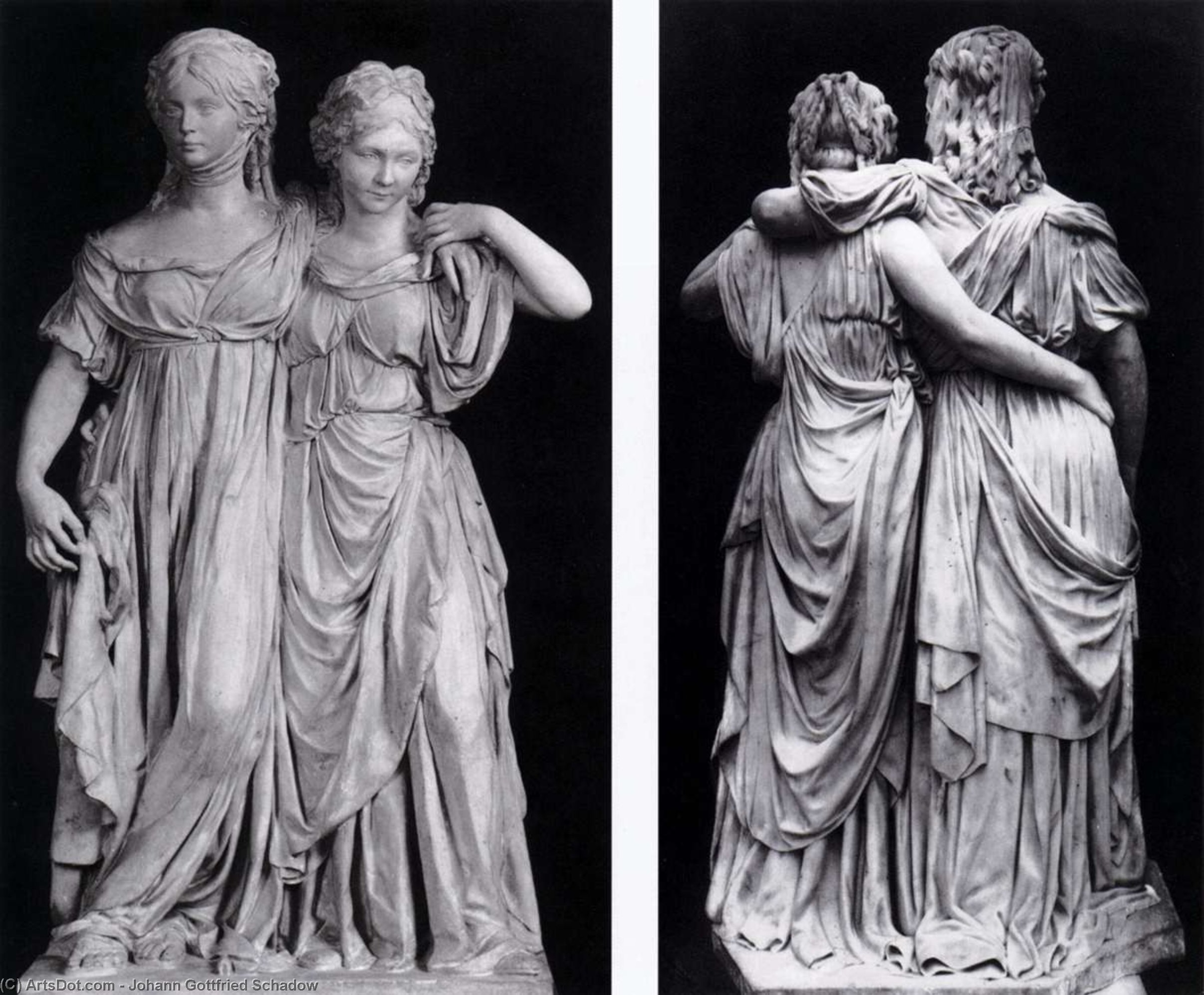
Crown Princess Louise and Princess Frederica of Prussia


 Read More
Purchase a high-resolution, enhanced digital image, far superior to the online preview.
Each file is meticulously prepared by our in-house specialists using advanced tools and expert manual retouching. We ensure every image has exceptional clarity, precise color accuracy, and fine detail.
The final file is delivered via email within 72 hours, optimized for immediate use in professional, editorial, and print environments. This is the same quality trusted by top-tier design studios, publishers, and galleries.
Digital Image
Download a high-resolution file for personal display, printing, and creative projects. ( Buy Print Buy Hand Made Painting)
Included in Every Digital Image Order
Expert Digital Delivery, Guaranteed
When you choose ArtsDot.com, you're not just getting an image - you're receiving a professionally enhanced digital artwork, crafted with precision and backed by a satisfaction guarantee. Here's everything that comes with your order, automatically:

Fast Email Delivery
Your high-resolution digital image file will be emailed to you within 72 hours of ordering - ready for immediate use.

AI-Enhanced Digital File
Your artwork is professionally optimized using advanced AI tools and manual editing, ensuring maximum detail, clarity, and color accuracy.

Free Lifetime Re-Delivery
Accidentally deleted or lost your file? No worries - we'll resend it to you anytime, free of charge.

No Import Fees - Ever
Enjoy your artwork instantly with zero customs, duties, or delivery fees - digital downloads are always tax-free.

Color Accuracy Guarantee
We ensure your digital image reflects the original colors as closely as possible using professional tools and color management.

60-Day Satisfaction Guarantee
If you're not satisfied with your digital image, we'll revise it or refund 100% within 60 days - no questions asked.

100% Money-Back Guarantee
Not satisfied? Get a full refund within 60 days of receiving your digital file - no questions asked.

Bulk Order Discounts
Buy 3 images, save 10% - Buy 5, save 15% - Buy 10+, save 20%. Great for creative projects, galleries, and agencies.
A Moment Frozen in Marble: Crown Princess Louise and Princess Frederica of Prussia
Captured in a meticulously preserved black and white photograph from 1796, Johann Gottfried Schadow’s “Crown Princess Louise and Princess Frederica of Prussia” offers a poignant glimpse into the artistic sensibilities of late 18th-century Prussia. This striking image showcases two life-size marble statues, commissioned to honor the young royal siblings, and exemplifies the Neoclassical style's enduring appeal – a style rooted in the revival of classical Greek and Roman ideals.
- The Sculptor’s Legacy: Johann Gottfried Schadow (1764-1850), born in Berlin to humble beginnings, rose to become one of Prussia’s most celebrated sculptors. His early apprenticeship under Antoine Tassaert, a favored artist of Frederick the Great, provided a rigorous foundation. Schadow's subsequent elopement with Marianne Devidel, defying societal norms and Tassaert’s expectations, fueled his artistic independence and ultimately shaped his distinctive style – a style characterized by its grace, precision, and profound understanding of human form.
- A Study in Classical Form: The statues themselves are masterpieces of Neoclassical sculpture. Crown Princess Louise and Princess Frederica are depicted in flowing classical drapery, reflecting the era’s fascination with ancient Greece and Rome. Their poses – arms gently encircling each other – evoke a sense of intimacy and familial connection, a symbolic representation of sisterhood and royal lineage.
Technical Brilliance: Marble and the Art of Photography
Schadow's skill as a sculptor is immediately apparent in the meticulous detail captured within the marble statues. The technique employed was subtractive sculpting – a process involving the careful removal of material to reveal the desired form, resulting in surfaces that are remarkably smooth and polished. The photograph itself, created using traditional photographic methods, brilliantly captures this tactile quality, highlighting the reflective properties of the marble with its stark contrasts of bright white and deep black.
- Line and Texture: Strong, curved lines define the drapery, while vertical lines emphasize the statues’ dignified postures. The sharp edges against the dark background isolate the forms, drawing the viewer's eye to the intricate details of the sculpted figures. The photograph expertly renders the texture of the marble – the polished surface juxtaposed with the folds and creases of the fabric – creating a dynamic interplay between form and material.
- A Legacy Preserved: The photograph serves not just as an image, but as a testament to Schadow’s mastery and the enduring power of classical sculpture.
Symbolism and Emotional Resonance
Beyond their aesthetic qualities, “Crown Princess Louise and Princess Frederica of Prussia” carries significant symbolic weight. The close embrace of the two figures speaks volumes about familial bonds, loyalty, and the importance of lineage within the Prussian court. Their dignified poses convey an air of nobility and grace, reflecting the high status of the royal siblings and reinforcing their role as symbols of stability and power.
- A Window to History: The artwork offers a tangible connection to 18th-century Prussia, providing insight into the artistic tastes and cultural values of the time. It’s a reminder of the enduring appeal of classical ideals and the profound impact of artists like Schadow on the development of Western art.
- Emotional Impact: The image evokes a sense of quiet contemplation and admiration for the beauty and skill involved in creating such timeless works of art.
Recreating the Masterpiece – A ArtsDot Reproduction
ArtsDot is proud to offer meticulously crafted hand-painted reproductions of “Crown Princess Louise and Princess Frederica of Prussia.” Our skilled artisans employ traditional techniques, mirroring Schadow’s original approach, to faithfully recreate this iconic artwork. Each reproduction captures the essence of the original – the texture of the marble, the precision of the lines, and the emotional resonance of the scene – ensuring a stunning addition to any collection or interior space.
Perfect for:- Art Collectors
- Interior Designers
- Those seeking a unique piece of historical art
Related Artworks




Artist Biography
Johann Gottfried Schadow: A Life in Sculpture
- Born: Berlin, Germany (1764)
- Died: 1850
Johann Gottfried Schadow was a prominent German Prussian sculptor who left an indelible mark on the art world. Born in Berlin to a poor tailor, his early life took a remarkable turn when he became an apprentice to Antoine Tassaert, a renowned sculptor patronized by Frederick the Great. This mentorship proved pivotal, though it also led to a dramatic personal shift – Schadow eloped with Marianne Devidel, a Jewish woman, defying Tassaert's expectations and embarking on a journey that would shape his artistic development.
Early Training and Artistic Development
Following his marriage, Schadow received financial support from Tassaert to travel to Italy for three years of study. This period in Rome was crucial, significantly influencing his style and solidifying his foundation in classical sculpture. Upon returning to Berlin in 1788, he succeeded Tassaert as sculptor to the court and secretary to the Prussian Academy of Arts – a position he held for over half a century.
Major Works and Artistic Style
- Monumental Statues: Schadow produced an impressive body of work, exceeding two hundred pieces. Among his most ambitious projects were monumental statues of Frederick the Great in Stettin, Blücher in Rostock, and Luther in Wittenberg.
- Portraiture: He excelled in portrait sculpture, creating notable works such as "Frederick the Great Playing the Flute" and the "Crown-Princess Louise and her Sister Frederica." His skill extended to busts, with over one hundred created, including seventeen colossal heads for the Walhalla in Ratisbon.
- Eclectic Style: Schadow's style was characterized by its variety, encompassing both classical influences and a unique artistic vision. He is particularly celebrated for his contributions to Neoclassicism, exemplified by the quadriga on the Brandenburg Gate and the allegorical frieze on the facade of the Royal Mint in Berlin.
Influence and Legacy
Schadow's influence extended beyond his sculptural achievements. As director of the Berlin Academy, he exerted considerable artistic leadership. He wrote extensively on topics such as the proportions of the human figure and national physiognomy, contributing to art theory and education. His interest in physiognomy is documented by a drawing he made of Harry Maitey, the first Hawaiian in Prussia.
- Friendship with Goethe: Schadow developed a close friendship with Johann Wolfgang von Goethe, evidenced by Goethe's son visiting Schadow in Weimar. Schadow created twelve bronze medals of Goethe, one of which is held by the British Museum and was awarded to Dr. Daisaku Ikeda in 2009 for his contributions to peace and Goethe’s philosophy.
- Family Legacy: His sons, Rudolph and Friedrich Wilhelm, also achieved recognition as a sculptor and painter respectively, while his grandson, Admiral Felix von Bendemann, served in the German Imperial Navy.
- Display of Works: Today, Schadow's sculptures and busts can be admired at institutions such as the Friedrichswerdersche Kirche and the Alte Nationalgalerie in Berlin.
Historical Significance
While not exclusively categorized as a Christian sculptor, Johann Gottfried Schadow is recognized for his significant contributions to German Neoclassicism and portraiture. His work on the Brandenburg Gate quadriga remains an iconic symbol of Berlin, solidifying his place as one of Prussia's most important sculptors.
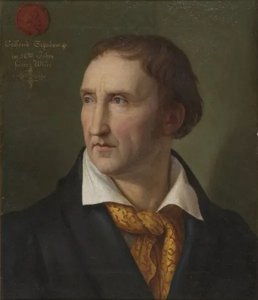
Johann Gottfried Schadow
1764 - 1850 , Germany
Quick Facts
- Artistic Movement Or Style: Neoclassicism
- Artists Or Movements Influenced By This Artist: ['Berlin School of sculpture']
- Artists Who Influenced This Artist:
- Antoine Tassaert
- Antonio Canova
- Date Of Birth: May 20, 1764
- Date Of Death: January 27, 1850
- Full Name: Johann Gottfried Schadow
- Nationality: German
- Notable Artworks:
- Draped Female Figure
- Tombstone for Count Alexander
- Frederick the Great in Stettin
- Blücher in Rostock
- Luther in Wittenberg
- Princesses Louise and Frederica
- Place Of Birth: Berlin, Germany

